|
Getting your Trinity Audio player ready... |
Most strawberry margaritas fail for one reason: the strawberries change the drink more than people realize.
That was the thing I kept running into while testing this Strawberry Margarita Recipe at home. I’d make a margarita formula that tasted balanced on its own, blend in strawberries, and suddenly everything felt flat. The lime disappeared. The tequila got buried. The drink looked beautiful but tasted oddly dull.
At first, I assumed the problem was the tequila. Then I blamed the strawberries themselves. Eventually I realized the real issue was sweetness perception. Strawberries soften acidity so much that many recipes compensate by adding even more sugar, which only pushes the cocktail further out of balance.
Once I started adjusting the lime instead of the syrup, the entire drink changed.
That’s the version I keep coming back to now, bright enough to still taste like a margarita, but soft and fruit-driven in the right way.
The Ingredient Decision That Actually Matters Most
People spend a lot of time debating tequila brands for strawberry margaritas. Honestly, the strawberries matter more.
Not just whether they’re fresh or frozen. Whether they actually taste like strawberries.
I tested this recipe with beautiful-looking grocery store berries that had almost no aroma. The margarita came out watery and muted no matter what I did with the citrus or tequila. Then I made the exact same recipe with ripe in-season berries from a local market and needed almost half the sweetener.
That changed the way I build this drink.
If the strawberries are naturally sweet and fragrant, the margarita almost balances itself. If the fruit is weak, the cocktail becomes a rescue mission.
So before anything else, smell the berries. If they barely smell like fruit, expect to work harder with syrup and lime.
Fresh vs Frozen Strawberries Changes More Than Texture
Most recipes frame this as a texture choice. It really isn’t.
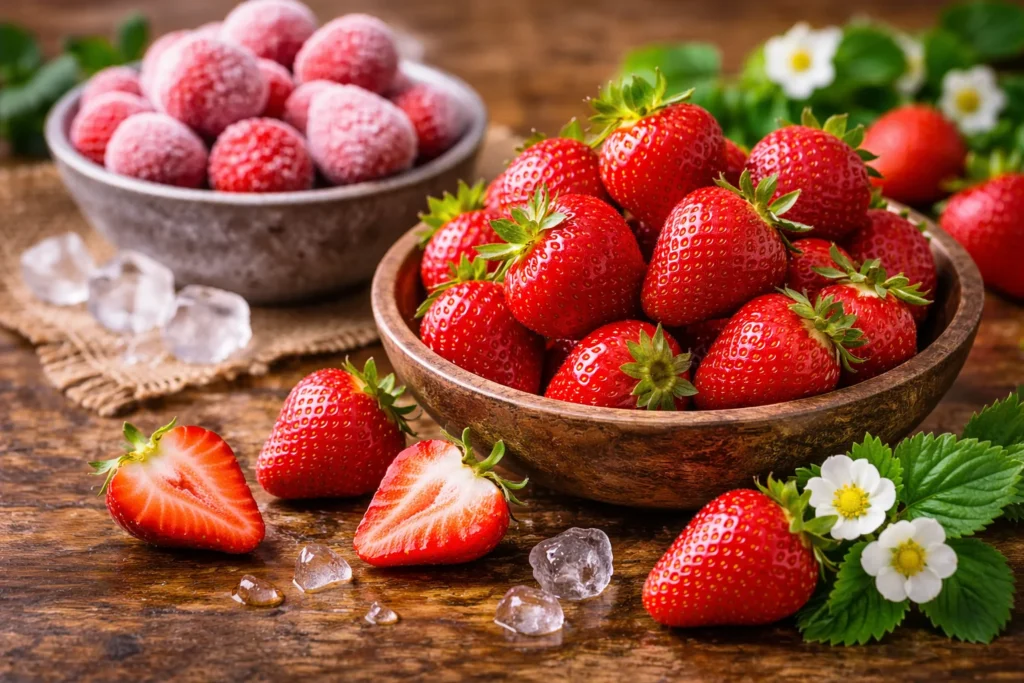
Fresh strawberries give me a brighter, sharper margarita. The lime stays more noticeable, and the tequila still cuts through the fruit. When I want a classic-style margarita on the rocks, fresh berries are the better option almost every time.
Frozen strawberries behave differently. They create thickness and body immediately, but they also mute acidity faster. That means a frozen strawberry margarita usually needs either slightly more lime juice or slightly less sweetener than people expect.
I learned this the hard way after making several frozen batches that tasted more like strawberry slushies than cocktails.
Now I reduce added ice dramatically when I use frozen fruit. That one adjustment keeps the flavor concentrated instead of watery.
The Biggest Mistake I Made With This Strawberry Margarita Recipe
I used too much simple syrup.
Not a little too much. Way too much.
A lot of online recipes build strawberry margaritas like dessert drinks, adding syrup before even tasting the fruit. The result looks vibrant but drinks heavy and sweet after a few sips.
Once I stopped automatically adding sweetener, the cocktail improved immediately.
Now I blend or muddle the strawberries first and taste them before deciding anything else. Good strawberries often provide enough natural sweetness alongside orange liqueur.
That doesn’t mean simple syrup is wrong. It just means it should solve a problem instead of being included by default.
Which Tequila Works Best With Strawberry?
I strongly prefer blanco tequila here.
A clean blanco keeps the margarita crisp and lets the strawberries stay bright. Reposado can work if you want a softer drink with subtle vanilla notes, but heavily aged tequila tends to overpower fresh fruit.
One thing surprised me during testing: overly peppery tequilas clashed with strawberries more than I expected. The best versions came from bottles with clean citrus and agave character rather than aggressive spice.
I also avoid ultra-cheap tequila in this recipe because strawberries don’t hide harsh alcohol nearly as well as people think they do.
The Lime Juice Adjustment Most Recipes Ignore
This is the part nobody explains clearly.
Strawberries reduce perceived acidity. Every time.
You can make a perfectly balanced standard margarita, add strawberries, and suddenly the drink tastes softer and sweeter even though you didn’t add sugar.
That’s why I almost always increase lime juice slightly in a strawberry margarita compared to a regular margarita. Not dramatically. Usually just enough to restore brightness.
Without that extra acidity, the cocktail loses its structure.
Too much lime creates a thin sour drink. Too little makes the margarita taste jammy and flat. The sweet spot is narrower than most recipes admit.
My Go-To Strawberry Margarita Recipe
After a lot of testing, this is the version I make most often at home because it still tastes like a margarita first and a fruit drink second.
Ingredients
- 2 ounces blanco tequila
- 1 ounce orange liqueur
- 1 ounce fresh lime juice
- 4 ripe strawberries
- ¼ ounce simple syrup, only if needed
- Ice
- Tajín or coarse salt for the rim
Instructions
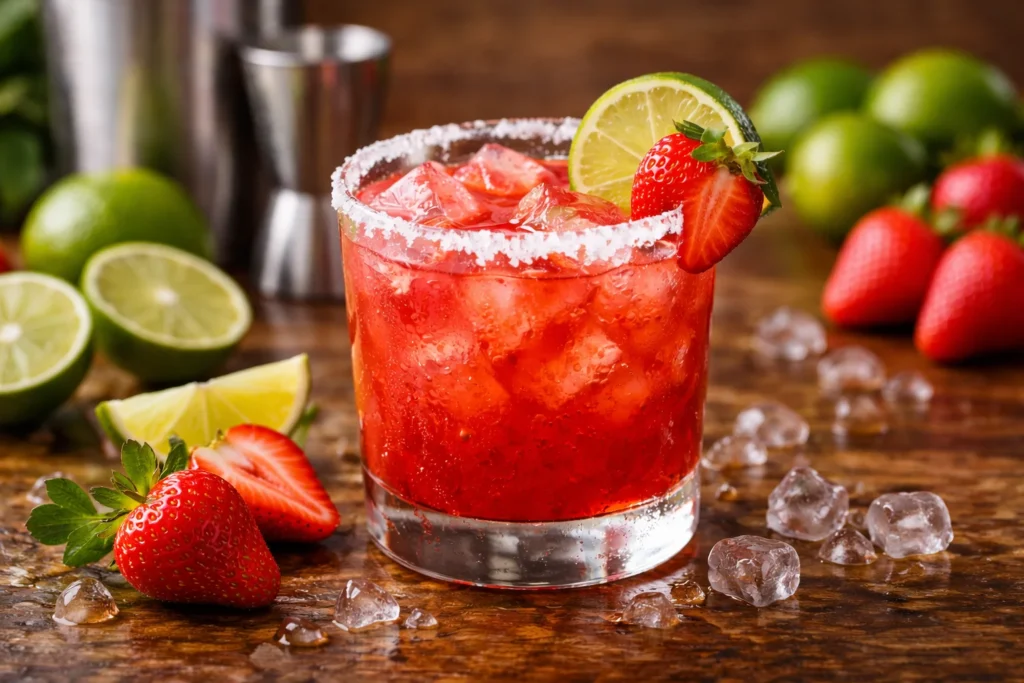
Rim a rocks glass lightly with Tajín or salt. I prefer a half-rim because it keeps the drink from becoming overly salty as the ice melts.
Muddle the strawberries in a cocktail shaker until fully broken down. Add tequila, orange liqueur, lime juice, syrup if needed, and ice.
Shake hard for about 15 seconds. That part matters more than most people think. Strawberries need aggressive shaking to integrate properly with citrus and spirits.
Double strain into a glass filled with fresh ice.
I garnish with either a lime wheel or a sliced strawberry. Nothing elaborate. The drink already has enough visual impact on its own.
Why Some Strawberry Margaritas Turn Pale Pink Instead of Deep Red
Usually it comes down to dilution.
When I first started making frozen strawberry margaritas, they looked almost pastel instead of vibrant red. I assumed the issue was the berries themselves. It turned out I was simply adding too much ice.
Frozen strawberries already provide cold temperature and texture. Extra ice dilutes both flavor and color surprisingly fast.
Now my ratio is simple:
- More frozen fruit
- Less ice
- Fully chilled ingredients before blending
That combination creates a thicker drink with stronger strawberry flavor and deeper color naturally.
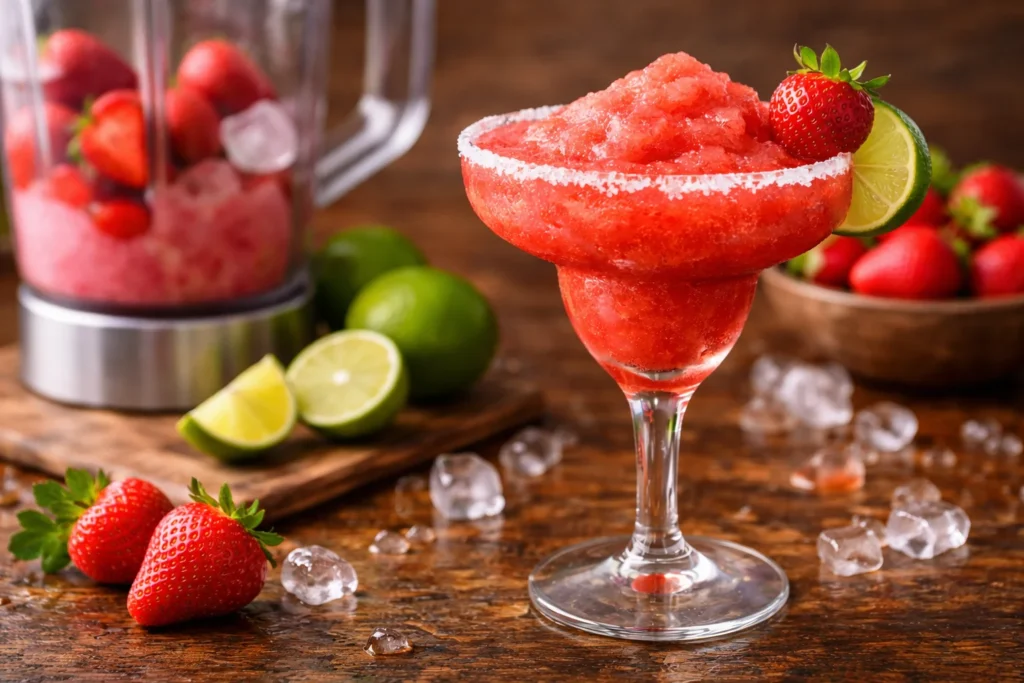
Frozen Strawberry Margarita That Still Tastes Like a Cocktail
A frozen margarita should not taste like melted smoothie mix.
That became my benchmark while testing frozen versions of this recipe.
Ingredients
- 2 ounces blanco tequila
- 1 ounce orange liqueur
- 1 ounce fresh lime juice
- 1 cup frozen strawberries
- ½ cup ice
- Optional splash of simple syrup
Instructions
Add everything to a blender and blend until smooth.
Then taste it before pouring. I always do this because frozen strawberries vary wildly in sweetness depending on brand and season.
If the drink feels dull, add a little more lime instead of immediately adding sugar. That adjustment usually fixes the balance faster.
The Strawberry Basil Version I Didn’t Expect to Like
I normally avoid herb-heavy fruit margaritas because they can drift into candle territory pretty quickly.
Basil changed my mind.
Not because it adds strong flavor. Because it changes the aroma of the drink. Fresh basil lifts the strawberry and makes the tequila feel brighter without dominating the cocktail.
I use one or two leaves max. More than that starts tasting grassy.
The trick is gently slapping the basil before shaking it. That releases aroma without shredding the herb into bitter fragments.
What Finally Made This Drink Click for Me
The breakthrough wasn’t a secret ingredient.
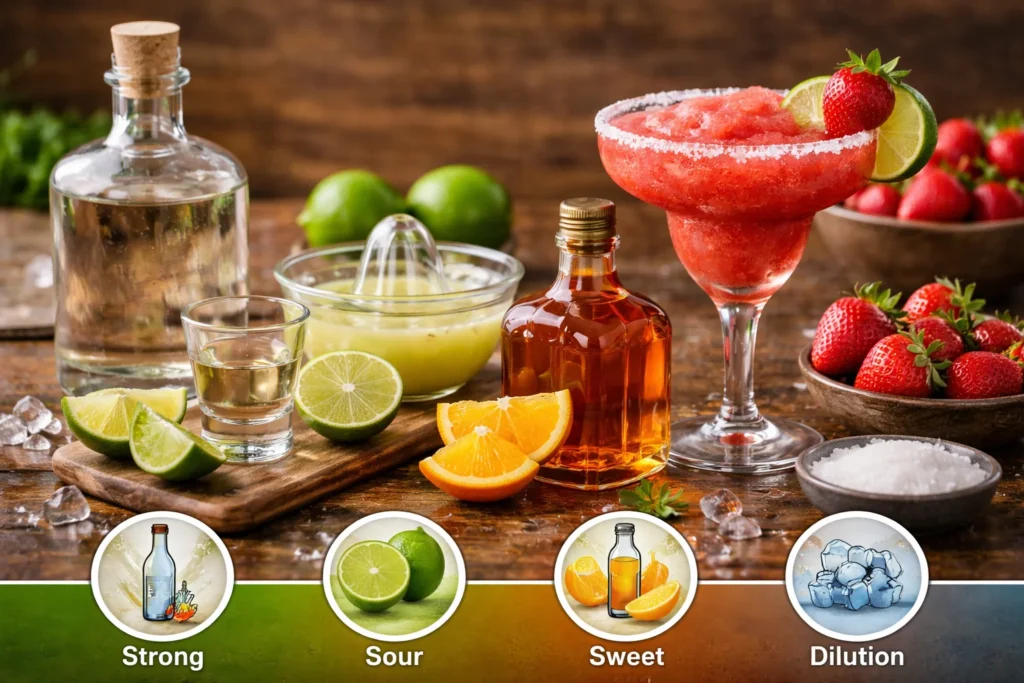
It was realizing strawberries aren’t just flavoring. They change the structure of the margarita itself, sweetness, texture, acidity, dilution, and even aroma.
Once I started treating strawberries like a core cocktail component instead of an add-on fruit, the drink became dramatically more balanced.
That’s also why this cocktail frustrates people so often. Small ingredient decisions matter more here than they do in a standard margarita.
Get the berries right, keep the lime bright, and resist the urge to oversweeten it.
Everything else falls into place naturally.
Faqs
What is the best triple sec for strawberry margaritas?
The best triple sec for strawberry margaritas is one that provides a clean orange flavor without excessive sweetness. Many bartenders prefer Cointreau, which is technically a premium triple sec-style orange liqueur known for its balanced citrus aroma and smooth finish. It blends well with tequila, lime, and strawberries without overpowering the fruit. Other commonly used options include Combier Triple Sec, which is one of the original triple sec producers, and DeKuyper Triple Sec, a widely available budget-friendly choice. For home bartenders, the key is choosing a triple sec that delivers natural orange flavor so it complements the tequila and fresh fruit rather than tasting artificial or overly sugary.
Is triple sec necessary for margaritas?
Triple sec is not strictly required, but it plays an important role in the traditional margarita structure. Classic margaritas rely on three main elements: tequila, citrus, and a sweet orange liqueur. Triple sec provides both sweetness and a bright orange aroma that connects the tequila with the lime juice. Without it, the drink can taste overly sharp or unbalanced. That said, some bartenders replace it with other orange liqueurs such as Cointreau or Grand Marnier, which offer slightly different flavor profiles. As long as the drink maintains a proper balance of sweet, sour, and strong elements, a margarita can still work without traditional triple sec.
What can replace triple sec in a margarita?
Several ingredients can replace triple sec while keeping the margarita balanced. One of the most common substitutes is Grand Marnier, which adds a richer, slightly deeper orange flavor because it is blended with cognac. Another option is Cointreau, often considered a premium alternative that delivers a cleaner citrus profile. Some bartenders also use simple syrup combined with a small amount of fresh orange juice to mimic the sweet citrus effect of triple sec. When making substitutions, the goal is to maintain the classic margarita balance between tequila, citrus acidity, and gentle sweetness.
What exactly is triple sec?
Triple sec is a clear orange-flavored liqueur made from dried orange peels and neutral alcohol. It originated in France during the 19th century and became widely used in cocktails because of its bright citrus aroma and moderate sweetness. One of the earliest and most influential producers is Combier Triple Sec, which helped establish the style still used in many cocktail recipes today. Triple sec is commonly used in classic drinks like margaritas, cosmopolitans, and sidecars because it adds both sweetness and citrus complexity. While many brands produce triple sec today, the quality and sweetness levels can vary significantly.
Is it better to use lime or lemon in a margarita?
Lime juice is traditionally used in margaritas and is widely considered the better choice. Fresh lime provides a sharper acidity and distinctive citrus flavor that pairs naturally with tequila and orange liqueur. Lemon juice, while still acidic, produces a softer and slightly sweeter citrus profile that changes the drink’s character. Most classic margarita recipes therefore rely on fresh lime juice rather than lemon. Using fresh juice is also important because bottled citrus juice often loses the bright aroma and natural oils that help give margaritas their crisp flavor.
References
Classic Margarita Ratio (2:1:1 Structure)
The “Golden Ratio” Used in Many Classic Cocktails
What Blue Curaçao Is (Why Blue Margaritas Exist)

Muhammad Hussain is the creator of MargaritaLab.com, where he tests and analyzes margarita recipes, ingredients, and techniques to help readers make better drinks at home. Over time, he has experimented with different tequila types, lime juice variations, and store-bought mixes to understand what actually makes a balanced margarita.
His approach combines hands-on testing with detailed research, focusing on real-world results rather than theory. Whether comparing fresh vs bottled lime juice or reviewing popular margarita mixes, his goal is to simplify the process and share what truly works.
Pingback: Is Triple Sec Strong? What Most People Get Wrong Before Mixing
Pingback: Jalapeno Margarita Recipe: How to Make the Perfect Spicy Margarita
Pingback: Cointreau vs Orange Liqueur: Discover the Best Choice for Your Margarita
Pingback: Best Watermelon Margarita Recipe: Why This Drink Is Harder to Get Right Than It Looks
Pingback: Best Margarita Glasses: What I Found After Testing Classic, Rocks, and Highball Side by Side
Pingback: Margarita Garnishes: What They Actually Do and How to Use Them Well
Pingback: Skinny Margarita Recipe: One Swap Cuts About 60 Calories (Here's the Math)
Pingback: How to Make a Margarita at Home: 5 Tricks Real Bartenders Actually Use
Pingback: Best Margarita Recipe: I Compared 6 Famous Versions Against My Own 2:1:1
Pingback: Best Salt for a Margarita Rim: Kosher vs. Sea vs. Tajín, Actually Compared