|
Getting your Trinity Audio player ready... |
For years, if you ordered a tequila cocktail, it was a margarita. That’s shifting. The Paloma, tequila, grapefruit, lime, a splash of something bubbly, has been showing up on more menus and more home bars, and it’s easy to see why: it’s lighter, it takes five minutes, and it doesn’t ask nearly as much of your ingredients as a margarita does.
Most recipes tell you to use fresh grapefruit juice instead of bottled grapefruit soda and leave it there. I actually tested both side by side, plus ran the numbers on how a Paloma’s alcohol content compares to a margarita’s, because “it feels lighter” and “it is lighter” aren’t automatically the same claim.
Paloma Recipe
Ingredients (1 serving):
- 2 oz blanco tequila
- 2 oz fresh grapefruit juice
- ½ oz fresh lime juice
- ¼ oz agave nectar (or simple syrup)
- 2 oz sparkling water or club soda
- Salt, for the rim
- Grapefruit wedge, for garnish
Instructions:
- Run a lime or grapefruit wedge around the rim of a rocks or highball glass, then dip in coarse salt.
- Fill the glass with ice.
- In a shaker, combine the tequila, grapefruit juice, lime juice, and agave. Fill with ice, seal, and shake until the shaker feels properly cold, about 15–20 seconds.
- Strain into your prepared glass.
- Top with sparkling water and stir gently.
- Garnish with a grapefruit wedge.
Fresh Grapefruit Juice vs. Bottled Grapefruit Soda: I Tested Both
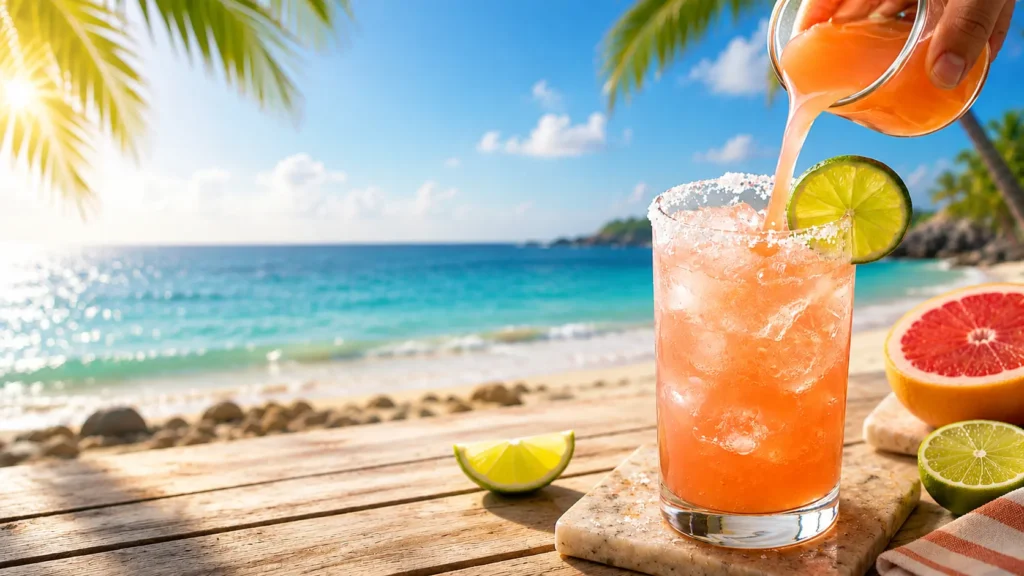
I ran into this exact question testing my grapefruit margarita recipe too, where swapping in bottled soda turns that drink into something closer to a Paloma-margarita hybrid. Here, I wanted to settle it for the Paloma itself: I made the same drink twice, once with fresh-squeezed grapefruit juice and soda water, once with bottled grapefruit soda (Jarritos) in place of both, using the same tequila, same lime, same ratio otherwise.
Fresh juice + soda water: Brighter and more bitter-forward, closer to the actual fruit. Needed the full ¼ oz of agave to round out the tartness. The carbonation from plain soda water stayed lighter and didn’t fight the citrus.
Bottled grapefruit soda: Noticeably sweeter and more one-note, grapefruit soda is closer to a soft drink than a juice, so the drink leaned candy-like rather than fresh. I could have skipped the agave entirely and it still tasted sweeter overall. The carbonation was heavier too, which flattened some of the tequila’s presence.
Verdict: fresh juice isn’t just a nicer-sounding option, it’s a genuinely different drink, sharper, more balanced, less sugary. That said, bottled soda isn’t a failure, it’s a shortcut: if you want something closer to a canned cocktail than a craft one, it’s a completely reasonable trade for the five minutes you save not juicing grapefruits.
Why a Paloma Actually Drinks Lighter Than a Margarita
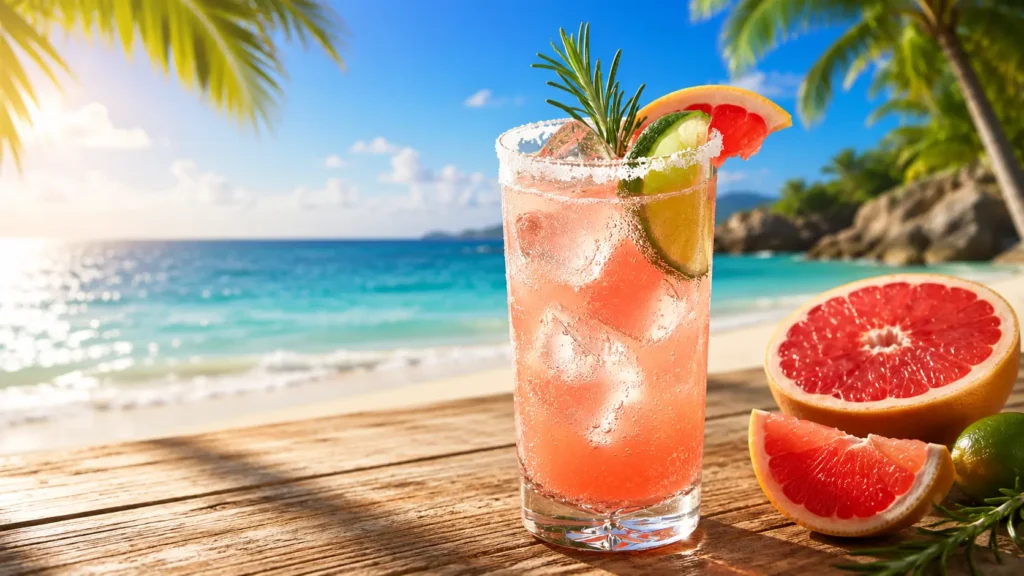
A classic margarita runs 2 oz tequila to 2 oz of citrus and liqueur combined (1 oz lime, 1 oz orange liqueur), a 1:1 ratio of spirit to everything else. This Paloma recipe runs 2 oz tequila against 4.5 oz of non-alcoholic liquid (grapefruit juice, lime juice, agave, and soda water), closer to a 1:2 ratio. That’s before the extra dilution from the soda water topping the drink rather than being shaken with ice like the rest.
The tequila pour is identical between the two drinks. What changes is everything around it: a Paloma simply has more non-alcoholic volume diluting the same amount of alcohol, which is the actual, measurable reason it drinks lighter rather than just feeling that way. If you want the deeper math on where a margarita’s alcohol comes from specifically, that’s covered in are margaritas strong?, this is the same logic applied to a different ratio.
Why It’s Suddenly Everywhere
Tequila sales have been climbing for years, and the Paloma is riding that wave as the cocktail with the lowest barrier to entry: three or four ingredients, no shaker technique to master, and a flavor profile (bitter, citrusy, not too sweet) that fits the broader shift toward lighter, less-sugary drinks. It’s Mexico’s actual best-selling tequila cocktail, more popular there than the margarita, American bars and home bartenders are just catching up to that.
Adjusting to Taste
- Too tart? Add another ¼ teaspoon of agave rather than more soda water, so you’re not further diluting the drink to fix a flavor problem.
- Too sweet? Cut the agave in half, or skip it if your grapefruit is naturally sweet enough.
- Want it stronger? Reduce the soda water slightly rather than adding more tequila, this keeps the citrus balance intact instead of just making the drink boozier.
Variations Worth Trying
Mezcal Paloma: Swap the tequila for mezcal. The smoke plays well against grapefruit’s bitterness, though you may want a touch more agave to balance it.
Spicy Paloma: Muddle a few jalapeño slices into the shaker, or rim the glass with Tajín instead of plain salt for a tart, spicy edge.
Batched for a group: Multiply the tequila, grapefruit juice, lime juice, and agave by however many servings you need, and mix ahead of time, but add the soda water fresh to each glass at serving time so it doesn’t go flat.
References

Muhammad Hussain is the creator of MargaritaLab.com, where he tests and analyzes margarita recipes, ingredients, and techniques to help readers make better drinks at home. Over time, he has experimented with different tequila types, lime juice variations, and store-bought mixes to understand what actually makes a balanced margarita.
His approach combines hands-on testing with detailed research, focusing on real-world results rather than theory. Whether comparing fresh vs bottled lime juice or reviewing popular margarita mixes, his goal is to simplify the process and share what truly works.
Pingback: Best Tequila for a Paloma: It's Not the Same Answer as Margaritas
Pingback: Paloma vs. Margarita: Which One Should You Actually Order?
Pingback: Low-Calorie Tequila Cocktails Beyond the Skinny Margarita