|
Getting your Trinity Audio player ready... |
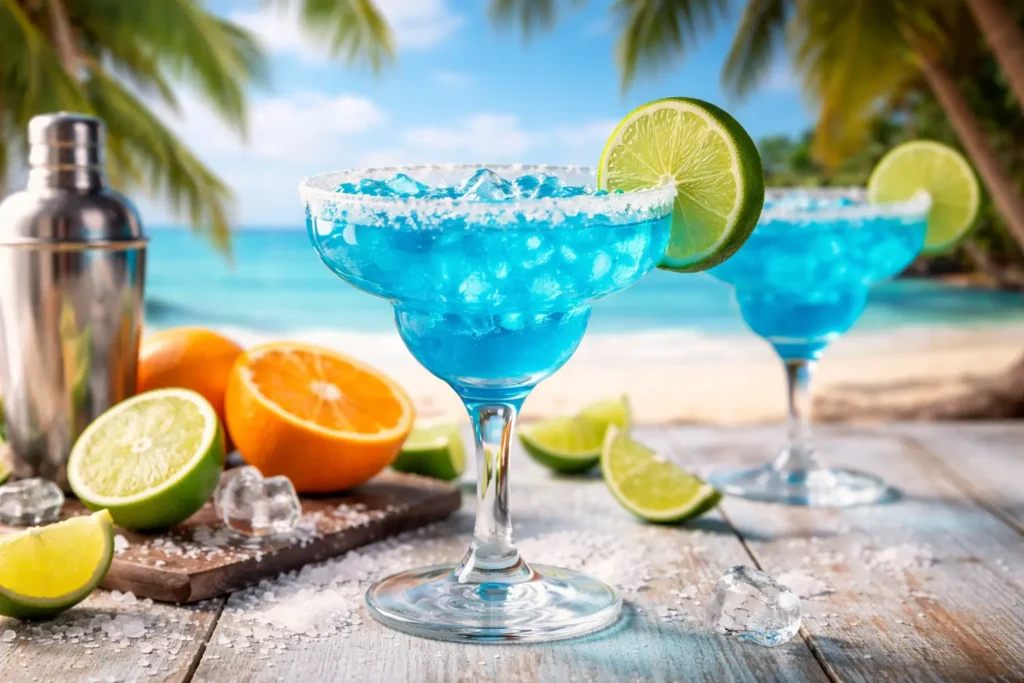
If you’ve ever seen a bright ocean-colored margarita served in a salt-rimmed glass, you’ve probably wondered what makes it glow that electric blue. In this complete blue margarita recipe guide, I’ll walk you through exactly what creates that color, how to balance the flavors properly, and how to avoid the common mistakes that ruin an otherwise beautiful drink.
As someone who follows classic sour cocktail structure and professional bartending standards, I approach every margarita, including the blue version, with balance first and color second. A great drink must taste as good as it looks.
Let’s break it down properly.
What Actually Makes it Blue?
The signature color originates from Blue Curaçao, a vibrant blue liqueur flavored with the dried peels of the Laraha citrus fruit, a bitter orange variety native to Curaçao.
Despite its striking color, Blue Curaçao tastes very similar to triple sec, with a sweet, citrusy, and lightly bitter profile. That means the blue margarita cocktail recipe still follows the same flavor structure as a classic margarita. The color changes. The structure does not.
Understanding the Foundation
Before mixing any blue margarita drink recipe, you need to understand balance. Margaritas are built on the classic sour formula:
2 parts spirit : 1 part citrus : 1 part sweetener
In practical terms:
- 2 oz tequila (strong)
- 1 oz fresh lime juice (sour)
- 1 oz orange liqueur (sweet + citrus complexity)
The Elements of Balance
- Strong: Tequila provides body, warmth, and backbone.
- Sour: Fresh lime juice brings brightness and acidity.
- Sweet: Blue Curaçao balances the lime.
- Dilution: Ice softens alcohol heat and integrates flavors.
If you increase Blue Curaçao, the drink becomes sweeter and softer.
If you increase lime, it becomes sharper and more acidic.
If you underdilute, it tastes harsh.
If you over-dilute, it becomes watery and flat.
Professional bartending relies on this equilibrium. The color is cosmetic, balance is structural.
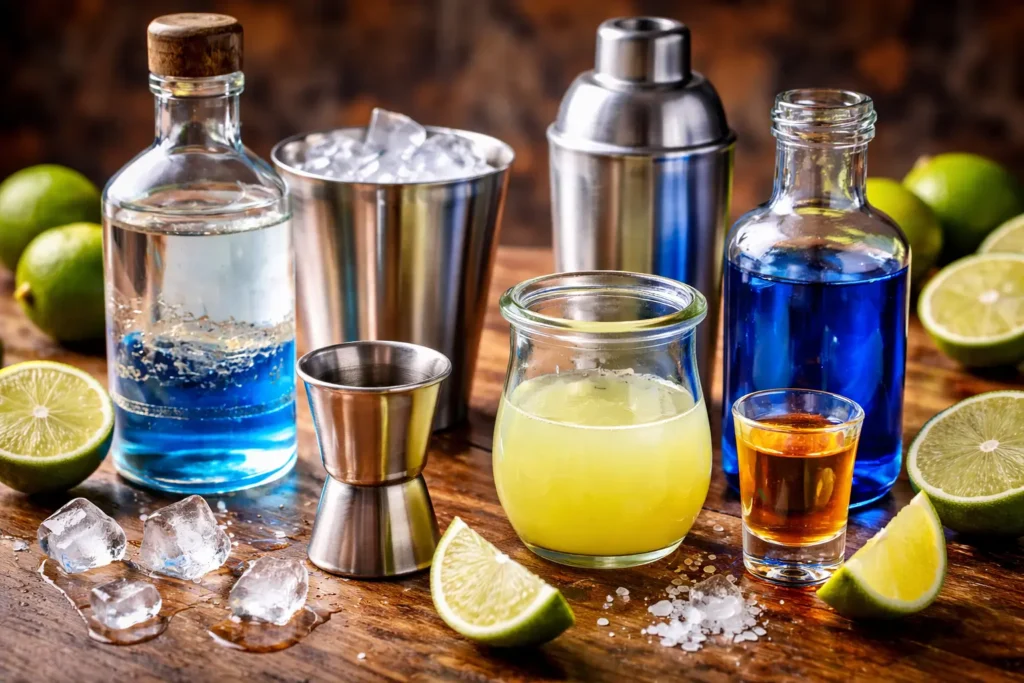
The Ingredient: Choose it Carefully
Tequila Types
For a proper blue margarita recipe, I recommend:
- Blanco tequila: Clean, bright, peppery. Best for vibrant citrus cocktails.
- Reposado tequila: Slight oak and vanilla notes, smoother finish.
Blanco keeps the drink crisp and lets the blue color shine clearly.
Orange Liqueur Options
In a standard margarita, you might use triple sec. In a blue curacao margarita recipe, Blue Curaçao replaces triple sec.
High-quality versions taste cleaner and less syrupy. Avoid artificially sweet, low-quality bottles that overpower lime acidity.
Fresh Lime Juice vs Bottled
Always choose fresh lime juice.
Bottled lime juice often tastes muted or bitter due to preservatives. Fresh juice gives brightness and proper acidity, essential for a well-balanced blue margarita cocktail recipe.
Blue Margarita Recipe: Step-by-Step Procedure
Here is my go-to structure.
Ingredients
- 2 oz blanco tequila
- 1 oz fresh lime juice
- 1 oz Blue Curaçao
- Ice
- Lime wheel (for garnish)
- Coarse salt (optional rim)
Instructions
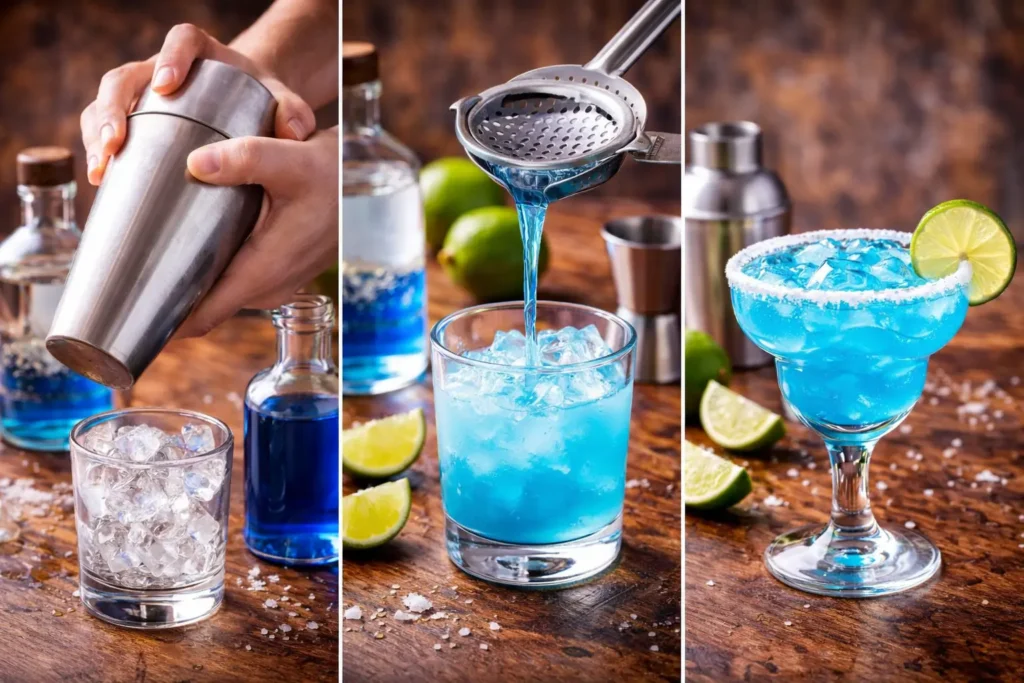
- Fill a shaker with fresh ice.
- Add tequila, lime juice, and Blue Curaçao.
- Shake firmly for 12–15 seconds.
- Strain into a rocks glass over fresh ice.
- Garnish with a lime wheel.
That’s it. Clean, balanced, vibrant.
Frozen vs On-the-Rocks:
On-the-Rocks
- Brighter citrus expression
- Clearer tequila presence
- Controlled dilution through shaking
This is my preferred method for clarity and structure.
Frozen Version
To make it frozen:
- Add ingredients to a blender
- Add 1 to 1½ cups ice
- Blend until smooth
Frozen margaritas feel softer and sweeter because blending incorporates more dilution and aeration.
Control tip: If it tastes flat, you likely over-blended. Add a splash of fresh lime and pulse briefly.
The Common Mistakes to Avoid
Even experienced home bartenders slip up. Here’s what ruins a blue margarita recipe:
- Using bottled lime juice
- Over-pouring Blue Curaçao (makes it cloying)
- Skipping proper shaking
- Using crushed ice in the shaker (over-dilutes quickly)
- Salting the entire rim heavily
The biggest mistake? Ignoring balance and focusing only on color.
Troubleshooting Guide
Too Sour?
Add:
- ¼ oz Blue Curaçao
- Or ¼ oz simple syrup
Too Sweet?
Add:
- ¼ oz fresh lime juice
- Or a splash of tequila to rebalance
Too Strong?
Shake longer or add a small splash of cold water to increase dilution.
Too Watery?
You likely over-shook or used wet ice. Add:
- ½ oz tequila
- A small squeeze of fresh lime
Taste, adjust, and rebalance in small increments.
Table of Flavor Variations
| Variation | What to Add | Flavor Impact | Pro Tip |
|---|---|---|---|
| Fruit Versions | Add ½ cup fresh fruit when blending (mango, pineapple, or blueberries) | Adds natural sweetness, body, and subtle acidity depending on the fruit | Taste before adding extra sweetener, ripe mango and pineapple are naturally sweet |
| Spicy Blue Margarita | Muddle 2 thin jalapeño slices before shaking | Adds heat and complexity that contrasts the citrus sweetness | Strain thoroughly to avoid overpowering spice; remove seeds for milder heat |
| Skinny Blue Margarita | Reduce Blue Curaçao to ¾ oz and add ¼ oz fresh orange juice | Lowers sweetness while maintaining citrus depth | Keep full 1 oz lime juice to preserve brightness |
| Premium Version | Use high-quality blanco tequila and refined Blue Curaçao | Cleaner texture, smoother finish, more balanced sweetness | Premium ingredients highlight structure, avoid over-shaking |
Red White & Blue Margarita Recipe: Layered Style
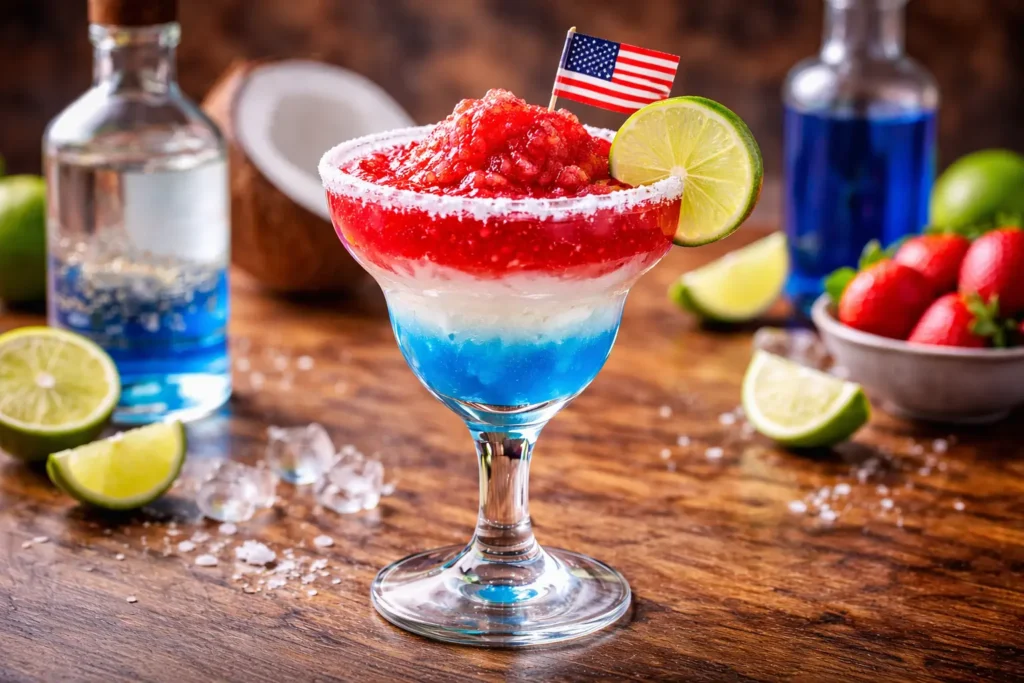
For festive occasions, I use a layered red, white, and blue margarita recipe.
Base (Blue Layer)
Standard blue margarita mixture.
White Layer
Blended coconut margarita (tequila, lime, coconut milk).
Red Layer
Strawberry purée with a splash of tequila.
Pour carefully over the back of a spoon to layer by density. Chill each layer separately for the best separation.
Presentation matters here, but so does balance in each layer.
Serving & Presentation Tips
Glassware
- Margarita glass for classic style
- Rocks glass for modern presentation
Chill your glass in the freezer first.
Salting the Rim Properly
- Rub fresh lime around only the outer rim.
- Dip lightly into coarse salt.
- Tap off excess.
Salt should enhance acidity, not dominate the sip.
Garnishes
- Lime wheel
- Orange twist
- Dehydrated citrus slice
Keep it simple. The blue color already makes a statement.
Party Batching Tips
For 8 servings:
- 16 oz tequila
- 8 oz fresh lime juice
- 8 oz Blue Curaçao
Stir in a large pitcher. Refrigerate for 1–2 hours.
Add ice only when serving to prevent over-dilution.
If batching for events, always taste before serving. Lime acidity changes slightly over time.
Why the Blue Margarita Works
The beauty of a blue margarita cocktail recipe lies in its visual appeal combined with traditional structure. It remains a true sour cocktail at heart: tequila, citrus, orange liqueur, dilution.
Color enhances the experience, but structure ensures repeatability.
That’s why this blue curacao margarita recipe continues to appear on bar menus, beach resorts, and home gatherings alike.
Try It & Make It Your Own
Now that you understand balance, dilution, and structure, experiment confidently.
Try:
- A smoky reposado variation
- A frozen mango-blue twist
- A layered red, white, and blue margarita recipe for holidays
If you test this blue margarita recipe, I’d love to know how you personalized it. Did you keep it classic? Add heat? Make it frozen?
The best margaritas evolve with your taste.
How This Article Was Created
This guide follows the classic sour cocktail structure (2:1:1 ratio), widely recognized in professional bartending and hospitality training materials. The techniques described here align with established mixology standards used in bars and culinary programs worldwide.
Flavor balance guidance is based on traditional cocktail construction principles: spirit strength, citrus acidity, sweetness control, and dilution management.
No fabricated origin stories or exaggerated claims were included. The information reflects practical experience, classic cocktail methodology, and trusted beverage education standards.
A well-made blue margarita isn’t just colorful, it’s structured, balanced, and intentional. Master that foundation, and every variation becomes effortless.
My Experience Making the Blue Margarita Recipe
The first time I made a blue margarita recipe, I’ll admit, I focused too much on the color and not enough on balance. I added extra Blue Curaçao, thinking it would enhance both the hue and the flavor. Instead, the drink became overly sweet and slightly artificial.
That moment reinforced something I already knew from classic cocktail training: structure always comes first.
When I corrected the ratio back to the traditional 2:1:1 sour format: 2 oz tequila, 1 oz fresh lime juice, 1 oz Blue Curaçao, everything snapped into place. The citrus brightened. The tequila became more defined. The sweetness was supported rather than dominated.
Since then, I treat every blue margarita cocktail recipe like a classic margarita that simply wears a different color.
Over time, I’ve also noticed:
- Blanco tequila keeps the drink cleaner and more vibrant.
- Fresh lime juice dramatically improves texture and brightness.
- Proper shaking (a full 12–15 seconds) makes the difference between harsh and harmonious.
The blue margarita drink recipe may look playful, but when built correctly, it tastes structured and professional.
Tell Your Story
One of the reasons I love teaching the blue margarita recipe is that it invites creativity.
Maybe you discovered it on a beach vacation.
Maybe you first saw a red, white, and blue margarita recipe at a summer party.
Maybe you’re experimenting at home and looking for your signature variation.
Cocktails are personal. The way you balance sweetness and acidity reflects your palate. Some people prefer sharper lime. Others lean slightly sweeter. There’s no single “correct” version, only a balanced one.
I encourage you to:
- Try it on-the-rocks first to understand the structure.
- Then experiment with frozen texture.
- Adjust lime or sweetness in small ¼ oz increments.
- Compare how dilution changes the experience.
If you create a variation, spicy, fruity, layered, or premium, take note of your ratios. Write them down. That’s how home bartenders evolve into confident mixologists.
The best blue curacao margarita recipe is the one that fits your taste while respecting classic balance.
Final Thoughts
A great blue margarita recipe isn’t great because it’s blue. It’s great because it follows timeless cocktail principles.
At its core, this drink remains a structured sour:
- Strong (tequila)
- Sour (fresh lime)
- Sweet (orange liqueur)
- Diluted properly (ice control)
When those four elements align, the drink feels vibrant, refreshing, and intentional.
The color simply makes it memorable.
Whether you’re making a single blue margarita cocktail recipe for yourself or batching a red, white, and blue margarita recipe for a celebration, focus on balance first. Use quality ingredients. Shake with confidence. Taste and adjust thoughtfully.
Master the foundation, and every variation becomes easy.
That’s the real secret behind a blue margarita drink recipe that looks stunning, and tastes even better.
Faqs
What’s in a Blue Sky Margarita?
A Blue Sky Margarita is a variation of the classic margarita made with tequila, lime juice, and an orange liqueur, but it includes blue curaçao to give it its bright blue color. The typical ingredients are tequila (usually blanco), fresh lime juice, blue curaçao, and sometimes simple syrup or agave syrup for added sweetness. Blue curaçao is an orange-flavored liqueur made from the dried peels of the laraha citrus fruit and is what creates the vibrant blue shade. The drink is usually shaken with ice and served in a salt-rimmed glass, either on the rocks or blended.
Why Is My Margarita Blue?
Your margarita is blue because it contains blue curaçao. Blue curaçao is a colored version of curaçao, an orange-flavored liqueur. The blue color does not change the flavor significantly; it is mainly for visual appeal. The liqueur is flavored with citrus peels and sweeteners, and the bright blue color comes from added food coloring. If your margarita turned blue unexpectedly, check whether a blue liqueur was added instead of a clear orange liqueur like triple sec.
What Is the Best Blue Tequila for Margaritas?
There is no naturally “blue” tequila; the blue color in margaritas comes from blue curaçao, not the tequila itself. For the best results, use a high-quality blanco tequila made from 100% blue Weber agave. Blanco (also called silver) tequila has a clean, crisp flavor that pairs well with citrus in margaritas.
Some well-known options made from 100% blue agave include Patrón, Don Julio, and Espolòn. These brands are widely used in premium margaritas because they offer smooth flavor without overpowering the lime and orange notes. Choosing 100% agave tequila is more important than choosing a “blue” label.
What Do Mexican Restaurants Use for Margaritas?
Most Mexican restaurants use a combination of tequila, lime juice, and orange liqueur (such as triple sec or curaçao). Many restaurants also use margarita mix for speed and consistency, especially in high-volume settings. Higher-quality or authentic restaurants typically use fresh lime juice and 100% agave tequila rather than pre-made mixes.
In traditional Mexican preparation, the margarita is simple: tequila, freshly squeezed lime juice, and orange liqueur, shaken with ice and served with a salted rim. Some establishments also add agave syrup to balance acidity. Frozen margaritas are made by blending these ingredients with ice.
What Can I Use Instead of Agave Syrup in Margaritas?
If you don’t have agave syrup, you can substitute simple syrup, honey syrup (honey diluted with warm water), or even maple syrup in small amounts. Simple syrup is the most neutral substitute and keeps the flavor closest to a classic margarita. Honey syrup adds slight floral notes, while maple syrup creates a deeper sweetness.
If you prefer a lower-sugar option, you can skip the sweetener entirely if your orange liqueur is already sweet enough. Taste and adjust gradually, since sweetness levels vary depending on the tequila and orange liqueur you use.
References
Official standards and classifications (Blanco, Reposado, etc.).
Margarita Recipe & Sour Formula

MargaritaLab.com is created and managed by Muhammad Hussain, an SEO specialist with several years of experience in research-driven content creation. With a focus on the Margarita Recipe niche, he combines data-backed insights, careful testing, and clear explanations to make margarita recipes easy to understand and enjoyable for readers at every level.