|
Getting your Trinity Audio player ready... |
Most coconut margarita recipes get one thing wrong. They chase tropical flavor so aggressively that the drink stops tasting like a margarita.
I went through a long stretch where every version I made was technically good for the first sip. Creamy. Tropical. Sweet. Then by sip four the drink felt exhausting. Heavy coconut fat coated my mouth, the tequila disappeared, and the lime tasted strangely muted.
That was the moment I understood that coconut does not just add flavor. It changes texture, sweetness perception, alcohol perception, and how acidity behaves. Once I understood that, the drink finally started working.
The key discovery was simple: restraint matters more here than in almost any other margarita variation.
The Coconut Problem That Ruins Most Homemade Versions
Most recipes push coconut too aggressively.
They add cream of coconut, coconut milk, toasted coconut syrup, and sometimes even vanilla extract. The result tastes closer to melted coconut ice cream than a proper tequila cocktail. Coconut fat dulls brightness fast, every extra creamy element reduces the sharp edges that make a margarita refreshing in the first place.
For weeks I kept trying to fix the drink by adding more lime. That only made things worse because the acidity started fighting the creaminess instead of balancing it. The better fix was reducing coconut intensity altogether.
Once I cut back the coconut component slightly, the tequila suddenly reappeared and the drink became dramatically more refreshing. That sounds obvious now. It did not while I was testing.
Coconut Cream vs Coconut Milk vs Cream of Coconut: This Choice Defines Your Drink
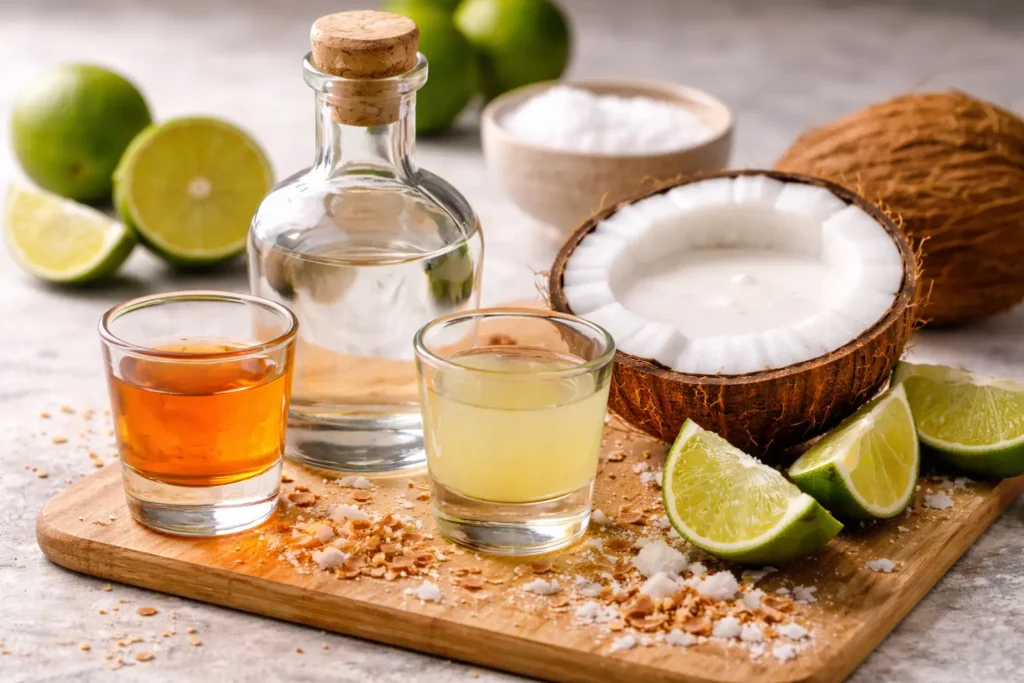
These three products are not interchangeable and most recipes do not explain the difference clearly enough.
Coconut milk gives the lightest texture. It creates a crisp, almost spritzy drink, but the coconut flavor disappears quickly under tequila. Good for lighter frozen drinks or lower-calorie versions. The significant risk with coconut milk is curdling under high citrus acidity, a documented problem that I will come back to shortly.
Coconut cream is my preferred option for most coconut margaritas. It gives body without automatically making the drink sugary, and it creates the smoothest texture when shaken properly. The downside is separation if not emulsified aggressively enough.
Cream of coconut is sweetened, think Coco López or Coco Real. It creates the most obvious tropical flavor immediately, but it overwhelms tequila faster than most people expect. The amount matters significantly: one ounce gives a lightly tropical drink, three ounces produces something closer to a piña colada in sweetness. I still use it occasionally for frozen versions because freezing suppresses sweetness slightly. On the rocks, though, it can become cloying fast.
After testing all three repeatedly, coconut cream consistently gave me the version I actually wanted to finish. For parties where I want crowd appeal, cream of coconut in a restrained quantity works better. For a serious on-the-rocks cocktail, coconut cream wins every time.
Why Coconut Separates in the Glass and How to Stop It
Coconut separation is mostly a fat emulsion problem.
When coconut fat gets cold it tightens and splits if the drink is not emulsified aggressively enough. That oily layer floating on top of bad coconut margaritas is almost always poor shaking technique or excessive dilution.
Three things made the biggest difference in my testing: shaking harder than you think you should, coconut fat needs real aeration to stay suspended; avoiding crushed ice in the shaker which over-dilutes too quickly and weakens the emulsion; and using fresh lime juice only because bottled juice has a flat acidity that makes coconut taste oddly heavy and dull.
Texture is the entire battle with this drink. Once the texture goes wrong the flavor usually follows immediately.
The Curdling Threshold: How Much Lime Is Too Much
This surprised me more than anything else during testing and it is the problem nobody explains until you experience it firsthand.
Coconut can curdle under high acidity, especially with coconut milk and certain canned coconut products containing stabilizers or gums. The first time it happened I thought I had used spoiled coconut. I had not, I had simply pushed the lime too far.
This is not a rare edge case; it happened to me repeatedly during early testing before I understood the threshold. The first time coconut milk curdled in my shaker, I thought the product had gone bad. It hadn’t. Most recipe sites never test the citrus limits of different coconut products, which is why this problem surprises people every time.
The threshold I found: once you exceed roughly one ounce of lime juice per serving with coconut milk specifically, separation becomes much more likely. Coconut cream handles slightly more acidity before breaking. Cream of coconut, being sweetened, is the most stable of the three under citrus.
My solution was to stop thinking like a standard margarita builder. More lime does not equal more freshness with coconut, it can destabilize the drink entirely. A small pinch of salt sharpens the drink without risking curdling and does more to restore brightness than extra citrus does.
What to Do If It Curdles in the Glass
If the drink is already poured and starts separating, it is difficult to recover fully but not hopeless.
Pour it back into the shaker immediately if you catch it early, add a small additional piece of ice, and shake hard again for ten seconds. This can re-emulsify the fat if the drink has not fully broken. Do not add more lime at this stage.
If the drink has already turned grainy and the fat has fully separated, it cannot be rescued by re-shaking. The better prevention is using coconut cream rather than coconut milk, keeping lime juice under one ounce per serving, and ensuring the shaker is properly chilled before the coconut goes in.
The Ingredient Decisions That Matter Here
Tequila: Blanco or Reposado With a Creamy Ingredient
I expected reposado to win here. Coconut plus vanilla-like oak notes seemed like an obvious pairing. In practice blanco tequila performed better almost every time. Reposado made the drink feel heavier and blurrier, the oak notes merged into the richness instead of contrasting it. Blanco creates tension. That contrast is what keeps the cocktail refreshing rather than sleepy. For a frozen coconut margarita I sometimes use reposado because freezing dulls flavor separation anyway. On the rocks, blanco consistently tastes cleaner.
How Coconut Fat Changes How You Perceive the Alcohol
This part is genuinely important and no competitor article addresses it.
Coconut fat softens alcohol burn dramatically. The tequila can seem weaker than it actually is because the texture masks sharpness. That sounds pleasant until you accidentally over-pour trying to bring the tequila back. A reader on one popular recipe site found the drink unexpectedly strong despite it tasting mild going down, this is exactly why. The fix is reducing sweetness and coconut density rather than increasing tequila. Once the texture becomes lighter the tequila becomes more noticeable naturally.
Orange Liqueur: Dry vs Sweet When the Drink Is Already Rich
A sweet orange liqueur combined with cream of coconut can become overwhelming quickly, richness stacking on richness. I prefer Cointreau because it adds orange aroma without excessive sweetness. With sweeter orange liqueurs, I found myself chasing balance with extra lime, which then risked curdling. Everything connects in this cocktail in a way it does not in most other margaritas.
My Go-To Coconut Margarita On the Rocks
This is the version I make most often because it still drinks like a margarita first.
Ingredients
- 2 oz blanco tequila Crisp and peppery, the contrast with coconut is the point.
- 1 oz fresh lime juice Fresh matters more here than in almost any other margarita. Bottled juice creates flat acidity that makes the coconut feel heavier.
- ¾ oz Cointreau Dry orange character keeps the drink sharp where coconut wants to push it soft.
- 1 oz coconut cream Unsweetened or lightly sweetened. Not cream of coconut, not coconut milk.
- ¼ oz agave syrup, only if needed after tasting Sometimes unnecessary, especially with naturally sweeter coconut cream.
- Small pinch of kosher salt Not enough to taste salty. Just enough to sharpen edges that coconut fat softens.
- Ice
Instructions
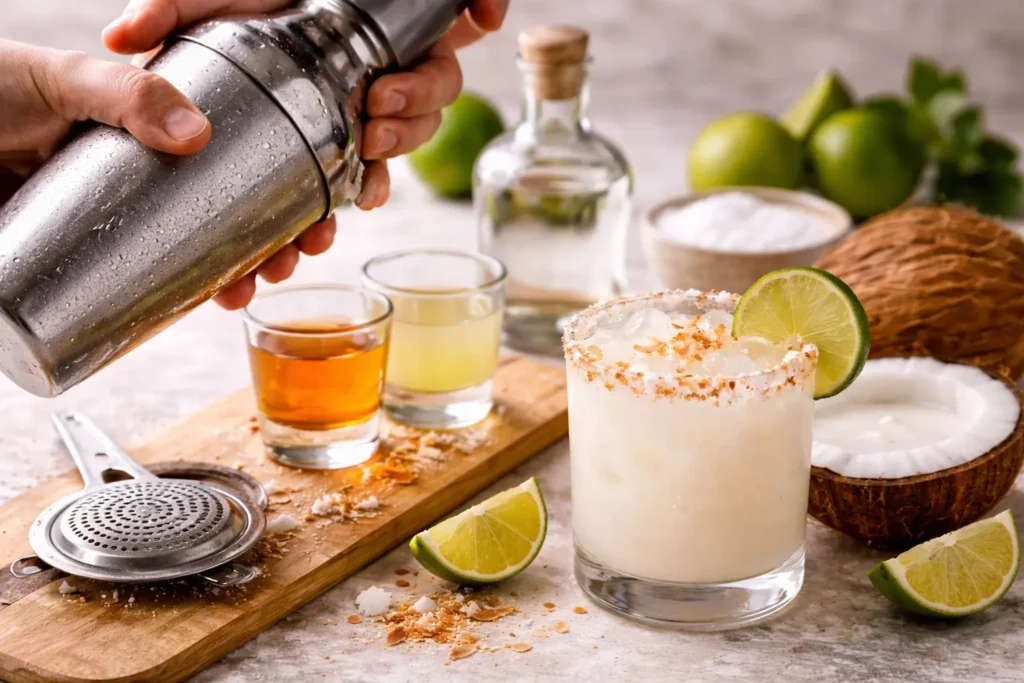
Fill the shaker with ice, not crushed ice, regular cubed ice.
Add tequila, lime juice, Cointreau, coconut cream, agave if using, and salt. The order here matters slightly: add the coconut cream after the liquid spirits and citrus are already in the shaker. This helps it disperse more evenly before the ice starts working.
Shake aggressively for 15 seconds. Really commit. Coconut fat needs real force to emulsify properly. A lazy shake leaves oily streaks and a drink that separates within minutes.
Strain over fresh ice in a rocks glass. Double strain if the coconut cream is especially thick, it makes a noticeable difference in smoothness.
Toasted Coconut Rim: How to Actually Do It
This is one of the most visually striking garnishes in any margarita recipe and the technique is simple once you know the steps.
Toast a small handful of shredded coconut in a dry skillet over medium heat. Shake the pan every thirty seconds. After about three to four minutes, some flakes will start turning golden, and the whole pan will smell fragrant. Pull it off the heat immediately; coconut burns quickly once it starts. Pour onto a plate and let it cool for two minutes.
Spread a thin layer of honey or agave on a second plate. Dip the rim of the glass into the honey first, then immediately roll it into the toasted coconut. The honey is the adhesive, without it the coconut will not stick properly.
For the on-the-rocks version I use a toasted coconut and coarse salt combination rather than pure toasted coconut alone. The salt adds structure and prevents the rim from tasting like dessert. For the frozen version, a half toasted coconut rim works beautifully because the sweet rim contrasts the slightly diluted frozen drink.
The Blending Order That Keeps the Texture Smooth for Frozen Versions
For frozen versions, ingredient order matters more than people expect.
If everything is added to the blender randomly, thicker coconut products sometimes clump unevenly around the ice. Adding liquids first, tequila, lime, orange liqueur, then the coconut product, then ice last, blends faster and creates a smoother texture with fewer unintegrated pockets.
Stop blending as soon as the texture turns uniform. Overblending both aerates the mixture excessively and pushes the coconut into a slightly gummy consistency.
Frozen Coconut Margarita: Why the Ratio Changes Completely
Cold suppresses sweetness and aroma. My first instinct was to add more coconut to compensate. That was wrong.
The colder the drink became, the more the fat lingered while the lime disappeared. The drink became strangely dull and sticky rather than refreshing.
The better frozen ratio: slightly less coconut, slightly more lime, and more salt than the rocks version.
- 2 oz blanco tequila
- 1 oz fresh lime juice, slightly more than the rocks version
- ¾ oz Cointreau
- ¾ oz coconut cream, less than the rocks version, intentionally
- 1 cup ice
- Pinch of salt, more prominent than in the rocks version
The salt especially helps wake frozen coconut drinks back up in a way that no amount of additional coconut or tequila can replicate.
Two Variations That Work With Coconut’s Creaminess
The key is choosing ingredients that either brighten or cut through the fat rather than adding more richness to what is already a rich drink.
Pineapple Coconut: Managing Two Thick Ingredients at Once
Pineapple and coconut sound easy together. They are not.
Pineapple juice adds body and sweetness on top of the existing coconut richness. My early versions became dense very quickly. The fix was to reduce the coconut cream slightly rather than the pineapple; pineapple’s natural acidity is doing useful work here, and you want to keep it. Fresh pineapple juice is significantly better than canned in this variation because its acidity keeps the drink lively, whereas canned produces a flatter result.
Spicy Coconut: How Heat Cuts Through Fat in a Way Citrus Cannot
Capsaicin cuts through coconut richness differently from lime. Heat creates contrast without increasing acidity and therefore without risking curdling.
I infuse tequila with jalapeño slices for 15 to 20 minutes before mixing. Shorter than that and the heat is too subtle. Longer and bitterness from the jalapeño skin starts creeping into the drink, which compounds unpleasantly with the coconut’s creaminess. The combination of creamy coconut and fresh green heat works better than it has any right to; the contrast makes both elements taste more interesting.
I Made This Drink Too Heavy for Two Months Before I Understood Why
My mistake was assuming tropical drinks should feel luxurious and dense. So I kept adding richness, more coconut, sweeter liqueurs, heavier tequila.
Every adjustment made the drink less refreshing.
Eventually I realised the best coconut margarita is not the richest one. It is the one that preserves enough contrast to stay drinkable. Coconut is texture support, not the star ingredient. Once I started thinking of it that way, the recipe became straightforward.
Batching for a Party Without It Turning Gummy
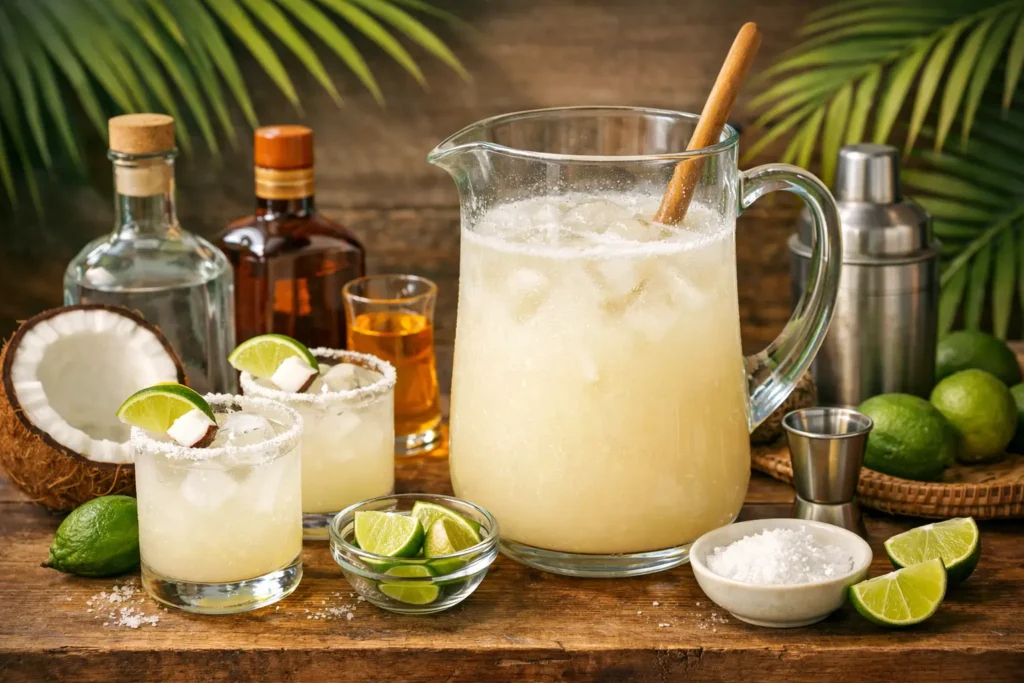
Coconut batches can get complicated fast because the fat thickens significantly when refrigerated.
A batch that looks perfectly smooth when mixed can become nearly unpourable after two hours in the fridge, which is why I add coconut cream no more than thirty minutes before serving rather than mixing it all ahead of time.
My solution: batch tequila, orange liqueur, and lime juice ahead of time. Add coconut cream no more than thirty minutes before serving. Keep the batch cold but not near freezing.
For an eight-serving pitcher:
- 2 cups tequila
- 1 cup Cointreau
- 1 cup fresh lime juice
- 3 cups coconut cream, added shortly before serving
Shake individual servings from the pitcher rather than pouring straight into glasses. The aeration from shaking each drink maintains the emulsion and prevents the drink from separating in the glass. If the batch does thicken in the fridge, a vigorous stir and thirty seconds at room temperature usually loosens it enough to shake properly.
A Note on Mocktail Versions
This works surprisingly well without alcohol because coconut carries enough flavor and visual appeal to hold the drink together.
Replace tequila with chilled sparkling water or a non-alcoholic tequila alternative. Keep the lime and Cointreau, or substitute Cointreau with a small amount of orange juice if avoiding alcohol entirely. The drink becomes lighter and more refreshing rather than feeling like something is missing, the coconut cream and citrus combination is genuinely enjoyable on its own.
A Coconut Margarita Question Worth Answering
People ask whether a coconut margarita is basically just a tequila piña colada.
Not if it is made properly.
A good Coconut Margarita Recipe should still taste like tequila and lime first. Coconut changes texture and softens the edges, but it should not erase the cocktail’s backbone. A piña colada is intentionally rich and lush; that is the point of it. A margarita relies on tension between citrus, tequila, sweetness, and texture. Once coconut dominates completely, you lose that contrast, and you are no longer drinking a margarita.
Faqs
How to make chilli coconut margarita?
To make a Chilli Coconut Margarita, start with 2 oz of tequila (preferably 100% agave blanco tequila), 1 oz of fresh lime juice, 1 oz of coconut cream or cream of coconut, and ½ oz of orange liqueur, such as Cointreau or Triple Sec. Add a few thin slices of fresh red chili or muddle a small amount gently in a shaker to release heat. Fill the shaker with ice and shake well until chilled.
Strain into a glass with a chili-salt rim over fresh ice. Garnish with a lime wheel or extra chili slices. The coconut adds creaminess and subtle sweetness, while the chili gives a spicy kick that balances the citrus and tequila. Adjust the spice level based on your preference.
What does a coconut margarita taste like?
A coconut margarita tastes smooth, slightly sweet, and tropical with a creamy texture. The coconut softens the sharpness of the lime and tequila, creating a balanced drink that is refreshing but less tangy than a classic margarita. You still get the bright citrus flavor from fresh lime juice and the crisp bite of tequila, but the coconut adds richness and a mild natural sweetness. If made with coconut cream, it will taste creamier and sweeter; if made with coconut milk, it will be lighter and less sweet. Overall, it has a tropical flavor profile similar to a beach-style cocktail, but with the familiar citrus backbone of a traditional margarita.
Can I use cream of coconut instead of coconut milk?
Yes, you can use cream of coconut instead of coconut milk, but they are not the same product. Cream of coconut is sweetened and much thicker, while coconut milk is unsweetened and thinner. If you substitute cream of coconut, reduce or skip any added sweetener like simple syrup to avoid making the drink overly sweet. If you prefer a lighter and less sweet margarita, coconut milk is the better choice. Many bartenders use cream of coconut for a richer, dessert-style coconut margarita and coconut milk for a fresher, more balanced version.
What is the coconut liqueur called?
The most well-known coconut liqueur is Malibu, which is technically a coconut-flavored rum rather than a traditional liqueur. Other coconut liqueurs include Kōloa Kaua‘i Coconut Rum and Blue Chair Bay Coconut Rum. These products add sweetness and coconut flavor to cocktails. For margaritas specifically, coconut cream or coconut milk is more commonly used than coconut rum, since margaritas are traditionally tequila-based.
Is coconut tequila good for margaritas?
Coconut-flavored tequila can work well in margaritas if you want a stronger coconut flavor without adding extra cream. It adds a subtle tropical note while keeping the base spirit tequila-forward. However, it may slightly change the traditional margarita balance because flavored tequilas can contain added flavoring and sweetness. For a more authentic margarita taste with a coconut twist, many bartenders prefer using 100% agave blanco tequila and adding natural coconut ingredients separately. This allows for better control over sweetness and texture while maintaining a balanced drink.
References
Margarita Cocktail Ratios & Industry Standards
Balancing Sweet and Sour in Margaritas

Muhammad Hussain is the creator of MargaritaLab.com, where he tests and analyzes margarita recipes, ingredients, and techniques to help readers make better drinks at home. Over time, he has experimented with different tequila types, lime juice variations, and store-bought mixes to understand what actually makes a balanced margarita.
His approach combines hands-on testing with detailed research, focusing on real-world results rather than theory. Whether comparing fresh vs bottled lime juice or reviewing popular margarita mixes, his goal is to simplify the process and share what truly works.