|
Getting your Trinity Audio player ready... |
Someone searching for this question is almost always in the middle of making a margarita and wondering if they can swap one for the other. The short answer is no; they’re not the same, and they can’t be used interchangeably without significantly altering the drink. However, a more useful answer explains exactly what each ingredient does, why the confusion occurs in the first place, and what actually changes in your glass when you use one instead of the other. That’s what this article covers.
What Simple Syrup Actually Is
Simple syrup is sugar dissolved in water. The standard ratio is one part sugar to one part water, heated until the sugar dissolves completely, then cooled. The result is a clear, sweet liquid with no flavor beyond sweetness itself.
That last point matters. Simple syrup is deliberately neutral. Bartenders use it precisely because it sweetens a drink without contributing any competing flavor; it’s a tool for adjusting the sweetness level without changing anything else about what’s in the glass. It dissolves instantly in cold liquid, which granulated sugar won’t do, and it measures accurately in a jigger, which sugar crystals don’t. These are practical advantages that make it useful behind a bar.
What simple syrup cannot do: add citrus complexity, provide alcohol structure, or contribute any aromatic quality. It sweetens and nothing more.
What Triple Sec Actually Is
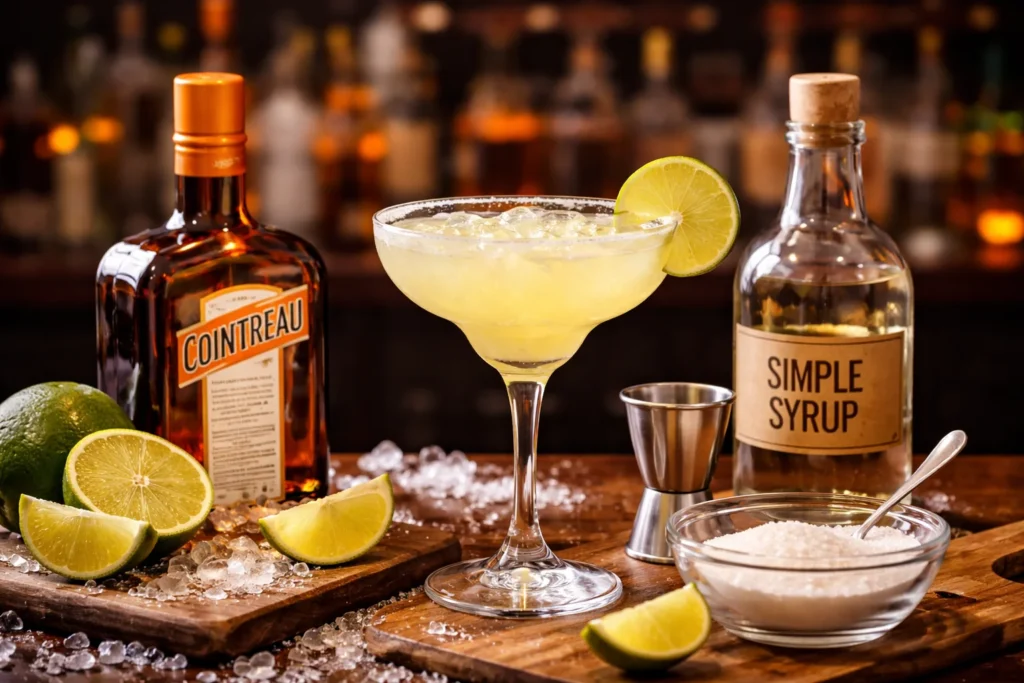
Triple sec is an orange liqueur, a distilled spirit made by macerating dried orange peels in neutral alcohol, then redistilling to concentrate the essential aromatic oils from the peel, and then blending with sugar and water to achieve the desired sweetness and ABV. The result is a spirit with orange citrus flavor, sweetness, and alcohol, typically between 15% and 40% ABV depending on the brand.
The name “triple sec” comes from the French word for “dry”, the original meaning referred to a drier style of orange liqueur compared to sweeter curaçao styles of the time. Modern commercial triple secs vary considerably: budget versions run at 15–25% ABV and are formulated quite sweet, while premium versions like Cointreau run at 40% ABV with a noticeably drier profile. Critically, triple sec does three separate jobs in a margarita simultaneously: it provides sweetness, orange citrus complexity, and an alcohol contribution to the drink’s overall structure. Simple syrup only does one of those three jobs.
Why People Confuse Them
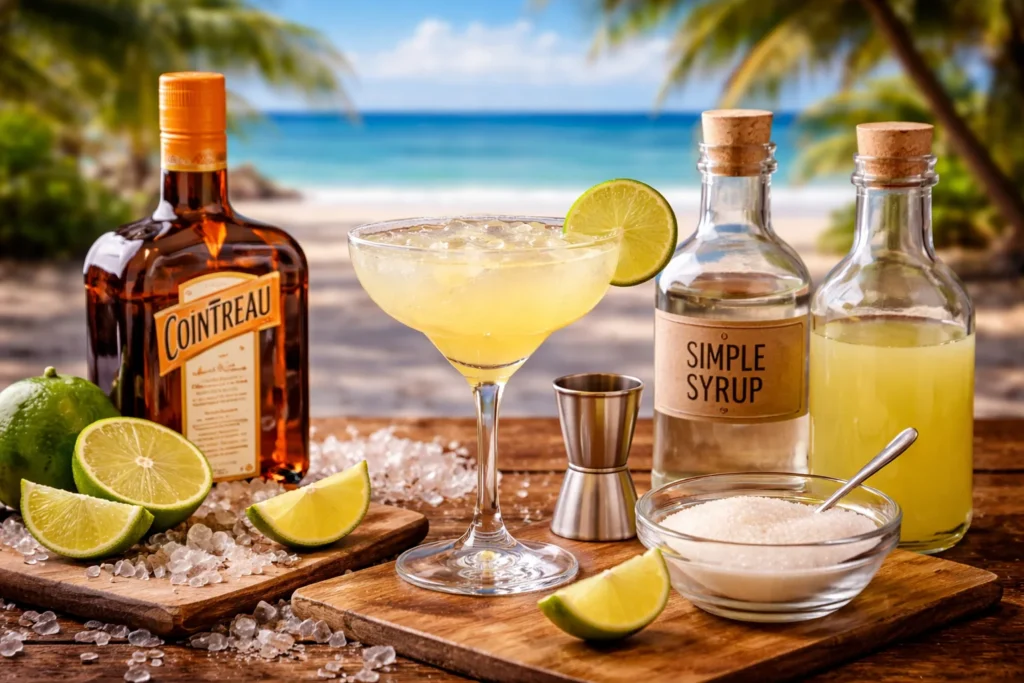
The confusion makes sense on the surface. Both are sweet, both are clear, and both appear in the sweetener slot of sour cocktail logic, the “sweet” component that balances the sour lime juice. When someone sees a margarita recipe call for triple sec and doesn’t have any, simple syrup looks like the nearest available option.
The problem is that “sweet” is the only property they share. Using simple syrup where triple sec belongs removes the orange citrus character and the alcohol contribution simultaneously. The drink loses its definition and becomes a tequila sour rather than a margarita, still a perfectly good drink, but a different one.
Patty Dennison, head bartender at Grand Army Bar in Brooklyn, makes an important related point: even within triple sec itself, the sugar content varies so much between brands that you may need to adjust how much you use depending on which bottle you bought. A budget 20% ABV triple sec is considerably sweeter than Cointreau at 40% ABV. Simple syrup has no such variation; it’s always the same. In that narrow sense, simple syrup is actually more predictable than some triple secs, just not interchangeable with them.
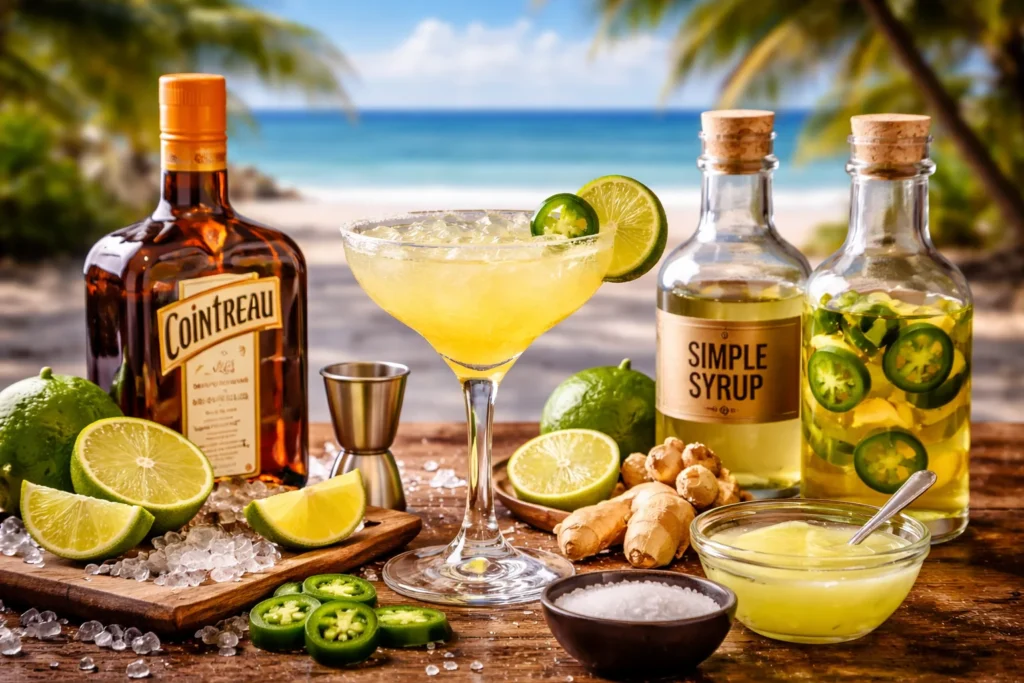
What Each One Does in Your Margarita: Side by Side
Understanding the practical difference is clearer with a direct comparison of what happens when you make the same margarita with each ingredient.
With triple sec (standard build): The drink has three distinct flavor layers, the agave-forward earthiness of tequila, the sharp brightness of fresh lime, and the orange citrus complexity of the liqueur. The ABV of the triple sec contributes to the drink’s overall alcohol level and adds weight to how the liquid feels. The sweetness integrates rather than sitting on top because the orange flavor is distributing the sweet perception across a wider flavor profile.
With simple syrup instead: The drink has two flavor layers, tequila and lime, with sweetness added. The orange citrus note is absent entirely. The drink is slightly weaker in ABV and feels lighter in the glass. What you have is a tequila sour with a salted rim, a clean, balanced drink that bartenders sometimes call a Tommy’s Margarita variation, but not a classic margarita in the traditional sense.
Neither outcome is wrong. They’re just different drinks, and knowing the difference lets you make either one deliberately rather than by accident.
The Mouthfeel Difference Nobody Mentions
Jesse Vida, operating partner at Cat Bite Club in Singapore, makes a point about triple sec that most comparisons overlook: the 40% ABV of a quality triple sec contributes physical weight to the drink, what bartenders call mouthfeel. Alcohol has viscosity. A drink made with a 40% ABV triple sec feels fuller and more substantial than the same drink made with simple syrup, even if the flavor balance is similar.
This is the subtler reason why replacing triple sec with simple syrup can make a margarita taste “thin” even when the sweet-sour ratio is technically correct. The liquid is lighter because the alcohol contribution of the triple sec is gone. Simple syrup adds sweetness; it doesn’t add weight.
This effect is most noticeable in a side-by-side comparison. When you’re only drinking one version, you might not identify it as thinness, it just feels like something is slightly off without being able to name what.
When Simple Syrup Actually Belongs in a Margarita
Simple syrup has a legitimate role in margarita making, just not as a triple sec replacement.
The correct use of simple syrup is as a fine-tuning tool after the drink is built. If a margarita tastes slightly too sharp after tasting it in the shaker, a few drops of simple syrup corrects the acidity without adding more orange flavor. This is especially useful when using a premium triple sec like Cointreau that’s drier than budget alternatives, the drier sweetness profile can sometimes need a small supplement.
It’s also the right tool when building a no-alcohol margarita from scratch, where triple sec’s ABV isn’t wanted and a different sweetener is needed. In that specific context, simple syrup plus an orange element (fresh orange juice, orange bitters, or a non-alcoholic orange spirit) rebuilds what triple sec would have provided as separate components.
But in a standard margarita, simple syrup should appear as an adjustment at the end, if at all, never as the primary orange liqueur replacement.
A Note on Agave Syrup
Agave syrup is a third option that often enters this conversation, and it occupies a middle position worth clarifying.
Like simple syrup, agave syrup adds only sweetness, no citrus complexity, no alcohol. It’s not the same as triple sec for the same reasons simple syrup isn’t. What makes agave syrup a natural pairing with tequila is flavor compatibility; both come from the agave plant, and the slight herbal quality of good agave syrup echoes the tequila in a way that simple syrup doesn’t. Tommy’s Margarita, the agave-sweetened, no-liqueur version, specifically uses agave rather than simple syrup for this reason. The drink is still not a classic margarita (the orange element is absent), but the flavor is more integrated than a simple syrup version because the sweetener reinforces the base spirit rather than just adding neutral sweetness.
Faqs
Why do bartenders use simple syrup?
Bartenders use simple syrup because it dissolves instantly in cold drinks, making it much easier to sweeten cocktails evenly. Unlike granulated sugar, which can sit at the bottom of a glass, simple syrup blends smoothly into beverages like margaritas, mojitos, and iced cocktails. It also allows bartenders to control sweetness more precisely and create consistent flavors across drinks. In addition, simple syrup can be infused with ingredients like herbs, fruit, or spices to add extra flavor without changing the drink’s texture.
What is another name for triple sec?
Another name for triple sec is orange liqueur, which is a broad category of sweet, citrus-flavored alcoholic spirits made from dried orange peels. Triple sec itself is a style of orange liqueur known for being clear, sweet, and citrus-forward. Some well-known orange liqueurs that are often used in place of triple sec include Cointreau and Curaçao-style liqueurs, although they may vary slightly in sweetness, alcohol content, and flavor intensity.
What’s another name for simple syrup?
Another name for simple syrup is sugar syrup, and in some regions it may also be called bar syrup or liquid sugar. All of these terms refer to a mixture of sugar dissolved in water, usually in a 1:1 ratio. This liquid form of sugar is widely used in cocktails, coffee drinks, and desserts because it mixes easily into both hot and cold beverages without leaving undissolved sugar behind.
Is triple sec sweet or bitter?
Triple sec is primarily sweet, not bitter. It has a noticeable citrus flavor from orange peels, but the dominant taste is sweetness balanced with bright orange notes. Some triple sec brands may have a slightly dry or mildly bitter finish due to the natural oils in orange peel, but overall it is considered a sweet liqueur. This sweetness is why triple sec is commonly used to balance sour ingredients like lime or lemon juice in cocktails such as margaritas.
Is triple sec high in sugar?
Yes, triple sec is generally high in sugar compared to many other spirits because it is a liqueur, and liqueurs are sweetened by definition. The exact sugar content varies by brand, but most triple sec products contain a significant amount of added sugar to create their sweet, citrus flavor. This is why cocktails made with triple sec can have higher carbohydrate and calorie content than drinks made with unsweetened spirits like vodka or tequila.
References
What Triple Sec Is (Definition & Role)
Classic Margarita Structure (Core Ingredients)
Margarita as a Sour Cocktail (Structure Explanation)

Muhammad Hussain is the creator of MargaritaLab.com, where he tests and analyzes margarita recipes, ingredients, and techniques to help readers make better drinks at home. Over time, he has experimented with different tequila types, lime juice variations, and store-bought mixes to understand what actually makes a balanced margarita.
His approach combines hands-on testing with detailed research, focusing on real-world results rather than theory. Whether comparing fresh vs bottled lime juice or reviewing popular margarita mixes, his goal is to simplify the process and share what truly works.