|
Getting your Trinity Audio player ready... |
Ask “how much sugar is in a margarita” and you’ll get wildly different answers depending on where you look, some sources say 11 grams, others say a standard margarita can run 20 to 30 grams, and bar-made versions have been measured as high as 60. That’s not conflicting research, it’s the same drink made three completely different ways. The sugar in a margarita isn’t fixed; it depends entirely on which ingredients are actually in your glass and how much of each one you’re pouring. Here’s where the sugar really comes from, ingredient by ingredient, so you can figure out what’s actually in the one you’re drinking.
Start With What Has Zero Sugar
Tequila itself contributes nothing here. It’s a distilled spirit, and distillation removes sugar entirely, a shot of blanco tequila has 0 grams regardless of brand or price point. The same is true of mezcal. So if a margarita tastes sweet, that sweetness is coming entirely from something added to the tequila, not the tequila itself. This matters because it means every gram of sugar in the final drink is a choice made somewhere in the recipe, not an unavoidable property of the base spirit.
Lime Juice: A Small but Real Contributor
Fresh lime juice does carry a small amount of natural sugar, roughly half a gram to one gram per ounce. In a standard margarita using one ounce of lime juice, that’s a negligible contribution on its own, it’s not what’s driving the total, but it’s also not literally zero, which matters if you’re trying to build toward a genuinely sugar-free version rather than just a lower-sugar one.
Triple Sec: Where Most of the Sugar Actually Lives
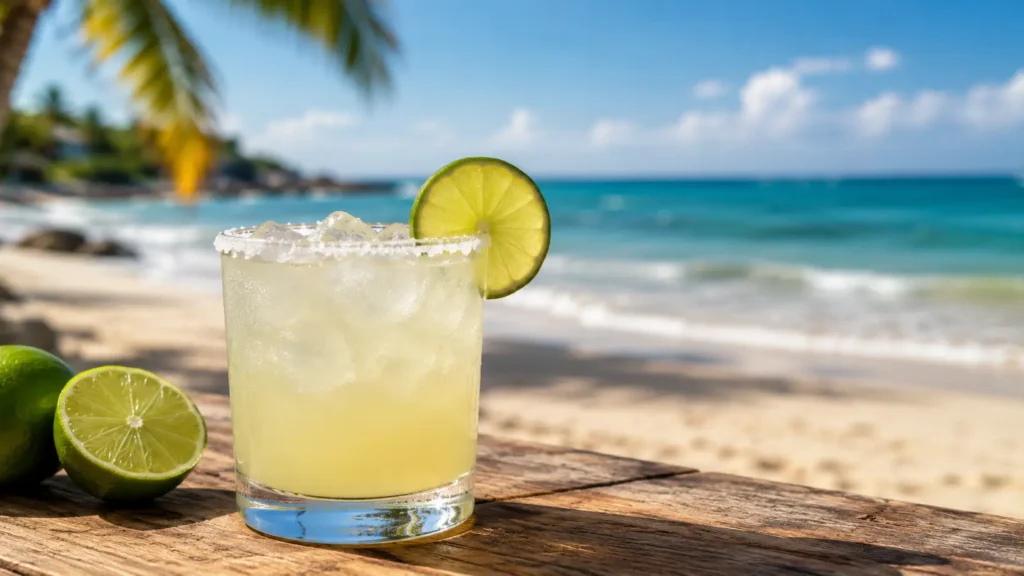
This is the ingredient doing almost all the work. Triple sec and other orange liqueurs are sweetened by definition, that’s part of what makes them a liqueur rather than a spirit, and a standard triple sec runs somewhere around 10 to 11 grams of sugar per ounce.
In a classic 2:1:1 margarita built with two ounces of tequila, one ounce of lime juice, and one ounce of triple sec, that single ounce of orange liqueur accounts for roughly 90% of the drink’s total sugar. Premium orange liqueurs like Cointreau are formulated to balance sweetness against alcohol and citrus rather than tasting syrupy, but they’re not meaningfully lower in sugar than a mid-range bottle, the sweetness is just better integrated, not reduced.
Add all three together, tequila’s zero, lime juice’s roughly one gram, triple sec’s roughly eleven, and a classic shaken margarita lands around 11 to 12 grams of sugar per serving. That’s the number you’ll see cited as “the” sugar content of a margarita, and it’s accurate for exactly one version: a home-shaken classic made with a standard 2:1:1 pour and no added syrup.
Why the Number Jumps to 20, 30, or Even 60 Grams
Almost every other version of a margarita adds sugar on top of that baseline, and this is where the wide range of numbers you’ll find online actually comes from.
Added sweetener stacks on top of the liqueur. Recipes that add simple syrup or agave nectar alongside the triple sec, rather than using it as a substitute, are adding another 4 to 5 grams of sugar per half-ounce pour on top of what the liqueur already contributes. This is a common recipe habit, and it’s the single fastest way to double a margarita’s sugar content without changing the flavor dramatically enough that most people notice.
Bar pours are bigger than home pours. A restaurant margarita is rarely built on a precise 2:1:1 ratio poured with a jigger. Heavier pours of both liqueur and syrup, especially in frozen or “house special” versions, are a big part of why bar-made margaritas have been measured well into the 20-to-30-gram range, and some run higher still.
Premade mix changes everything. A margarita built on a bottled mix instead of fresh lime juice and measured triple sec is a different sugar profile entirely, and it varies enormously by brand, some mixes run under 5 grams of sugar per ounce, others considerably more, and you’re often adding a full serving of a sugar-forward mix on top of straight tequila. I go through what to actually look for on a label in my guide to store-bought margarita mixes, since the ingredient list is where the real difference shows up, not the marketing on the front of the bottle.
Frozen Margaritas Aren’t Automatically Worse: But They Often Are in Practice
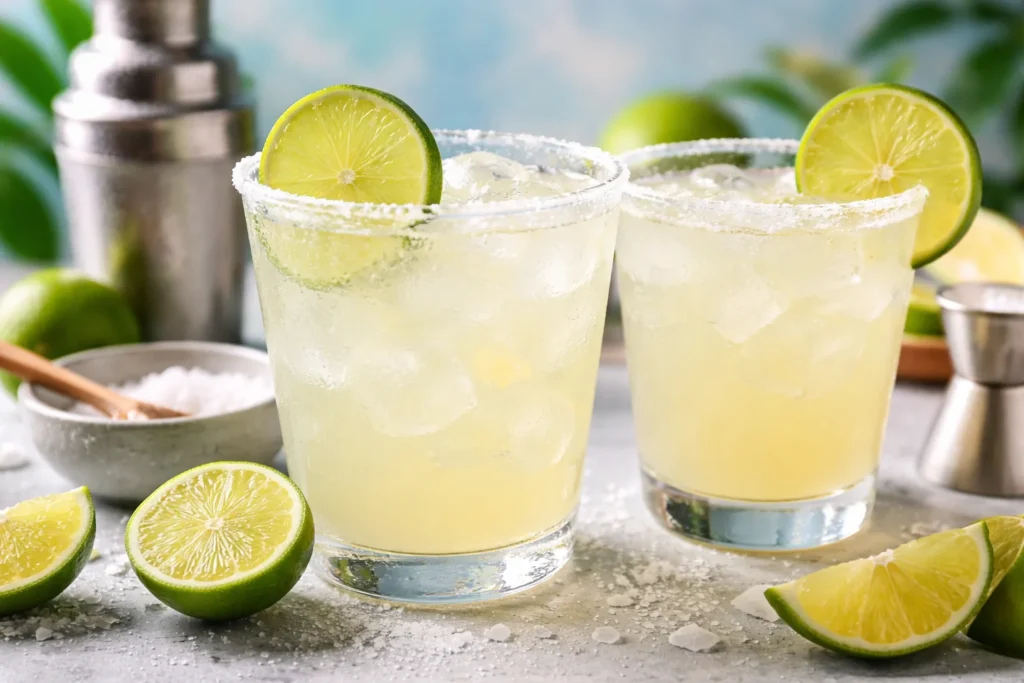
Being frozen doesn’t inherently add sugar; a frozen margarita made with the same 2:1:1 ratio as a shaken one has the same sugar content, just blended with ice instead of shaken with it. In practice, though, frozen margaritas, especially machine-made or bar versions, are more likely to be built around a premade mix designed to be sweet enough to stay flavorful once diluted with a large volume of ice. That’s a recipe choice tied to the format, not a property of freezing itself.
Does “Skinny” Actually Mean Lower Sugar?
Not automatically, and this is worth being direct about since it surprises a lot of people. Multiple independent tests of bar-ordered “skinny” margaritas have found sugar content ranging from roughly 13 grams up to 30, because there’s no fixed definition of what makes a margarita “skinny”, some bars just pour less triple sec, others swap in a different sweetener that isn’t actually lower in sugar, and a few just serve a smaller glass of the same recipe and call it skinny. Ordering “skinny” at a bar is not a guarantee of anything specific unless you know exactly what substitution they’re making.
A genuinely lower-sugar margarita comes from removing the triple sec entirely rather than trimming it, since that’s where nearly all the sugar is concentrated in the first place. Replacing it with fresh orange juice and a small amount of natural sweetener cuts the sugar load significantly while keeping the citrus-forward flavor triple sec normally provides, I walk through the exact swap and the resulting numbers in my skinny margarita recipe, which is built specifically around cutting that one ingredient rather than just pouring less of everything.
What This Actually Means for Your Glass
If you want to know how much sugar is in the margarita in front of you, the honest answer depends on three questions: was it made with fresh lime juice and measured triple sec, or a premade mix? Was any additional syrup added on top of the liqueur? And was it poured to a standard ratio, or a heavier bar pour? A home-shaken classic sits around 11 to 12 grams. A restaurant version with a heavier pour and added syrup can easily double or triple that. And a “skinny” label on a menu tells you almost nothing on its own, the only way to actually know is to ask what’s in it, or make it yourself and control the ratio directly.
References
- Skinny Mixes: How Much Sugar Is in a Margarita? per-ounce sugar breakdown for triple sec and lime juice
- Chef’s Resource: How Much Sugar Is in a Skinny Margarita? sugar range comparison between standard and “skinny” bar recipes

Muhammad Hussain is the creator of MargaritaLab.com, where he tests and analyzes margarita recipes, ingredients, and techniques to help readers make better drinks at home. Over time, he has experimented with different tequila types, lime juice variations, and store-bought mixes to understand what actually makes a balanced margarita.
His approach combines hands-on testing with detailed research, focusing on real-world results rather than theory. Whether comparing fresh vs bottled lime juice or reviewing popular margarita mixes, his goal is to simplify the process and share what truly works.