|
Getting your Trinity Audio player ready... |
Yes, you can use vodka instead of tequila in a margarita. The result is a real drink, clean, citrus-forward, and genuinely refreshing. But the swap changes more than just the base spirit, and most recipes don’t explain what actually shifts. Vodka’s neutrality lets the lime and orange liqueur come through more clearly than tequila does. That sounds like an advantage, and in some ways it is. The problem is that vodka also removes the complexity that tequila was providing in the background, which means the orange liqueur and citrus balance matter more in a vodka margarita than in a standard one, not less. Here’s exactly what to do differently.
What Tequila Was Doing That Vodka Doesn’t
A standard margarita has three flavor layers: the citrus brightness of lime, the orange complexity of triple sec, and the herbal, slightly earthy depth of agave tequila. The tequila doesn’t just provide alcohol; it provides a distinct flavor character that gives the drink its backbone. Blanco tequila brings grassy, slightly peppery agave notes that work against the lime’s acidity to create contrast and interest.
Vodka is designed to be neutral. That’s the point of it: a clean spirit that doesn’t compete with other flavors. In a vodka margarita, the agave character is simply absent. What you get is lime, orange liqueur, and alcohol with nothing in the background. The drink is brighter and lighter than the original, but it’s also simpler. Some people prefer that. Others find it thin. Understanding this is what determines which adjustments actually help.
The Adjustments That Matter
Use a better orange liqueur than you would with tequila.
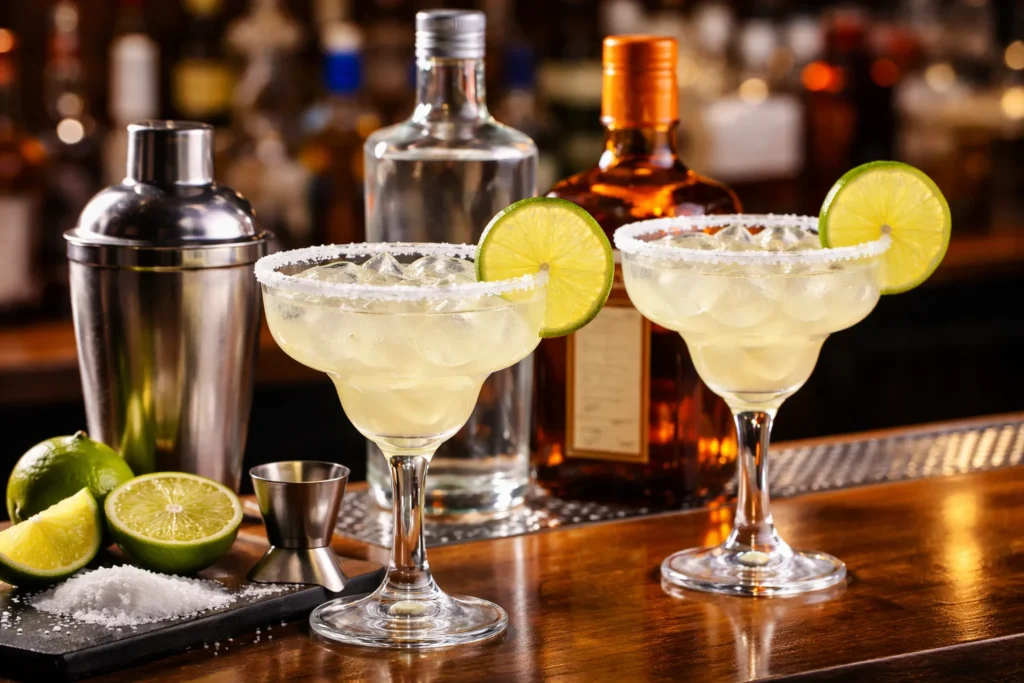
In a standard tequila margarita, the tequila’s character shares the flavor load with the triple sec; neither one has to do everything. In a vodka margarita, the orange liqueur is doing more of the flavor work because the base spirit isn’t contributing much. A budget triple sec at 20% ABV produces a flat, overly sweet result in a vodka build. A 40% ABV Cointreau or Combier produces a noticeably better drink because the quality and dryness of the orange liqueur is far more exposed when vodka is the base.
Avoid Grand Marnier in a vodka margarita. Grand Marnier’s cognac base adds vanilla and oak notes that work well alongside tequila, which has comparable character. Alongside neutral vodka, the cognac dominates and produces an unbalanced drink. It’s a small but specific point that matters if you’re used to using Grand Marnier in a tequila version and wondering why it doesn’t translate.
Add a small amount of agave alongside the orange liqueur.
Vodka doesn’t add the softness that tequila’s agave character provides in the background. Adding half an ounce of agave nectar to the shaker doesn’t make the drink sweeter; it rounds the edges and makes the citrus feel less stark. The orange liqueur covers sweetness; the agave covers texture. Both matter when the base spirit is neutral.
Consider lemon alongside lime.
Kelly Stilwell’s version uses equal parts lemon and lime rather than lime alone. The lemon adds a slightly brighter, more floral citrus note that partially compensates for the missing herbal complexity of tequila. It’s not a dramatic change, half an ounce of lemon alongside half an ounce of lime rather than a full ounce of lime, but it adds a second citrus register that makes the drink feel less one-dimensional.
The Vodka Margarita Recipe
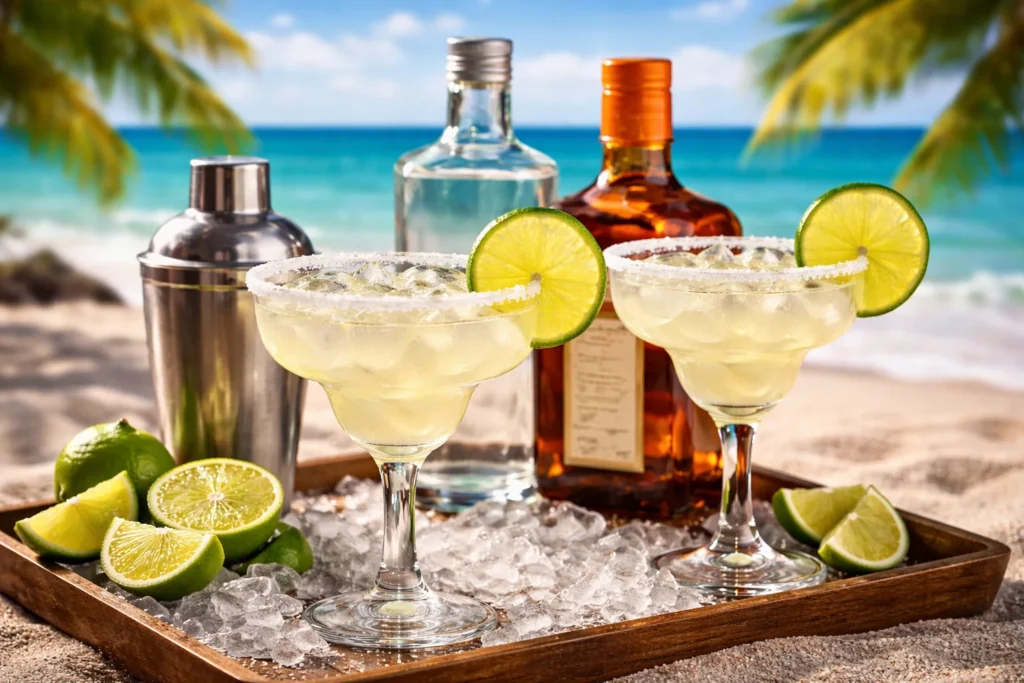
This build incorporates the three adjustments above and produces a drink that’s genuinely satisfying rather than just a tequila margarita with the tequila removed.
Ingredients (1 serving)
- 2 oz vodka (unflavored, mid-range, Tito’s or Ketel One work well)
- ½ oz fresh lime juice
- ½ oz fresh lemon juice
- 1 oz Cointreau or 40% ABV triple sec
- ½ oz agave nectar
- Ice for shaking
- Ice for serving
- 1–2 oz sparkling water to finish
- Coarse kosher salt or Tajín for the rim (optional)
Instructions
- If rimming the glass, run a lime wedge around the outer edge and press lightly into coarse salt or Tajín on a flat plate. Fill the glass with fresh ice and set aside.
- Add vodka, lime juice, lemon juice, Cointreau, and agave to a cocktail shaker with ice.
- Shake hard for 12 to 15 seconds. The shaker should feel cold and frosted on the outside.
- Strain into the prepared glass over fresh ice.
- Top with a small splash of sparkling water, approximately 1 to 2 ounces. Do not stir it in and never shake it; the carbonation adds a lightness and freshness that integrates naturally without mixing. Shaking or stirring it flattens the bubbles and removes the point of adding it.
- Taste before serving. If it tastes too tart, a few drops more agave corrects it. If it tastes flat, the issue is almost always under-dilution, shake again with fresh ice rather than adding more liqueur.
The Tajín Rim Option
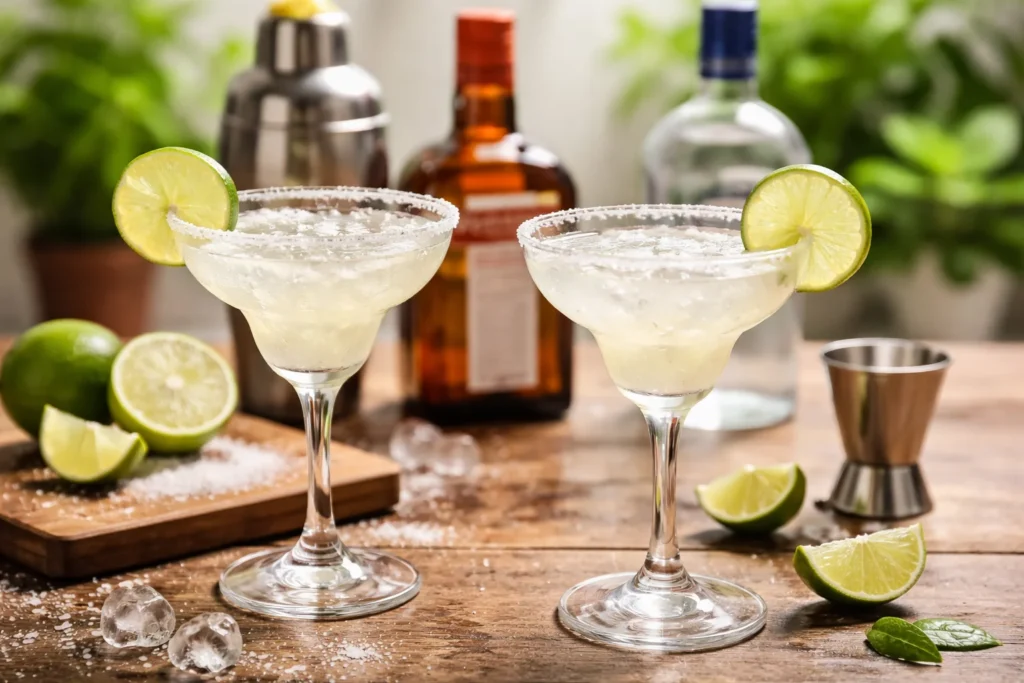
A standard salt rim works as well here as in a tequila margarita. But Tajín, a Mexican chili-lime salt, is worth trying specifically with a vodka build, because the chili warmth adds a layer of complexity that partly compensates for the missing tequila character. Vodka’s neutrality means the Tajín reads more prominently than it would against a spirit with its own strong flavor. Whether that’s welcome depends on how much spice you want in the drink, but it’s a genuinely different and interesting experience rather than just a decoration choice.
Variations
Spicy vodka margarita: Add two thin jalapeño slices to the shaker before the ice and muddle briefly. Strain out the jalapeño with the ice when pouring. Removing the seeds produces gentle heat; keeping them in produces significant heat. Alternatively, a pepper-infused vodka works well here, the spice is distributed more evenly through the drink than muddle heat, which can pool.
Frozen vodka margarita: Combine vodka, lime juice, lemon juice, Cointreau, and agave in a blender with one and a half cups of crushed ice. Blend for 15 to 20 seconds, stopping the moment the texture turns uniformly slushy. Skip the sparkling water in the frozen version. The cold suppresses sweetness perception, so taste before pouring and add a few drops more agave if it tastes flat once chilled.
Citrus vodka variation: A good citrus-flavored vodka, lemon or lime, adds aromatic complexity that plain vodka doesn’t provide. It’s not a premium choice, but it’s a practical upgrade over standard vodka in a casual setting. Use the same quantities as the base recipe and reduce the lemon juice by half since the flavored vodka is already contributing citrus.
Pitcher Build for 8 Servings
- 3 cups vodka
- 1 cup Cointreau
- ¾ cup fresh lime juice
- ¾ cup fresh lemon juice
- ½ cup agave nectar
Combine in a pitcher and stir well. Refrigerate until ready to serve, do not add ice to the pitcher. Shake individual servings with ice before pouring, or pour over fresh ice in individual glasses. Add sparkling water per glass at serving time, not to the pitcher.
The citrus is the most time-sensitive element. Squeeze the limes and lemons as close to serving as possible; fresh citrus juice starts losing its aromatic brightness within a few hours of pressing.
Faqs
What can replace tequila in a margarita?
Several spirits can replace tequila in a margarita, depending on the flavor you want. Vodka is one of the most common substitutes because of its neutral taste, which allows lime juice and orange liqueur to stand out clearly. Mezcal is another option that keeps the agave character but adds a smoky flavor. Some bartenders also use white rum for a lighter, slightly sweeter profile, or gin for a more herbal variation. While these alternatives change the traditional margarita flavor, they still follow the same citrus-and-liqueur structure that defines sour-style cocktails.
What’s a good alternative to tequila?
A good alternative to tequila depends on whether you want a similar taste or something completely different. Mezcal is the closest substitute because it is also made from agave and delivers a related earthy character. If you prefer a smoother and more neutral drink, vodka works well and is often used as a vodka margarita substitute. White rum can also work, adding mild sweetness that blends easily with lime and orange liqueur. Each option creates a different flavor profile, but all can produce a balanced citrus cocktail when mixed carefully.
What do Mexicans drink instead of tequila?
In Mexico, tequila is widely enjoyed, but it is not the only popular spirit. Many people also drink mezcal, especially in regions where it is traditionally produced. Beer, particularly Mexican lagers, is another common choice for casual drinking. In cocktail settings, people may also enjoy drinks made with mezcal or other spirits, depending on personal preference. There is no single universal replacement for tequila in Mexico, as beverage choices vary by region, tradition, and occasion.
Can vodka be used for margaritas?
Yes, vodka can be used for margaritas, and this variation is often called a vodka margarita or vodkarita. Because vodka has a neutral flavor, it creates a cleaner and lighter taste compared to tequila. The basic structure remains the same; vodka is mixed with fresh lime juice and orange liqueur, then shaken with ice to achieve proper dilution. While it does not replicate the earthy notes of tequila, vodka works well as a substitute when tequila is unavailable or when serving guests who prefer milder-tasting cocktails.
How to make a margarita taste better?
To make a margarita taste better, focus on the quality of ingredients and achieving a proper balance. Fresh lime juice is one of the most significant improvements because it offers a brighter acidity than bottled juice. Using a good-quality orange liqueur, such as triple sec or premium alternatives, also enhances flavor depth. Proper shaking with ice ensures correct dilution, which softens harsh alcohol notes and blends ingredients smoothly. Adjusting sweetness and acidity gradually, rather than adding large amounts at once, helps maintain the classic balance that makes margaritas refreshing and enjoyable.
References
Classic Margarita Ratio (2:1:1 Structure)
Margarita Ingredient Standards
Margarita History and Daisy Cocktail Roots

Muhammad Hussain is the creator of MargaritaLab.com, where he tests and analyzes margarita recipes, ingredients, and techniques to help readers make better drinks at home. Over time, he has experimented with different tequila types, lime juice variations, and store-bought mixes to understand what actually makes a balanced margarita.
His approach combines hands-on testing with detailed research, focusing on real-world results rather than theory. Whether comparing fresh vs bottled lime juice or reviewing popular margarita mixes, his goal is to simplify the process and share what truly works.