|
Getting your Trinity Audio player ready... |
Every margarita recipe calls for triple sec or orange liqueur, and most home bartenders treat them as interchangeable. They’re not, but the confusion is completely understandable, because the labeling on orange liqueur bottles is genuinely inconsistent and the category has no regulatory definition. After spending time tracing why the same style of product carries four different names on the shelf, I found that the confusion is mostly marketing-driven rather than a real difference in what the product does. Here’s how to read a bottle label and know exactly what you’re buying before you open it.
How the Category Got Confusing
The orange liqueur category has one root and many branches, and understanding the history explains why the shelf looks the way it does.
The original product was Curaçao Liqueur, named after the Caribbean island where the Laraha orange, a bitter citrus native to the region, was cultivated by Dutch trading companies in the 17th century. The Laraha was inedible raw, but its peel produced pronounced citrus oils when dried, and Dutch producers began making a liqueur from it. For roughly two centuries, orange liqueur was synonymous with Curaçao.
The term “triple sec” emerged in France in the 19th century. Both Cointreau (founded 1875) and Jean-Baptiste Combier claim to have invented the name, Cointreau based on their use of three different types of oranges, Combier based on a triple distillation process. Both claims are disputed. What’s not disputed is that Cointreau initially labeled its bottle “Triple Sec Cointreau,” then added “Curaçao Blanc” to the label when “Curaçao” was the dominant commercial term. It later removed “Curaçao” from the label when cheap curaçao products flooded the market, and Cointreau sought to distance itself from them.
The 1937 Café Royal Cocktail Book, one of the most authoritative historical cocktail references available, defines the terms this way:
- Curaçao: A sweet digestive liqueur made with wine or grain spirit, sugar, and orange peel. Named after the island where the bitter orange used as flavoring was first cultivated.
- Triple Sec: A description of white Curaçaos, effectively a style name for dry, clear versions of the same product.
- Orange Liqueur: Made in both France and Holland, a sweet liqueur flavored with orange.
- Cointreau: The triple-distilled colorless orange liqueur.
In other words, as of 1937, triple sec was defined as a type of curaçao. Today, the commercial relationship has essentially reversed; Curaçao is now understood as a type of triple sec by most consumers. Both terms sit under the broader umbrella of orange liqueur. The names changed; the products are fundamentally in the same category.
What “Triple Sec” Means on a Label Today
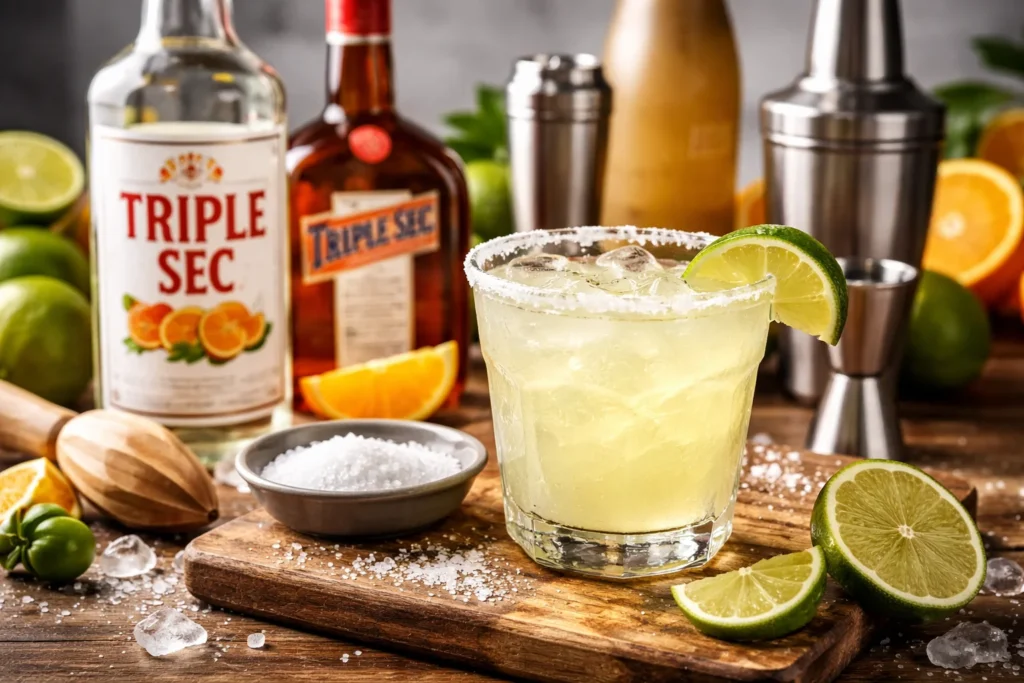
Here’s the practical implication of having no regulatory definition: “triple sec” on a label tells you almost nothing about what’s inside.
A $7 bottle of triple sec and a $35 bottle of triple sec both use the same label. The $7 bottle is likely made from orange flavorings added to neutral grain spirit with sugar, the minimum viable product that technically qualifies. The $35 bottle uses real dried orange peel from specific regions, copper pot distillation, and strict quality controls.
The single most useful number on any triple sec bottle is the ABV. Budget triple secs typically run at 15 to 25% alcohol. Premium triple secs like Cointreau and Combier run at 40%. That gap is the clearest quality signal available on the shelf because it correlates with both production method and flavor concentration. A 15% triple sec achieved its lower alcohol by reducing the spirit and adding more water and sugar, which means proportionally more sweetness and less aromatic complexity per ounce. A 40% triple sec has more of everything: more orange flavor, more aromatic oil concentration, more structural contribution to the cocktail.
The second useful signal is whether the label specifies the orange source. “Orange peel” is vaguer than “Seville bitter orange” or “Laraha orange from Curaçao.” Real orange peel produces complex citrus flavor including both sweet and bitter notes. Flavoring additives produce a flat, one-dimensional orange taste.
How to Read a Bottle on the Shelf
Before buying any orange liqueur for margaritas, these four checks tell you what you’re actually getting.
ABV above 25%. Anything below 25% is primarily a sweetener rather than a spirit. In a margarita where the orange liqueur contributes roughly a third of the drink’s alcohol structure, a 15% triple sec is producing a weaker, sweeter drink than the recipe was calibrated for, even if the volume is correct.
Real orange listed as an ingredient. Look for “orange peel,” “orange zest,” or a named orange variety. Avoid bottles where “natural flavors” or “artificial flavors” appear as the primary flavoring agent. The difference in taste is dramatic.
Sweetener type. Cane sugar produces a cleaner sweetness than corn syrup. Some premium liqueurs use no added sugar beyond what fermentation provides, relying on the natural sugars in the orange peel itself.
Base spirit disclosure. Most triple secs use neutral grain spirit. Curaçao-style products may use sugar cane alcohol. Cognac-based products like Grand Marnier specify this on the label. The base spirit affects both flavor and mouthfeel, cognac adds vanilla and oak notes, neutral spirit is clean but thin.
What Each Style Does in a Margarita
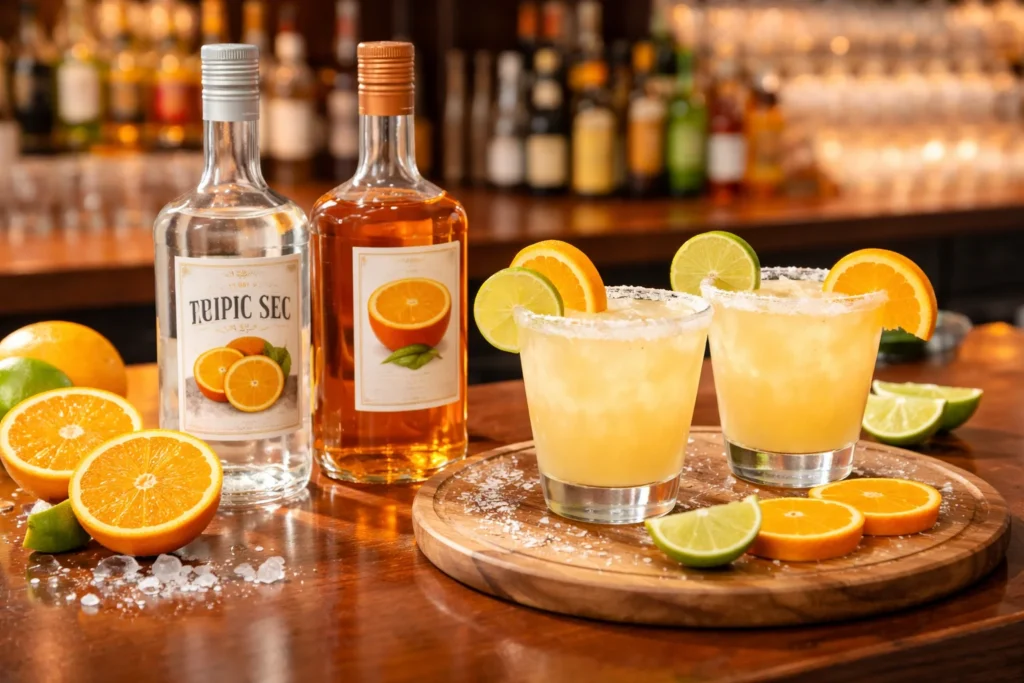
Triple sec style (Cointreau, Combier, standard triple secs): Clean, citrus-forward, bright finish. The orange flavor supports the lime rather than competing with it. This is the style most margarita recipes were developed around, and it’s the right default choice for a classic on-the-rocks margarita where balance is the priority.
Curaçao style (Senior Curaçao, Pierre Ferrand Dry Curaçao): Slightly drier, with more pronounced bitterness from the Laraha orange peel and sometimes additional botanicals. Produces a more complex, less sweet margarita than standard triple sec at the same volume. The right choice when you want the orange element to be dry and interesting rather than straightforwardly sweet.
Cognac-based orange liqueur (Grand Marnier): The cognac base adds vanilla, dried fruit, and oak notes that shift the margarita toward richness and warmth. The resulting drink is a Cadillac Margarita rather than a classic, still a margarita, but a different character. The cognac complexity needs something to balance against, which is why Grand Marnier works well with reposado tequila (similar barrel notes) but can dominate alongside a light blanco.
Armagnac or other brandy-based orange liqueur: Similar principle to Grand Marnier but with regional variation, Armagnac is more rustic and earthy than Cognac, which produces a warmer, slightly more savory orange note in the margarita. Less widely available but worth knowing the category exists.
The Flavor Intensity Problem in Frozen Margaritas
This is a specific and underappreciated point about orange liqueur choice: blending with ice for a frozen margarita dilutes flavor intensity dramatically. A budget triple sec at 15% ABV with artificial orange flavoring loses almost all of its character once blended with a cup and a half of ice. The resulting drink tastes like tequila-spiked slush with a faint citrus note rather than a real margarita.
A 40% ABV triple sec or curaçao-style liqueur has enough aromatic concentration to survive the blending process and still register as orange in the finished drink. If you only make frozen margaritas, this is actually the situation where the ABV difference matters most, more than in a shaken drink where the dilution is controlled and smaller.
The practical adjustment: in a frozen margarita, increase the orange liqueur quantity slightly (to about 1.25 oz rather than the standard 1 oz) and use the highest-proof version you have available.
Why Cheap Triple Sec Ruins a Good Margarita
The margarita has three ingredients in roughly equal proportion. Each one is doing meaningful work. Tequila provides the base spirit character and the majority of the alcohol. Lime juice provides acidity and brightness. Orange liqueur provides sweetness, citrus complexity, and a smaller but real alcohol contribution.
When the orange liqueur is a budget 15% product with artificial flavoring, two things happen simultaneously: the sweetness increases beyond the recipe’s calibration (more sugar per ounce), and the citrus complexity disappears (artificial flavoring produces a flat, one-dimensional orange note). The drink becomes sweeter and less interesting at the same time.
This is why upgrading from a budget triple sec to a 40% ABV option like Cointreau is often described as the single biggest quality improvement you can make to a margarita without changing anything else. It’s not brand preference or snobbishness; it’s a measurable difference in both ABV contribution and flavor complexity.
Orange Liqueur Styles and Margarita Use
| Style | Examples | ABV | Best Margarita Use |
| Premium triple sec | Cointreau, Combier | 40% | Classic on-the-rocks margarita |
| Dry curaçao | Pierre Ferrand, Senior | 40% | Drier, more complex margarita |
| Budget triple sec | DeKuyper, Bols | 15–25% | Casual batches, frozen drinks |
| Cognac-based | Grand Marnier | 40% | Cadillac margarita, reposado pairings |
| Blue curaçao | Various | 20–25% | Blue margarita (color only) |
Faqs
What is better, triple sec or Cointreau?
Neither triple sec nor Cointreau is universally “better”, it depends on quality and how you plan to use it. Triple sec is a general category of orange liqueur that ranges from budget-friendly to premium options. At the same time, Cointreau is a specific high-quality brand known for its balanced sweetness, strong orange flavor, and smooth finish. In cocktails like margaritas, Cointreau is often preferred because it provides a cleaner, more refined citrus taste. However, good-quality triple sec can still produce excellent results at a lower cost.
Is triple sec an orange liqueur?
Yes, triple sec is a type of orange liqueur made from dried orange peels, usually from bitter and sweet oranges. The term “triple sec” refers to a style within the broader orange liqueur category, which also includes products like curaçao and premium brands such as Cointreau. Triple sec typically has a lighter body, noticeable citrus sweetness, and alcohol content that usually ranges from about 15% to 40% ABV, depending on the brand.
What is a substitute for triple sec?
Common substitutes for triple sec include other orange liqueurs such as Cointreau or curaçao, which provide similar citrus flavor and sweetness. If you don’t have orange liqueur available, you can use orange juice combined with a small amount of simple syrup or orange zest to mimic the citrus sweetness, though the flavor will be lighter and less complex. Non-alcoholic orange syrups or orange extracts can also work in alcohol-free drinks, but they may not provide the same depth as true orange liqueur.
Can I use orange juice instead of triple sec?
You can use orange juice instead of triple sec, but it will change the flavor and balance of the drink. Triple sec adds both sweetness and concentrated orange flavor along with alcohol, while orange juice is more diluted and less sweet. If substituting, many bartenders recommend adding a small amount of simple syrup or sugar to maintain sweetness and adjusting other ingredients slightly to keep the drink balanced.
Can you drink triple sec orange liqueur straight?
Yes, triple sec can be drunk straight, but it is most commonly used as a mixer in cocktails rather than consumed on its own. Many triple sec brands are quite sweet, which can make them taste strong or syrupy when sipped alone. Higher-quality orange liqueurs with better balance are generally more pleasant to drink neat or over ice, but most people prefer triple sec as an ingredient in cocktails like margaritas, cosmopolitans, and sidecars.
References
Difford’s Guide (Orange Liqueur Differences)

Muhammad Hussain is the creator of MargaritaLab.com, where he tests and analyzes margarita recipes, ingredients, and techniques to help readers make better drinks at home. Over time, he has experimented with different tequila types, lime juice variations, and store-bought mixes to understand what actually makes a balanced margarita.
His approach combines hands-on testing with detailed research, focusing on real-world results rather than theory. Whether comparing fresh vs bottled lime juice or reviewing popular margarita mixes, his goal is to simplify the process and share what truly works.