|
Getting your Trinity Audio player ready... |
The first time I made a proper Grapefruit Margarita Recipe at home, I got it completely wrong.
Not because of the tequila. Not because of the lime. The problem was the grapefruit itself.
Most recipes treat grapefruit juice like it behaves the same way every time. It does not. Some grapefruits are sharp and bitter. Others are surprisingly sweet. Ruby red grapefruit tastes dramatically different from white grapefruit, and that one ingredient choice changes the entire cocktail more than the tequila does.
After testing this drink over multiple summers, I stopped following rigid specs and started adjusting based on the grapefruit in front of me. That single shift made this cocktail go from pretty good to something I genuinely crave in hot weather.
A great grapefruit margarita should taste bright, crisp, slightly bitter, and refreshing without turning into alcoholic grapefruit juice. That balance is harder than most recipes admit.
The Bitterness Problem That Makes or Breaks This Drink
A classic margarita already has plenty of citrus structure from lime juice. Grapefruit changes that balance because it brings bitterness alongside acidity.
That sounds obvious, but most recipes treat grapefruit like a sweeter orange replacement. It is not.
The first few versions I made used the same lime juice ratio I normally use in a standard margarita. The drink came out sharp, bitter, and strangely thin at the same time. I kept trying to fix it with agave syrup, which only made things worse. The cocktail became sweeter but somehow flatter.
Eventually I realized the bitterness needed definition, not suppression.
A little dilution helped. Salt helped even more. Reducing the lime juice was the real breakthrough.
Once I stopped fighting the grapefruit, the drink finally tasted balanced.
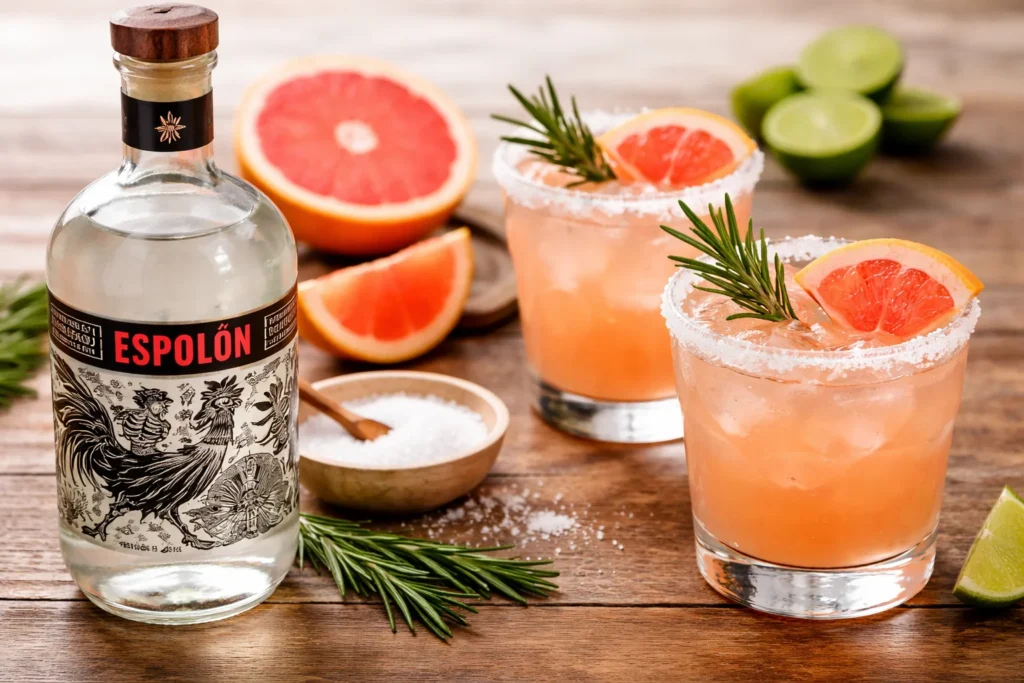
Ruby Red vs White Grapefruit: This Choice Changes Everything
If there is one ingredient decision that matters most in this entire article, it is this one.
Ruby red grapefruit and white grapefruit make completely different margaritas.
White grapefruit gives stronger bitterness and a drier finish. I like it in a Paloma where carbonation softens the edges, but in a shaken margarita it can dominate the drink fast. Ruby red is what I reach for almost every time now. It still has bitterness, but it carries more natural sweetness and softer citrus oils. That gives the tequila room to stay noticeable.
I tested both side by side with identical specs. The white grapefruit version needed extra sweetener just to become approachable. The ruby red version worked almost immediately with only minor adjustments.
If someone tells me they do not usually like grapefruit, ruby red is what I hand them. That ingredient choice changes the drink more than upgrading from a decent tequila to an expensive one.
Why a Grapefruit Margarita Is Not Just a Paloma
This question comes up constantly because the ingredients overlap so obviously.
A Paloma is long, fizzy, and refreshing in a casual way, tequila, grapefruit soda, lime, and salt. A grapefruit margarita is tighter and more structured. The lime and orange liqueur create a more concentrated citrus profile, while shaking adds texture and dilution differently than carbonation does.
When I first started making grapefruit margaritas, I accidentally treated them like spirit-forward Palomas. Too much grapefruit juice. Not enough attention to dilution. The drinks tasted loose and unfocused.
A proper Grapefruit Margarita Recipe should still feel like a margarita first. The grapefruit changes the personality, not the foundation.
Fresh Juice Timing Matters More Than You Think
This is the insight that improved my results more than any tequila upgrade ever did.
Grapefruit juice falls off quickly, not in a food safety sense, but in flavor. I tested juice immediately after squeezing against the same juice four hours later stored in the refrigerator. The later version had lost most of its aroma and developed a dull, flat bitterness that the fresh version did not have.
Lime juice changes over time too. But grapefruit seems especially sensitive to oxidization in a way that directly damages the cocktail.
If possible, squeeze right before mixing. At minimum, juice it the same day you plan to serve it. For parties, I squeeze in the hour before guests arrive rather than the night before.
That single habit changed this drink for me more than anything else.
The Ingredient Decisions That Actually Matter Here
This cocktail does not need many ingredients, but every single one pulls hard in a different direction. Small adjustments change the final drink dramatically.
Tequila: What Works Against Grapefruit Bitterness
I strongly prefer blanco tequila here. A clean blanco with peppery or mineral notes sharpens the grapefruit without competing with it.
One early test with an aggressively vanilla-forward reposado tasted almost creamy beside the grapefruit bitterness, not terrible, just wrong for the drink I was trying to make. Reposado can work, but once oak sweetness enters the picture, the cocktail starts feeling heavier than it should in summer.
I keep coming back to crisp blancos because they let the citrus stay bright and forward.
How Much Lime You Actually Need When Grapefruit Is Already Acidic
This was the adjustment that changed my results the most.
Many recipes add a full ounce of lime juice on top of grapefruit juice. I think that is excessive unless your grapefruit is unusually sweet. I settled around half to three quarters of an ounce depending on the fruit in front of me.
Less lime lets the grapefruit stay recognizable. Too much pushes the cocktail back toward a standard margarita while making the bitterness feel harsher instead of cleaner.
The balance is narrower with grapefruit than with orange or mango. Small changes matter more here.
Orange Liqueur: Dry or Sweet and Why It Matters Here
Cointreau works best because it stays dry enough to support the bitterness instead of covering it.
I tested sweeter triple secs and noticed the drink lost tension quickly. The grapefruit became softer but also less interesting. That said, if your grapefruit is especially tart, a slightly sweeter orange liqueur can help round things out without adding straight agave syrup, I would rather adjust sweetness through the liqueur than dump in extra syrup.
Sweetener: When to Add It and When to Skip It
Sometimes I skip sweetener entirely and the drink is better for it.
That surprises people because grapefruit has a reputation for bitterness, but ruby red grapefruit in peak season often carries enough natural sweetness alongside the orange liqueur.
Now I always build the drink and taste it before deciding on agave. If the cocktail tastes sharp but lively, I leave it alone. If the bitterness feels aggressive or pithy rather than clean, I add just a small bar spoon of agave and shake again.
That single habit improved my grapefruit margaritas more than any premium tequila ever did.
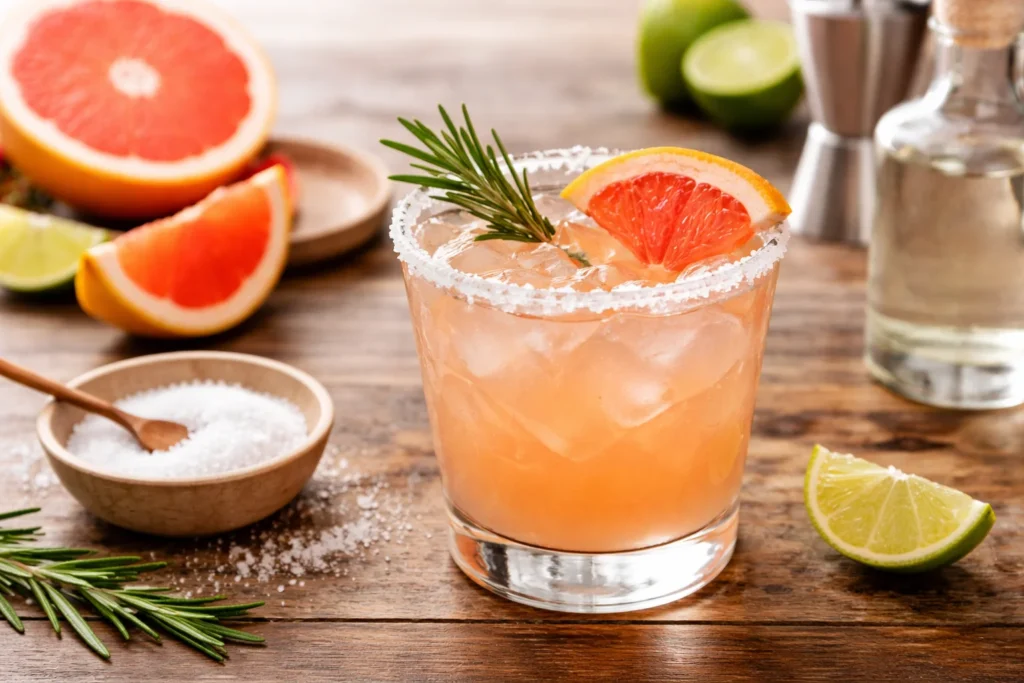
My Go-To Grapefruit Margarita Recipe
This is the version I make most often now, bright, slightly bitter, and crisp enough to want a second one immediately.
Ingredients
- 2 oz blanco tequila A clean, peppery blanco because grapefruit already brings enough richness on its own.
- 1 oz fresh ruby red grapefruit juice Squeezed the same day. Preferably right before mixing.
- ½ oz fresh lime juice Enough to sharpen the drink without overwhelming the grapefruit.
- ¾ oz Cointreau Its dryness keeps the cocktail crisp and focused.
- ¼ oz agave syrup, only if needed Taste the grapefruit first. You may not need this at all.
- Small pinch of kosher salt This sounds minor. It is not.
- Ice, grapefruit wedge or peel for garnish
Instructions
Add tequila, grapefruit juice, lime juice, Cointreau, agave if using, and salt to a cocktail shaker with plenty of ice.
Shake hard for 10 to 12 seconds. Grapefruit benefits from slightly more dilution than a lime-only margarita because water softens bitterness at the edges without flattening the drink entirely.
Strain into a rocks glass over fresh ice with a half salt rim.
Garnish with a grapefruit wedge or a thin peel twisted over the glass.
The Shake Time That Changed My Results
I used to under-shake this drink constantly.
With lime-only margaritas, a lighter shake can sometimes work because the acidity carries everything. Grapefruit behaves differently. It benefits from more dilution because water softens bitterness in a way that extra lime or agave cannot replicate.
Once I extended my shake from roughly six seconds to around twelve, the texture smoothed out noticeably. The drink became brighter and less jagged without tasting watery.
Dave Arnold writes extensively about dilution as a cocktail ingredient rather than a byproduct in Liquid Intelligence, and this drink made me understand that principle more clearly than almost any other margarita I have made.
Why Salt Does Something Different in This Drink
Salt suppresses bitterness perception, that is established food science, not just bartending lore. In most margaritas, salt mainly contrasts acidity. In a grapefruit margarita, it actively changes how the bitterness lands on the palate.
A full salt rim can become overwhelming here though. I learned that after making one version that tasted almost savory by the last sip.
Now I prefer a half rim with coarse salt. That gives you control, some sips stay clean and citrus-forward, others pick up salinity that softens the grapefruit edge.
I also add a tiny pinch of salt directly into the shaker. Not enough to taste salty at all. Just enough to sharpen flavor definition and make the grapefruit taste more intensely like itself.
Without it, the cocktail can feel slightly disconnected. With it, everything locks together.
Can I Use Jarritos or Grapefruit Soda Instead?
Yes, but it becomes a meaningfully different cocktail.
Using grapefruit soda turns this into more of a Paloma-margarita hybrid. That can taste great, especially for outdoor summer parties where people want something lighter and fizzier. But it loses the concentrated citrus structure that makes a real shaken grapefruit margarita so satisfying.
If I am going the soda route, I reduce the orange liqueur and skip most or all of the agave to prevent the drink from going sugary.
For a quick highball version that works well in heat:
- 2 oz blanco tequila
- ½ oz fresh lime juice
- ½ oz Cointreau
- Top with grapefruit soda
- Half salt rim
Lighter, fizzier, easier to batch for a crowd. Still good, just a different drink entirely.
Frozen Grapefruit Margarita: The One Adjustment That Prevents a Bitter Slush
Frozen grapefruit margaritas can turn unpleasantly bitter fast because cold temperatures mute sweetness more than they mute bitterness. That imbalance gets worse the more ice you add.
The fix is reducing the grapefruit juice slightly and increasing the orange liqueur just a touch.
For frozen versions I use:
- 2 oz blanco tequila
- 1½ oz fresh ruby red grapefruit juice instead of a full 2 oz
- ½ oz lime juice
- 1 oz Cointreau, slightly more than usual
- ¼ oz agave if the grapefruit needs it
- 1 cup ice, less than you think
Blend only until smooth. Stop earlier than feels right. Overblending aerates the drink and makes the bitterness land harsher.
The texture should pour cleanly, not mound in the glass.
Two Variations Worth Making
Most grapefruit margarita variations feel gimmicky. These two respect what the fruit actually does.
Spicy Grapefruit: How Heat Interacts With Bitterness
Heat amplifies grapefruit bitterness if you are careless about it. My first jalapeño version tasted harsh because the spice and bitterness stacked directly on top of each other.
Now I lightly muddle one or two thin jalapeño slices directly in the shaker instead of infusing the tequila. That keeps the heat bright and green rather than deep and building. Fresh chili heat actually lifts grapefruit beautifully when it is restrained, the two flavors create contrast rather than competition.
Grapefruit Rosemary: The Herb That Complements Bitterness
Mint clashes with grapefruit. Basil can overpower it. Rosemary works in a way that surprised me.
Its piney, slightly resinous aroma complements grapefruit bitterness without pulling the drink in a savory direction. I slap a small rosemary sprig between my hands before using it as a garnish so the oils release over the glass without shredding into the drink.
One small sprig is enough. More than that and the cocktail starts tasting medicinal very quickly.
I Spent Two Summers Trying to Fix the Wrong Thing
I made almost every common mistake possible with this drink before finding the right approach.
I over-sweetened it repeatedly, assuming bitterness meant something was wrong. I used bottled grapefruit juice once and immediately understood why it does not work: flat, dull, missing all the aromatic citrus oils that make the drink worth making. I treated lime juice as a fixed measurement instead of something to adjust based on the specific fruit in front of me.
The worst mistake was assuming the bitterness was a problem to fix.
It is not. A grapefruit margarita should have a slight bitter edge. That edge is exactly what makes the drink feel refreshing instead of heavy. Once I accepted that bitterness was the point rather than the problem, everything became easier to balance.
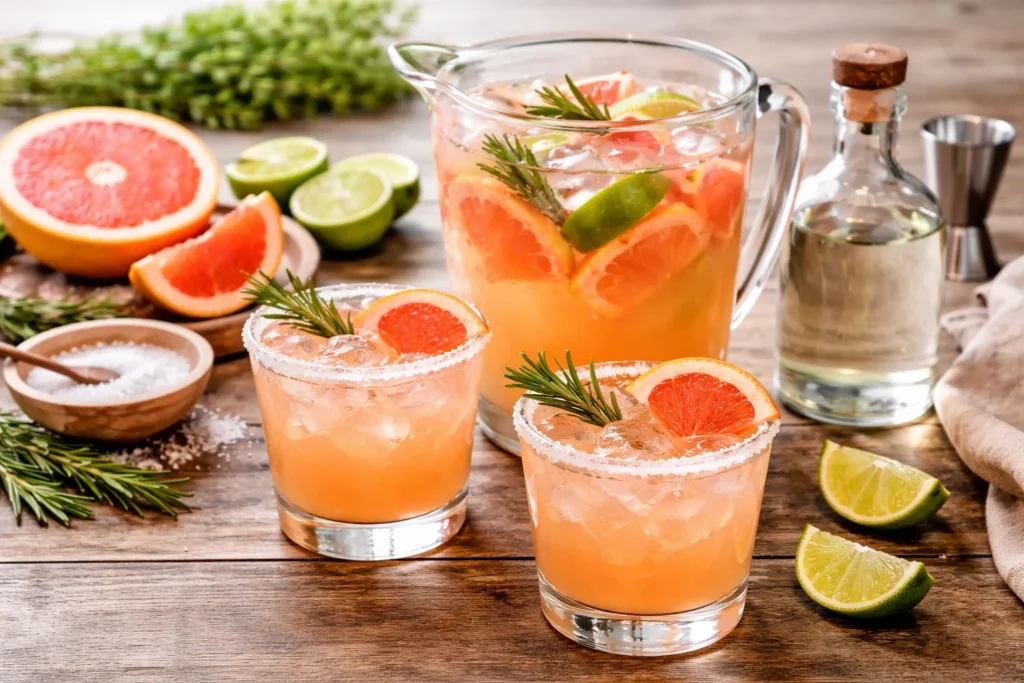
Batching for a Party Without the Bitterness Getting Worse
Batching grapefruit margaritas is trickier than batching other fruit margaritas because bitterness intensifies as the juice sits and oxidizes.
If I am making these ahead for guests, I batch everything except the grapefruit juice several hours early, tequila, Cointreau, lime, and agave combined and kept cold. Then I add freshly squeezed grapefruit juice right before serving.
That one adjustment preserves the brighter citrus oils and prevents the batch from drifting toward dull bitterness by the end of the night.
I also keep the batch colder than I would for standard margaritas. Grapefruit bitterness becomes more noticeable as the drink warms, so a colder serve temperature matters more here than it does with sweeter fruit margaritas.
A Grapefruit Margarita Question Worth Answering
People ask constantly whether this drink is supposed to taste sweet.
My answer is: not really.
Refreshing, yes. Bright, absolutely. But sweetness should sit quietly in the background. A good Grapefruit Margarita Recipe should finish crisp with a little bitterness still present after the sip.
If it tastes like pink lemonade with tequila, something went wrong, and the fix is almost always less agave, not more lime.
Faqs
How to make a margarita without Cointreau or triple sec?
You can make a margarita without Cointreau or triple sec by replacing the orange liqueur with another source of sweetness and citrus flavor. A simple method is to use fresh lime juice, tequila, and a small amount of agave syrup or simple syrup to balance the acidity.
Some people also add a splash of fresh orange juice to mimic the citrus notes normally provided by orange liqueur. While the flavor will be slightly different from a classic margarita, the drink can still taste balanced and refreshing when the sweet and sour elements are properly adjusted.
Can I skip triple sec in margarita?
Yes, you can skip triple sec in a margarita, but you will need to replace its sweetness and citrus flavor to maintain balance. Triple sec contributes both sugar and orange aroma, so removing it without adjustment can make the drink taste too sour or sharp.
To compensate, add a small amount of agave syrup, simple syrup, or fresh orange juice. Many modern margarita recipes intentionally omit triple sec and rely on fresh citrus and sweeteners instead, especially in lighter or “skinny” margarita variations.
What is a cheaper substitute for Cointreau?
A common cheaper substitute for Cointreau is standard triple sec, which is widely available and usually costs less while providing a similar orange flavor.
Other budget-friendly orange liqueurs can also work well in margaritas, especially those labeled simply as “triple sec.” While these alternatives may be slightly sweeter or less refined than Cointreau, they still perform well in mixed drinks where citrus and tequila are the dominant flavors. For most home margarita recipes, a basic triple sec is a practical and cost-effective replacement.
What to use if you don’t have triple sec?
If you don’t have triple sec, you can use other orange-flavored liqueurs or natural substitutes. Good options include Cointreau, Grand Marnier, or another orange liqueur if available.
If you don’t have any orange liqueur, you can combine a small amount of fresh orange juice with agave syrup or simple syrup to recreate both sweetness and citrus flavor. This approach keeps the margarita balanced and prevents it from tasting overly sour.
Is orange liqueur necessary for margaritas?
Orange liqueur is not strictly necessary for margaritas, but it plays an important role in traditional recipes. In a classic margarita, orange liqueur adds sweetness, citrus aroma, and depth, helping balance the sharpness of lime juice and the strength of tequila.
However, many modern variations skip orange liqueur and use agave syrup, fresh fruit juices, or flavored syrups instead. These alternatives can still produce a good margarita, as long as the drink maintains the correct balance of sour, sweet, and strong elements.
References
Classic Margarita Structure & Ratios (Professional Guide)
Ratios and Mixology Fundamentals
Classic Margarita Ingredients & Technique (Bartending Schools)
Traditional IBA Margarita Ratios (Open Source Mixology Wiki)

Muhammad Hussain is the creator of MargaritaLab.com, where he tests and analyzes margarita recipes, ingredients, and techniques to help readers make better drinks at home. Over time, he has experimented with different tequila types, lime juice variations, and store-bought mixes to understand what actually makes a balanced margarita.
His approach combines hands-on testing with detailed research, focusing on real-world results rather than theory. Whether comparing fresh vs bottled lime juice or reviewing popular margarita mixes, his goal is to simplify the process and share what truly works.
Pingback: Non-Alcoholic Margarita Recipe: How to Make One That Doesn't Taste Like a Compromise
Pingback: Paloma Recipe: Tequila's Other Cocktail (And Why It's Trending)