|
Getting your Trinity Audio player ready... |
The first time I made a proper Prickly Pear Margarita Recipe at home, I expected the prickly pear to behave like a strong fruit puree. It doesn’t. That’s the mistake most recipes make. They treat prickly pear like strawberry or mango and pile in too much tequila, too much lime, or too much syrup until the drink turns muddy and flat.
Prickly pear is softer than people expect. The flavor is delicate, slightly melon-like, mildly floral, and less aggressively fruity than the bright pink color suggests. If you overpower it, you lose the whole point of the cocktail.
After testing several versions, the biggest shift in my results came from two decisions: using prickly pear syrup sparingly and reducing the lime juice slightly compared to my standard margarita build. Once I stopped forcing this drink into a classic sharp margarita profile, the flavor finally opened up.
That’s why this cocktail works when it’s done right. It’s not supposed to punch you in the face with acidity. It’s supposed to taste smooth, vivid, and almost refreshing enough to forget there’s tequila in it.
Why Prickly Pear Makes a Margarita Unlike Any Other Fruit
Prickly pear does not behave like mango, strawberry, or pineapple. Those fruits push their flavor forward immediately. Prickly pear stays softer and more floral.
The first time I worked with fresh fruit, I actually thought I had under-flavored the cocktail. Then a few seconds later, a melon-like flavor appeared quietly at the finish. That delayed, gentle quality is what makes the drink interesting when it is balanced correctly.
It also means aggressive ingredients become a problem fast. A standard margarita lime ratio can completely flatten prickly pear. So can oak-heavy tequila. Even certain orange liqueurs become too sharp beside it.
That subtlety is exactly why this cocktail works when handled carefully, and why so many versions end up tasting generic.
Fresh Prickly Pear vs Prickly Pear Syrup: The Decision Most Recipes Skip Over
This matters more than any tequila choice.
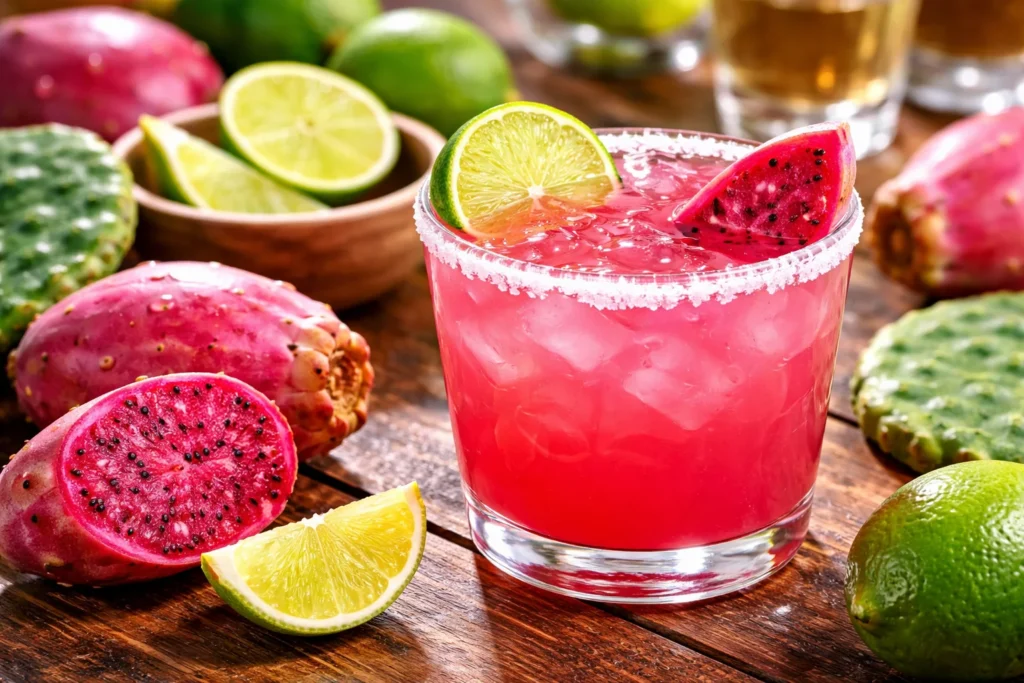
Fresh prickly pear gives the drink a cleaner, lighter, more natural flavor. The texture feels softer too. But fresh fruit can be difficult to find, inconsistent in sweetness, and honestly annoying to prepare.
Prickly pear syrup is easier, brighter in color, and more reliable. The tradeoff is sweetness. Some syrups push the drink toward candy territory almost immediately.
After testing both side by side, I landed here: fresh fruit makes the better cocktail when the fruit is ripe and flavorful. But a good syrup makes the more practical cocktail. It is consistent, fast, and usually prettier in the glass.
Most home bartenders will honestly get better results with a quality syrup because consistency matters more than chasing an ideal version with mediocre out-of-season fruit. That surprised me. I expected fresh to win every time.
The key with syrup is avoiding anything that tastes aggressively artificial. If your syrup smells like candy before it even hits the shaker, it will overwhelm the drink. Look for syrups that taste lightly fruity rather than sweet-forward.
How to Handle Fresh Prickly Pear If You Can Actually Find It
Fresh prickly pear looks intimidating because of the tiny glochids, those almost invisible hair-like spines that cover the skin. Even after the visible ones are removed, they can still irritate your hands.
I use gloves every time. No exceptions.
Once protected, the process is straightforward:
- Slice off both ends of the fruit
- Cut a shallow slit down one side
- Peel away the skin carefully from that opening
- Blend the flesh briefly until liquid
- Strain through a fine mesh strainer to remove seeds
The juice oxidizes faster than most people expect. I noticed the color starting to dull after about an hour in the refrigerator, especially when exposed to air. That leads directly into the next problem most recipes never address.
Why the Color Is So Vivid, And How to Keep It That Way
The bright magenta color comes from betalains, the same pigment family found in beets. They are visually stunning but chemically sensitive.
Too much citrus dulls the color surprisingly fast. Heat also damages it. That is one reason I prefer shaking this cocktail hard but serving it immediately rather than letting a batch sit for hours.
A few specific things helped preserve the color during my testing:
Fresh lime juice worked better than bottled. Bottled citrus acidity sometimes muted the brightness faster than expected. Refrigerating all ingredients beforehand reduced dilution and preserved the vivid tone longer. Using larger clear ice instead of crushed ice slowed color fading noticeably because it melts more slowly. The visual appeal is a core part of why this margarita became popular in the first place. Protecting that brightness is worth the small extra effort.
The Flavor Problem Nobody Warns You About
Prickly pear is floral. Not sugary-fruity in the usual margarita sense. Floral.
That means certain ingredients accidentally create a perfume-like cocktail that nobody enjoys after the first sip.
The first version I made with a heavily vanilla-forward reposado tequila tasted oddly cosmetic. Not terrible. Just disconnected and slightly off in a way that was hard to identify until I pulled the tequila out of the equation entirely.
I also found that too much orange liqueur crowded the finish. Triple sec that works perfectly in a classic margarita can feel sharp and abrasive beside prickly pear’s gentler character.
The drink improved immediately once I simplified the build and reduced everything competing against the fruit.
Does It Actually Taste Like Pear?
Not really, and this surprises almost everyone the first time they make or order one.
Prickly pear comes from cactus fruit, not the common pear you find at the grocery store. The flavor lands somewhere between watermelon, bubblegum, melon, and cucumber depending on ripeness and preparation method. It is subtle and genuinely hard to pin down on first taste.
The color makes people expect something intensely sweet and tropical. The real experience is gentler, softer, and more refreshing than the vivid pink suggests.
That gap between expectation and reality is also why this cocktail gets overbuilt so often. People taste it, feel like something is missing, and start adding more syrup or sweetener. The better response is to trust the fruit and keep the build restrained.
The Ingredients I Use and Why Each One Was Chosen
Tequila: Why Blanco Works and Reposado Sometimes Doesn’t
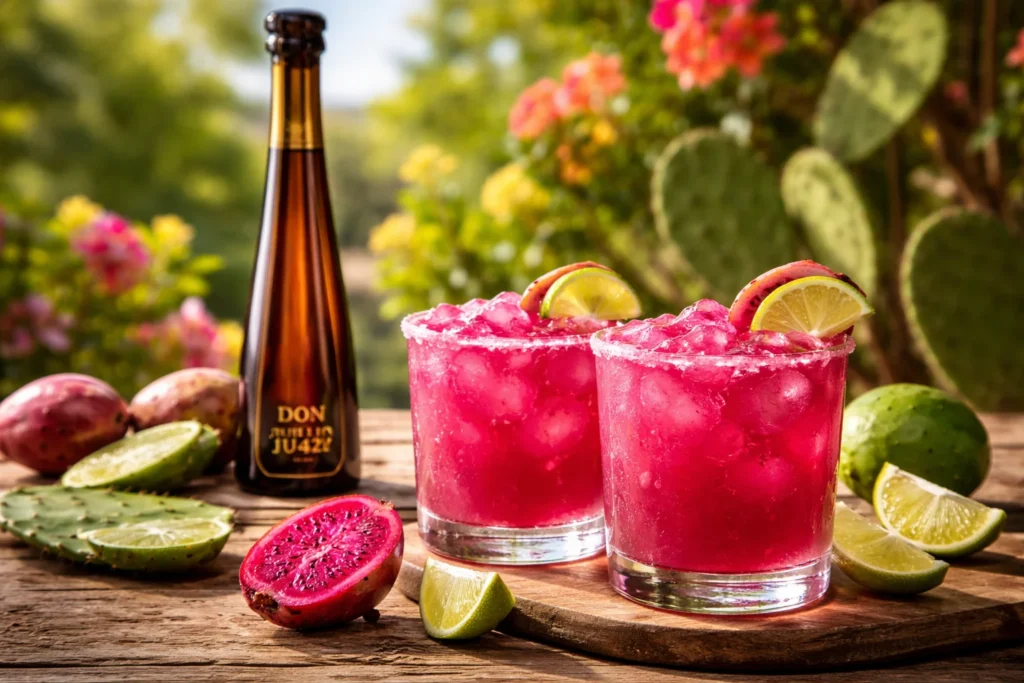
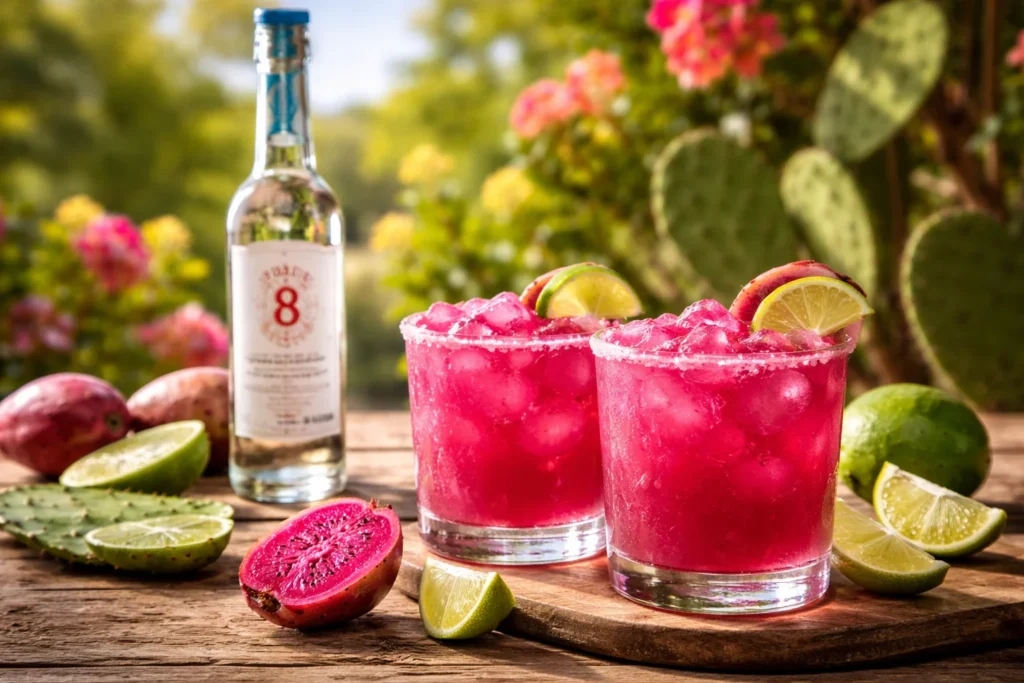
For this Prickly Pear Margarita Recipe, I almost always reach for a clean blanco tequila. Tequila Ocho and Espolòn both worked especially well in my testing because they stayed crisp and bright without competing against the fruit.
Reposado can work, but only when the oak influence stays genuinely restrained. Once vanilla or caramel notes dominate the tequila, the prickly pear flavor starts disappearing into the background entirely.
Orange Liqueur: What Pairs With a Floral Fruit
I prefer Cointreau here over sweeter triple sec options. Cointreau gives enough orange structure without turning the drink syrupy or one-dimensional. Grand Marnier pushed the cocktail too rich for this recipe because the brandy notes competed directly with the floral prickly pear character.
Lime Juice: How Much Changes With This Fruit
This was the adjustment that surprised me most across all my testing.
I use notably less lime than I would in a standard margarita. Too much acidity crushes the delicate fruit flavor almost immediately, I made one early version with my normal heavy lime pour and the prickly pear disappeared entirely, leaving only citrus sharpness and tequila heat.
Reducing the lime by even a quarter ounce made the cocktail noticeably rounder, more balanced, and more recognizably prickly pear.
Prickly Pear Margarita On the Rocks
This is the version I come back to most often because it keeps the texture clean and the flavor properly focused.
Ingredients
- 2 oz blanco tequila
- 1 oz prickly pear syrup or fresh prickly pear puree
- ¾ oz fresh lime juice
- ½ oz Cointreau
- Pinch of kosher salt, not enough to taste salty, just enough to sharpen the fruit
- Ice
- Optional: Tajín or half-salt rim
Instructions
Add tequila, prickly pear syrup or puree, lime juice, Cointreau, and salt to a cocktail shaker with plenty of ice.
Shake hard for about 12 seconds. I shake this slightly longer than a standard margarita because extra chilling helps tighten the sweetness and keeps the color vivid longer.
Strain into a rocks glass over fresh ice. If using fresh puree instead of syrup, double strain to catch remaining seeds or pulp.
Frozen Prickly Pear Margarita, When It Works and When It Doesn’t
Frozen versions look incredible but dilute the flavor faster than people expect. Prickly pear is subtle already, once heavily blended with excess ice, the drink risks becoming more visual than flavorful.
Frozen versions work best when using syrup instead of fresh fruit because syrup maintains flavor intensity better through the blending process.
The texture should pour, not mound. Stop blending earlier than you think you need to.
Ingredients
- 2 oz blanco tequila
- 1¼ oz prickly pear syrup
- ¾ oz fresh lime juice
- ½ oz Cointreau
- 1 cup ice, less than most frozen margarita recipes
Instructions
Add everything to a blender. Blend only until smooth, overblending aerates the drink and weakens both color and flavor simultaneously.
Taste before pouring. If the drink feels dull, add a small amount of additional syrup rather than more lime. Serve immediately.
Salt or Tajín: I Tested Both and Here Is What I Actually Use
A full salt rim can dominate this cocktail in a way it never does with a classic margarita. That surprised me the first few times I made it.
For prickly pear, I prefer one of three options depending on the occasion. A half-salt rim keeps the contrast without overwhelming the softer fruit flavor. Tajín adds brightness that complements the floral notes surprisingly well; the chile-lime seasoning wakes everything up without fighting the fruit. No rim at all is honestly my favorite option when using fresh prickly pear puree. The cocktail feels cleaner and more delicate without anything on the glass edge.
The cocktail already has enough visual personality. It rarely needs extra distraction.
Two Variations That Actually Respect the Fruit
A lot of prickly pear variations bury the ingredient completely. These two kept the fruit genuinely recognizable.
Spicy Prickly Pear: Why Jalapeño Works Surprisingly Well Here
Jalapeño works with prickly pear because the fruit is gentle enough that heat creates contrast without creating competition. I muddle one thin jalapeño slice lightly before shaking. More than that starts masking the fruit rather than complementing it.
The result tastes brighter rather than hotter, the heat opens up the floral quality rather than suppressing it.
Prickly Pear Hibiscus: The Floral Combination That Makes Sense
Hibiscus and prickly pear belong together. Both are floral, but hibiscus adds tartness that prickly pear naturally lacks. A small splash of chilled hibiscus tea in place of part of the lime juice gave me one of the most balanced and interesting versions I tested across this whole recipe.
Too much hibiscus tea, though, and the drink stops tasting like prickly pear altogether. Restraint is the rule with every ingredient in this cocktail.
I Treated Prickly Pear Like a Bold Fruit: That Was the Whole Problem.
The biggest mistake was treating prickly pear like a bold tropical fruit. It is not.
My original build used a full ounce of lime juice and a rich reposado tequila. The cocktail looked stunning and tasted like almost nothing except citrus and oak. The fruit was completely invisible.
Another failed version used homemade prickly pear syrup cooked over high heat trying to concentrate the flavor. The heat flattened the taste and turned the color from vivid magenta into a muddy reddish tone that made the drink look unappetizing.
The breakthrough happened when I simplified the build, reduced the lime, and switched to a clean blanco. Everything became clearer immediately. The fruit reappeared. The color stayed bright. The cocktail finally tasted like what it was supposed to be.
Making a Batch Without Losing the Color
Batching works, but only reliably for a few hours if the appearance matters to you.
I combine tequila, prickly pear syrup, and orange liqueur ahead of time, then add fresh lime juice shortly before serving. That one adjustment noticeably preserves both the flavor brightness and the vivid color. Keeping the batch refrigerated also helps maintain the magenta tone longer.
If you are serving this outdoors in summer heat, expect the color to soften gradually no matter what you do. The betalain pigments are genuinely heat-sensitive, and there is no practical way to fully prevent fading in a warm outdoor setting. Make smaller batches more frequently rather than one large batch that sits.
Faqs
What alcohol goes well with prickly pear?
Prickly pear pairs best with tequila, which is why it is most commonly used in a prickly pear margarita. The fruit’s mild sweetness and subtle berry-like flavor balance the earthy, slightly peppery character of tequila, especially blanco and reposado styles. Other alcohols that work well include mezcal, which adds a smoky depth, and vodka, which creates a lighter, more neutral prickly pear cocktail. Some recipes also use gin for herbal complexity or rum for a sweeter, tropical twist, but tequila remains the most traditional and widely preferred choice.
What do Mexicans use prickly pears for?
In Mexico, prickly pears, known as tunas, are widely used in traditional foods and drinks. The fruit is commonly eaten fresh, blended into juices called aguas frescas, or made into syrups, candies, and jams. It is also used to flavor desserts and beverages, including cocktails like margaritas. The cactus pads, called nopales, are also an important part of Mexican cuisine and are cooked in dishes such as salads, tacos, and stews. Because prickly pear cactus grows naturally across many regions of Mexico, it has been used in local cooking and food traditions for centuries.
What is another name for prickly pear?
Another common name for prickly pear is cactus pear. In Spanish-speaking regions, especially Mexico, the fruit is called tuna, while the cactus plant itself is known as nopal. The scientific genus for prickly pear cactus is Opuntia, which includes many species that produce edible fruit. These different names are often used interchangeably depending on the region, but they all refer to the same family of cactus fruits commonly used in drinks like prickly pear margaritas and in traditional foods.
What is the best garnish for a prickly pear margarita?
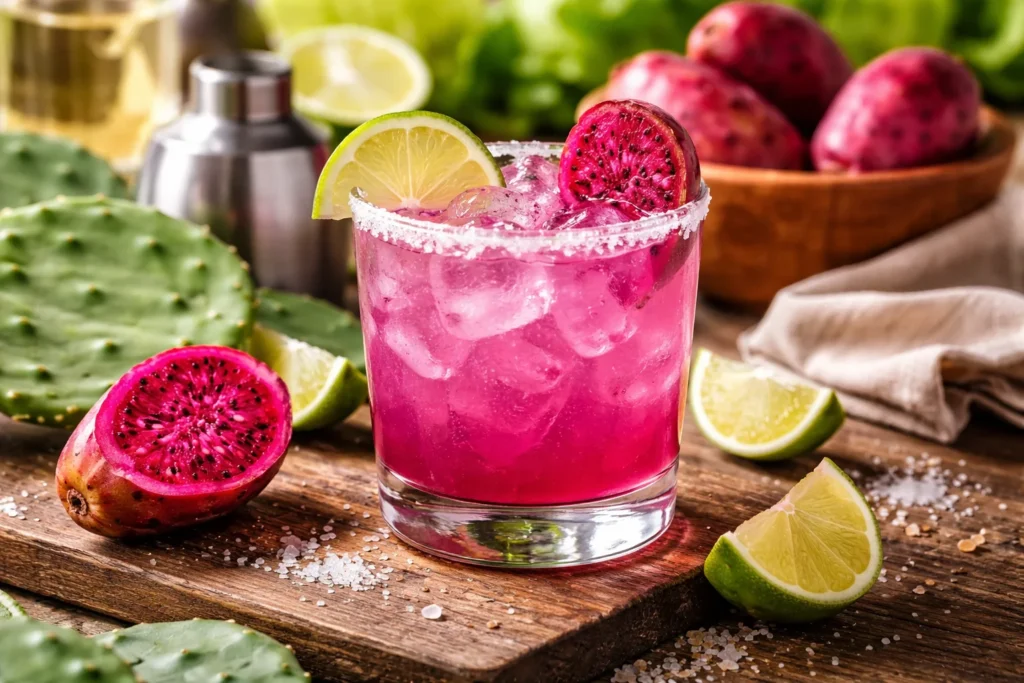
The best garnish for a prickly pear margarita is a lime wheel or wedge, as it complements the citrus flavors already present in the drink. For visual appeal, many bartenders also add a slice of fresh prickly pear or a small cactus fruit wedge, which highlights the cocktail’s main ingredient and vibrant pink color. A salted or Tajín-style rim is another popular finishing touch because the salty, slightly spicy flavor enhances the sweetness of the prickly pear. Simple garnishes that match the drink’s flavors usually work better than overly decorative ones.
What does a prickly pear cocktail taste like?
A prickly pear cocktail typically tastes lightly sweet, mildly fruity, and refreshing, with subtle flavors similar to watermelon, berry, or bubblegum-like fruit. The taste is not overly strong, which allows other ingredients, such as lime juice and tequila, to remain noticeable. In a prickly pear margarita, the fruit adds a gentle sweetness and a bright pink color while balancing the tartness of lime and the strength of tequila. Overall, the flavor is smooth and approachable, making prickly pear cocktails popular even among people who prefer less intense fruit flavors.
References
The Café Royal Cocktail Book (1937) – Early Tequila Cocktail Reference
The Fine Art of Mixing Drinks (1948) by David A. Embury
Professional Margarita Ratio & Bartending Standards
Classic Margarita Ratios Explained (Wikibooks)
Why Fresh Lime Juice Is Essential in Cocktails

Muhammad Hussain is the creator of MargaritaLab.com, where he tests and analyzes margarita recipes, ingredients, and techniques to help readers make better drinks at home. Over time, he has experimented with different tequila types, lime juice variations, and store-bought mixes to understand what actually makes a balanced margarita.
His approach combines hands-on testing with detailed research, focusing on real-world results rather than theory. Whether comparing fresh vs bottled lime juice or reviewing popular margarita mixes, his goal is to simplify the process and share what truly works.