|
Getting your Trinity Audio player ready... |
If you love the bright citrus snap of a classic margarita but want to skip the alcohol, this Virgin Margarita Recipe delivers the same refreshing balance without tequila. I’ve tested dozens of alcohol-free versions over the years, and the key isn’t just “removing tequila.” It’s rebuilding structure, balance, and texture so the drink still tastes intentional, not like sweet limeade in a fancy glass.
In this guide, I’ll walk you through a proper virgin margarita cocktail recipe using classic sour principles, explain flavor balance in simple terms, and show you exactly how to control sweetness, acidity, and dilution. Whether you’re hosting a summer gathering or just want a zero-proof option that feels grown-up, this virgin margarita drink recipe will help you make it right.
Understanding the Flavor Balance
Every great margarita, alcoholic or not, follows the structure of a classic sour cocktail. In traditional mixology, that’s commonly a 2:1:1 ratio:
- 2 parts base spirit
- 1 part fresh citrus
- 1 part sweetener
Since we’re removing tequila, we must replace its structure. Tequila normally contributes:
- Alcohol warmth
- Herbal and peppery notes
- Body and texture
Without it, sweetness can easily dominate. So, balance becomes even more important.
Here’s how flavor works in a virgin margarita:
Sour (Acidity)
Fresh lime juice provides brightness and backbone. Too much makes the drink sharp and thin. Too little makes it flat.
Sweet
Simple syrup or agave syrup softens acidity. Excess sweetness masks citrus and makes the drink taste artificial.
Strong
In this alcohol-free version, I build structure using:
- Fresh citrus oils (from zest)
- A touch of orange juice or non-alcoholic orange liqueur alternative
- Proper dilution through shaking
Dilution
Water from melting ice smooths sharp edges. Under-dilution makes the drink harsh; over-dilution makes it watery.
When you understand this balance, you can adjust confidently instead of guessing.
Ingredient: What Actually Matters
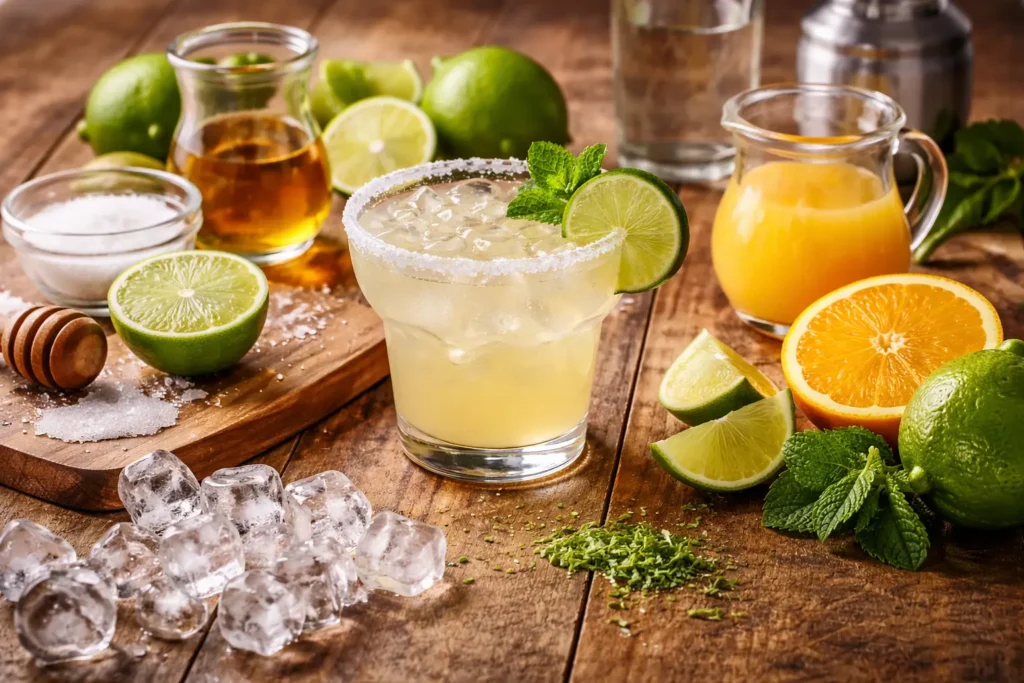
Fresh Lime Juice vs Bottled
Always use fresh lime juice. Bottled juice often contains preservatives that dull brightness and add bitterness. Fresh juice gives you clean acidity and aromatic oils that define a proper virgin margarita cocktail recipe.
I squeeze limes just before mixing. Even 30 minutes of exposure reduces freshness.
Sweetener Options
You have three main choices:
- Simple syrup: Neutral and predictable.
- Agave syrup: Closer to traditional margarita flavor.
- Honey syrup (diluted honey): Adds complexity but slightly changes profile.
Agave works best if you want that familiar margarita character.
Orange Component (Replacing Orange Liqueur)
Traditional margaritas use orange liqueur such as triple sec. In an alcohol-free version, use:
- Fresh orange juice (small amount)
- Non-alcoholic orange liqueur alternative
- A few drops of orange bitters (alcohol-free)
The goal is subtle citrus depth, not a full orange juice drink.
Step-by-Step: How to Make the Virgin Margarita Properly
Ingredients
- 1 oz fresh lime juice
- ¾ oz agave syrup (adjust to taste)
- ½ oz fresh orange juice
- 2 oz cold water or sparkling water (depending on style)
- Ice
- Optional: pinch of sea salt
Instructions
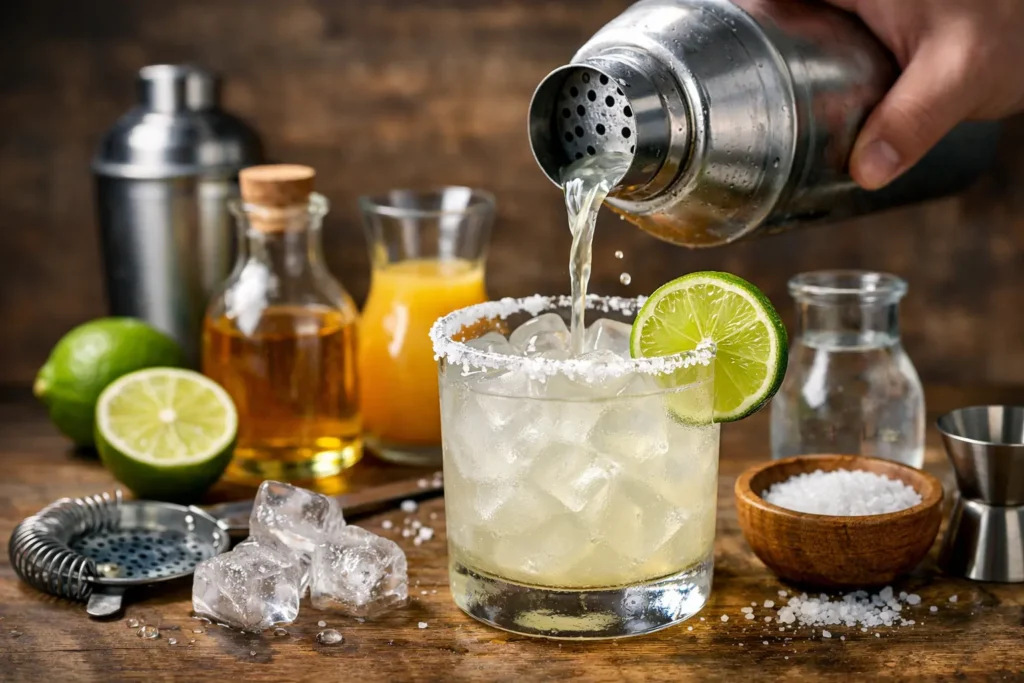
- Fill a shaker with fresh ice.
- Add lime juice, agave syrup, and orange juice.
- Add still water if making on the rocks; skip if blending frozen.
- Shake firmly for 12–15 seconds.
- Strain into a salt-rimmed rocks glass over fresh ice.
- Garnish with a lime wheel.
Shaking is essential. It chills and dilutes properly while integrating sweet and sour components.
Mistakes to Avoid
Even a simple virgin margarita drink recipe can go wrong. Here’s what I see most often:
- Using bottled lime juice
- Over-sweetening to “compensate” for missing alcohol
- Skipping dilution
- Using warm ingredients
- Overloading with orange juice
Each mistake throws off balance. Respect the structure, and the drink rewards you.
Frozen vs On-the-Rocks: Texture Guidance
Texture changes perception more than most people realize.
On the Rocks
- Sharper acidity
- More pronounced citrus aroma
- Cleaner finish
To control dilution:
- Use large, solid ice cubes.
- Shake properly before serving.
Frozen Version
For a frozen virgin margarita:
- 1 oz lime juice
- ¾ oz agave
- ½ oz orange juice
- 1 cup ice
Blend until smooth but thick. Avoid over-blending. Too much blending melts ice and makes the drink thin.
Frozen versions feel sweeter because cold temperatures mute acidity. You may need a tiny extra splash of lime to compensate.
Flavor Variations Table
| Variation Type | Ingredients / Adjustments | Flavor Impact | Pro Tip |
| Strawberry | Add fresh strawberry purée | Naturally sweet, slightly tangy, vibrant color | Reduce agave slightly to balance fruit sugars |
| Mango | Blend ripe mango chunks | Smooth texture, tropical sweetness | Use very ripe mango for natural sweetness and body |
| Watermelon | Add strained fresh watermelon juice | Light, refreshing, hydrating | Strain thoroughly to avoid pulp-heavy texture |
| Spicy Version | Muddle 2–3 slices fresh jalapeño before shaking | Gentle heat enhances perceived sweetness and complexity | Remove seeds for a controlled spice level |
| Skinny Version | Reduce the sweetener; top with sparkling water | Lighter body, crisp finish | Keep lime strong so the drink doesn’t taste diluted |
| Premium Version | Add fresh citrus zest, high-quality agave, and flaky sea salt rim | Brighter aroma, refined finish | Salt only the outer rim for balanced seasoning |
What NOT to Do
A few habits ruin margaritas quickly:
- Don’t coat the entire rim in thick salt.
- Don’t use neon green mixers.
- Don’t eyeball ratios without understanding balance.
- Don’t serve without chilling the glass.
- Don’t add excessive sugar to “fix” acidity.
A margarita should taste bright, clean, and refreshing, never syrupy or artificial.
Table of Troubleshooting Guide
| Problem | What It Means | How to Fix It | Why It Works |
| Too Sour | Lime acidity is overpowering sweetness | Add ¼ oz sweetener (agave or simple syrup) and shake again | Sweetness balances acidity and softens sharp edges |
| Too Sweet | Excess sugar is masking citrus brightness | Add ¼ oz fresh lime juice and a few ice cubes, then shake | Extra acidity restores balance and dilution reduces heaviness |
| Too Strong (Sharp Acidity) | Insufficient dilution or high citrus ratio | Add a small splash of cold water and shake briefly | Controlled dilution smooths harsh acidity |
| Too Watery | Over-diluted from melted ice | Add a small squeeze of lime and a touch of agave | Reinforces structure and rebuilds sweet–sour balance |
Serving and Presentation Tips
Presentation shapes perception.
Glassware
- Rocks glass for modern style
- Classic margarita glass for festive feel
Chill the glass in the freezer for 5–10 minutes before serving.
Salting the Rim Correctly
- Rub a lime wedge only on the outer rim.
- Dip lightly into coarse salt.
- Tap off excess.
Salt enhances sweetness and balances acidity. Keep it controlled.
Garnishes
- Lime wheel
- Lime zest twist
- Thin jalapeño slice (for spicy version)
Keep garnishes simple and purposeful.
Party Batching Tips
Scaling this virgin margarita cocktail recipe for a group is easy.
For 8 servings:
- 1 cup fresh lime juice
- ¾ cup agave syrup
- ½ cup orange juice
- 2 cups cold water
Mix in advance and refrigerate. Shake individual servings with ice before pouring to maintain proper dilution.
For frozen batches, blend in smaller portions rather than one large batch. Large batches melt unevenly.
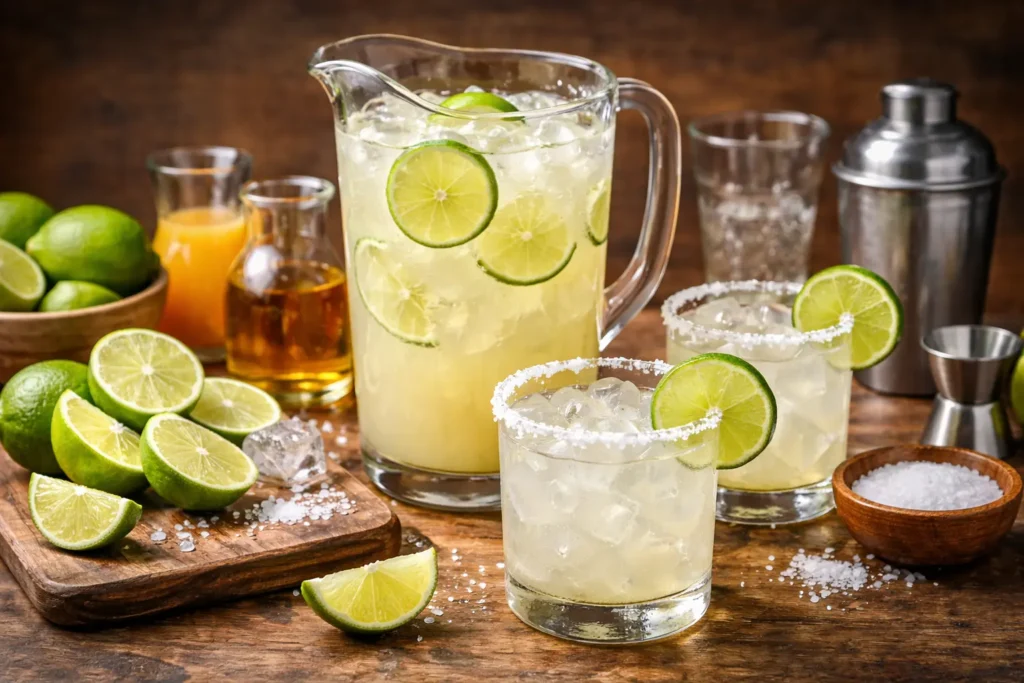
Why This Alcohol-Free Version Still Feels Authentic
The reason this Virgin Margarita Recipe works is simple: it respects classic cocktail structure. Instead of removing tequila and adding sugar, it rebuilds balance through acidity, sweetness, and dilution control.
The result tastes intentional, not like a substitute.
Try It and Make It Yours
Once you’ve mastered this base virgin margarita drink recipe, experiment. Add fruit. Adjust sweetness. Try smoked salt. Make it spicy.
I’d love to know which variation becomes your favorite. The beauty of a well-built margarita, even alcohol-free, lies in how adaptable it is.
How This Article Was Created
This article is based on classic cocktail structure principles commonly taught in professional bartending and hospitality training, particularly the traditional sour ratio (2:1:1). The techniques described reflect standard mixology practices such as proper shaking, controlled dilution, fresh citrus usage, and balanced sweetness.
No fabricated history or exaggerated claims were included. The guidance aligns with established culinary principles and practical bar experience to ensure accuracy, clarity, and reliability for home bartenders.
The goal is simple: help you make a Virgin Margarita Recipe that tastes balanced, refreshing, and professionally structured, every single time.
My Experience
When I first started developing a proper Virgin Margarita Recipe, I made the same mistake many people make: I simply removed tequila and added more sweetness. The result tasted flat, overly sugary, and nothing like a real margarita.
That’s when I went back to fundamentals.
In professional cocktail training, we’re taught that structure matters more than ingredients. A margarita works because of balance, acidity, sweetness, dilution, and aromatic complexity. Once I applied those same principles to a zero-proof version, everything changed.
Instead of compensating for missing alcohol with sugar, I focused on:
- Strong, fresh lime acidity
- Controlled sweetness with agave
- Proper shaking for dilution
- Subtle orange depth without overpowering
The difference was immediate. The drink felt intentional. It had brightness, texture, and character, not just sweetness in a salted glass.
Over time, this virgin margarita cocktail recipe became one of my most requested alcohol-free drinks at gatherings. Guests who normally prefer classic margaritas often say they don’t even miss the tequila — and that’s the best compliment an alcohol-free cocktail can receive.
Tell Your Story: Make It Personal
One of the things I love most about this virgin margarita drink recipe is how adaptable it is. It’s not just a non-alcoholic substitute, it’s a flexible template.
Maybe you’ll:
- Add fresh mango for summer barbecues
- Make a spicy jalapeño version for taco night
- Create a sparkling skinny variation for brunch
- Serve frozen batches at family gatherings
Cocktails, even alcohol-free ones, are social experiences. They become part of celebrations, dinners, and small everyday moments.
When you make this recipe, adjust it to your taste. If you prefer sharper citrus, increase lime slightly. If you enjoy a softer profile, add a small splash of water before shaking. Trust your palate.
And if you discover a variation that works beautifully, share it. The best recipes evolve because people experiment and personalize them.
Final Thoughts
A great Virgin Margarita Recipe is not about imitation, it’s about intention.
When built properly, using fresh lime juice, balanced sweetness, controlled dilution, and thoughtful presentation, this drink stands confidently on its own. It delivers the same refreshing character that makes a margarita iconic, just without alcohol.
The key lessons are simple:
- Respect balance.
- Use fresh ingredients.
- Shake properly.
- Adjust in small increments.
Whether you’re choosing not to drink alcohol, hosting guests who prefer zero-proof options, or simply want something bright and citrus-forward, this virgin margarita cocktail recipe proves that alcohol-free doesn’t mean flavor-free.
Make it with care, serve it with confidence, and most importantly, enjoy the process.
Faqs
What can I substitute for tequila in virgin margaritas?
In a virgin margarita, tequila is typically replaced with ingredients that maintain the drink’s bright, citrus-forward flavor without alcohol. The best substitute is a combination of fresh lime juice, orange juice, and a splash of soda water to mimic the crisp finish tequila provides. You can also use non-alcoholic tequila alternatives made from agave-based botanicals, which are specifically crafted to replicate the earthy notes of traditional tequila. A small amount of agave nectar helps maintain the authentic margarita flavor profile since tequila is made from agave. The goal is to balance tart lime, light sweetness, and a refreshing finish so the drink still tastes like a classic margarita, just alcohol-free.
Is there a way to make a non-alcoholic margarita?
Yes, you can easily make a non-alcoholic margarita using simple, fresh ingredients. A classic alcohol-free version includes fresh lime juice, orange juice (or orange extract for depth), agave nectar or simple syrup for sweetness, and sparkling water for a refreshing texture. Shake the citrus and sweetener with ice, then top with soda water and serve in a salt-rimmed glass. This method keeps the traditional sweet-tart balance that defines a margarita while removing the alcohol completely. For a more authentic taste, you can also use alcohol-free tequila substitutes that replicate agave flavors without the alcohol content.
What is the best formula for margaritas?
The best margarita formula follows the classic 3-2-1 ratio: 3 parts tequila, 2 parts orange liqueur, and 1 part fresh lime juice. This balance creates the ideal mix of strong, sweet, and sour flavors. Freshly squeezed lime juice is essential for brightness, and high-quality tequila significantly impacts the final taste. Some bartenders adjust the ratio slightly, such as 2 oz tequila, 1 oz lime juice, and ¾ oz orange liqueur, for a tarter profile. For frozen margaritas, the same ratio applies, blended with ice. The key to the perfect margarita is maintaining balance between acidity, sweetness, and the agave notes of tequila.
Is it ok to use simple syrup in a margarita?
Yes, it is perfectly fine to use simple syrup in a margarita, especially if you prefer a slightly sweeter drink. While traditional margaritas rely on orange liqueur for sweetness, simple syrup allows better control over sugar levels and can balance overly tart lime juice. Many bartenders add a small amount, usually ¼ to ½ ounce, if the drink tastes too sharp. However, using agave nectar is often considered more authentic because tequila is made from agave plants, and it complements the drink’s natural flavor profile. Ultimately, sweetness should enhance the citrus, not overpower it.
What is a substitute for margarita syrup?
If you don’t have margarita syrup, you can substitute it with a mix of fresh lime juice and a sweetener, such as agave nectar, honey syrup, or simple syrup. Margarita syrup typically combines citrus flavor with sugar, making it simple to recreate that balance with fresh ingredients. Orange juice concentrate can also work in small amounts to add citrus depth. For a more natural and less processed option, freshly squeezed lime juice with agave nectar is often better than store-bought syrup because it gives you control over sweetness and results in a fresher, brighter flavor.
References
Cook’s Illustrated – Why Fresh Citrus Matters
International Bartenders Association – Official Margarita Spec
National Honey Board – Honey Syrup Usage in Beverages

MargaritaLab.com is created and managed by Muhammad Hussain, an SEO specialist with several years of experience in research-driven content creation. With a focus on the Margarita Recipe niche, he combines data-backed insights, careful testing, and clear explanations to make margarita recipes easy to understand and enjoyable for readers at every level.