|
Getting your Trinity Audio player ready... |
Watermelon margaritas fail for one specific reason: watermelon is 92% water, and most recipes do not take this into account.
Once you start shaking watermelon juice with ice and citrus, you are stacking water on top of water on top of water. The fruit flavour disappears. The drink turns pale pink and tastes like tequila limeade with a faint sweetness. I made this mistake in my first eight versions before I understood that the problem was not the recipe, it was the ingredient itself.
The fix is a juice concentration step that takes 20 extra minutes and changes the entire drink. Blend fresh watermelon, strain it, then let the juice rest in the refrigerator for 20 to 30 minutes. Pour from the upper portion rather than the bottom. That small step concentrates the flavour enough that the watermelon survives shaking, dilution, and the full lime hit. Without it, the fruit loses the battle every time.
Why Watermelon Is the Most Difficult Fruit to Balance in a Margarita
Strawberries bring acidity. Pineapple brings texture. Mango brings body.
Watermelon brings water.
That sounds obvious until you start building cocktails with it. The fruit is delicate, low-acid, and soft in flavor compared to nearly every other margarita fruit. Once shaken with ice, it can disappear fast.
Most recipes compensate by adding more sweetener. I tested that approach early and hated the result. The drink became candy-like while still somehow tasting weak. The better solution was concentrating flavor instead of increasing sugar. That single realization changed how I approach every watermelon cocktail.
The 92% Water Problem, and What It Means for Every Decision You Make
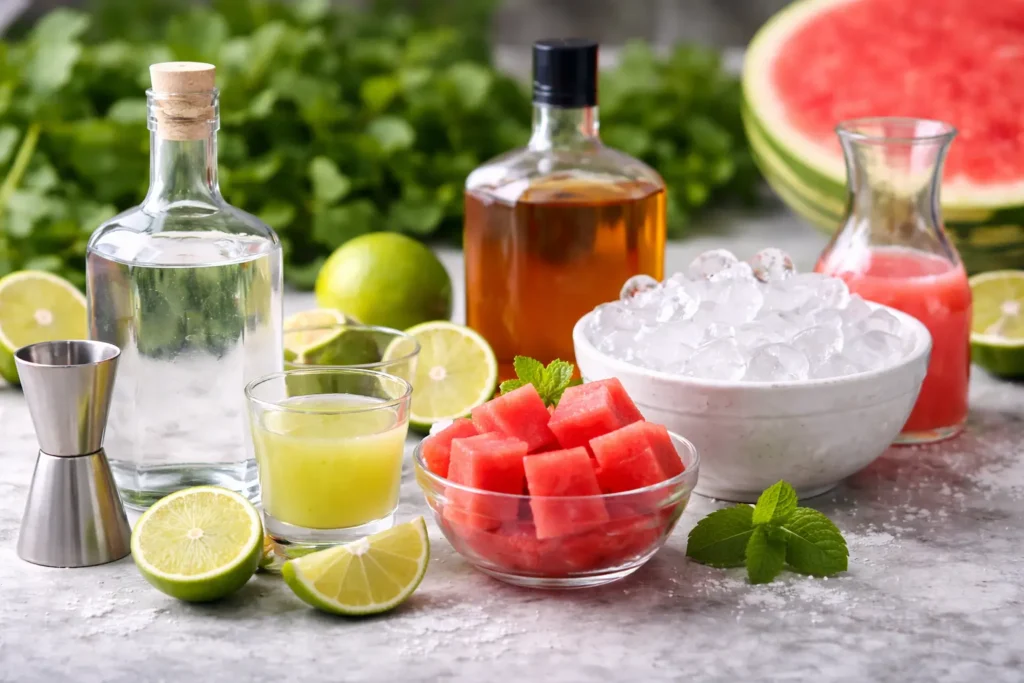
Watermelon is roughly 92% water. That number matters because margaritas already involve dilution through shaking and ice.
When you combine watermelon juice with lime juice and then shake aggressively over ice, you are stacking water on water on water.
Everything becomes softer. The tequila feels muted because alcohol perception drops with excess dilution. A tequila that tastes vibrant in a classic margarita can suddenly become invisible here. Citrus loses structure faster than expected. Sweetness becomes harder to judge accurately; watermelon tastes sweeter when eaten than when mixed into cocktails.
Once I understood this, I stopped treating watermelon margaritas like fruit-forward drinks and started treating them like delicate high-water cocktails that need active protection from over-dilution at every stage.
How to Pick a Watermelon That Will Actually Make a Good Drink
Most cocktail recipes barely mention the fruit itself, which makes no sense for this drink since the watermelon is everything.
I look for several things before cutting. A heavy watermelon for its size usually means higher moisture content and more consistent ripeness. A creamy yellow field spot, not white, on the underside indicates the melon had time to ripen fully on the ground. White spots often mean it was picked too early.
Strong aroma near the stem end matters enormously. If it smells like almost nothing, the cocktail probably will too.
Look also for sugar spots, rough brownish patches where natural sugar has seeped through the skin. Most people think this looks like damage. They are actually a positive sign of ripeness. Similarly, small dark pollination points near those sugar spots indicate good development. These are the watermelons you want.
Seedless watermelon is easier to prepare, but flavor matters more than seed type. I avoid pre-cut supermarket containers whenever possible, once watermelon sits exposed in refrigeration for too long, the aroma dulls noticeably, and the cocktail loses freshness before mixing starts.
Seasonal Variability, Why July Tastes Different from October
This surprised me significantly during testing.
Peak-summer watermelon behaves differently from late-season fruit. July watermelon tends to taste brighter, cleaner, and more aromatic. By early autumn, sweetness softens, and fragrance decreases.
That means your recipe needs adjustment depending on when you are making it. In midsummer, I often skip agave entirely; the fruit carries the drink on its own. In weaker watermelon months, I sometimes add a small amount of agave, but carefully. Too much sweetener flattens the drink faster than most people expect.
The goal is not to make watermelon taste sweeter. The goal is to make it taste more like itself.
How to Extract Watermelon Juice Without Ruining the Drink
This is where many homemade versions go wrong before the first ingredient hits the shaker.
Watermelon does not need aggressive blending. Over-processing incorporates foam and air, which changes both texture and appearance after shaking. I cube the watermelon, blend only until smooth, then immediately fine-strain it.
After straining, I let the juice rest in the refrigerator for about 20 to 30 minutes. The foam rises, and some heavier water settles slightly underneath. Pouring from the richer upper portion gives noticeably better flavor concentration than using it immediately.
That step sounds unnecessary until you taste the difference side by side. It was the single biggest improvement I found during testing, more impactful than changing tequila brands or adjusting ratios.
What to Do When Your Watermelon Is Not Sweet Enough
Every home bartender eventually cuts open a watermelon and discovers it is pale, bland, and lacking the flavor the cocktail needs.
Do not throw it out. Sugar maceration is a culinary technique that can rescue mediocre fruit.
Cube the watermelon, toss with a small amount of granulated sugar, roughly one teaspoon per cup of cubed fruit, and let it rest in a bowl for 30 minutes. The sugar draws out moisture through osmosis and concentrates the fruit’s natural flavor in the resulting liquid. The juice you drain from that bowl will taste noticeably more intense than fresh-pressed juice from the same fruit.
Blend and strain that macerating liquid rather than plain fresh-pressed juice. The cocktail will taste significantly better, even from fruit that seemed too bland to use.
The Rind Bitterness Problem Nobody Warns You About
One batch taught me this quickly and definitively.
During testing, I included pale white flesh near the rind because I did not want to waste fruit. The bitterness was subtle in the juice alone but became clearly noticeable once mixed with tequila and lime, a vegetal edge that clashed badly with the citrus oils.
Watermelon rind contains compounds that interact unpleasantly with alcohol in a way that eating fresh watermelon does not reveal.
Now I stay firmly in the deep red flesh and stop well before the pale layer. Losing a small amount of yield is completely worth it.
The Ingredient Decisions That Matter for This Specific Fruit
Watermelon exposes every supporting ingredient because its own flavor is so delicate. With stronger fruits, you can sometimes hide mediocre choices. With watermelon, everything becomes more noticeable than usual.
Tequila: What Survives Watermelon’s Delicate Character
I strongly prefer blanco tequila here. Reposado often adds vanilla and oak notes that sit on top of the fruit rather than inside it. A clean peppery blanco keeps the drink brighter and sharper.
This is one of the few margaritas where I actively avoid heavily smoky builds. Smoke dominates watermelon very easily. I made one version with too much mezcal that tasted more like campfire with pink coloring than actual fruit. That said, a small mezcal split, one and a half ounces blanco with half an ounce mezcal, adds interesting smokiness that works beautifully without overwhelming the fruit.
Lime Juice: More Than Feels Right When the Fruit Is Mostly Water
Most people underestimate watermelon cocktails. Because watermelon is low in acidity, the drink needs more structural help from citrus than instinct suggests. Without enough lime juice, the cocktail tastes flat and blurry.
Yet there is a narrow window. Too much lime completely erases the fruit.
After testing smaller and larger amounts repeatedly, one ounce of fresh lime juice for a standard serving is the ratio that consistently worked. Fresh lime matters enormously here; bottled juice tasted harsh and oddly metallic against watermelon’s delicate character.
Orange Liqueur: Dry vs Sweet with a Neutral-Sweet Fruit
A very sweet triple sec can make watermelon margaritas taste juvenile fast because watermelon itself already reads as soft sweetness. Drier orange liqueurs like Cointreau give better results, the cleaner finish helps the fruit stay fresh instead of syrupy.
My Go-To Watermelon Margarita on the Rocks
After a lot of testing, this became the version I actually wanted to drink repeatedly rather than simply admire for its colour.
Ingredients
- 2 oz blanco tequila Clean and peppery, oak character competes with watermelon rather than supporting it.
- 1 oz fresh lime juice. Fresh matters more here than in almost any other fruit margarita.
- 1 oz Cointreau Dryness keeps the drink sharp, where watermelon wants to push it soft.
- 2½ oz fresh strained watermelon juice. Rest in the refrigerator for 20–30 minutes after straining if possible.
- ¼ oz agave syrup, only if needed after tasting. Peak-season watermelon usually needs none.
- A small pinch of salt added directly to the shaker sharpens the watermelon flavor noticeably without tasting salty.
- Ice, Tajín, or coarse salt for rim
Instructions
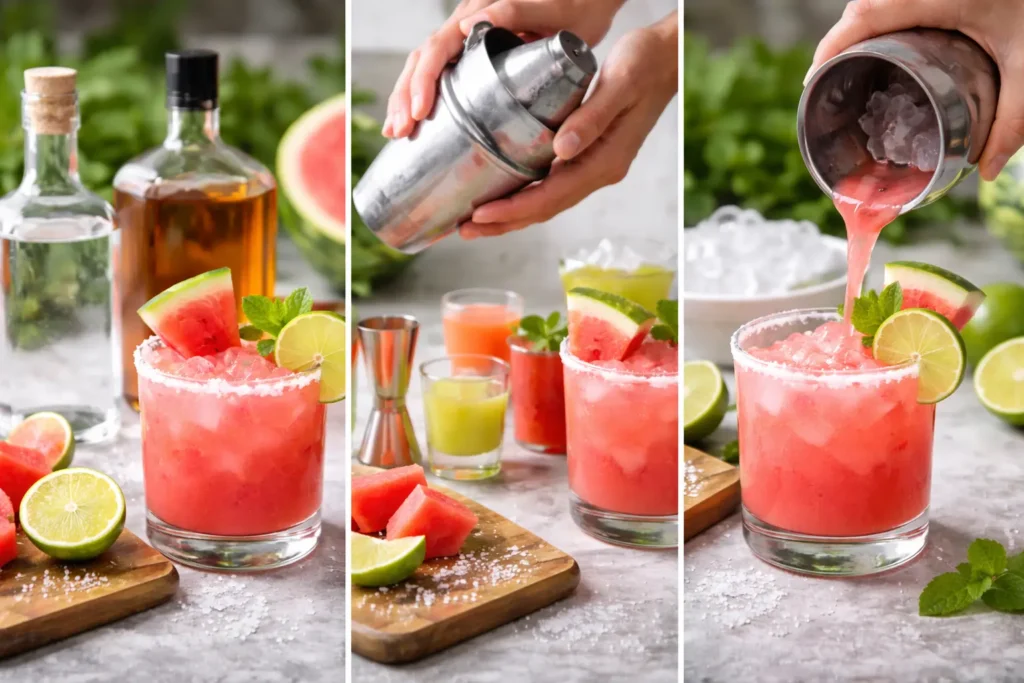
Rim half the glass with Tajín or salt. A full rim becomes exhausting quickly with a drink this delicate.
Add all liquid ingredients plus the pinch of salt to a shaker filled with ice.
Shake firmly for about 10 seconds. Not longer. That timing surprised me the first time I tested it carefully, the difference between 10 seconds and 20 seconds was immediately obvious in the glass. Watermelon juice is already thin, and dilution compounds faster here than with any other fruit margarita.
Double strain into the rimmed glass over fresh ice and serve immediately.
Why Double Straining Changes the Drink Completely
This cocktail improves dramatically with double straining, and most recipes treat it as optional when it is not.
Without it, tiny watermelon solids and foam fragments continue separating in the glass. After three or four minutes, the drink becomes pulpy and inconsistent, clearer liquid on top, heavier material settling below.
Double straining keeps the texture clean and consistent from first sip to last. It also keeps the colour more vivid for longer because the foam particles that cause premature dulling are removed before they can settle.
Frozen Watermelon Margarita: The Ice Trap That Ruins Most Versions
Frozen watermelon margaritas sound like the perfect summer drink until they melt into weak pink water within five minutes.
The problem is that watermelon already behaves like partially melted ice in a blender. Adding a full cup of additional ice on top creates massive dilution. The drink collapses before you finish the first glass.
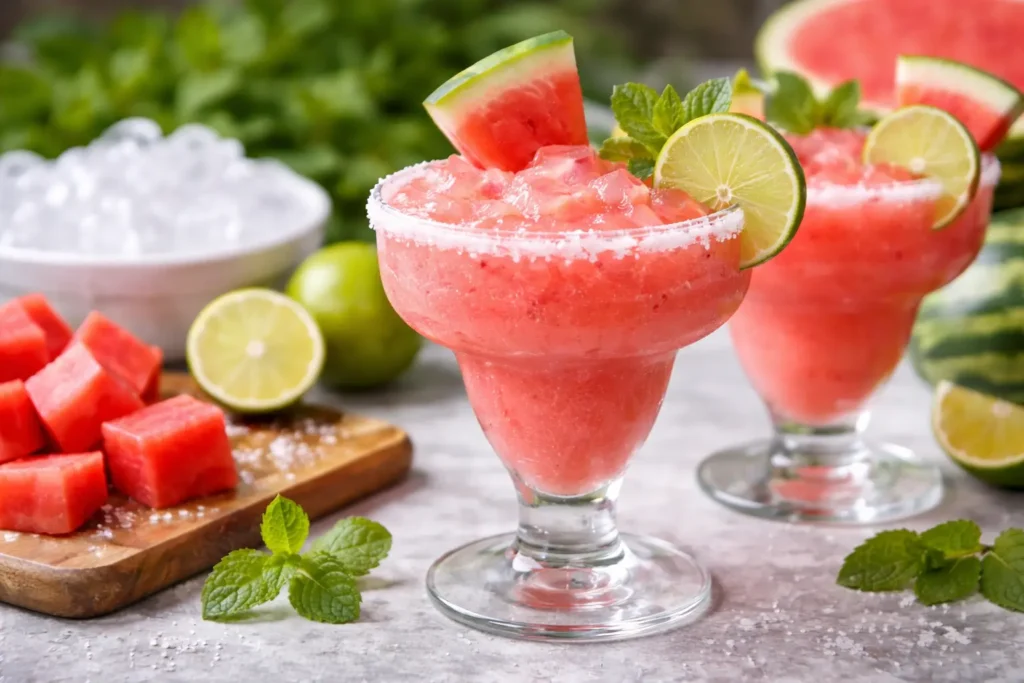
The solution is using frozen watermelon cubes as the primary frozen element with very little added ice.
Prepare the frozen cubes correctly: spread watermelon chunks in a single layer on a baking sheet lined with parchment paper and freeze for at least four to six hours. Single-layer freezing prevents clumping in the blender; frozen chunks clumped together in a bag create uneven blending and inconsistent texture.
Once frozen, blend with only a small handful of additional ice. The frozen watermelon provides both cold temperature and body temperature simultaneously. The drink holds together and keeps its flavor much longer than ice-heavy versions.
Why Watermelon and Mint Work Together and How to Use Them
Mint works beautifully here because watermelon lacks aggressive acidity or tannin that would fight with the herb.
The cooling menthol effect amplifies the fruit’s refreshing character through a different sensory pathway than citrus does; lime sharpens acidity, mint creates a perception of coolness that makes the watermelon feel even more summer-appropriate.
The technique matters. I never muddle mint aggressively with this drink. Lightly slapping mint leaves between palms before using them as a garnish releases aroma without shredding the herb into bitter fragments that turn the drink grassy. That distinction matters more than most recipes acknowledge.
The Soda Water Option for Extremely Hot Days
On particularly hot days, I sometimes add a small splash of soda water to the finished drink and find it genuinely improves the experience.
No more than half an ounce should be added to the glass after straining. It lightens the texture slightly and creates a subtle carbonation that makes the drink feel even more refreshing without changing the flavour in any meaningful way. The watermelon character stays intact. The lime stays sharp. The drink just feels a little livelier on the palate.
Do not add it before or during shaking. The carbonation disappears immediately if shaken, and the dilution throws off the balance you built. Add it after pouring, then serve straight away.
The Colour Fade Problem When Batching for Parties
Fresh watermelon cocktails lose visual brightness quickly in ways that cranberry and prickly pear do not.
After batching for a gathering once, I noticed the vivid pink-red colour faded within a couple of hours. Oxidation and separation dull the appearance faster than almost any other fruit margarita. Watermelon simply does not hold colour like berries or beets.
Now I batch the tequila, lime, and orange liqueur ahead of time and add fresh watermelon juice no more than thirty minutes before serving. Keeping the juice cold and sealed in a covered container slows the fading, but watermelon will always fade faster than other fruits regardless of storage.
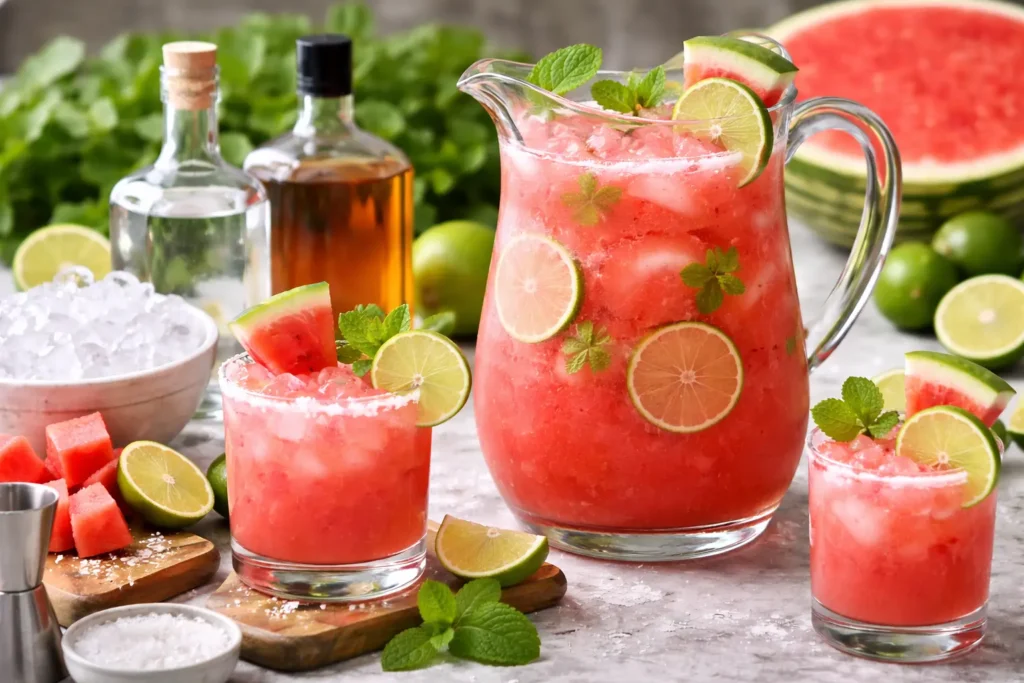
For a pitcher serving eight:
- 1½ cups blanco tequila
- 1 cup Cointreau
- 1 cup fresh lime juice
- 2 cups fresh strained watermelon juice, added 30 minutes before serving
- Agave to taste, approximately 2 tablespoons
Shake individual servings from the pitcher rather than pouring straight into glasses. The aeration from shaking each drink keeps the flavour brighter and slows visual fading per glass.
I Made This Drink Watery for Months Before I Found the Fix
For a long time, I thought my ratios were wrong. I tried stronger tequila, more lime, more agave, and less orange liqueur. None of those solved the real issue because the problem was dilution all along, not proportion.
The fix ended up being a combination of smaller changes: less aggressive shaking, better watermelon selection, the resting technique for extracted juice, frozen fruit instead of ice for blended versions, and double straining.
None of those are dramatic interventions. Together they transformed the drink from weak pink water into something that tastes bright, cooling, juicy, and unmistakably summery. Once I treated watermelon as a fragile ingredient rather than a bold one, the recipe finally clicked.
A Watermelon Margarita Question Worth Answering
Do you actually need fresh watermelon juice?
Yes. I tested bottled watermelon juice specifically because readers ask about it constantly. Most packaged versions tasted either cooked, stale, or oddly cucumber-like after mixing with tequila and lime. The difference was immediately noticeable.
Fresh watermelon aroma disappears quickly after processing, and that aroma is half the appeal of this cocktail. For many margaritas, a shortcut works reasonably well. For a proper watermelon margarita, fresh juice is the one shortcut that should not be taken.
Faqs
What tequila is best for watermelon margaritas?
For watermelon margaritas, blanco (silver) tequila is generally the best choice. Blanco tequila is either unaged or aged for a very short time, which means it has a clean, bright agave flavor that pairs naturally with fresh fruit. Because watermelon has a light, refreshing taste, an aged tequila like reposado or añejo can sometimes overpower it with oak and vanilla notes.
Look for a 100% agave tequila rather than a “mixto,” as it delivers a smoother flavor and fewer additives. Popular blanco options many home bartenders use include brands like Patrón, Don Julio, and Espolòn. The key is quality and balance; you want the tequila to support the watermelon, not compete with it.
Do watermelon and tequila go together?
Yes, watermelon and tequila go very well together. Watermelon is naturally sweet, mildly aromatic, and high in water content, which makes it refreshing and easy to blend into cocktails. Tequila, especially blanco tequila, has herbal and citrusy agave notes that complement watermelon’s light sweetness.
The combination works particularly well in warm-weather drinks because both ingredients feel crisp and cooling. Adding fresh lime juice enhances the pairing even more, since acidity balances watermelon’s sweetness and highlights the natural brightness of tequila. This balance of sweet, tart, and spirit-forward is what makes watermelon margaritas so popular.
Why is a margarita so high in calories?
A margarita can be high in calories mainly because of its alcohol and added sugars. Alcohol itself contains about 7 calories per gram, which is nearly as calorie-dense as fat. A standard serving of tequila (1.5 oz) already contributes a significant portion of calories before mixers are added.
Many margaritas also include orange liqueur and sweeteners like simple syrup, agave nectar, or pre-made sour mix. Store-bought margarita mixes are often especially high in added sugar, which increases total calorie count quickly. Frozen margaritas may contain even more calories due to larger serving sizes and extra sweeteners used to balance dilution.
To reduce calories, use fresh lime juice, limit added sugar, and avoid overly sweet commercial mixes.
How do you make a watermelon margarita slushie?
To make a watermelon margarita slushie, start with fresh watermelon cubes that have been frozen. Freezing the fruit helps create a thick, icy texture without relying too heavily on added ice, which can dilute flavor.
Blend frozen watermelon with blanco tequila, fresh lime juice, and a small amount of orange liqueur. If the watermelon is very sweet, you may not need additional sweetener. Blend until smooth and thick. If the mixture is too thin, add more frozen watermelon; if too thick, add a splash of lime juice or cold water.
Serve immediately for the best texture. Because watermelon contains a lot of water, the slushie will melt faster than thicker fruit blends, so it’s best enjoyed right away.
What not to mix with watermelon?
Watermelon is delicate and high in water, so it doesn’t pair well with very heavy, creamy, or strongly flavored ingredients. Dairy products like cream or milk can clash with watermelon’s texture and may curdle when mixed with acidic ingredients like lime.
Strong, bitter liqueurs or heavily oaked spirits can also overpower watermelon’s subtle sweetness. For example, intensely smoky or heavily aged spirits may dominate the drink instead of complementing it.
Watermelon works best with light spirits (like blanco tequila), citrus juices, fresh herbs such as mint or basil, and mild sweeteners. When in doubt, keep flavors clean and balanced to let the fruit shine.
References:
The Cocktail Atlas: Professional Margarita Guide
Cocktailogy: Easy 3-Ingredient Margarita
Flavor365: Original Margarita Step-by-Step

Muhammad Hussain is the creator of MargaritaLab.com, where he tests and analyzes margarita recipes, ingredients, and techniques to help readers make better drinks at home. Over time, he has experimented with different tequila types, lime juice variations, and store-bought mixes to understand what actually makes a balanced margarita.
His approach combines hands-on testing with detailed research, focusing on real-world results rather than theory. Whether comparing fresh vs bottled lime juice or reviewing popular margarita mixes, his goal is to simplify the process and share what truly works.
Pingback: Is Triple Sec Strong? What Most People Get Wrong Before Mixing
Pingback: Cointreau vs Orange Liqueur: Discover the Best Choice for Your Margarita
Pingback: Best Margarita Recipe: I Compared 6 Famous Versions Against My Own 2:1:1