|
Getting your Trinity Audio player ready... |
The first time I made a mezcal margarita, I treated it exactly like a tequila margarita with smoke added. Same ratio. Same lime level. Same orange liqueur amount. Same expectations.
It tasted harsh, oddly thin, and much smokier than it actually was.
That was the moment I realised the biggest mistake most mezcal margarita recipes make: they assume smoke is the main difference. It is not. Smoke changes how you perceive acidity, sweetness, texture, and even alcohol heat. A mezcal margarita is not simply a tequila margarita with campfire flavour layered on top. The entire structure of the drink behaves differently.
Once I started adjusting for that instead of fighting it, the cocktail became dramatically better.
Why a Mezcal Margarita Is Not Just a Smoky Tequila Margarita
Tequila and mezcal may both come from agave, but they do not drink the same way.
A good tequila margarita usually feels bright first. Lime leads. Orange follows. The agave backbone sits underneath. Mezcal flips that order around. Smoke and earthiness hit immediately, which changes how your palate interprets both acid and sweetness from the very first sip.
That matters because lime juice becomes sharper against smoke. I noticed this most clearly when testing versions with identical ratios; the tequila version tasted balanced, while the mezcal version tasted aggressively acidic, even though the lime measurement had not changed at all.
Smoke exaggerates dryness. That is the core insight this entire article is built around. It explains why many mezcal margaritas fail, they are technically balanced on paper but emotionally out of balance in the glass.
How Mezcal Is Made, and Why the Production Creates a Fundamentally Different Spirit
The production process explains almost everything about the flavour difference.
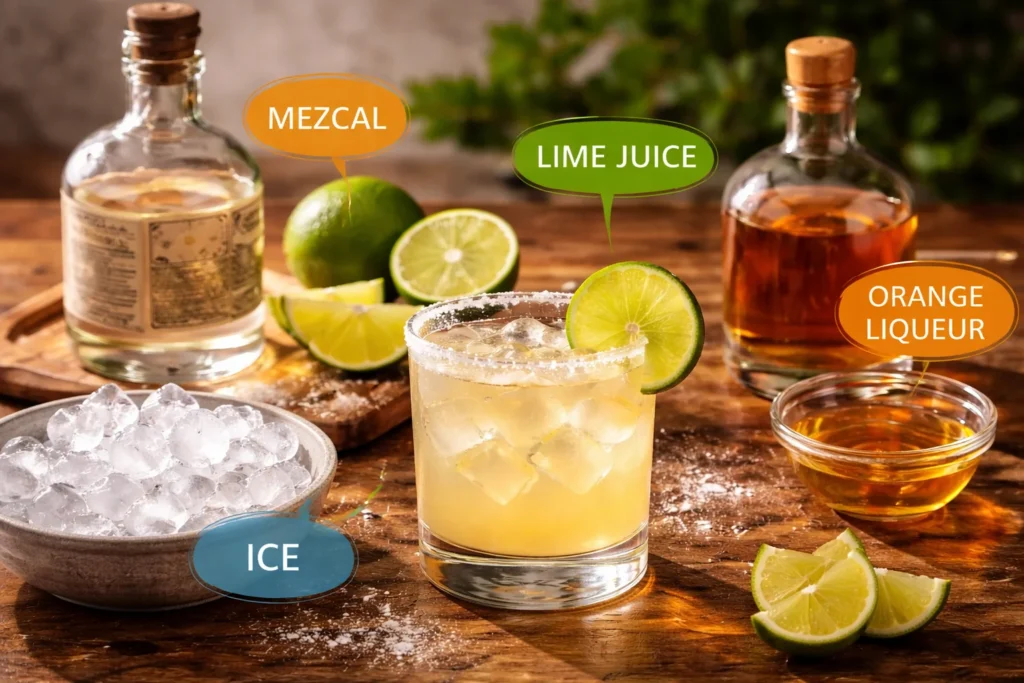
Tequila production typically uses steam ovens or autoclaves to cook agave. Mezcal traditionally roasts agave hearts underground in earthen pits lined with hot stones and burning wood. That roasting process caramelises sugars while infusing the agave with smoke compounds before fermentation even begins, which means the smoke is not added to the spirit, it is baked into the raw ingredient from the very beginning.
Then things become even less standardised. Many mezcals are still produced in small palenques using wild fermentation, open-air conditions, copper or clay distillation, and regional traditions that vary widely across Oaxaca and other producing regions. That variability is exactly why one mezcal margarita recipe can taste beautifully integrated while another feels like drinking lime juice beside a bonfire.
The spirit itself changes everything before you even touch the shaker.
The Mezcalita’s Origin: What the Name Actually Means
Through research and tasting, I found that mezcalita is essentially shorthand for a mezcal-based margarita or mezcal sour variation. The name appears to have emerged informally in Mexican bar culture as mezcal began reaching wider audiences.
In practice, the term gets used in a few different ways. Some use mezcalita for any margarita made entirely with mezcal instead of tequila. Others use it for fruit-forward mezcal cocktails with muddled ingredients or chilli. A few reserve mezcal margarita for split-base versions containing both spirits together.
There is no universally enforced distinction, and in my experience the terminology matters far less than understanding the smoke level in the glass. A drink called either name can be excellent or exhausting depending on how thoughtfully the smoke was handled.
The Smoke-Acid Problem: Why Lime Juice Behaves Differently Here
I did not fully understand this drink until I started reducing lime juice.
That sounds backwards because margaritas are supposed to be bright and citrus-forward. But mezcal reacts differently to citrus than tequila does. Heavy smoke plus high acid creates a sensation that feels thinner and more aggressive than the actual recipe ratio suggests. Lime can flatten the earthy sweetness inside mezcal if pushed too hard, the acid suppresses the aromatic compounds that make the spirit interesting rather than simply adding brightness.
During testing the most balanced version I made used three quarters of an ounce of lime juice instead of a full ounce, slightly higher dilution, and softer sweetness from agave syrup rather than plain syrup.
The difference was immediate. The smoke became integrated instead of dominant. The agave notes reappeared. The finish stopped tasting dry and jagged.
This is the single adjustment I wish more recipes explained.
Cointreau vs Simple Syrup: The Decision That Divides Mezcal Margarita Recipes
This is where mezcal margarita recipes split into two camps and both have genuine merit.
One side uses orange liqueur as the only sweetener. The other adds syrup separately and reduces or removes the orange liqueur entirely. I have tested both extensively and the honest answer is more nuanced than either camp usually admits.
Cointreau brings structure. Its bitterness and orange oil notes connect beautifully with mezcal’s smoky edges. But used as the sole sweetener at standard quantities, the drink can finish muddy and flat, the orange character actively competes with the smoke rather than framing it. The mezcal disappears behind the citrus of the liqueur rather than being supported by it.
Simple syrup fixes the dryness problem but can make the cocktail feel disconnected. White sugar sweetness sits on top of the smoke instead of inside it, which creates a drink that tastes assembled rather than integrated.
Agave syrup worked best in my testing. Not because it is fashionable but because it tastes structurally related to the spirit. The earthy sweetness fills the gaps in the flavour profile without competing with the mezcal’s character.
My preferred approach is a combination: half an ounce of Cointreau for brightness and aroma alongside a quarter ounce of agave syrup for texture and integration. That combination consistently tasted more complete than either approach alone and prevented both the muddied-flat problem and the disconnected sweetness problem.
Choosing the Right Mezcal: Espadín vs Wild Agave and Why It Matters
Most people should start with espadín.
Not because wild agave mezcals are worse, they are often extraordinary. But many are too complex or too expensive for regular citrus mixing, and their specific character profiles often do not survive the combination well.
Espadín gives you moderate smoke, better consistency between bottles, enough vegetal sweetness to survive lime juice, and a lower cost that makes experimentation less painful.
Wild agave mezcals can become overwhelming in a margarita. Some disappear entirely behind citrus while others dominate the drink so aggressively that balance becomes impossible. I made one mezcal margarita with a beautifully funky tobalá mezcal that I genuinely loved drinking neat. In the cocktail it tasted like burnt rubber and grapefruit peel. Expensive lesson.
A margarita compresses flavours and removes nuance faster than people expect. Save the special bottles for sipping.
All Mezcal vs Split Base: Two Genuinely Different Cocktails
This decision changes the character of the drink more than any other single choice.
An all-mezcal margarita is intense, earthy, smoky, dry, and sometimes almost savoury. It is a contemplative cocktail that demands attention.
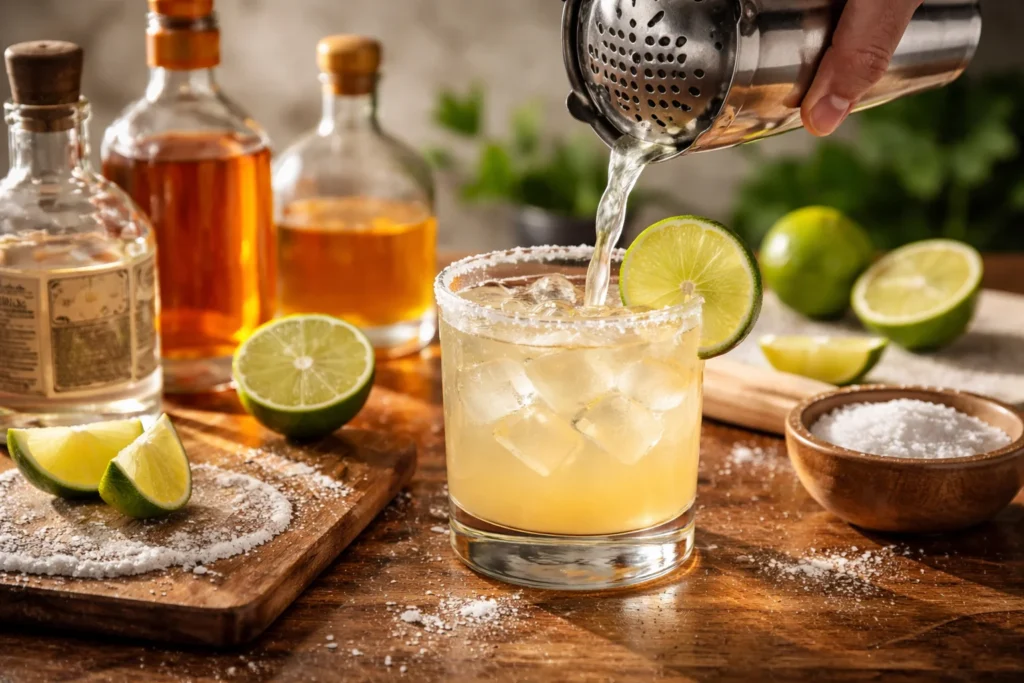
A split-base version, typically one and a half ounces of tequila alongside half an ounce of mezcal, is softer and more approachable. The tequila restores citrus brightness while the mezcal adds depth and complexity underneath without dominating. Many people who think they dislike mezcal margaritas have only tried full-smoke versions. The split-base version consistently surprised guests who expected to be overwhelmed.
I reach for all-mezcal when I want something to think about. I use split-base when serving groups or when I want the drink to invite a second round rather than demand recovery time.
How Smoke Intensity Varies Between Brands and How to Adjust for It
Not all mezcals taste equally smoky and treating them identically in the same recipe is one of the most consistent mistakes home bartenders make with this drink.
Some espadín mezcals are soft, citrusy, and barely smoky. Others taste like roasted peppers and wet charcoal. When smoke intensity increases significantly I reduce lime slightly, extend the shake for more dilution, pull back the Cointreau, and avoid heavily seasoned rims that intensify the dryness further.
One heavily smoky mezcal I tested became dramatically better with just half an ounce of lime juice instead of three quarters. That tiny adjustment transformed it from harsh and aggressive to genuinely interesting.
The same recipe that works perfectly with a medium-smoke espadín may be undrinkable with a high-smoke artisanal bottle. Flexibility matters here more than in any other spirit category.
The Ingredient Decisions That Matter for This Specific Spirit
Orange Liqueur or Simple Syrup: After Testing Both Here Is Where I Landed
For tequila margaritas I often rely entirely on orange liqueur. For mezcal margaritas I almost never do anymore.
The combination of half an ounce of Cointreau plus a quarter ounce of agave syrup gave me the best texture and integration across multiple testing sessions. The drink stayed bright without becoming austere and the mezcal character remained clearly present throughout.
Lime Juice: The Ratio That Keeps Smoke Intact
Three quarters of an ounce became my consistent sweet spot for most espadín mezcals. For extremely smoky bottles even half an ounce can work better. I never start with a full ounce in a mezcal margarita because the lime-smoke interaction almost always creates imbalance at that level.
Sweetener Type: Why Agave Syrup Connects More Naturally
White sugar syrup sweetens the drink. Agave syrup supports the spirit.
That distinction sounds subtle until you taste both versions back to back. Agave syrup carries earthy roasted notes that bridge the gap between lime and smoke in a way that white sugar simply cannot. In this specific cocktail that difference is consistently noticeable even for people who cannot articulate why one version tastes more cohesive than the other.
Maple syrup is also worth trying, it adds caramel warmth that connects to smoke through a different sensory pathway from agave. I tested it once out of curiosity and found it created a noticeably richer cocktail with deeper autumn character. Not my everyday preference but genuinely interesting with a lightly smoky espadín.
My Go-To Mezcal Margarita Recipe
This is the version I keep returning to after dozens of tests.
Ingredients
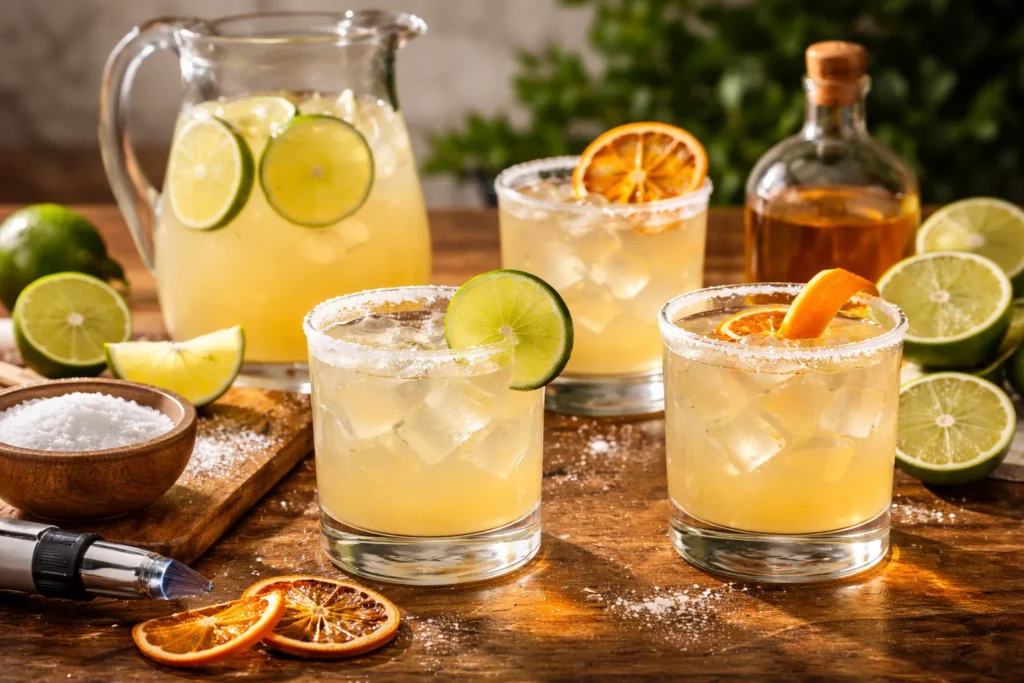
- 2 oz espadín mezcal The cleaner the smoke character, the more the drink rewards attention.
- ¾ oz fresh lime juice Less than a standard margarita. The smoke-acid interaction demands restraint.
- ½ oz Cointreau Enough for brightness without muddying the mezcal.
- ¼ oz agave syrup Supports the spirit rather than simply sweetening it.
- Pinch of sea salt directly in the shaker Connects all elements more cohesively than no salt. Different from rim salt.
- Optional: half sal de gusano rim or half kosher salt rim
Instructions
Add all ingredients to a shaker with plenty of cold ice.
Shake harder and slightly longer than you would for a standard margarita, around 14 to 15 seconds. Mezcal genuinely benefits from a bit more dilution than tequila does because extra water softens the smoke-acid sharpness.
Strain over fresh ice in a rocks glass.
Taste before deciding on the rim. Salt amplifies smoke intensity faster than most people expect. A drink that tastes balanced without a rim can become dry and harsh with a full salt rim.
Garnish with a lime wheel or serve bare. The drink already has enough visual presence from the colour.
The Citrus Question: Lime vs Grapefruit in a Mezcal Margarita
Lime is the standard but grapefruit is genuinely worth exploring.
I tested grapefruit juice in place of lime after considering how its bitterness and lower acidity might interact differently with smoke. The result was a softer, more complex drink where the grapefruit bitterness complemented the smoky earthiness in a way that lime’s sharp citric acidity does not. The drink felt more integrated from the first sip, without the characteristic lime-smoke edge that requires careful ratio management.
The challenge is adjusting sweetener accordingly, grapefruit brings less acidity than lime which means the agave syrup needs a slight increase to maintain balance.
I now consider grapefruit a legitimate alternative for people who find the standard lime version too aggressive or for situations where I want the smoke character to feel more prominent and less contrasted.
The Side-by-Side Test: Tequila Margarita vs Mezcal Margarita in the Same Glass
I made three drinks back to back and tasted them in sequence: a classic tequila margarita, a split-base version, and a full mezcal version, all with the same proportions.
The tequila version felt vibrant and uncomplicated. Bright, refreshing, exactly what a margarita is supposed to be. After drinking it I would have been happy to have another immediately.
The split-base version felt deeper and more interesting. The smoke gave the drink a second dimension that the tequila version lacked. It did not demand attention the way the full mezcal version did but it rewarded it if you paid attention. This was the version I wanted to drink twice in a row.
The full mezcal version was the one that changed how I thought about margaritas. It suddenly made the tequila version feel like it was missing something important. But it was also the version I could only drink slowly and deliberately, not because it was bad but because every sip asked for more consideration than a casual summer cocktail usually requires.
That comparison taught me something important: the split-base version is the most liveable of the three. The full mezcal version is the most interesting. Choose based on what you want from the experience, not just which one sounds more impressive.
Sal de Gusano and Spiced Salt Rims: The Options That Actually Belong Here
Regular kosher salt works, but mezcal opens the door to rim options that connect to the spirit’s heritage rather than simply contrasting it.
Sal de gusano, the traditional Oaxacan seasoning made from salt, chilli, and ground agave worms, reinforces the earthy character already present in the spirit and creates a rim experience that feels genuinely connected to the drink rather than decorative. If you can source it, it is worth using specifically with mezcal.
For those who cannot source sal de gusano, these alternatives work in different ways. Smoked salt in very small amounts reinforces rather than duplicates the smoke character. Chilli-lime salt works well with split-base versions where the tequila component softens the overall intensity enough to handle the additional spice. Black lava salt adds mineral sharpness and visual contrast without adding competing flavour.
What I avoid is heavily seasoned Tajín-style rims on already smoky mezcals. Too much chilli-lime plus smoke together can flatten the drink into a single aggressive note that obscures everything interesting underneath.
The Spicy Mezcal Margarita: Why Smoke and Heat Stack Differently Than Expected
Heat behaves differently with mezcal than with tequila and most spicy mezcal recipes do not account for this.
Capsaicin and smoke amplify each other in a specific way, both create drying sensations on the palate that compound rather than contrast. Even mild jalapeño infusion can feel significantly more aggressive once smoke enters the picture because the two sensations stack on the same receptors rather than balancing across different ones.
The mistake I made early was using the same chilli level I would use in a tequila margarita. The mezcal version became exhausting halfway through the glass, not because it was painfully hot but because the combined dryness of smoke and heat made every sip feel like work.
Now I use fewer pepper slices, shorter infusion time, and slightly more dilution when making spicy mezcal versions. Smoke creates the illusion of extra heat even when the actual chilli level is moderate and the recipe needs to account for that perception rather than just measuring capsaicin.
The Mezcalita vs the Mezcal Margarita: What the Difference Actually Means
In real-world bartending the terms overlap constantly and most bars use them interchangeably.
The occasional distinction I encounter is that mezcalita implies something more casual and ingredient-forward, fresh fruit, chilli, muddled herbs, Tajín rims, while mezcal margarita implies a more classic structure built around the spirit’s character. But this is a convention rather than a rule, and the naming matters far less than whether the recipe respects how smoke changes the balance.
The important question is not what the drink is called. It is whether the recipe was built around the mezcal or simply adapted from a tequila recipe with the spirit swapped out.
Why Mezcal Almost Never Works Frozen
Frozen margaritas depend on brightness and refreshment. Mezcal thrives on aroma and earthy complexity.
Blending dulls both. Cold temperatures mute the agave complexity that makes mezcal interesting while ice dilution flattens smoke into something muddy and strangely bitter. I tested several frozen versions and every one tasted less expressive than the shaken equivalent, not just slightly less interesting but genuinely worse.
Tequila survives freezing better because its cleaner citrus profile still cuts through ice. Mezcal’s complexity often disappears into it entirely. If someone specifically requests a frozen mezcal margarita, a split-base version with mostly tequila and a small mezcal float after blending preserves more of the smoke character than full blending does.
Batching a Mezcal Margarita Without Losing the Smoke Character
Batching works but dilution becomes even more critical than usual.
Smoke gets dull faster in large-format mixes sitting in refrigeration. The drink can start tasting flat and vaguely bitter instead of expressive and earthy after a few hours. The best approach I found was reducing pre-added water slightly, shaking individual servings harder at service to restore aeration, and keeping the citrus extremely fresh, day-of squeezed rather than the night before.
For parties I strongly prefer split-base mezcal batches over full mezcal. Full mezcal batches fatigue the palate surprisingly quickly over multiple rounds, especially as the smoke character concentrates slightly as the batch sits. The split-base version remains more approachable across the length of a gathering.
A Mezcal Margarita Question Worth Answering
The most common question I hear is whether cheap mezcal works in a margarita.
Yes, but only to a point.
Unlike tequila margaritas where citrus can cover rough spirit character reasonably well, mezcal margaritas expose harsh smoke immediately. Rough mezcal becomes harsher once lime enters the equation because the acid-smoke interaction amplifies unpleasant notes rather than softening them.
The drink does not require ultra-premium mezcal. But it does require something clean enough to taste intentional. A solid mid-range espadín is usually the sweet spot, smooth enough to work in a cocktail, characterful enough to justify using mezcal over tequila in the first place.
Faqs
Can I use mezcal instead of tequila for Margaritas?
Yes, you can use mezcal instead of tequila to make a margarita. In fact, this variation is commonly called a mezcal margarita or mezcalita. Both mezcal and tequila are made from agave, but mezcal has a distinct smoky flavor because the agave hearts are traditionally roasted in underground pits. When you substitute mezcal for tequila in a margarita recipe, you keep the classic structure of lime juice and orange liqueur, but the drink becomes smokier, earthier, and more complex. If you prefer a balanced flavor, many bartenders recommend starting with a 50/50 mix of mezcal and tequila before switching fully to mezcal.
What is the ratio for mezcalita?
The standard mezcalita ratio follows the classic margarita formula: 2 ounces mezcal, 1 ounce fresh lime juice, and 1 ounce orange liqueur such as Cointreau or Triple Sec. This 2:1:1 ratio creates a balanced cocktail with strong agave flavor, bright acidity, and slight sweetness. Some people prefer a slightly less sweet version using 2 ounces mezcal, 1 ounce lime juice, and ½ ounce orange liqueur. Fresh lime juice is important for proper balance, and the drink is typically shaken with ice and served in a salt-rimmed glass.
Is mezcal stronger than tequila?
Mezcal is not necessarily stronger than tequila. Both mezcal and tequila usually contain between 38% and 55% alcohol by volume (ABV), although most bottles sold internationally are around 40% ABV. The perception that mezcal is stronger often comes from its smoky and intense flavor rather than its alcohol content. Always check the label for exact ABV, as strength varies by brand and production method.
What’s the difference between a margarita and mezcalita?
The main difference between a margarita and a mezcalita is the base spirit. A traditional margarita uses tequila, while a mezcalita uses mezcal. Tequila is a specific type of mezcal made only from blue Weber agave and primarily produced in certain regions of Mexico, including Jalisco. Mezcal can be made from several types of agave and is commonly associated with regions like Oaxaca. Flavor is the biggest distinction: margaritas taste crisp and citrus-forward, while mezcalitas have a smoky, earthy depth due to the roasting process used in mezcal production.
Is mezcal bad for your liver?
Mezcal, like all alcoholic beverages, can harm your liver if consumed in excess. The liver processes alcohol, and heavy or long-term drinking increases the risk of liver conditions such as fatty liver disease, alcoholic hepatitis, fibrosis, and cirrhosis. There is no scientific evidence that mezcal is healthier or safer for the liver than tequila or other spirits. Health authorities such as the World Health Organization state that alcohol consumption carries health risks, and the safest level of drinking for overall health is low or none. If you choose to drink, moderation is key.
References
Mezcal Margarita from Mezcal Culture
Mezcal Margarita on DrinksWorld
Wisdom Library – Mezcal Nutrition & Health Considerations

Muhammad Hussain is the creator of MargaritaLab.com, where he tests and analyzes margarita recipes, ingredients, and techniques to help readers make better drinks at home. Over time, he has experimented with different tequila types, lime juice variations, and store-bought mixes to understand what actually makes a balanced margarita.
His approach combines hands-on testing with detailed research, focusing on real-world results rather than theory. Whether comparing fresh vs bottled lime juice or reviewing popular margarita mixes, his goal is to simplify the process and share what truly works.
Pingback: Best Pineapple Margarita Recipe with Sweet-Tart Tropical Flavor