
|
Getting your Trinity Audio player ready... |
The orange liqueur is not a minor ingredient in a margarita. It is the one that changes how much lime you can use.
I made the same margarita three times back to back, same tequila, same lime, same shaking time, and changed only the orange liqueur. Grand Marnier made the drink richer and softer but pushed the tequila into the background in a way I did not expect. Cointreau kept everything cleanly separate: tequila, citrus, and orange, without any element dominating. Cheap triple sec flattened the finish and forced me to add extra lime just to restore the balance.
Same cocktail. Three different drinks. The orange liqueur was doing more work than any recipe I had ever read suggested.
The Quick Answer Before the Details
Cointreau makes the most balanced classic margarita overall. It is dry enough, strong enough, and clean enough that it rarely fights the tequila. Grand Marnier makes a richer, heavier margarita with deeper orange flavour and a softer finish, it shines specifically with oak-aged tequila. Generic triple sec can work, but cheaper versions often add too much sweetness and not enough alcohol, which changes the drink more than most people expect.
If I could only keep one bottle for margaritas at home, Cointreau every time. But there are situations where Grand Marnier absolutely wins and it is worth understanding exactly when those are.
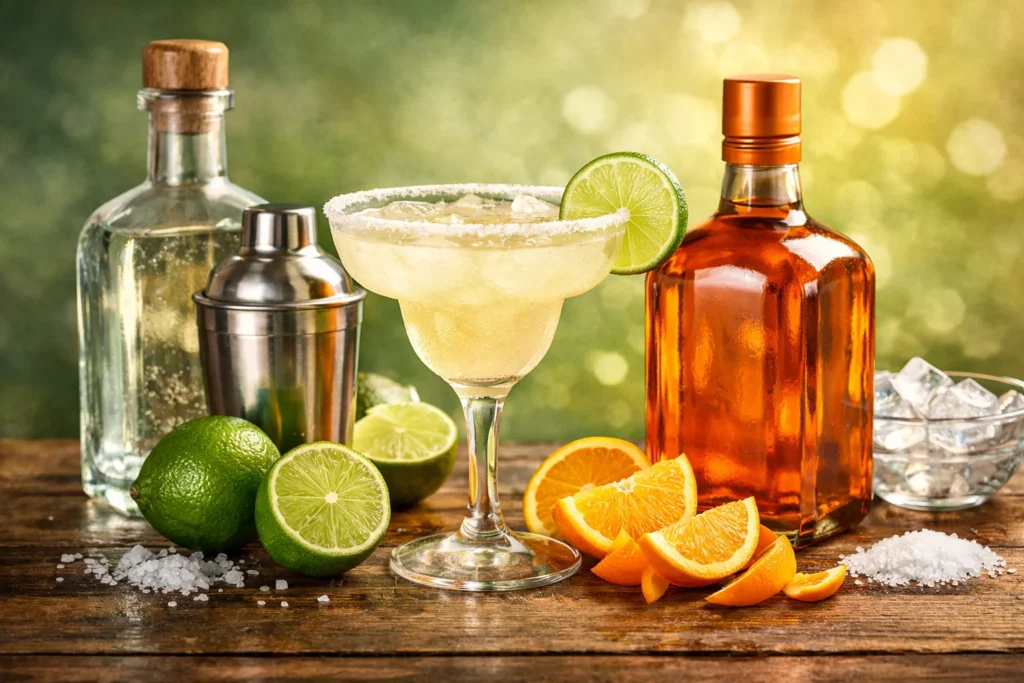
Why the Orange Liqueur Matters More Than Most People Think
A margarita looks simple on paper, tequila, lime, orange liqueur. Yet the orange liqueur touches almost every structural part of the drink simultaneously.
Sweetness varies dramatically between products. That directly changes how much lime juice your recipe can support before tasting harsh rather than bright.
Alcohol strength determines how the cocktail holds up under dilution. A higher-proof orange liqueur keeps the margarita lively after ice enters the equation. Lower-proof bottles can make the drink feel limp and sugary as soon as dilution starts.
Texture is affected especially by Grand Marnier, whose cognac base changes mouthfeel, the drink lands rounder and softer rather than crisp and sharp.
Orange intensity varies more than people realise. Certain triple sec bottles barely taste like fresh orange peel. Cointreau tastes vivid and aromatic. That difference becomes immediately obvious in a cocktail as minimalist as a margarita where there is nowhere for weakness to hide.
Once I started testing these side by side using identical tequila and lime ratios, I realised I was not simply swapping brands. I was effectively making three different cocktails.
What Separates These Three Products at a Fundamental Level
The confusing part is that triple sec functions as both a style category and a product description simultaneously, which creates genuine labelling confusion on bar shelves.
Triple sec is a style of orange liqueur made from a neutral spirit base, alcohol from sugar beets or grain, with bitter orange peel providing the flavour. Because it is a category rather than a brand, quality varies enormously between producers.
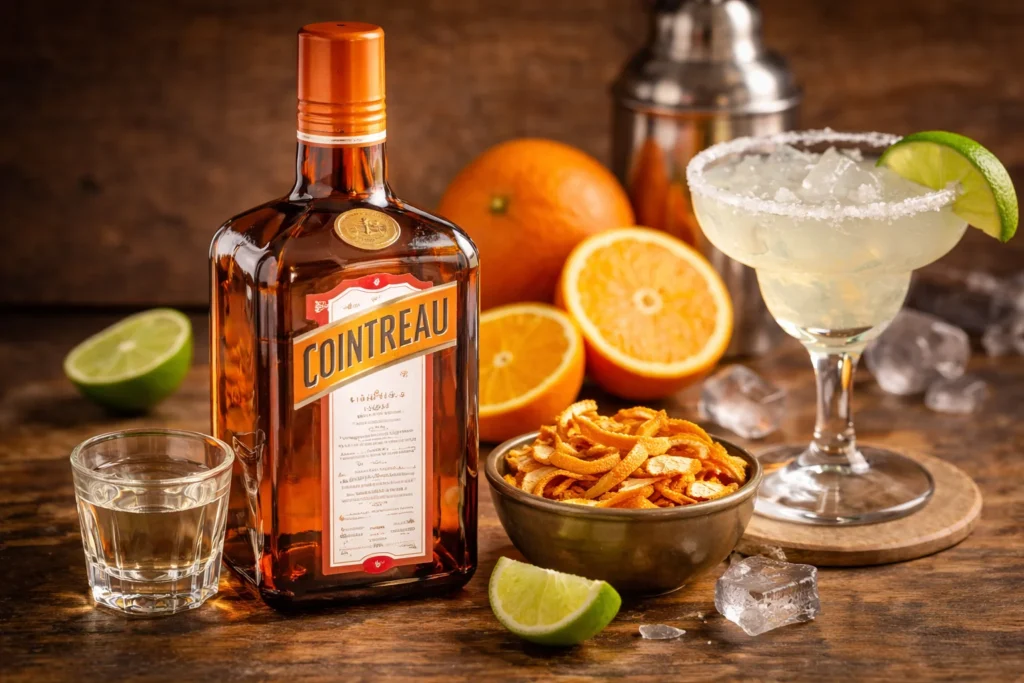
Cointreau is technically a triple sec, specifically the clearest example of the style done at a high level. It uses a neutral spirit base like other triple secs, but at 40% ABV it behaves more like a proper cocktail spirit than a sugary modifier. This is why it appears in classic cocktail recipes and why it is sometimes described as the premium triple sec.
Grand Marnier is not triple sec. It belongs to the curaçao style of orange liqueur, made with a cognac base rather than neutral spirit. That distinction is the most important technical difference in this comparison. Grand Marnier Cordon Rouge is the version most people encounter and it is amber in colour from the cognac, visually distinct from the clear appearance of Cointreau and triple sec. That colour difference in the glass is your first practical signal that you are dealing with a fundamentally different product.
The Base Spirit Difference: Why Grand Marnier Behaves Differently
This was the biggest surprise during testing. I expected Grand Marnier to taste slightly richer. Instead it fundamentally changed the structure of the margarita.
With blanco tequila, the cognac notes sometimes competed with the grassy brightness I actually wanted. The drink became softer and heavier, not bad, just different in character from what a margarita is supposed to be.
With reposado tequila, something clicked. The oak from the tequila and the cognac base connected naturally. The margarita tasted more layered and almost evening-oriented without becoming sweet enough to feel cloying. That pairing is where Grand Marnier genuinely earns its place.
The ABV Difference: Why Cheap Triple Sec Changes More Than Just Sweetness
Many inexpensive triple sec bottles sit around 15–20% ABV while Cointreau is 40%. That is not a minor difference; it is a dramatic one that changes dilution dynamics entirely.
A shaken margarita already picks up water from ice. If the orange liqueur starts low-proof and heavily sweetened, the final cocktail loses definition fast. Lime dulls. Tequila fades. The finish becomes syrupy rather than crisp. I noticed this most clearly in frozen margaritas where cheap triple sec disappeared almost entirely once blended. Cointreau kept its structure throughout.
The Sweetness Difference: How Each One Changes Your Lime Ratio
This is the single biggest recipe mistake I see consistently. People swap orange liqueurs while keeping the exact same lime ratio. That almost never produces the best result.
In my testing, I adjusted lime every time I changed the liqueur. With Cointreau I could push lime higher without the drink turning harsh. With sweeter triple sec I often needed extra lime just to prevent the cocktail from tasting candy-like. With Grand Marnier, reducing lime slightly worked better because the richer orange profile already softened the edges naturally.
The orange liqueur is not a passive ingredient. It changes the acid balance of the entire drink and your lime measurement needs to respond accordingly.
Grand Marnier in a Margarita: What I Actually Found
My first attempt with Grand Marnier disappointed me. The drink tasted muddy and disconnected. Eventually I understood the problem, I was pairing it with a very peppery blanco tequila that fought the cognac notes constantly. Switching to reposado changed everything.
The ratio that finally worked:
Grand Marnier Margarita Recipe
- 2 oz reposado tequila
- 1 oz Grand Marnier
- ¾ oz fresh lime juice
- Small pinch of salt
Shake hard with ice until properly chilled, then strain over fresh ice.
That smaller lime measurement matters. At a full ounce the drink lost the velvety richness that makes Grand Marnier interesting. The result tasted rounder, warmer, and more layered than a classic margarita. Less sharp. More contemplative. Not necessarily better, but very good in the right context.
Cointreau in a Margarita: Why It Became My Default
Cointreau kept winning in my kitchen for one simple reason: everything stayed clear. The tequila tasted like tequila. The lime stayed bright. The orange remained noticeable without becoming syrupy or dominant.
Classic Cointreau Margarita Recipe
- 2 oz blanco tequila
- 1 oz Cointreau
- 1 oz fresh lime juice
Shake with cold ice for about 12 seconds and strain into a chilled glass.
This is the version that held up best when using high-quality tequila because nothing masked the spirit. It is also the most consistent across different situations, works with blanco, works with reposado to a lesser degree, holds together when frozen, does not require ratio adjustment when circumstances change.
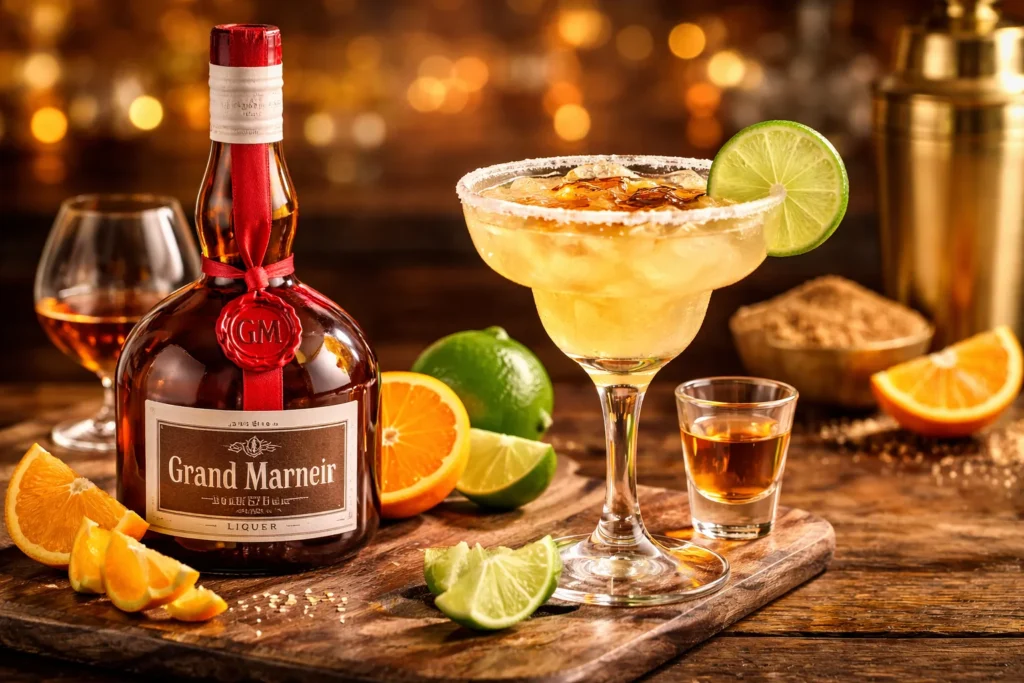
Triple Sec in a Margarita: When It Works and When It Doesn’t
Not every triple sec deserves the criticism it receives. The issue is that many people first encounter it through very cheap bottles that taste aggressively sweet and artificially orange.
Better triple sec can absolutely make a good margarita. If budget is a genuine constraint, these are the specific brands worth knowing:
De Kuyper is the most common budget option and works adequately for frozen margaritas where blending softens its limitations. For shaken versions it is noticeably sweeter and thinner than Cointreau.
Combier sits in the mid-range, at roughly the same price as Cointreau, and performs significantly better than De Kuyper, making ita genuinely viable alternative for classic margaritas.
Luxardo Triplum is another mid-range option at similar pricing to Cointreau, with a slightly cleaner orange profile than De Kuyper and more complexity than basic triple sec.
Bols is the other common budget brand alongside De Kuyper, roughly interchangeable at the lower end.
My honest position: Cointreau and Combier are close enough in price that I would choose Cointreau for a shaken margarita every time. For frozen batches at scale where cost matters more than precision, De Kuyper or Bols with an adjusted recipe is a reasonable compromise.
The Cadillac Margarita: Why Grand Marnier Gets Floated
You will see this on upscale bar menus described as a “top shelf” or “Cadillac” margarita, the same classic recipe with Grand Marnier floated on top rather than mixed in.
The technique exists for a specific reason. When Grand Marnier is mixed into a margarita the cognac character blends throughout the drink and can compete with the tequila. When floated, the first sips carry the concentrated richness of Grand Marnier before the layers integrate as you drink, giving a layered experience rather than a blended one.
To float it, pour your classic shaken margarita first, then use the back of a spoon held just above the surface to pour Grand Marnier slowly over the top. About half an ounce is enough.
This technique also means the float adds visual appeal, the amber Grand Marnier sitting on the lighter drink is striking before the first sip disturbs it. It is a legitimate technique with a real reason behind it, not just a marketing term.
The Side-by-Side Comparison: Same Recipe, Three Liqueurs
I tested all three using the same base: 2 oz blanco tequila, 1 oz orange liqueur, 1 oz lime juice. Same tequila. Same ice. Same shaking time.
| Orange Liqueur | Result |
| Cointreau | Crisp, balanced, bright, clean finish |
| Grand Marnier | Richer texture, deeper orange, softer acidity, amber tint |
| Cheap Triple Sec | Sweeter, flatter, less defined after dilution |
The biggest surprise was the texture. Grand Marnier made the margarita feel heavier physically, not just in flavour. The drink landed differently in the mouth, rounder and more coating, rather than sharp and refreshing.
How Each One Behaves Differently With Different Tequilas
Blanco tequila works best with Cointreau because both emphasise freshness and citrus definition. Grand Marnier can work here but only with a softer, less pepper-driven blanco. Cheap triple sec disappears quickly under assertive blancos.
Reposado tequila pairs most naturally with Grand Marnier because the oak elements from both products connect rather than compete. This combination creates a margarita that feels richer and evening-oriented compared to the crisp energy of a blanco Cointreau version.
Añejo tequila deserves either Cointreau or Grand Marnier. If you are spending money on aged tequila, cheap triple sec becomes very noticeable as the weakest element and undermines what you paid for.
How Each One Behaves Differently When Frozen vs Shaken
Frozen margaritas changed my opinion on cheap triple sec slightly.
In a frozen drink, dilution and temperature already soften complexity. The difference between premium and budget orange liqueur narrows somewhat because blending naturally smooths sharp edges. Cheap triple sec performed slightly better in frozen margaritas than in shaken versions for exactly this reason.
Shaken margaritas are far less forgiving. A shaken margarita exposes imbalances immediately because there is nowhere for sweetness excess or weak orange character to hide. Cointreau shines most clearly in classic shaken versions. Grand Marnier becomes almost dessert-like when frozen, sometimes pleasantly so, sometimes too much.
The Price Question: Is the Upgrade Always Worth It
For frozen pitchers at large gatherings, the upgrade from budget triple sec to Cointreau may not be perceptible enough to justify the cost difference across a high volume of drinks.
For a properly shaken single margarita, upgrading from cheap triple sec is immediately noticeable and in my view absolutely worth it. Cointreau especially earns its price through consistency, I rarely need to correct the balance after mixing, which saves both ingredients and frustration.
Other Uses for Your Grand Marnier Bottle
If you buy Grand Marnier specifically for a Cadillac Margarita or a reposado version, it is worth knowing where else it performs well so the bottle gets used rather than sitting on a shelf.
Grand Marnier works beautifully in a Sidecar; the cognac base connects logically with the Cognac spirit in that cocktail. It makes an excellent B-52 shot. It works well in mulled wine and holiday punch applications where its warmth and spice character belong. It also makes a genuinely good sipping digestif on its own, especially alongside dark chocolate.
Where it does not work as well as Cointreau: anything light and citrus-forward like a Cosmopolitan or a Corpse Reviver, where the weight and amber colour work against the drink’s intended character.
Which One Should You Actually Buy
Buy Cointreau if: you want the most reliable classic margarita, you primarily drink shaken margaritas, you enjoy bright and crisp tequila-forward flavour, or you want one bottle that works consistently across the widest range of applications.
Buy Grand Marnier if: you prefer richer cocktails, you frequently use reposado tequila, you want to make Cadillac Margaritas, or you enjoy sipping liqueurs.
Buy a mid-range triple sec (Combier or Luxardo Triplum) if: budget is genuinely a constraint but you still want a noticeable improvement over the cheapest options.
Buy cheap triple sec (De Kuyper or Bols) if: you mainly make frozen margaritas for groups and cost-per-drink matters more than precision.
I keep both Cointreau and Grand Marnier at home because they solve different problems. Cointreau gets used most often by a significant margin.
A Question About Orange Liqueur Worth Answering
People constantly ask whether Grand Marnier makes a margarita “top shelf.”
The label matters less than whether the flavour fits the tequila. Sometimes Grand Marnier genuinely improves the drink. With the wrong tequila pairing, it simply makes it heavier without adding the complexity that justifies the weight. The Cadillac designation has real meaning when the ingredients are matched correctly, and becomes just expensive heaviness when they are not.
Faqs
Is Grand Marnier considered triple sec?
No, Grand Marnier is not technically considered triple sec. Triple sec is a category of clear orange liqueurs made from dried orange peels and neutral spirits. Grand Marnier, however, is a curaçao-style orange liqueur made with cognac and bitter orange essence. Because it uses cognac as the base spirit, it has a richer, deeper flavor than most triple secs. While it can sometimes be used in the same cocktails, it belongs to a different style of orange liqueur.
Which is the best orange liqueur?
The “best” orange liqueur depends on the cocktail and your flavor preference. Cointreau is often considered the most balanced and versatile option because it has a clean orange flavor and consistent sweetness, making it ideal for margaritas and many classic cocktails. Grand Marnier is usually preferred when a drink benefits from a richer, slightly oak-aged flavor. Budget triple secs can also work well for casual cocktails, but premium options like Cointreau generally provide better balance and aroma.
Can I replace triple sec with Grand Marnier?
Yes, you can replace triple sec with Grand Marnier in most cocktails, including margaritas. However, the flavor will change slightly. Grand Marnier is sweeter and more complex because it contains cognac, so the drink may taste richer and smoother. Many bartenders even consider this substitution an upgrade, especially in premium margaritas sometimes called “Cadillac margaritas.”
Is Cointreau the same as triple sec?
Cointreau is technically a type of triple sec, but it is also its own premium brand within that category. Triple sec refers to the general style of orange liqueur, while Cointreau is a specific product made using a refined distillation process and high-quality orange peels. Because of its consistent flavor and balance, many cocktail recipes specifically call for Cointreau rather than generic triple sec.
Is Cointreau more expensive than triple sec?
Yes, Cointreau is usually more expensive than most standard triple sec brands. Generic triple secs are often produced at a lower cost and sold as budget cocktail ingredients. Cointreau is considered a premium orange liqueur, which is why it typically costs more. Many bartenders prefer it because the flavor is cleaner, more aromatic, and less syrupy than cheaper alternatives.
References
Wine Enthusiast – Orange Liqueur Explained
Liquor.com – Grand Marnier vs Cointreau
Martha Stewart – Triple Sec vs Cointreau vs Grand Marnier
Food Republic – Difference Between Grand Marnier and Triple Sec

Muhammad Hussain is the creator of MargaritaLab.com, where he tests and analyzes margarita recipes, ingredients, and techniques to help readers make better drinks at home. Over time, he has experimented with different tequila types, lime juice variations, and store-bought mixes to understand what actually makes a balanced margarita.
His approach combines hands-on testing with detailed research, focusing on real-world results rather than theory. Whether comparing fresh vs bottled lime juice or reviewing popular margarita mixes, his goal is to simplify the process and share what truly works.

Pingback: Triple Sec vs Cointreau for Margaritas: What the Bottle Label Does Not Tell You
Pingback: Mezcal Margarita Recipe: How Smoke Changes Everything About the Drink