
|
Getting your Trinity Audio player ready... |
The biggest misunderstanding in the Triple Sec vs Cointreau debate is thinking they are opposites.
They are not.
Cointreau is technically a triple sec. That confuses almost everyone at first because most recipes treat triple sec like a separate lower-quality category. In practice, the words on the label tell you far less than people think.
What actually changes your margarita is sweetness, alcohol percentage, orange oil intensity, and how the liqueur behaves once lime juice enters the drink.
I did not fully understand this until I started making side-by-side margaritas with identical tequila and lime ratios. Some orange liqueurs vanished completely under citrus. Others became bitter. A few suddenly tasted sweeter once diluted.
That was the moment I stopped treating orange liqueur as a background ingredient.
Why This Comparison Is More Complicated Than Most Guides Admit
Most articles reduce this conversation to cheap triple sec versus premium Cointreau and leave it there.
That is far too simplistic.
There are wildly different triple secs on the market. Some are syrupy and candy-like. Others are dry, sharp, and deeply aromatic. Even among respected brands, the texture and sweetness levels vary enough to force recipe adjustments each time you switch bottles.
The label alone tells you almost nothing about how a product will behave in a margarita.
I learned this after buying a budget triple sec for frozen margaritas, assuming the blender would hide any quality difference. Instead, the cocktail tasted oddly artificial once lime hit it. The orange flavor became flat and sugary rather than bright and aromatic.
That single batch changed how I evaluate every orange liqueur.
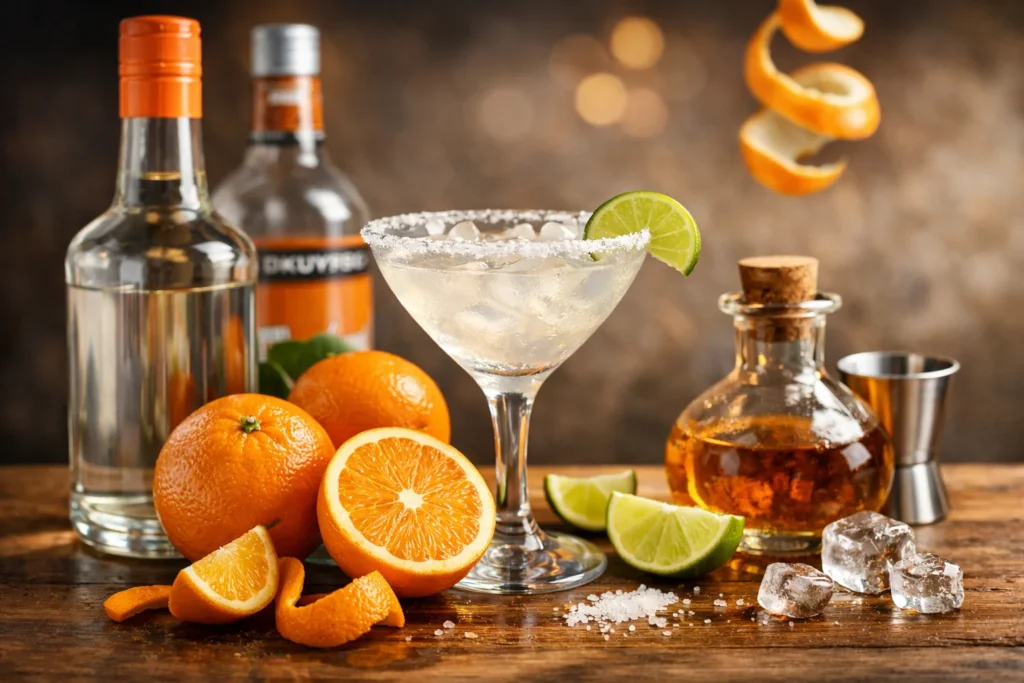
What Triple Sec Actually Means, and Why the Name Misleads Everyone
Triple sec is not a protected quality designation and it never has been.
Historically, the term referred broadly to a style of dry orange liqueur made by steeping or distilling orange peels in neutral spirit. The name originates from the French word “sec,” meaning dry, although ironically, this was primarily a marketing term; the liqueur is not particularly dry and is not always triple-distilled, as the label implies.
Modern bottles using the name range from inexpensive mixer products to genuinely excellent spirits. Two triple secs can taste almost unrelated.
Some producers focus on sweetness because it appeals to casual drinkers and works well in high-volume bar programs. Others lean into bitter orange peel oils and higher proof structure. So when a recipe says use triple sec, it is missing the real question: which one? That question matters more than most recipes acknowledge.
How Cointreau Is Produced Differently: and Why It Matters
Cointreau built its reputation on a specific approach: using both sweet and bitter orange peels sourced from multiple regions rather than relying on a single peel type or artificial orange flavouring.
That blend creates a cleaner citrus profile than many lower-cost triple secs. The bitterness is carefully controlled, which becomes especially noticeable once lime juice enters the drink.
Cheaper triple secs often emphasise sweetness first because sugar masks roughness in production. Cointreau behaves differently; it stays structured under acid rather than collapsing into undifferentiated sweetness.
The first time I tested Cointreau directly against a grocery-store triple sec in the same recipe, the biggest difference was not flavour intensity. It was clarity. The margarita tasted more distinct; I could identify tequila, lime, and orange as separate elements, rather than tasting a blended sweetness with alcohol in it.
The Cointreau Drier vs Sweeter Confusion: Addressed Directly
You will see contradictory claims about this everywhere. Some sources say Cointreau is drier than triple sec. Others say it is sweeter.
Both observations can be accurate simultaneously and here is why.
Cointreau is drier in structure; its higher proof and concentrated peel oils create a clean, crisp finish rather than a lingering sugary one. But it is more intensely flavoured overall, which means it can read as sweeter to some palates simply because there is more flavour reaching them.
A cheap triple sec that is technically higher in sugar may taste less sweet in a margarita because the orange character is weak and the sweetness has nothing to back it up. Cointreau at 40% ABV with concentrated orange oils delivers more flavour intensity, and flavour intensity and sweetness perception are not the same thing.
When I first noticed this I thought I had measured incorrectly. The Cointreau version tasted more vibrant and full, which some people interpret as sweeter, while the triple sec version tasted flat, which some people interpret as less sweet. The confusion comes from conflating sweetness with flavour intensity.
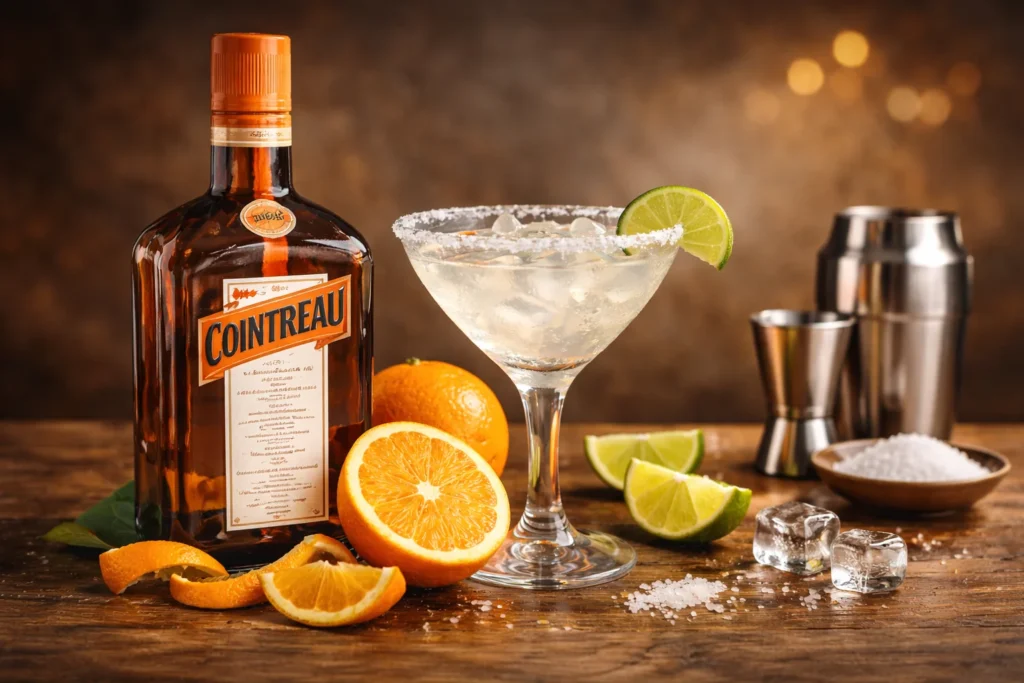
The ABV Math That Changes Your Margarita More Than You Realise
Many common triple secs sit around 15–25% ABV. Cointreau is 40% ABV.
That changes dilution, texture, and perceived dryness dramatically in ways that go beyond just flavour.
When you use a lower-proof triple sec in a recipe designed around Cointreau, the margarita becomes softer and sweeter, even if the sugar content is technically similar. The lower alcohol content means the drink integrates differently with ice and citrus; the structural tension that makes a margarita feel crisp starts to collapse.
I noticed this most clearly in frozen margaritas. Lower-proof triple secs disappeared fast once blended with ice, while Cointreau kept its structure and orange character throughout the drink. The difference sounds technical and small. In the glass it is obvious and immediate.
What Happens to Orange Character Under Lime Juice Acidity
Lime juice changes orange flavour aggressively and this is where cheap triple secs most often fail.
Certain triple secs that taste pleasantly orange on their own become candy-like or flat under citrus. Others lose their aroma almost entirely once lime enters the shaker. Cointreau survives lime well because of its higher proof and concentrated peel oils; the acid-stable aromatic compounds remain noticeable even after shaking.
Some sweeter triple secs create a strange secondary effect: the lime starts tasting sharper than it should because the orange underneath it lacks bitterness and structure. The lime has nothing to contrast against, so it dominates in an unpleasant way.
That imbalance ruined several early margaritas for me. I blamed the lime juice first. Then the tequila. The real issue was the orange liqueur collapsing under acid.
The Brand-by-Brand Comparison Most Articles Skip
This is where the conversation finally becomes practical for home bartenders who need to make an actual purchasing decision.
De Kuyper: The Most Common Budget Option
De Kuyper is the bottle most home bartenders encounter first because it is inexpensive and available almost everywhere.
In margaritas, it tastes noticeably sweeter and less structured than Cointreau. The orange flavour leans candied once lime enters the mix. That does not make it automatically bad, for frozen margaritas or large party batches where dilution is high anyway, the softer sweetness can work adequately. In a shaken margarita, though, I usually need slightly more lime juice to maintain balance.
Bols: The Other Grocery Store Standard
Bols sits between budget and mid-range in character.
It tends to feel slightly drier than De Kuyper, though still lighter and less intense than Cointreau. It works reasonably in casual shaken margaritas if you reduce added sweeteners slightly elsewhere. The orange aroma fades faster once the bottle is open compared to higher-proof alternatives.
Combier: The Mid-Range Worth Knowing
Combier deserves considerably more attention than it gets.
It is historically significant in the orange liqueur category and more importantly for home bartenders it tastes balanced and natural without becoming aggressively expensive. Combier keeps good brightness under lime juice while feeling slightly softer and rounder than Cointreau.
I find it particularly useful in reposado margaritas where the gentler orange character lets the barrel notes in the tequila stay visible rather than competing. If budget prevents buying Cointreau consistently, Combier is the specific alternative I would recommend testing first.
Luxardo Triplum: The Premium Alternative
Luxardo Triplum surprised me the first time I tested it directly against Cointreau.
It has deeper spice notes and a richer texture, not from a brandy base as Grand Marnier has, but from Luxardo’s specific Italian production approach and their peel sourcing, which creates a more complex profile than most neutral-spirit triple secs. That additional complexity makes it excellent in spirit-forward margaritas but slightly heavier and more assertive in frozen drinks, where the extra intensity can become too much.
I would not call it a direct replacement for Cointreau. It changes the personality of the cocktail rather than simply substituting for it.
Cointreau: Why It Became the Default
There is a reason bartenders return to it constantly.
Not because marketing convinced everyone. Because it consistently works across different tequila styles, different preparation methods, and different ratios without requiring constant correction.
After extensive testing, the pattern I kept finding was that Cointreau rarely creates the most interesting margarita in isolation; certain tequila and spirit pairings produce more complex results with other liqueurs. But Cointreau rarely creates a bad one either. That reliability across varying conditions is genuinely valuable and harder to achieve than it sounds.
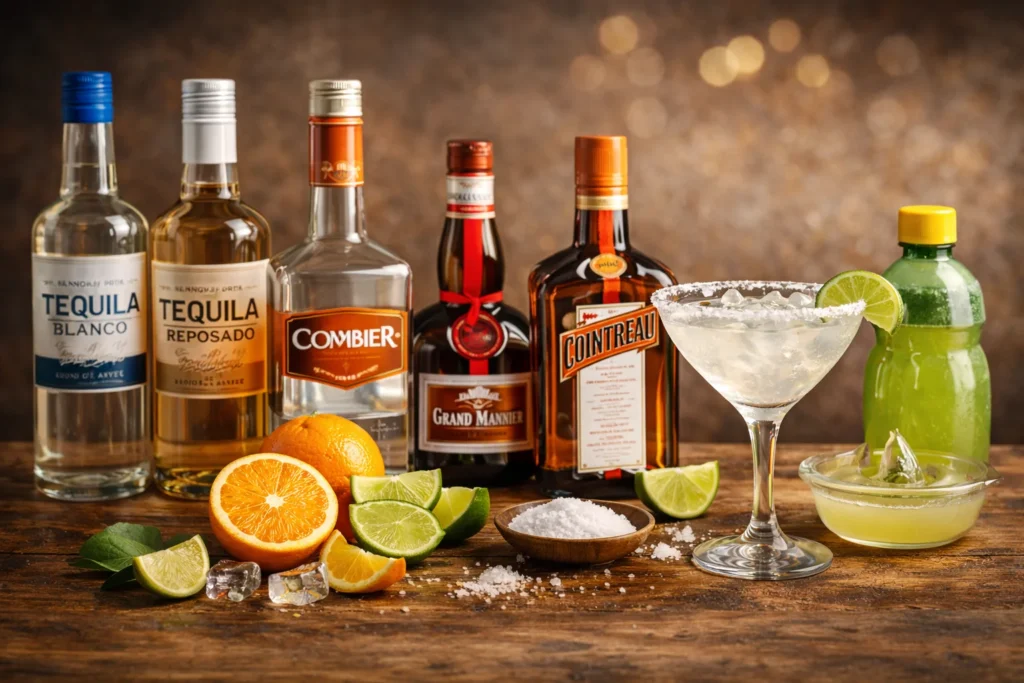
The Lime Ratio Adjustment Nobody Explains
Switching orange liqueurs almost always requires adjusting the lime juice too. Almost nobody does this.
Sweeter triple secs usually need slightly more lime to maintain structural balance. Drier or higher-proof liqueurs may need less than expected because they already sharpen the drink’s perception naturally.
One of my most consistent testing mistakes in the early stages was swapping bottles while keeping every other measurement identical. The margaritas tasted completely different between brands and I initially blamed product quality alone. In reality the recipe itself needed adjustment alongside the product change.
Now whenever I switch orange liqueurs I taste the first drink before serving and adjust lime by quarter-ounce increments before committing to a full batch.
How Each One Holds Up Differently as Your Bottle Ages
This surprised me more than any other discovery during testing.
Once opened, orange liqueurs gradually lose aromatic sharpness as they are exposed to oxygen over time. Lower-proof triple secs appear to fade faster, especially if stored in a warm location or with the bottle frequently uncapped.
Older budget triple sec tends to taste sweet first and orange second; the aromatic compounds that give it character are the first things to fade while the sugar remains.
Cointreau holds its structure noticeably longer because the higher alcohol content slows oxidation of aromatic compounds. A Cointreau bottle opened several months ago and stored properly will taste essentially the same as when first opened. The same is rarely true for budget triple sec.
For home bartenders who make margaritas occasionally rather than weekly, this shelf-life difference compounds the per-bottle value question significantly.
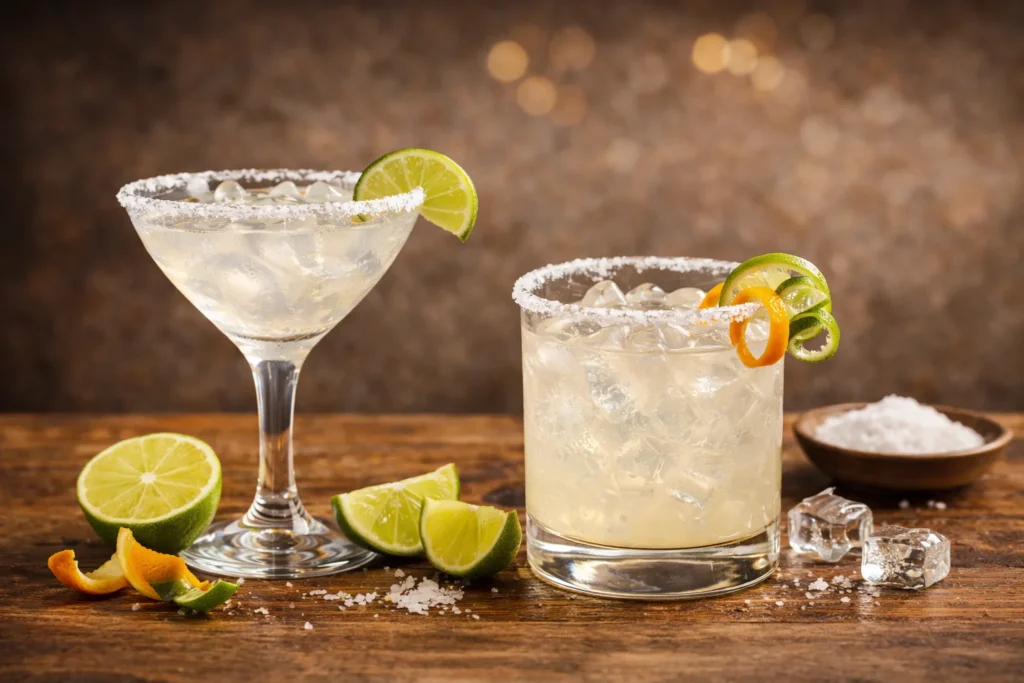
Triple Sec vs Cointreau in Frozen vs Shaken Margaritas
These two preparation methods change the comparison in opposite directions.
In frozen margaritas, heavy blending dilution and cold temperature together soften complexity. Budget and mid-range triple secs perform better here relative to their on-the-rocks performance because the blender smooths differences that would be obvious in a shaken drink. For large frozen batches the quality gap between De Kuyper and Cointreau narrows significantly.
In shaken margaritas, that gap widens substantially. A shaken drink has nowhere to hide artificial orange notes, excessive sweetness, or weak structure. Everything is immediate and transparent.
For frozen pitchers at a gathering I am now reasonably flexible about which orange liqueur I use, adjusting the recipe slightly based on the product. For a shaken margarita I care considerably more about what goes into the shaker.
What to Use When You Have Neither
If you find yourself mid-recipe without triple sec or Cointreau, a few alternatives can work reasonably well in a margarita.
Combier, if you can find it, is the closest in character to Cointreau. Pierre Ferrand Dry Curaçao works well because its cognac base adds complexity while keeping good citrus structure. Aperol contributes orange character with a bitter herbal note, it changes the margarita’s personality but produces a genuinely interesting result rather than a flawed one.
What does not work as a substitution is simply adding orange juice. Fresh orange juice adds sweetness and citrus but at the wrong proof and with the wrong concentrated aromatic character, the drink loses its structure entirely.
The Real Cost Calculation: Per Cocktail Not Per Bottle
People focus on the bottle price without calculating what the product actually costs per drink.
At three quarters of an ounce per cocktail, a twelve dollar bottle of De Kuyper provides roughly 33 cocktails at about 36 cents each. A 32 dollar bottle of Cointreau provides the same number of drinks at about 97 cents each. The real per-cocktail difference is 61 cents.
At a party of twenty people where everyone has two drinks, choosing Cointreau over De Kuyper costs an additional $24 in orange liqueur. Whether that is significant depends entirely on what else you are spending on the occasion.
For a quiet evening making two margaritas at home, 61 cents per drink is genuinely negligible. For a gathering of forty people, the maths shifts noticeably.
Thinking in per-cocktail terms rather than shelf price changes how most people feel about the upgrade decision.
Which One Should You Actually Buy Right Now
For most home bartenders the answer depends less on budget and more on how and how often you make margaritas.
If you mostly blend frozen drinks for groups, a mid-range triple sec like Combier works perfectly well and the quality difference from Cointreau is genuinely minimal in that context.
If you care about sharp shaken margaritas where tequila, lime, and orange stay distinct and perceptible as separate elements, Cointreau earns its reputation honestly and the per-cocktail cost difference is smaller than the bottle price makes it appear.
If budget is the primary constraint, Combier is the specific product I would recommend over De Kuyper or Bols for shaken margaritas, the quality improvement over budget options is noticeable and the price difference is small.
I keep both Cointreau and a mid-range triple sec at home now because they genuinely serve different purposes. Cointreau for precision. The budget option for volume. That balance made more sense than chasing a single best bottle for every situation.
A Question Worth Answering
Do expensive orange liqueurs automatically make better margaritas?
No, they make more structured margaritas. That is a different thing.
A casual frozen margarita at a summer gathering can taste completely enjoyable with an inexpensive triple sec. But once you start caring about clarity, brightness, and the ability to taste the tequila you spent money on, the quality of the orange liqueur becomes immediately noticeable.
The biggest thing repeated testing taught me was that orange liqueur quality matters most in the simplest margaritas. The more other ingredients are involved, fruit purees, spice infusions, complex tequilas, the less the specific orange liqueur brand dominates the outcome.
Classic shaken three-ingredient margarita: Cointreau wins clearly.
Blended fruit margarita for a crowd: almost any decent triple sec is sufficient.
Faqs
Can I substitute triple sec for Cointreau?
Yes, you can substitute triple sec for Cointreau in most cocktail recipes. Cointreau is actually a premium type of triple sec, meaning both are orange-flavored liqueurs made from dried orange peels. Because of this, they serve a similar purpose in drinks. However, Cointreau usually has a smoother, more balanced orange flavor and a slightly higher alcohol content than many standard triple sec brands. If you replace Cointreau with triple sec, the drink will still work well, but it may taste slightly sweeter or less refined, depending on the brand you use.
Is triple sec or Cointreau better in margaritas?
For a classic margarita, many bartenders prefer Cointreau because of its clean, balanced orange flavor that blends smoothly with tequila and lime juice. Cointreau has a consistent quality and an alcohol content of about 40% ABV, which helps give the margarita a brighter and more structured taste. That said, triple sec is still widely used in margaritas and can be a good option if you want a more budget-friendly ingredient. The choice often comes down to personal taste and the quality of the triple sec being used.
Are Cointreau and Grand Marnier the same?
No, Cointreau and Grand Marnier are not the same, although both are orange liqueurs. Cointreau is a clear triple sec made from sweet and bitter orange peels and neutral spirit. Grand Marnier, on the other hand, is made with orange essence blended with cognac, which gives it a darker color and a richer, deeper flavor. Because of this difference, Grand Marnier tends to taste warmer and more complex, while Cointreau has a lighter and brighter citrus profile.
Which is cheaper, triple sec or Cointreau?
In most cases, standard triple sec is cheaper than Cointreau. Triple sec is a broad category of orange liqueurs that includes many brands at different price levels, including budget options commonly used for mixed drinks. Cointreau is considered a premium triple sec and is produced by Rémy Cointreau, which contributes to its higher price. Because of its quality and reputation, Cointreau typically costs more than most basic triple sec bottles.
What liquor is closest to triple sec?
The liquor closest to triple sec is Curaçao, another orange-flavored liqueur made from citrus peels. Both triple sec and Curaçao share a similar orange base and are often used in the same types of cocktails. The main difference is that Curaçao can sometimes have a slightly richer flavor and may be colored, such as in blue curaçao. Other orange liqueurs like Cointreau or Grand Marnier can also serve a similar role in cocktail recipes, depending on the flavor profile you want.
References:
Difford, Simon. Difford’s Guide to Cocktails
Consejo Regulador del Tequila (CRT)
Oxford Companion to Spirits and Cocktails (Edited by David Wondrich & Noah Rothbaum)

Muhammad Hussain is the creator of MargaritaLab.com, where he tests and analyzes margarita recipes, ingredients, and techniques to help readers make better drinks at home. Over time, he has experimented with different tequila types, lime juice variations, and store-bought mixes to understand what actually makes a balanced margarita.
His approach combines hands-on testing with detailed research, focusing on real-world results rather than theory. Whether comparing fresh vs bottled lime juice or reviewing popular margarita mixes, his goal is to simplify the process and share what truly works.

Pingback: Is Triple Sec the Same as Simple Syrup? (No, and the Difference Changes Your Margarita)
Pingback: 18 Triple Sec Brands Ranked for Margaritas: The ABVs Labels Don't Tell You
Pingback: How to Make a Margarita at Home: 5 Tricks Real Bartenders Actually Use