|
Getting your Trinity Audio player ready... |
The 2:1:1 ratio, tequila, orange liqueur, lime juice, is where most margarita guides start and stop. It’s correct, but it’s also just the entry point. When VinePair asked ten working bartenders how they actually make margaritas at home, off the clock, almost none of them stuck to the textbook ratio exactly. They blend tequilas, freeze their own lime juice into cubes, and adjust the classic formula based on what they’re serving and who they’re serving it to.
This guide covers the full method, ingredients, step-by-step technique, and troubleshooting, plus the specific tricks that separate a good margarita from one that tastes like it came from behind a bar.
The 2:1:1 Ratio, and Why Bartenders Bend It
A margarita follows the sour cocktail formula, built around four elements:
- Strong: tequila
- Sour: fresh lime juice
- Sweet: orange liqueur or a light sweetener
- Dilution: water from ice as you shake
The standard starting ratio is 2:1:1, 2 parts tequila, 1 part orange liqueur, 1 part fresh lime juice, but treat that as a baseline, not a rule. Several bartenders VinePair spoke with use closer to 2:¾:1, leaning the balance slightly more tart and slightly less sweet than the textbook version.
What each imbalance actually does:
- Too much lime: overly sour
- Too much liqueur: overly sweet
- Too much tequila: harsh, boozy
- Too much dilution: watery, flat
Ingredients
Tequila
Blanco (silver): unaged, bright, agave-forward. The standard choice for margaritas.
Reposado: briefly aged in oak, rounder and slightly smoother, with subtle vanilla notes.
Añejo: long-aged, more complex: better reserved for sipping than mixing.
One trick worth trying: a couple of the bartenders VinePair interviewed blend two different blancos in the same drink, one with a peppery, mineral profile and one with brighter, more floral notes, to get a rounder flavor than either bottle gives alone. You don’t need two bottles to make a good margarita, but if you already have a couple of blancos on hand, it’s worth trying a 3:1 split instead of using just one.
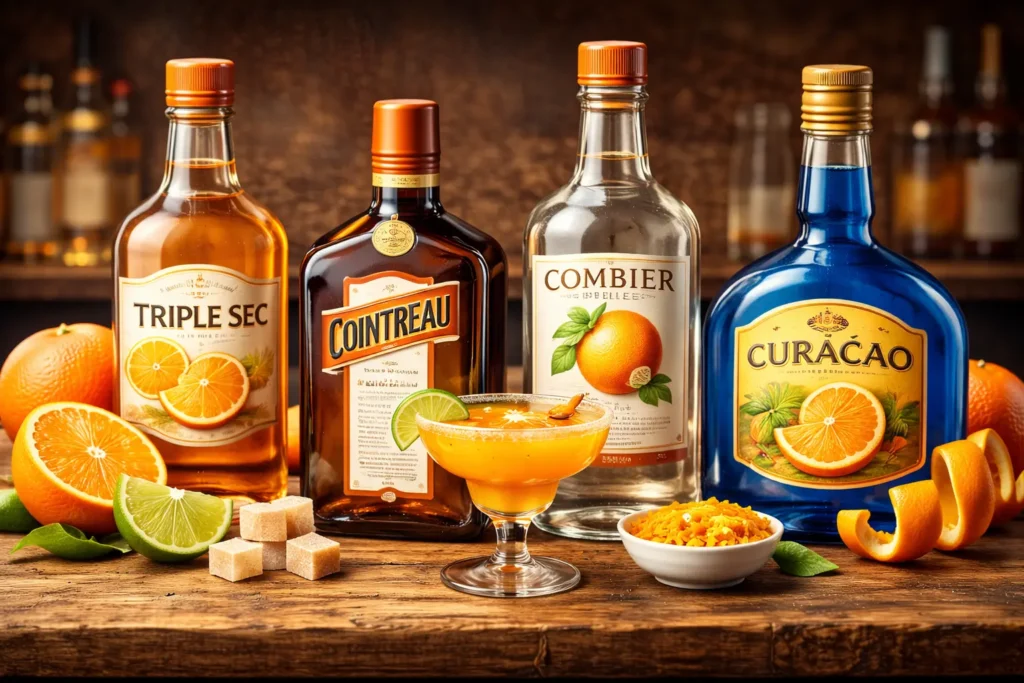
Orange Liqueur
- Triple sec: lighter, classic, widely used
- Cointreau: clean, balanced, the most commonly cited “non-negotiable” pick among the bartenders surveyed
- Grand Marnier: cognac-based, richer; used specifically for a Cadillac-style margarita
Fresh Lime Juice vs. Bottled
Fresh is non-negotiable, bottled juice tastes flatter and more one-note due to preservatives. One practical fix if you make margaritas often: juice a batch of limes when they’re in season and freeze the juice into half-ounce ice cubes. As they melt into the shaker, they add lime flavor back into the drink instead of just watering it down, a trick borrowed directly from one of the bartenders VinePair interviewed.
Shaking One at Home
Ingredients:
- 2 oz tequila
- ¾–1 oz orange liqueur
- 1 oz fresh lime juice
- Ice
- Salt for the rim (optional)
Instructions:
- Prepare the glass. Run a lime wedge around the rim and dip lightly in salt, coating only half the rim lets whoever’s drinking it control how much salt they get per sip.
- Fill a shaker with ice.
- Add the tequila, orange liqueur, and lime juice.
- Shake for 10–15 seconds, until the shaker feels properly cold.
- Taste it before straining. This is the step most home recipes skip. If it’s sharper than you want, add a small amount more liqueur or a few drops of agave and shake again briefly.
- Strain into a glass over fresh ice.
- Garnish with a lime wedge or wheel.
Frozen vs. On-the-Rocks
| Style | Description | Advantages | Tips |
| On-the-Rocks | Shaken with ice, served over fresh ice | Cleaner flavor, stronger tequila character, easier dilution control | Shake fully before serving; fresh ice keeps it from watering down further |
| Frozen | Blended with ice into a slushy texture | Refreshing, great in hot weather | Reduce lime slightly to avoid excess tartness; don’t over-blend or it thins out |
5 Techniques From Professional Bartenders
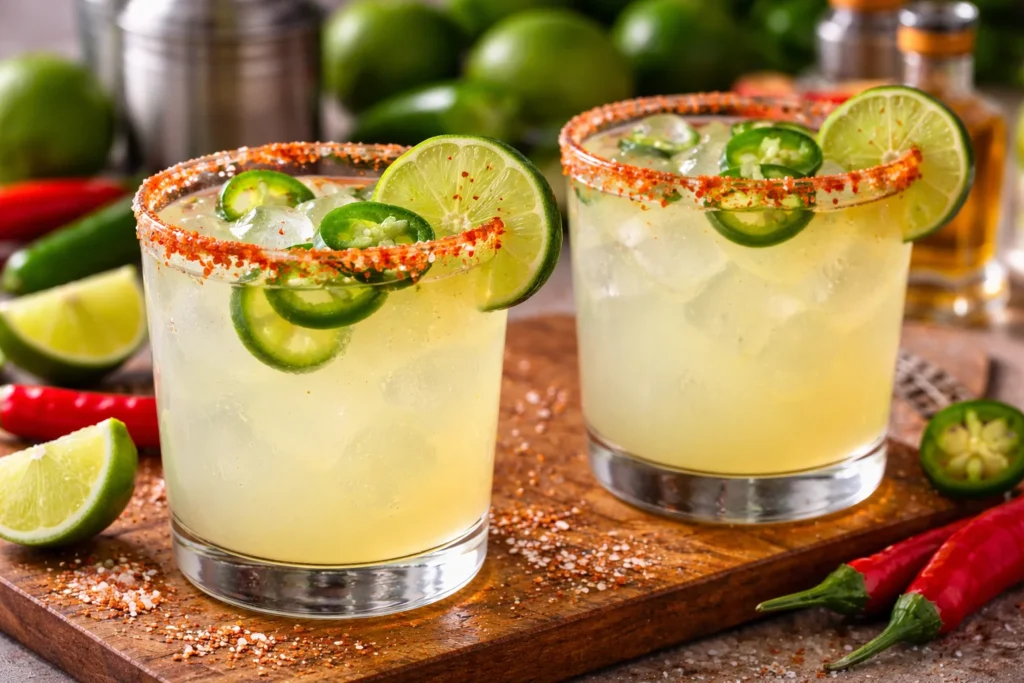
Beyond the basic method, here’s what working bartenders actually do differently when they’re making margaritas for themselves:
- Freeze lime juice into cubes. As covered above, dilution becomes flavor instead of water.
- Blend two tequilas. A mineral, peppery blanco plus a brighter, more aromatic one gives more dimension than either alone.
- Float a small amount of higher-proof tequila on top. A half-ounce of a stronger tequila poured on top of a standard blanco base adds depth without changing the overall volume much.
- Adjust for how you’re serving it. For a pitcher-style batch meant for sipping over an afternoon, several bartenders dial the tequila back slightly and boost the lime and a touch of sweetener, worth remembering, since a standard margarita made at full strength contains close to three ounces of 80-proof spirit, more than people usually assume from a drink that tastes this easy to sip.
- Salt only the outside of the rim, never the inside, it keeps the salt from ending up in the drink itself while still giving the aroma and first-sip contrast.
Popular Variations
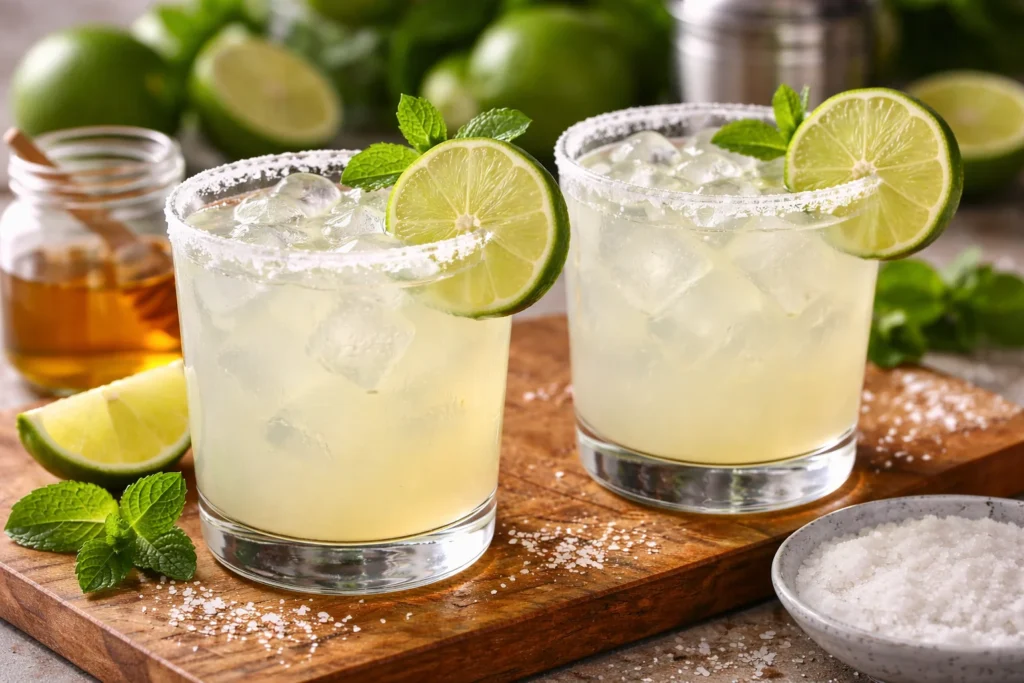
Once the base method is solid, these are the most common directions to take it:
- Fruit margaritas: strawberry, mango, pineapple, watermelon
- Spicy margaritas: muddled jalapeño, chili tincture, or a chili salt rim
- Skinny margaritas: less liqueur, a touch of agave, extra lime
- Cadillac margaritas: premium tequila and Grand Marnier, traditionally floated on top
Five Mistakes That Flatten a Margarita
- Using mixto tequila: it contains added sugars and often tastes harsh
- Using bottled lime juice: dulls the drink and tastes artificial
- Over-sweetening: a margarita should taste bright, not syrupy
- Over-blending a frozen margarita: melts the ice and waters it down
- Skipping the shake: without it, the ingredients never properly integrate
Fixing a Margarita That’s Off
| Problem | What’s Happening | Fix |
| Too sour | Too much lime relative to sweetness | Add a small splash of orange liqueur or agave |
| Too sweet | Too much liqueur or sweetener | Add a little more fresh lime juice |
| Too strong | Tequila is dominating | Add more ice and shake again to increase dilution |
| Too watery | Over-diluted from over-shaking or melted ice | Shake for less time next time, and use larger, colder ice |
Glass, Rim, and Garnish
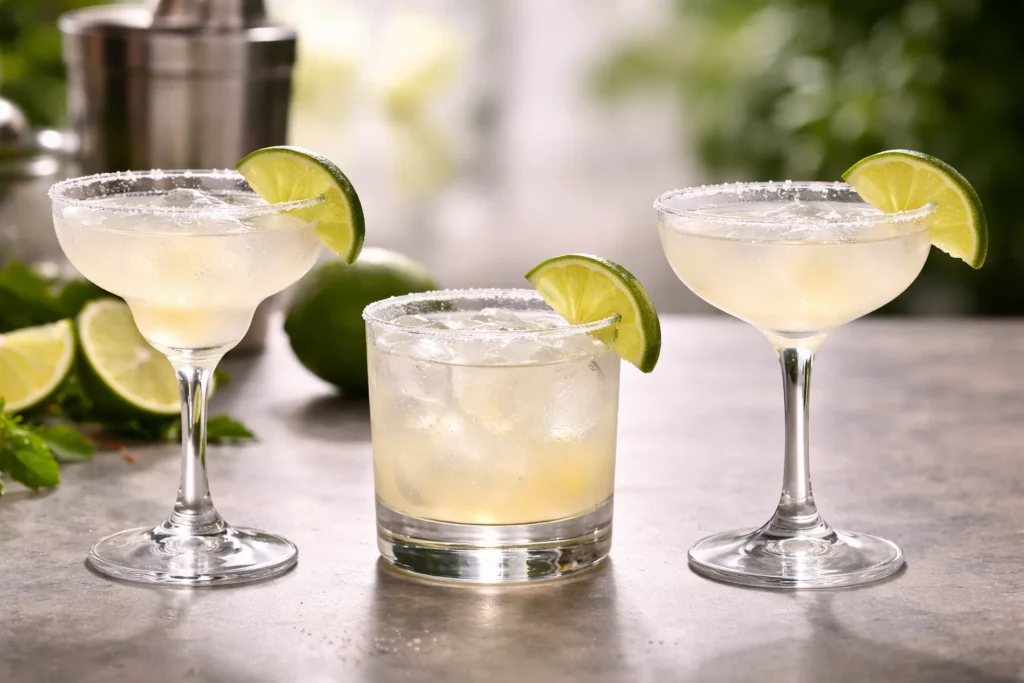
Glassware: a rocks glass is the most practical everyday choice; the classic stemmed glass and coupe both have their place for presentation or a no-ice pour.
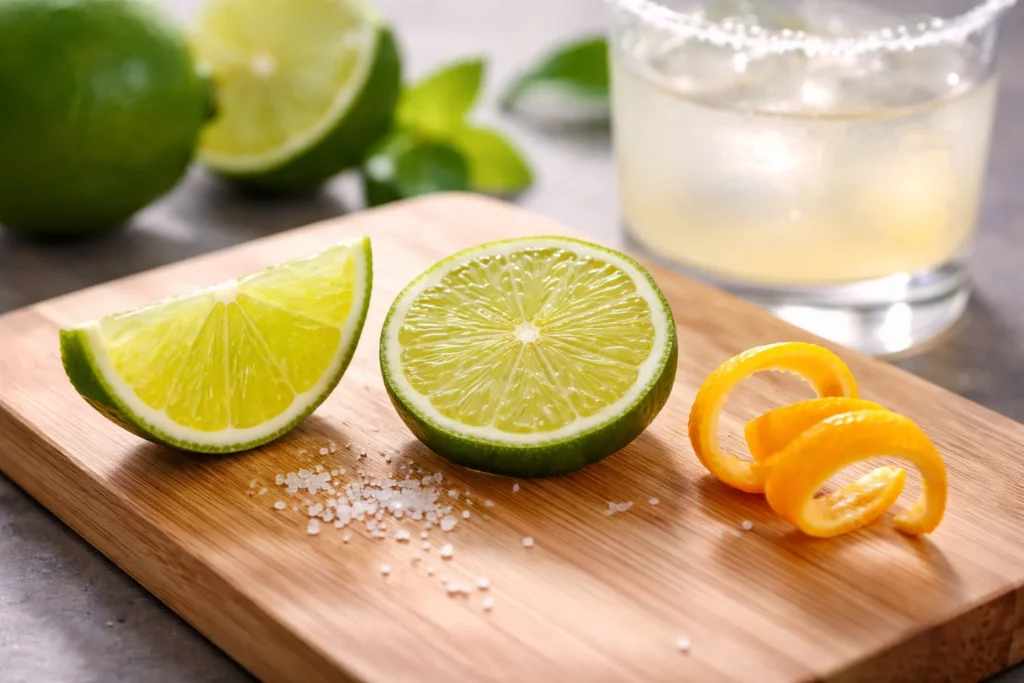
Rim: run lime around half the rim, dip lightly in coarse salt, and avoid a thick coating.
Garnish: a lime wedge, wheel, or thin twist, simple works better than elaborate.
Party Batching
For about 8 servings:
- 16 oz tequila
- 8 oz orange liqueur
- 8 oz fresh lime juice
Mix and chill ahead of time, then either shake individual portions with fresh ice as you serve, or pour over ice and stir. If you want a lighter, more sessionable batch for an afternoon of drinking, scale the tequila down slightly and add a touch more lime and agave, following the same logic bartenders use for pitcher service.
Faqs
What is the secret to a good margarita?
The secret to a good margarita is proper balance between tequila, fresh lime juice, and orange liqueur. Most bartenders follow a simple structure that keeps the drink bright and refreshing without becoming too sour or too sweet. Using 100% agave tequila and freshly squeezed lime juice makes a noticeable difference in flavor. Good shaking technique also matters because shaking with ice chills the drink and adds the right amount of dilution, which helps blend the ingredients smoothly.
Does a margarita get you tipsy?
Yes, a margarita can make you feel tipsy because it usually contains a full serving of tequila. A classic margarita typically includes about 2 ounces of tequila, which is similar to one standard cocktail. Alcohol affects people differently depending on body weight, tolerance, and how quickly the drink is consumed. Drinking slowly and having food with the cocktail can help reduce the effects of alcohol.
Is margarita very alcoholic?
A margarita is considered a moderately strong cocktail, but it is not usually stronger than many other classic mixed drinks. The alcohol mostly comes from tequila and the orange liqueur used in the recipe. When prepared with the traditional proportions of tequila, lime juice, and triple sec, the alcohol level typically falls within the same range as drinks like a daiquiri or whiskey sour. However, larger servings or frozen margaritas with extra tequila can increase the overall alcohol content.
What is the unhealthiest cocktail?
There is no single cocktail officially labeled as the unhealthiest, but drinks that contain large amounts of sugar, syrups, or cream tend to be the highest in calories. Examples often include frozen cocktails, creamy drinks, and heavily sweetened tropical cocktails. Large frozen margaritas can also become high in sugar and calories if they contain sweet mixes or flavored syrups. Choosing drinks made with fresh citrus and fewer added sweeteners can help keep a cocktail lighter.
Is margarita or vodka stronger?
A margarita is not necessarily stronger than a vodka cocktail because strength depends on the amount of alcohol used in the recipe. A typical margarita contains tequila and orange liqueur, while vodka drinks often contain vodka mixed with juice or soda. If both drinks contain a similar amount of alcohol, their strength will be very similar. The main difference is flavor: tequila adds earthy agave notes, while vodka has a more neutral taste.
References
Classic Margarita Ratio and Structure
Sour Cocktail Balance Principles
International Bartenders Association (IBA)

Muhammad Hussain is the creator of MargaritaLab.com, where he tests and analyzes margarita recipes, ingredients, and techniques to help readers make better drinks at home. Over time, he has experimented with different tequila types, lime juice variations, and store-bought mixes to understand what actually makes a balanced margarita.
His approach combines hands-on testing with detailed research, focusing on real-world results rather than theory. Whether comparing fresh vs bottled lime juice or reviewing popular margarita mixes, his goal is to simplify the process and share what truly works.
Pingback: 18 Triple Sec Brands Ranked: Which One Makes the Best Margarita?
Pingback: Best Prickly Pear Margarita Recipe: Why This Bright Pink Cocktail Is So Popular
Pingback: Fresh Lime Juice Margarita vs Bottled: The Secret to a Perfect Margarita
Pingback: Best Margarita Garnishes: How They Transform Your Drink
Pingback: Strong vs Smooth Margaritas: What’s Better?
Pingback: Homemade vs Store Margarita: Why Homemade Margaritas Taste Better
Pingback: Frozen vs Classic Margarita: Which One Wins?
Pingback: Homemade Lime Juice for Margarita: Stop Using Bottled Juice and Try This Instead
Pingback: Best Store-Bought Margarita Mix: Stop Buying the Wrong Ones
Pingback: Homemade vs Store-Bought Margarita: I Tested Both and the Answer Surprised Me