|
Getting your Trinity Audio player ready... |
Bottled lime juice doesn’t just taste different from fresh, it’s missing compounds that can’t survive the bottling process. After testing both side by side in the same margarita build, same tequila, same ratio, the fresh version was better every single time without exception. The fix is simple, but the reason it works is worth understanding before you squeeze a single lime. Here’s everything I learned.
Why Homemade Lime Juice Changes Everything
Bottled lime juice tastes flat compared to fresh, and there’s a specific reason for that beyond simple freshness. Fresh limes contain volatile aromatic oils in the peel and juice that begin breaking down the moment they’re exposed to air and heat. Commercial bottling involves pasteurization, heating the juice to extend shelf life, which destroys most of those oils in the process. What remains is acidic but aromatic, which is why bottled juice can make a margarita that tastes sour without tasting fresh.
The other issue is oxidation. Once lime juice is pressed and stored, it starts losing its top notes, the bright, slightly floral quality that makes a freshly squeezed margarita smell as good as it tastes. Bottled juice has been oxidizing since it was pressed, sometimes for weeks before you open it.
Fresh juice, pressed just before you make the drink, still has all of those compounds intact. That’s the difference you taste. It’s not subtle.
How to Juice Limes for Maximum Flavor
This is where most people lose quality without realizing it. The how matters almost as much as the when.
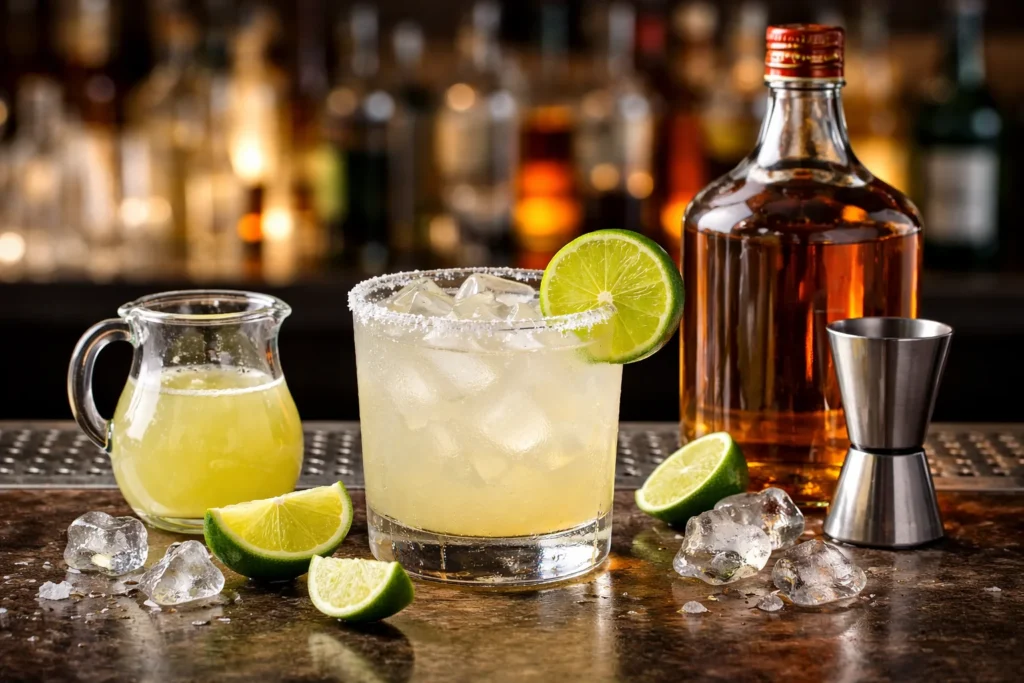
Start with limes at room temperature. Cold limes are significantly harder to juice and yield less liquid; the cell structure is tighter when chilled. If your limes came straight from the fridge, let them sit out for 20 to 30 minutes or roll them firmly on the counter for 30 seconds. Both methods help break down the internal membranes before you cut.
Cut crosswise rather than lengthwise. This exposes more of the juice sacs to the press and gives you better extraction. Use a handheld citrus press rather than a reamer if you’re making more than one drink, the leverage gives you a cleaner press without forcing the pith.
The one mistake worth repeating here: stop squeezing before the lime is completely dry. The last bit of pressure pulls juice from the pith, which is where the bitterness lives. The first press of each lime half gives the brightest, cleanest flavor. Pushing past that point adds a harsh edge that no amount of sweetener fully covers.
Strain out seeds and any large pulp, then use the juice immediately. Within a few hours, you’ll notice the brightness starting to fade, the same oxidation process that ruins bottled juice, just happening in real time. For the best result, press the limes just before you start mixing.
One lime typically yields about one ounce of juice, though this varies with size and ripeness. Measure rather than estimate, a margarita built on a 2:1:1 ratio is sensitive to variations of even a quarter ounce.
How to Make Homemade Lime Margarita Mix
If you’re making drinks for more than two or three people, pressing limes to order becomes impractical. The solution is a simple homemade lime margarita mix, fresh lime juice combined with a sweetener and water, that you can make ahead and store in the fridge.
This is the approach worth knowing because it solves the fresh-vs-convenient tradeoff without compromise. You still get real lime juice. You still control what goes into it. You just do the work once rather than per drink.
Ingredients
- 1 cup fresh lime juice (approximately 8–10 limes)
- ½ cup sweetener (see substitutions below)
- 1½ cups water
Instructions
- Juice the limes and strain into a small saucepan.
- Add the sweetener and water.
- Heat over medium-low, whisking gently, until the sweetener fully dissolves. Do not boil, you want to dissolve the sweetener, not cook the juice.
- Remove from heat immediately and let cool to room temperature.
- Transfer to a glass jar or pitcher and refrigerate.
The heat is brief and low enough that it doesn’t significantly damage the lime flavor, you’re dissolving sugar, not pasteurizing. The result tastes noticeably fresher than any bottled mix because the lime juice went from fruit to finished product in under ten minutes.
Sweetener Substitutions
Granulated sugar is the most neutral option and produces the cleanest lime flavor. Agave nectar works well and is a natural pairing with tequila; it’s slightly softer in sweetness and dissolves easily, even without heat. Honey adds a floral background note that some people love; others find it distracting. If you use agave or honey, be aware that both run sweeter than sugar by volume. Start with a third of a cup rather than a half and taste before adding more. You can always add sweetness, but you can’t remove it.
How Long It Keeps and How to Store It
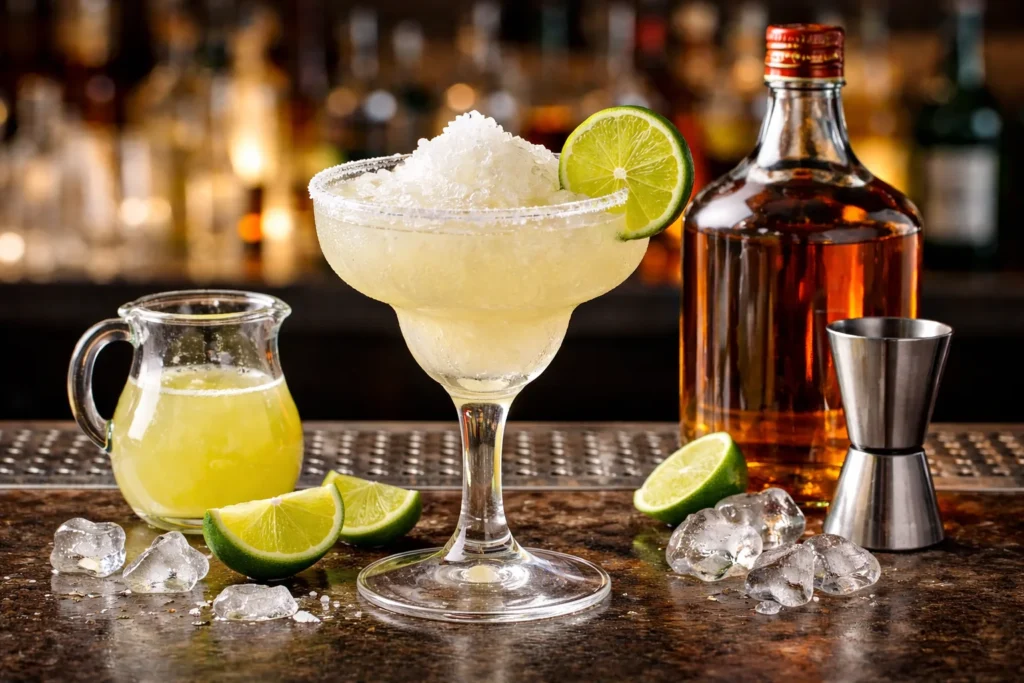
Stored in a sealed glass container in the fridge, this mix stays good for up to five days. After that, the lime flavor starts to dull and the mix develops a slightly cooked quality. Glass preserves the flavor better than plastic, which can absorb citrus oils over time.
If you’re making a large batch for a party, make it the day before rather than the morning of, it needs to chill fully before mixing, and the flavors settle slightly overnight in a way that actually improves the balance.
Why Your Margarita Tastes Different Every Time
This is the question nobody explains clearly: if you’re using the same recipe, same measurements, same technique, why does the margarita taste different batch to batch?
The answer is that fresh lime juice isn’t standardized. Limes vary in acidity, sugar content, and juice yield depending on the variety, the season, and how ripe they are at the time of pressing. A lime picked in summer tastes different from the same variety in winter. A perfectly ripe lime tastes different from one that’s slightly past its peak. None of this is a problem; it’s just the nature of working with fresh fruit, but it means your measurements are a starting point, not a guarantee.
The other variable is dilution. Shaking time, ice temperature, and how much you pack the shaker all affect how much water enters the drink during mixing. A longer shake with warmer ice produces more dilution, which affects both the strength and the perceived sweetness of the finished drink.
Neither of these variables is within your control. What is within your control is what you do after the first sip.
How to Adjust on the Fly: One Sip, One Fix
The simplest habit I’ve built into my process: taste the drink before it goes into the glass, while it’s still in the shaker, and make one small adjustment if needed.
This doesn’t require a trained palate. It requires answering one question: does anything feel off? If the drink is too sharp, add a few drops of agave and shake for three more seconds. If it feels flat or dull, add a few drops of fresh lime and shake again. If the tequila is dominating, the issue is usually dilution, shake longer rather than adding more mix.
The key is one adjustment at a time. Overcorrecting in two directions simultaneously is how a fixable margarita becomes an unfixable one. One sip, one change, taste again. That’s the entire process.
Over time, you start recognizing the patterns: summer limes need slightly less lime juice, certain tequilas need slightly more sweetener, and adjustments happen almost automatically. But it starts with the habit of tasting before you pour.
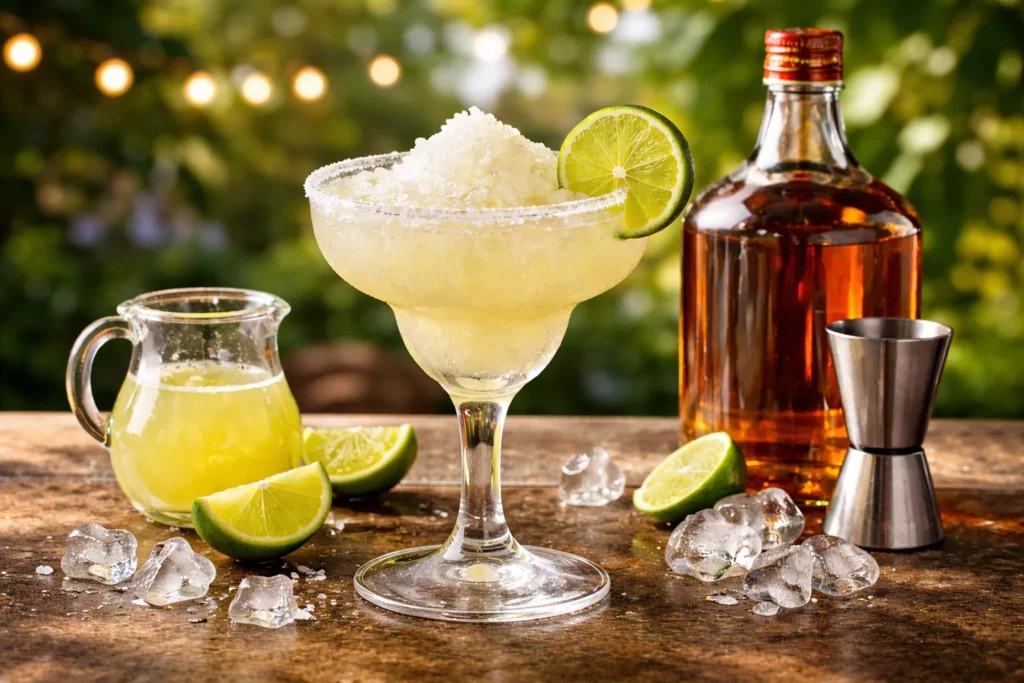
The Full Margarita Recipe Using Your Homemade Mix
Once you have the mix ready, this comes together in under two minutes.
Ingredients
- 2 oz blanco tequila
- 1 oz homemade lime margarita mix
- ½ oz orange liqueur (Cointreau or triple sec)
- Ice for shaking
- Ice for serving
- Salt for the rim (optional)
Instructions
- If salting the rim, run a spent lime half around the edge of a rocks glass and press lightly into salt on a flat plate. Set aside.
- Fill a cocktail shaker with ice, about three-quarters full.
- Add the tequila, lime mix, and orange liqueur.
- Shake hard for 12 to 15 seconds. The shaker should feel cold and slightly frosted on the outside.
- Fill the prepared glass with fresh ice. Strain the drink over the ice.
- Garnish with a lime wedge if you like.
A note on the orange liqueur: the homemade mix doesn’t include orange, so the liqueur is doing genuine flavor work here, not just providing sweetness. Don’t skip it or reduce it significantly, without it, the drink is lime-forward but flat. The orange complexity is what gives a margarita its structure.
References
Salt enhances flavor balance in margaritas (professional bartending insight)
Modern bartenders now use saline solutions instead of just salt rims
Scientific explanation of why salt improves cocktails

Muhammad Hussain is the creator of MargaritaLab.com, where he tests and analyzes margarita recipes, ingredients, and techniques to help readers make better drinks at home. Over time, he has experimented with different tequila types, lime juice variations, and store-bought mixes to understand what actually makes a balanced margarita.
His approach combines hands-on testing with detailed research, focusing on real-world results rather than theory. Whether comparing fresh vs bottled lime juice or reviewing popular margarita mixes, his goal is to simplify the process and share what truly works.