|
Getting your Trinity Audio player ready... |
Can you make a margarita without alcohol? Yes, but most people get the substitution backwards. They remove the tequila and replace it with more juice, which makes the drink sweeter and thinner at the same time. After testing this recipe with both a citrus-only build and a zero-proof spirit build side by side, I found that the right fix depends on whether you’re trying to recreate the flavor of tequila or just the structure it provides. They’re not the same problem, and most recipes only solve one of them.
What Tequila Actually Does That Juice Can’t Replace
Removing tequila removes three things, not one. It removes the alcohol, obviously. It also removes a specific herbal, slightly vegetal flavor that comes from agave, and it removes body, the weight and warmth that spirits add to a cold drink. Most non-alcoholic margarita recipes try to solve all three problems with citrus and sweetener, which only addresses the third one, and not very well.
This is why a non-alcoholic margarita made with just lime, orange juice, and agave often tastes like a watered-down limeade rather than a margarita. The flavor balance can be technically correct and the drink will still feel like something’s missing, because nothing in the recipe is doing the job tequila used to do.
There are two honest paths forward, and which one you take changes everything else about the recipe.
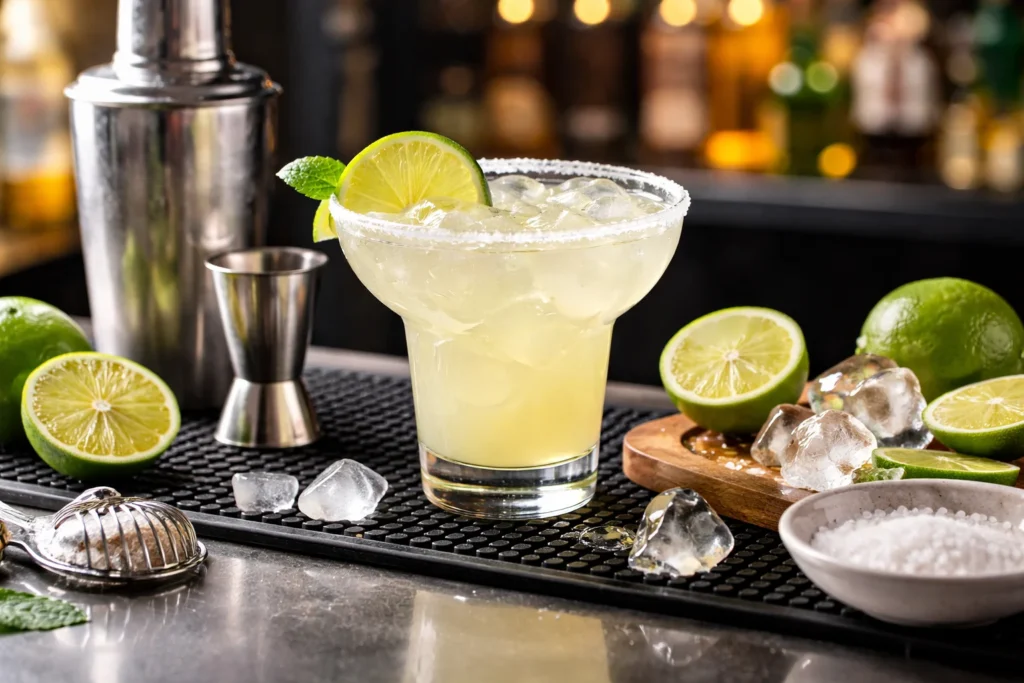
Path One: Zero-Proof Spirits
Non-alcoholic spirit brands designed specifically to mimic tequila have become genuinely good in the last few years. They’re built around the same botanical logic as real agave spirit, herbal, slightly earthy, with a peppery finish, minus the ethanol. Using one of these in place of tequila solves the flavor and body problem directly, because the product is engineered to solve exactly that problem.
The tradeoff is cost. A 750ml bottle of a non-alcoholic agave spirit alternative typically runs $30 to $35, which is close to or sometimes higher than a decent blanco tequila. If you make non-alcoholic margaritas regularly, as a designated driver, during pregnancy, or simply because you’ve cut back on alcohol, the cost evens out over time. For an occasional drink, it’s a real expense to consider before buying.
The build is simple because the zero-proof spirit is doing the heavy lifting: 2 oz non-alcoholic agave spirit, 1 oz fresh lime juice, ½ oz agave nectar, shaken with ice and strained over a salted rim. The ratio mirrors a classic margarita almost exactly because the spirit is engineered to behave like one.
Path Two: Building Without a Spirit Substitute
If you don’t want to buy a specialty product, you can rebuild the drink’s missing structure using ingredients you already have. This path takes more care, but it works.
The key decision is layered citrus rather than relying on lime alone. Lime provides the dominant tartness, but a margarita without tequila needs a second citrus element to create complexity, otherwise the drink tastes one-dimensional. Grapefruit juice is the most effective addition because it carries a natural bitterness that reads to the palate as structure, the same way tequila’s slight bitterness does in the original drink. A small amount of fresh orange juice rounds out the sweetness in a way that plain agave alone doesn’t achieve.
The mistake most people make here is over-sweetening to compensate for the missing alcohol. The instinct when a drink tastes thin is to add more sweetener, but that makes a non-alcoholic margarita taste more like dessert and less like a cocktail. The better fix is the grapefruit bitterness, not additional sugar.
The build: 1.5 oz fresh lime juice, ½ oz fresh grapefruit juice, ½ oz fresh orange juice, ½ oz agave nectar, shaken hard with ice, strained over a salted rim, topped with a small splash of sparkling water for texture. The sparkling water goes in last and isn’t shaken, it adds lightness without flattening the citrus flavor.
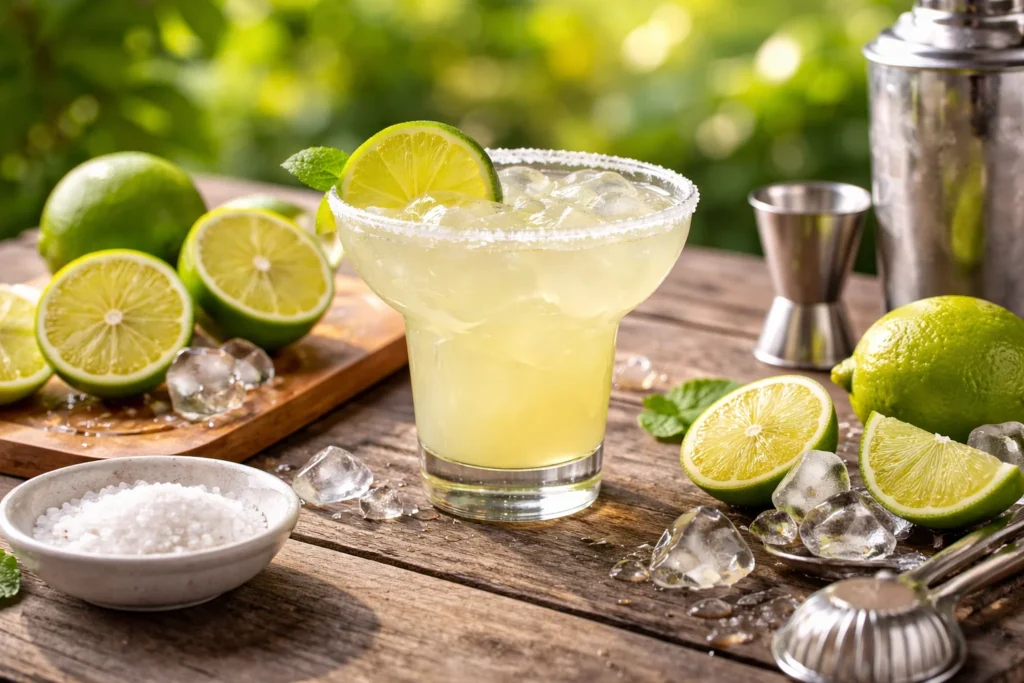
The Recipe
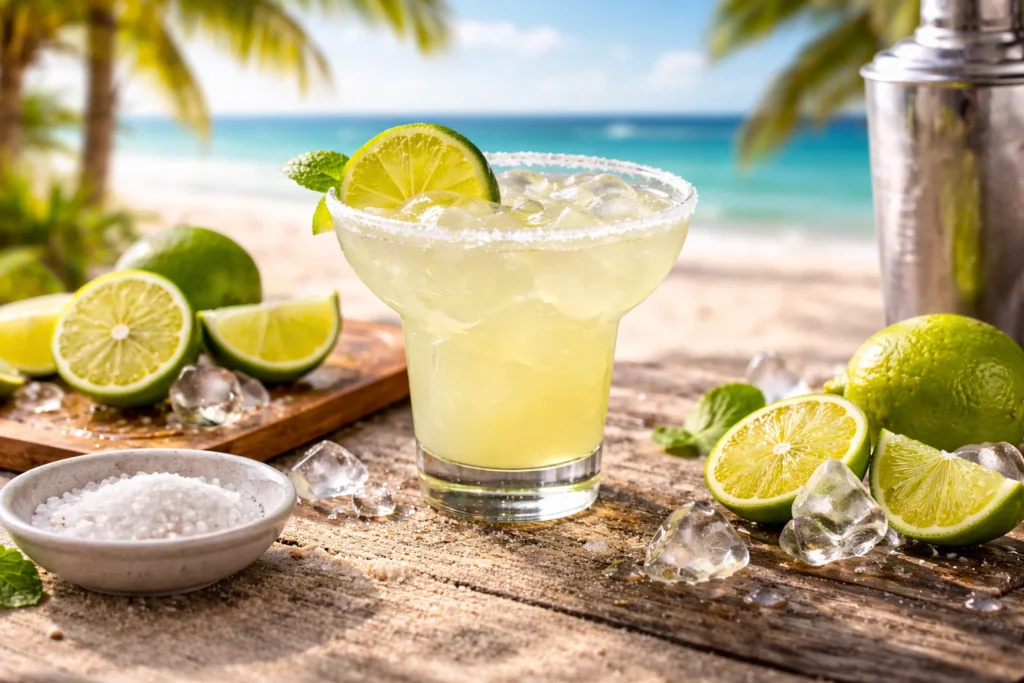
This is the citrus-built version, no specialty ingredients required, made with things most people already have on hand.
Ingredients (1 serving)
- 1.5 oz fresh lime juice
- 0.5 oz fresh grapefruit juice
- 0.5 oz fresh orange juice
- 0.5 oz agave nectar
- 2 oz sparkling water
- Ice for shaking and serving
- Coarse kosher salt for the rim (optional)
Instructions
- Run a lime wedge around the rim of a rocks glass and press lightly into coarse salt on a flat plate. Fill the glass with fresh ice.
- Add the lime juice, grapefruit juice, orange juice, and agave to a cocktail shaker with ice.
- Shake hard for 12 to 15 seconds, the shaker should feel cold to the touch.
- Strain into the prepared glass.
- Top with the sparkling water. Do not stir it in, the light carbonation adds texture and goes flat quickly if mixed too aggressively.
- Taste before serving. If it’s too tart, add a few more drops of agave. If it tastes flat, a few more drops of grapefruit restores the structure.
For the zero-proof spirit version, swap the lime, grapefruit, and orange juice for 2 oz of a non-alcoholic agave spirit alternative and 1 oz fresh lime juice, keeping the agave the same. Skip the sparkling water, the spirit already provides enough body that the drink doesn’t need it.
When Each Path Makes Sense
The zero-proof spirit version is the right choice when you’re making non-alcoholic margaritas regularly and want a drink that most closely mirrors the original, pregame parties, happy hour with coworkers, or simply having a no-alcohol option always available without needing to think about a recipe each time.
The citrus-built version is the right choice for an occasional drink, when you want something that tastes intentional without buying a specialty bottle, or when you’re serving a mixed group where some people are drinking alcohol and you want a no-alcohol option that doesn’t feel like an afterthought.
Both are legitimate. Neither is a downgrade from the other, they’re solving the same problem with different tools.
FAQs
Can a non-alcoholic margarita actually taste like a real one? Reasonably close, depending on the approach. A zero-proof spirit alternative gets closest because it’s engineered to replicate tequila’s flavor and body specifically. A citrus-built version won’t taste identical, but layered citrus, particularly grapefruit, closes much of the gap that plain lime and sweetener leaves behind.
What can I use instead of tequila in a non-alcoholic margarita? Either a non-alcoholic agave spirit alternative, which directly substitutes for tequila in the same volume, or a combination of grapefruit juice and orange juice alongside lime, which rebuilds some of the complexity and body tequila would normally provide.
Why does my non-alcoholic margarita taste flat? Usually because the recipe relies on lime and sweetener alone. Without tequila’s bitterness and body, the drink needs another source of complexity. Grapefruit juice is the most effective fix, its natural bitterness reads as structure in a way that more sweetener can’t replicate.
Is a non-alcoholic margarita safe during pregnancy? A margarita made with fresh citrus, sweetener, and no alcohol is generally considered safe, but check the label of any non-alcoholic spirit alternative you use, most contain no measurable alcohol, but always verify with the specific product. If you have any concerns, consult your healthcare provider for personalized guidance.
Can I make this less sweet? Yes. Reduce the agave to a quarter ounce and increase the grapefruit juice slightly. The added bitterness compensates for the reduced sweetness, keeping the drink balanced rather than just sour.
Do non-alcoholic tequila alternatives actually taste like tequila? Closer than you’d expect, though not identical. They’re built around the same agave-forward, slightly peppery flavor profile, minus the alcohol burn. The body and mouthfeel they provide is genuinely close to a real spirit, which is the hardest thing to replicate with juice alone.
References
Classic Margarita Structure & Ratios
Cocktail Balance (Sweet, Sour, Strong)
Margaret Sames margarita recipe

Muhammad Hussain is the creator of MargaritaLab.com, where he tests and analyzes margarita recipes, ingredients, and techniques to help readers make better drinks at home. Over time, he has experimented with different tequila types, lime juice variations, and store-bought mixes to understand what actually makes a balanced margarita.
His approach combines hands-on testing with detailed research, focusing on real-world results rather than theory. Whether comparing fresh vs bottled lime juice or reviewing popular margarita mixes, his goal is to simplify the process and share what truly works.