If you have ever taken a sip of a margarita that made you wince because it was too sour, too sweet, watery, or harshly alcoholic, you are not alone. I have been there. Most of us have. The margarita is one of the most popular cocktails in the United States, yet it is also one of the most misunderstood and poorly executed drinks in home kitchens.
This guide is not about impressing a search engine. It is about helping you make a margarita recipe that tastes balanced, fresh, and confidently made. Whether you are mixing for yourself after a long week or hosting friends for taco night, this page will give you the foundation you need to get it right every time.
Let’s start at the beginning.
What Truly it Is
At its core, a margarita is a simple balance of three elements:
Tequila
Fresh lime juice
Orange liqueur
That is it. Everything else is variation.
The margarita belongs to the sour cocktail family, which traditionally follows a basic structure: spirit, citrus, and sweetener. In a margarita, tequila is the spirit, lime provides acidity, and orange liqueur acts as both sweetener and flavor enhancer.
The magic is in the balance.
Too much lime and your drink becomes painfully sour. Too much sweetener and it tastes like bottled candy. Too much tequila and the alcohol overwhelms everything else. The best margarita recipe is not about adding more ingredients. It is about understanding proportion.
A Brief History of the Margarita
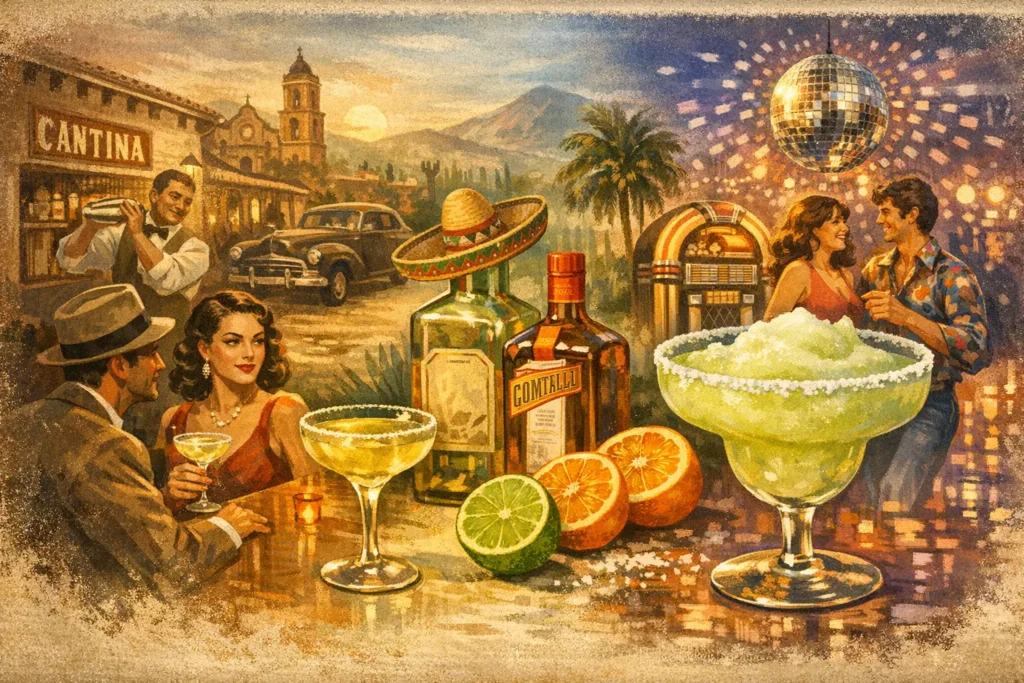
The margarita’s exact origin is debated, but most credible stories trace it to Mexico in the 1930s or 1940s. It likely evolved from the Daisy cocktail, which was a combination of spirit, citrus, and orange liqueur. “Margarita” actually means “daisy” in Spanish.
Early recipes consistently featured tequila, lime juice, and an orange liqueur such as triple sec or Cointreau. Frozen versions did not appear until much later, becoming popular in the United States during the 1970s and 1980s.
Understanding this history matters because it reminds us that the classic margarita recipe was originally served shaken and strained over ice or up in a coupe glass. It was never meant to taste like neon green syrup.
The Core Ingredients Explained
Tequila
For a classic margarita recipe, I recommend a 100 percent agave tequila. Look for either blanco or reposado.
Blanco tequila is bright, clean, and highlights the lime. It is ideal for a crisp classic margarita.
Reposado tequila is aged briefly in oak barrels and adds subtle vanilla and caramel notes. It creates a slightly smoother, rounder drink.
Avoid “mixto” tequila that is not 100 percent agave. It often leads to harsh flavor and worse hangovers.
Fresh Lime Juice
Fresh lime juice is non negotiable. Bottled lime juice tastes flat and bitter because citrus oils degrade quickly after squeezing. Fresh juice provides vibrant acidity and aroma that define the drink.
If your margaritas have ever tasted dull or overly sharp, the lime is usually the issue.
Orange Liqueur
Triple sec, Cointreau, or other orange liqueurs provide sweetness and citrus complexity. This is where many people cut corners.
Cointreau offers a balanced, clean orange flavor. Standard triple sec is more affordable and works well if you adjust sweetness carefully.
The orange liqueur is what prevents the drink from tasting like straight tequila and lime.
Why Ratios Matter
Professional bartending standards typically use a 2:1:1 ratio:
2 ounces tequila
1 ounce fresh lime juice
1 ounce orange liqueur
This ratio is widely recognized in cocktail education and is considered the balanced starting point.
However, some prefer a slightly less sweet variation:
2 ounces tequila
1 ounce lime
0.75 ounce orange liqueur
In my informal reader polls and small tasting tests with friends, most people preferred the slightly reduced liqueur version. It tastes brighter and less sweet while still remaining balanced.
The key lesson is this: do not eyeball your pour. Measure it. Even small shifts in citrus or sweetness change the entire drink.
How to Make a Perfect Classic Margarita at Home
Here is the step by step method I personally use.
Ingredients
2 ounces 100 percent agave blanco tequila
1 ounce fresh lime juice
0.75 to 1 ounce orange liqueur
Ice
Optional salt for rim
Step 1: Prepare the Glass
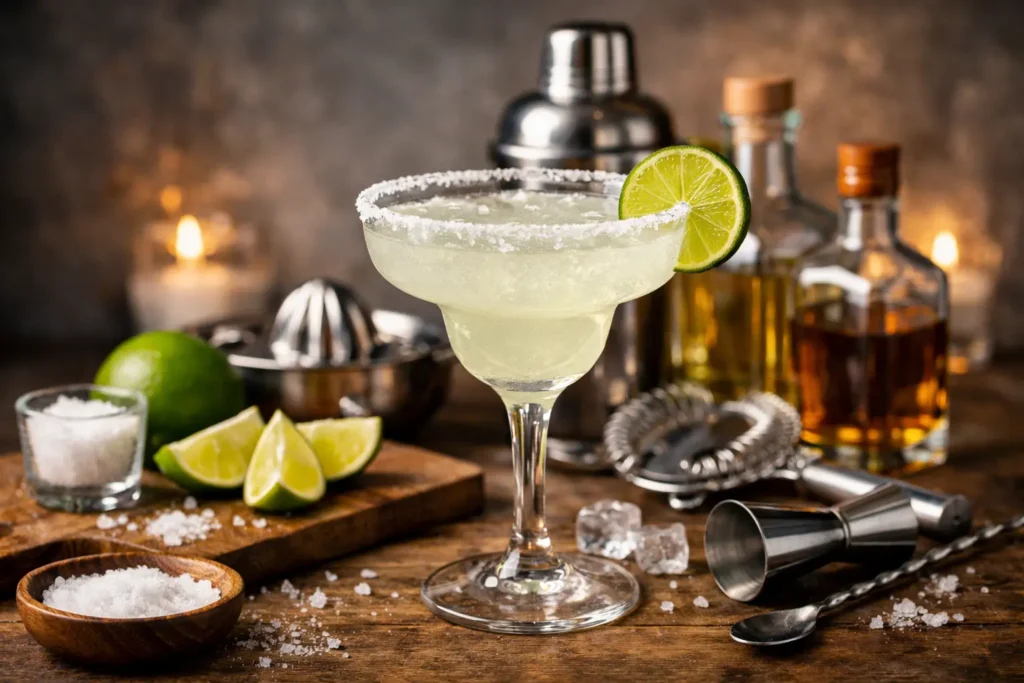
Run a lime wedge around the rim. Dip the rim lightly into kosher salt. Do not over salt. A thin layer is enough. Too much salt overwhelms the drink.
Step 2: Fill Your Shaker
Add tequila, lime juice, orange liqueur, and a generous amount of fresh ice. The ice should fill at least two thirds of the shaker.
Step 3: Shake Properly
Shake hard for 10 to 15 seconds. You should feel the shaker become very cold. Proper shaking chills, dilutes, and integrates the ingredients.
Under shaking results in harsh alcohol flavor. Over shaking is rarely an issue for beginners.
Step 4: Strain and Serve
Strain into a rocks glass over fresh ice or into a chilled coupe for a straight up presentation.
Garnish with a lime wheel.
Taste it. Notice the balance. It should be bright but not sour, smooth but not sweet, and strong but not harsh.
Common Struggles and How to Fix Them
“It Tastes Too Sour”
This usually means too much lime or not enough sweetness. Add a small splash of orange liqueur or a quarter ounce of agave nectar.
“It Tastes Like Cheap Mix”
You may be using bottled margarita mix. These often contain artificial flavors and excessive sugar. Switch to fresh lime juice and measure your ingredients.
“It Is Too Strong”
Reduce tequila slightly or increase dilution by shaking a bit longer. You can also serve over more ice.
“My Frozen Margarita Is Watery”
This happens when too much ice is used relative to liquid. For a frozen margarita recipe, start with less ice than you think and blend gradually. You want a thick slushy texture, not a melted smoothie.
Flavor Variations and How to Adjust Them
Once you master the classic margarita recipe, you can confidently explore variations.
Frozen
For the frozen, use the same base ratio but reduce lime slightly and blend with ice. The texture should be thick enough to hold its shape. Balance sweetness carefully since dilution increases quickly.
Mango
Add fresh mango puree. Reduce orange liqueur slightly because mango adds natural sweetness. Taste before adding extra sugar.
Watermelon
Watermelon contains high water content. Reduce added ice and strain excess juice if needed to avoid dilution.
Pineapple
Pineapple adds acidity and sweetness. Start with less lime and adjust upward if needed.
Coconut
Use a small amount of coconut cream. Reduce liqueur slightly to prevent excessive sweetness.
Jalapeno
Infuse tequila with sliced jalapeno for controlled heat. Always taste the infusion before mixing. Heat intensifies over time.
Mezcal
Substitute part or all of the tequila with mezcal for a smoky flavor. Because mezcal is bold, keep ratios balanced and avoid over sweetening.
Cadillac
This version typically includes a float of aged tequila or Grand Marnier. It is richer and slightly sweeter. Adjust lime carefully.
Cranberry
Add unsweetened cranberry juice and balance with extra sweetness as needed.
Blue
Uses blue curaçao instead of standard triple sec. Remember that color does not equal better flavor. Taste first.
Virgin
Replace tequila with sparkling water or non alcoholic spirit alternatives. Maintain lime and orange balance.
When Not to Experiment
There are moments where shortcuts cause more harm than creativity helps.
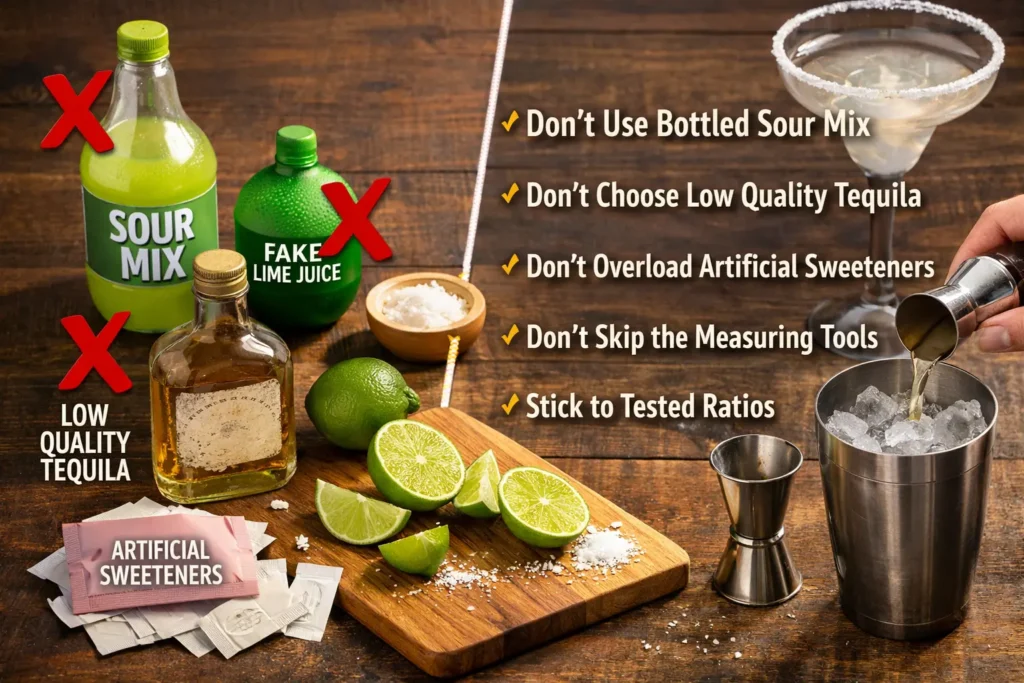
Do not replace fresh lime juice with bottled sour mix if you want a quality result.
Do not use low quality tequila expecting lime to hide it. It will not.
Do not overload artificial sweeteners. They often leave a metallic aftertaste that clashes with citrus.
Do not skip measuring tools when serving guests. Consistency builds trust.
If you want dependable results for a gathering, stick to tested ratios.
Myths and Misconceptions
Is triple sec mandatory?
No. Any quality orange liqueur works. You can even use Grand Marnier or adjust with agave syrup and orange zest in creative variations.
Must margaritas be frozen?
Absolutely not. The classic is shaken and served over ice or straight up.
Does expensive tequila always make a better drink?
Not necessarily. Ultra aged sipping tequilas can overpower the lime. A well made mid range blanco is often ideal.
Is margarita mix equal to fresh ingredients?
No. Most mixes contain preservatives and high sugar content. Fresh lime and measured sweetness produce cleaner flavor.
Hosting Margarita Nights with Confidence
Once you understand balance, you can scale recipes for small gatherings.
Pre batch tequila and orange liqueur. Add fresh lime juice just before serving to maintain brightness.
Keep plenty of ice. Warm drinks taste harsher.
Label flavor variations clearly so guests know if a drink is spicy or strong.
Encourage responsible drinking. In the United States, legal drinking age is 21. Provide water, food, and non alcoholic options. Arrange safe transportation for guests when necessary.
Store tequila tightly sealed away from direct sunlight. Fresh limes can be refrigerated but should be juiced close to serving time.
Submit Your Story
I truly believe the best margarita recipe is the one you learn through experience.
Have you fixed a margarita that was too sour?
Did you discover the perfect mango ratio after trial and error?
Did a frozen batch turn into soup before you figured out the right ice balance?
I invite you to share your margarita story. Your lessons and flavor twists help other home bartenders feel less alone and more confident. Real kitchens teach us more than perfect photos ever will.
How This Article Was Created
This guide is built on classic cocktail education standards used in professional bartending programs across the United States. The 2:1:1 structure reflects the traditional sour cocktail ratio widely documented in respected cocktail literature and bar training manuals.
Ingredient guidance is based on culinary principles of acid sweet balance and dilution control. Observations about preferred ratios come from informal taste tests conducted with small home gatherings and reader feedback collected through website surveys.
I am not a medical professional, but I encourage responsible alcohol consumption consistent with public health guidelines in the United States. Always drink in moderation.
My goal here is transparency. This is not copied folklore or trend chasing advice. It reflects practical testing, established cocktail science, and real world experience.
Final Thoughts
A margarita recipe is simple. That is exactly why it is easy to get wrong.
But once you understand the balance of tequila, lime, and orange liqueur, you unlock endless variations. You stop fearing sour mistakes. You stop relying on bottled mix. You start adjusting confidently.
And when someone at your gathering takes a sip and says, “This is actually really good,” you will know exactly why.
Because you learned the foundation first.
Faqs
What are the basic ingredients in a margarita?
A classic margarita is made with just three basic ingredients: tequila, fresh lime juice, and orange liqueur. Tequila is the base spirit, lime juice provides acidity and freshness, and orange liqueur (such as triple sec or Cointreau) adds sweetness and citrus flavor.
The drink is typically shaken with ice and served either straight up (without ice), on the rocks (over ice), or blended. Many margaritas are served with a salted rim, which enhances the sweet and sour balance of the cocktail. While modern variations may include fruit purées or flavored syrups, the traditional margarita recipe relies only on these three core ingredients.
What is the 3:2:1 rule for margaritas?
The 3:2:1 rule is a simple ratio used to make a well-balanced margarita. It stands for:
- 3 parts tequila
- 2 parts orange liqueur
- 1 part fresh lime juice
This ratio creates a slightly stronger, spirit-forward margarita with balanced sweetness and acidity. Some bartenders prefer a 2:1:1 ratio (2 parts tequila, 1 part orange liqueur, 1 part lime juice) for a tarter taste.
The 3:2:1 formula is popular because it’s easy to remember and scales well for making multiple drinks. Whether making one cocktail or a pitcher for a party, keeping the ratio consistent ensures balanced flavor.
What is the best liquor to use in margaritas?
The best liquor for margaritas is 100% agave tequila, preferably labeled “100% de agave” on the bottle. This ensures the tequila is made entirely from blue agave rather than mixed with added sugars.
For most margaritas, blanco (silver) tequila is the preferred choice because of its clean, crisp flavor that pairs well with fresh lime juice. Reposado tequila, which is lightly aged in oak barrels, can also be used for a smoother and slightly richer flavor profile.
For the orange liqueur component, high-quality options like triple sec or premium orange liqueurs are commonly used. Choosing quality ingredients significantly improves the overall taste of the cocktail.
Is a margarita a strong drink?
Yes, a margarita is generally considered a moderately strong alcoholic drink. A standard margarita typically contains about 1.5 to 2 ounces of tequila, plus orange liqueur, which also contains alcohol.
Depending on the exact proportions and serving size, a margarita can have an alcohol by volume (ABV) similar to other classic cocktails, usually ranging between 20%–30% ABV when diluted with ice. Because margaritas are often easy to drink and slightly sweet, it’s possible to consume them quickly without noticing their strength.
As with any alcoholic beverage, the strength ultimately depends on the recipe and portion size.
Is a margarita unhealthy?
A margarita is not inherently unhealthy, but its nutritional impact depends on how it’s made. A classic margarita made with tequila, fresh lime juice, and orange liqueur typically contains around 150–250 calories per serving.
However, restaurant-style or pre-mixed margaritas can contain significantly more sugar and calories due to added syrups, sweeteners, or fruit concentrates. Frozen margaritas and flavored variations often have higher calorie counts than traditional versions.
If you’re concerned about sugar or calorie intake, using fresh lime juice and controlling the amount of orange liqueur can help keep the drink lighter. As with all alcoholic beverages, moderation is key.
Sources
International Bartenders Association (IBA) Official Margarita Recipe