|
Getting your Trinity Audio player ready... |
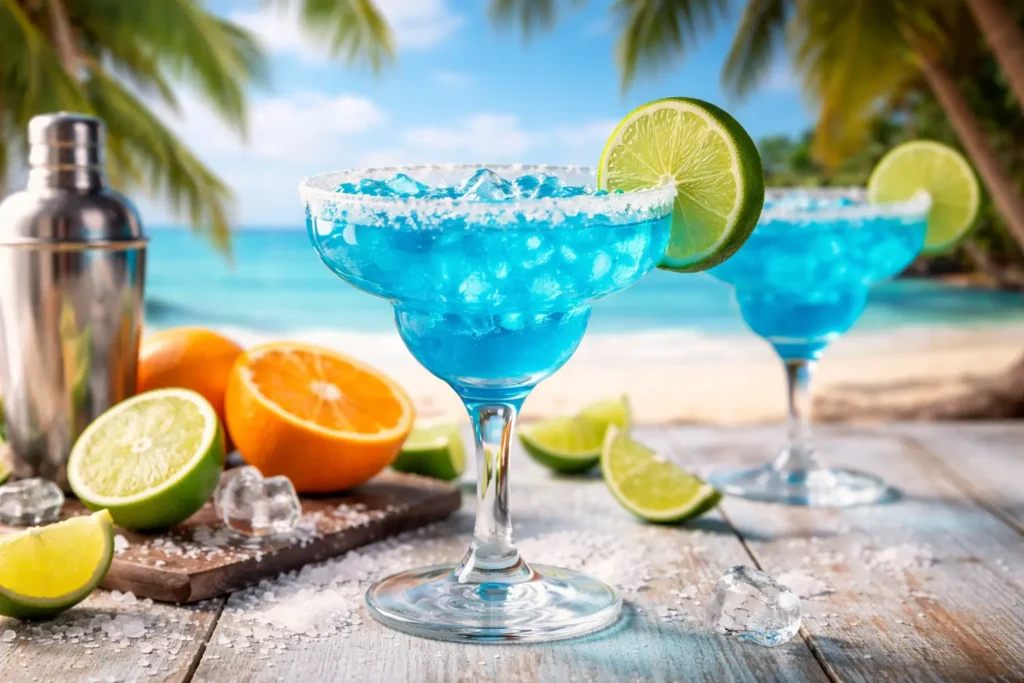
A blue margarita is one of the most visually striking drinks you can make at home. It’s also one of the most commonly unbalanced, because the swap from standard triple sec to blue curaçao isn’t as straightforward as most recipes suggest. After making this drink across multiple versions, adjusting the curaçao quantity, testing different liqueur combinations, and solving the color-vs-balance problem directly, I found that the version everyone wants to make and the version that actually tastes good require slightly different approaches. Here’s how to get both.
Why Blue Curaçao Changes More Than the Color
The blue color comes entirely from blue curaçao, a liqueur made from the dried peels of the laraha citrus fruit, a bitter orange native to the island of Curaçao. The laraha itself is inedible raw, but its peel carries a pronounced citrus oil that creates a sweet, slightly bitter orange flavor in the finished liqueur. The blue color is added separately; curaçao is naturally clear, and the vivid blue is food coloring added for visual appeal. It does not affect flavor.
What does affect the drink is the ABV. Standard blue curaçao runs at 25 to 30% alcohol. Cointreau and premium triple secs run at 40%. Swapping blue curaçao for triple sec at the same one-ounce volume in a classic margarita reduces the alcohol contribution of the orange liqueur slot by a meaningful amount, and because blue curaçao is also sweeter than a dry premium triple sec, the drink becomes noticeably softer and cloying.
This is the mistake most blue margarita recipes make: they call for a direct 1:1 substitution without compensating for either the sweetness increase or the ABV drop. The result is a drink that looks beautiful and tastes unbalanced, too sweet, with the tequila floating on top rather than integrating.
The Color vs Balance Tradeoff
Before choosing a build, it helps to understand the tradeoff.
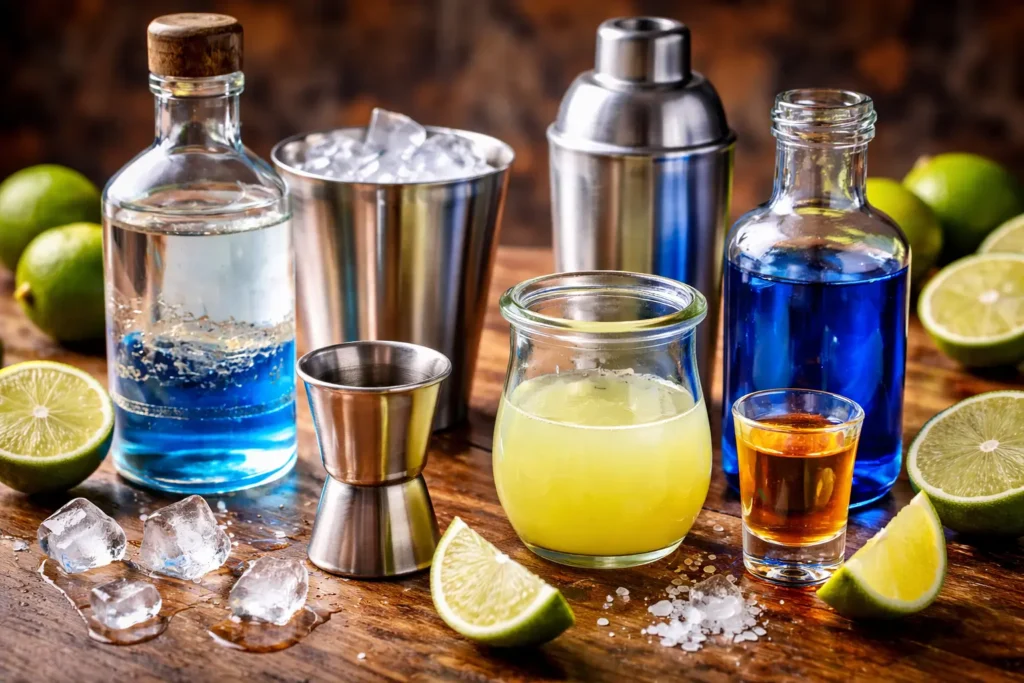
More blue curaçao produces a deeper, more vivid blue color. It also increases sweetness and reduces the structural ABV contribution of the orange liqueur, pushing the drink further from a classic margarita and closer to a sweet citrus drink. Less curaçao produces a better balance and more tequila presence, but a paler color, closer to teal or aqua than electric blue.
There is no version that maximizes both color intensity and classic margarita balance simultaneously. The choice depends on what you’re optimizing for.
Two Builds Worth Knowing
Build 1: Maximum Color, Adjusted for Balance
This version uses the full ounce of blue curaçao for a vivid color, then compensates for the sweetness and ABV gap with a small amount of premium triple sec alongside it.
Ingredients:
- 2 oz blanco tequila (100% agave)
- ¾ oz blue curaçao
- ¼ oz Cointreau or premium triple sec
- 1 oz fresh lime juice
- Ice for shaking and serving
- Coarse kosher salt for the rim (optional)
The dual-liqueur approach, combining blue curaçao with a smaller amount of Cointreau, produces both the color and the structural ABV of a properly balanced margarita. The Cointreau adds the citrus clarity and dry finish that blue curaçao alone cannot provide.
Instructions:
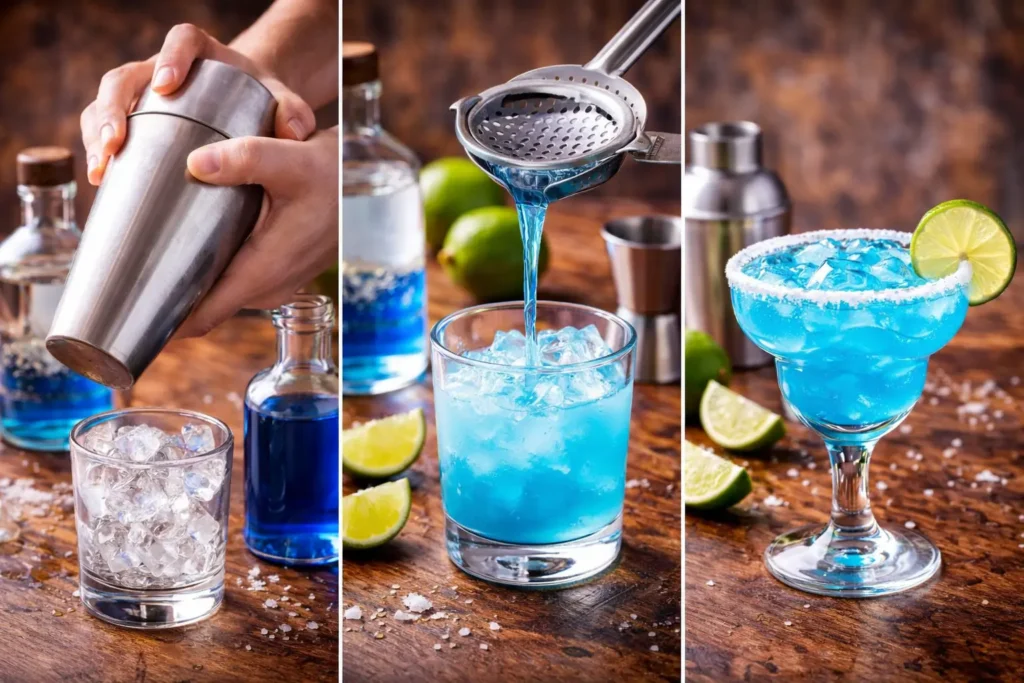
- If salting the rim, run a spent lime half around the outer edge of a rocks glass and press lightly into coarse salt on a flat plate. Fill the glass with fresh ice.
- Fill a cocktail shaker three-quarters full with ice.
- Add the tequila, blue curaçao, Cointreau, and lime juice.
- Shake hard for 12 to 15 seconds, the shaker should feel cold and frosted on the outside.
- Strain into the prepared glass.
- Taste before serving. If the sweetness is too prominent, add three drops of fresh lime juice and stir. If the drink tastes harsh, shake again with fresh ice rather than adjusting ingredients; under-dilution is almost always the cause.
Build 2: Better Balance, Softer Color
This version prioritizes flavor over visual intensity. It uses less blue curaçao and compensates with a small amount of fresh orange juice to restore citrus complexity.
Ingredients:
- 2 oz blanco tequila (100% agave)
- ½ oz blue curaçao
- ½ oz fresh orange juice
- 1 oz fresh lime juice
- Ice for shaking and serving
- Coarse kosher salt for the rim (optional)
The color will be paler, aqua rather than electric blue, but the flavor is closer to a classic margarita. The orange juice replaces the citrus complexity that a full ounce of Cointreau would normally provide, without the added sweetness of a larger blue curaçao pour. This is the version I make when I want a blue margarita that tastes as good as it looks, rather than just looks good.
Instructions: Same as Build 1 above.
Why Blanco Tequila Is the Right Choice Here
Reposado tequila adds vanilla and oak notes from barrel aging that soften the drink and add warmth. In most margaritas, this is a worthwhile trade. In a blue margarita, it muddies the visual clarity of the color, the amber tones of reposado push the blue toward greenish-gray rather than the electric blue that makes this drink visually distinctive.
Blanco tequila is clear, which means the blue curaçao’s color comes through cleanly. It’s also the right flavor call; the crisp, grassy, slightly herbaceous character of a good blanco creates a better contrast with the sweet citrus of blue curaçao than a softer, vanilla-forward reposado would.
Use a 100% agave blanco. Mixto tequilas, those made with up to 49% non-agave sugars, produce a sharper, slightly chemical flavor that becomes more noticeable in a drink where the spirit isn’t softened by a full pour of premium liqueur.
The Natural Blue Alternative
Blue curaçao achieves its color with food dye, which is fine for most purposes. If you want a naturally blue drink without artificial coloring, butterfly pea flower tea is the alternative worth knowing.
Butterfly pea flowers, also called blue pea or Clitoria ternatea, produce a deep indigo-blue tea when steeped in hot water. The color is vivid and all-natural. More interestingly, the color changes to purple or pink when it contacts an acid, which means adding fresh lime juice to a butterfly pea-colored drink produces a visible color shift in the glass, which is genuinely dramatic as a presentation moment.
The practical approach: make a small amount of butterfly pea tea, let it cool, and use it in place of a small amount of the shaking water, or add it as a float on top of the finished drink. It adds no significant flavor, just color. Use it alongside a standard margarita build with Cointreau rather than blue curaçao, you get the visual effect without the sweetness trade-off.
The Red, White, and Blue Layered Version
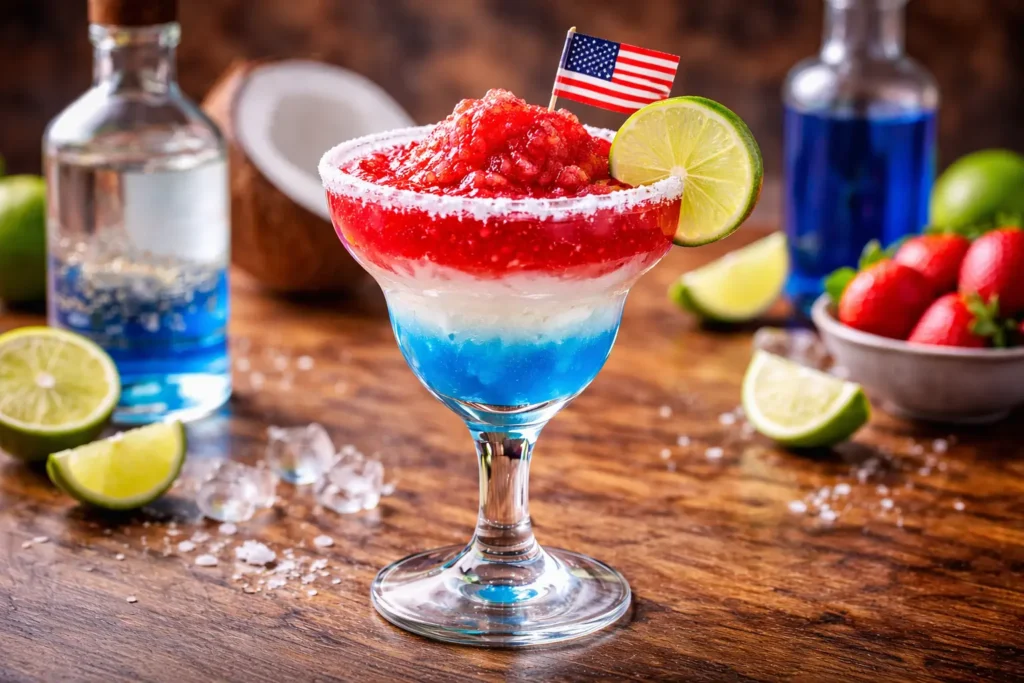
For festive occasions, a layered build using blue, white, and red elements in the same glass is worth making.
The layering works by density; denser liquids sink, lighter liquids float. Pour carefully and slowly over the back of a spoon held just above the surface of the previous layer to maintain separation.
Blue base layer: Standard blue margarita mix (tequila, blue curaçao, lime juice), shaken and strained over ice. Fill the glass halfway.
White middle layer: Two ounces of coconut cream thinned with a splash of tequila and a squeeze of lime. Pour slowly over the back of a spoon. Coconut cream is denser than the margarita layer when used in small quantities, if it sinks rather than floats, add a small amount of water to thin it further.
Red top layer: One ounce of strawberry purée (fresh or frozen strawberries blended until smooth, strained through a fine mesh). Strawberry purée is the lightest layer and floats naturally. Pour it last, again over a spoon.
Chill each component separately before building the drink; warm layers blend rather than separate. Serve immediately after layering and don’t stir.
Frozen Blue Margarita
The frozen version produces a paler color than on-the-rocks because blended ice dilutes the blue. Compensate by increasing the blue curaçao to three-quarters of an ounce rather than the half ounce used in Build 2.
Add the tequila, blue curaçao, lime juice, and Cointreau (if using) to a blender with one to one-and-a-half cups of ice. Blend until smooth but not watery; over-blending melts the ice and produces a thin, diluted drink. The consistency should be thick enough that it holds its shape briefly when spooned.
Frozen margaritas taste slightly sweeter than shaken versions because cold temperatures suppress the perception of acidity. If the frozen version tastes too sweet, add a quarter ounce of fresh lime juice and blend for three seconds. Do not add more ice to fix a flat frozen drink, it dilutes without improving.
Batch Build for 8 Servings
- 16 oz blanco tequila
- 6 oz blue curaçao
- 2 oz Cointreau or premium triple sec
- 8 oz fresh lime juice
Combine in a pitcher and stir well. Refrigerate for up to two hours before serving. Do not add ice to the pitcher, pour over fresh ice in individual glasses at serving time.
The lime juice is the most time-sensitive element. Press limes as close to serving as possible, citrus juice starts losing its aromatic brightness within a few hours of pressing. If prepping the night before, store the lime juice separately and add it to the pitcher just before guests arrive.
Taste before serving and adjust with a small amount of additional lime juice if the batch tastes flat; acidity perception decreases slightly when the liquid is very cold.
Faqs
What’s in a Blue Sky Margarita?
A Blue Sky Margarita is a variation of the classic margarita made with tequila, lime juice, and an orange liqueur, but it includes blue curaçao to give it its bright blue color. The typical ingredients are tequila (usually blanco), fresh lime juice, blue curaçao, and sometimes simple syrup or agave syrup for added sweetness. Blue curaçao is an orange-flavored liqueur made from the dried peels of the laraha citrus fruit and is what creates the vibrant blue shade. The drink is usually shaken with ice and served in a salt-rimmed glass, either on the rocks or blended.
Why Is My Margarita Blue?
Your margarita is blue because it contains blue curaçao. Blue curaçao is a colored version of curaçao, an orange-flavored liqueur. The blue color does not change the flavor significantly; it is mainly for visual appeal. The liqueur is flavored with citrus peels and sweeteners, and the bright blue color comes from added food coloring. If your margarita turned blue unexpectedly, check whether a blue liqueur was added instead of a clear orange liqueur like triple sec.
What Is the Best Blue Tequila for Margaritas?
There is no naturally “blue” tequila; the blue color in margaritas comes from blue curaçao, not the tequila itself. For the best results, use a high-quality blanco tequila made from 100% blue Weber agave. Blanco (also called silver) tequila has a clean, crisp flavor that pairs well with citrus in margaritas.
Some well-known options made from 100% blue agave include Patrón, Don Julio, and Espolòn. These brands are widely used in premium margaritas because they offer smooth flavor without overpowering the lime and orange notes. Choosing 100% agave tequila is more important than choosing a “blue” label.
What Do Mexican Restaurants Use for Margaritas?
Most Mexican restaurants use a combination of tequila, lime juice, and orange liqueur (such as triple sec or curaçao). Many restaurants also use margarita mix for speed and consistency, especially in high-volume settings. Higher-quality or authentic restaurants typically use fresh lime juice and 100% agave tequila rather than pre-made mixes.
In traditional Mexican preparation, the margarita is simple: tequila, freshly squeezed lime juice, and orange liqueur, shaken with ice and served with a salted rim. Some establishments also add agave syrup to balance acidity. Frozen margaritas are made by blending these ingredients with ice.
What Can I Use Instead of Agave Syrup in Margaritas?
If you don’t have agave syrup, you can substitute simple syrup, honey syrup (honey diluted with warm water), or even maple syrup in small amounts. Simple syrup is the most neutral substitute and keeps the flavor closest to a classic margarita. Honey syrup adds slight floral notes, while maple syrup creates a deeper sweetness.
If you prefer a lower-sugar option, you can skip the sweetener entirely if your orange liqueur is already sweet enough. Taste and adjust gradually, since sweetness levels vary depending on the tequila and orange liqueur you use.
References
Official standards and classifications (Blanco, Reposado, etc.).
Margarita Recipe & Sour Formula

Muhammad Hussain is the creator of MargaritaLab.com, where he tests and analyzes margarita recipes, ingredients, and techniques to help readers make better drinks at home. Over time, he has experimented with different tequila types, lime juice variations, and store-bought mixes to understand what actually makes a balanced margarita.
His approach combines hands-on testing with detailed research, focusing on real-world results rather than theory. Whether comparing fresh vs bottled lime juice or reviewing popular margarita mixes, his goal is to simplify the process and share what truly works.
Pingback: Vodka Margarita Substitute: Can You Use Vodka Instead of Tequila in Margaritas?
Pingback: Shaken vs Blended Margarita: How Ice Affects the Taste