|
Getting your Trinity Audio player ready... |
Most people think the difference between a shaken and blended margarita is texture.
That is only part of the story.
After making both side-by-side repeatedly, I realized the real difference is how ice changes the entire structure of the drink. Dilution, aroma, acidity perception, alcohol sharpness, and mouthfeel all shift depending on whether the ice is shaken briefly or pulverized completely.
What surprised me most during testing was this: even when using the exact same ingredients and ratios, the two cocktails barely tasted like the same drink.
That is the thing most recipes never explain clearly enough. A blended margarita is not a frozen shaken margarita. The mechanics are completely different, and understanding those mechanics changes how you approach both.
The Same Recipe, Two Completely Different Drinks: Here Is Why
I used to think I could take my favourite shaken margarita recipe, dump it into a blender with ice, and get a frozen version automatically.
Every attempt tasted wrong.
The blended version felt duller, sweeter, and flatter even though the ingredients were identical. The shaken version tasted sharper, brighter, and more clearly like tequila with each sip.
Eventually I understood the reason. Ice is not just chilling the cocktail. It is actively reshaping it through five simultaneous mechanisms: dilution rate, aeration level, temperature, texture, and how your palate perceives sweetness and acidity. Shaking and blending engage all five differently.
Once I started treating them as two genuinely separate drinks rather than two presentations of the same drink, both versions improved dramatically.
What Shaking Actually Does to a Margarita
A shaker creates controlled dilution. That phrase sounds technical but it matters enormously in practice.
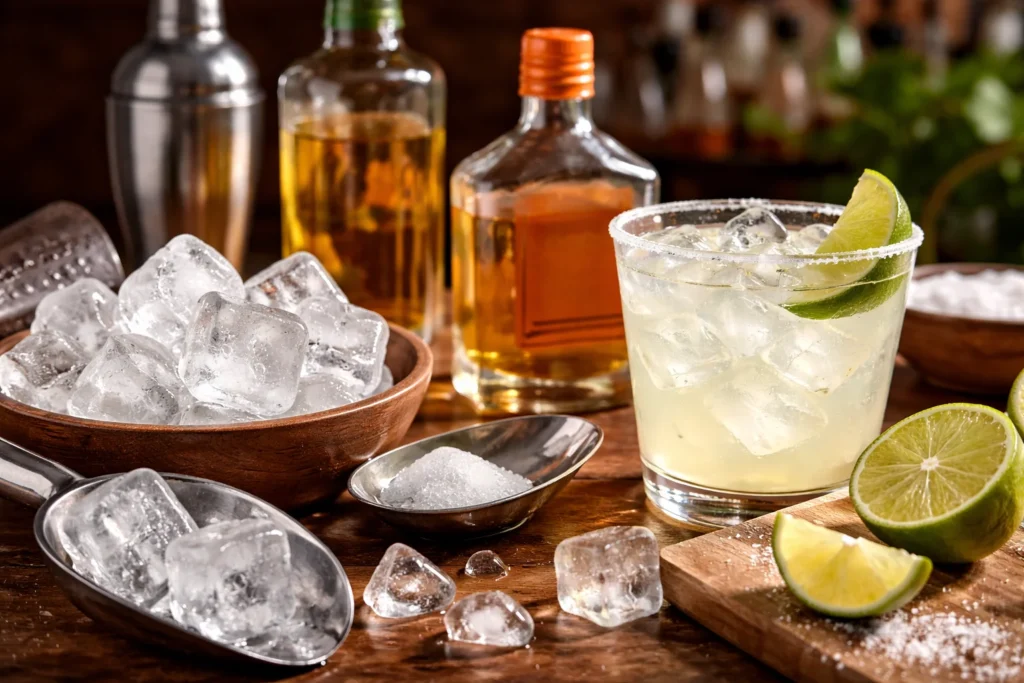
When you shake a margarita, ice chills the liquid while slowly melting into it. At the same time, the vigorous movement traps tiny air bubbles inside the drink, softening the texture slightly without making it foamy. The result is a drink that feels cold, sharp, bright, and lightly textured, not thin, not aggressive, not watery.
The ice is responsible for all of that simultaneously.
Jeffrey Morgenthaler writes extensively about proper shaking technique in The Bar Book, and margaritas are one of the clearest examples in his work of why technique changes flavour independent of the recipe itself.
How Dilution Works During a Shake
I used to think dilution was something to minimise. Then I started tasting intentionally under-diluted margaritas beside properly shaken ones.
The under-diluted versions tasted harsh and disjointed. The tequila stuck out awkwardly. The lime felt acidic rather than refreshing. The drink had no cohesion.
Water is an ingredient in a margarita whether people acknowledge it or not. Dave Arnold makes this argument extensively in Liquid Intelligence, and margaritas prove his point immediately.
During shaking, dilution happens in stages. The surface of the ice melts first on contact with the warm liquid. Agitation through shaking accelerates that melting. As the liquid cools, the rate of further dilution slows because colder liquid melts ice more slowly. This self-regulating mechanism is what makes shaking a relatively forgiving and consistent dilution method once you understand the timing.
Why Shake Time Matters More Than Most Recipes Say
Most recipes say “shake well.” That instruction is almost useless without knowing what well actually means in terms of time.
A five-second shake and a fifteen-second shake create noticeably different drinks even with identical ingredients. Short shakes leave the drink sharp and edgy; the alcohol has not integrated properly with the citrus, and the flavours feel disconnected. Over-shaking creates excessive dilution and weakens aroma because colder drinks suppress aromatic intensity.
There is a sweet spot where the drink feels icy but still expressive. I made the over-shaking mistake constantly early on, assuming colder automatically meant better.
For large cubes, I shake a standard margarita for twelve to fifteen seconds. For smaller cubes that melt faster, I reduce it to ten to twelve seconds. Hard shaking, using controlled, forceful movements rather than casual agitation, achieves better aeration and temperature drop faster, meaning you can reach the right result with slightly less time than a casual shake requires. The goal is force combined with control, not just duration.
The reliable indicator that the shake is done: the shaker feels uncomfortably cold to hold and has developed condensation on the outside. That tells you the contents have reached the right temperature range regardless of exactly how many seconds have passed.
What Happens to the Drink After It Leaves the Shaker
A shaken margarita keeps changing in the glass and most recipes completely ignore this.
As the serving ice melts, dilution continues slowly. The first sip and the last sip are not identical. Good shaken margaritas evolve gradually rather than collapsing immediately; the structure holds through the drink rather than deteriorating within two minutes.
This is why serving ice matters almost as much as shaker ice. Large cubes in the glass slow dilution and preserve structure longer. Small wet ice melts aggressively and flattens the drink fast. During summer testing sessions, cheap freezer ice consistently ruined otherwise balanced cocktails within minutes of pouring. The same recipe with large clear ice remained balanced throughout.
What Blending Actually Does to a Margarita
Blending changes everything simultaneously rather than in the staged and controllable way shaking does.
Instead of controlled dilution, you get instant dilution combined with aggressive aeration combined with temperature shock all at once. A blender shatters ice into tiny particles suspended throughout the drink. Those particles continue melting rapidly after pouring, which means a blended margarita is always changing much faster than a shaken one.
Texture becomes the dominant sensory experience. That creamy frozen consistency can be excellent, but it comes at a cost: flavour clarity. Tequila tastes softer. Lime tastes less sharp. Sweetness becomes more noticeable. This is why frozen margaritas need genuinely different ratios, not just the same recipe presented cold.
Why Blending Creates More Dilution Than Shaking
When I started measuring melted water after both techniques using identical ice quantities, the difference was significant and consistent.
Blending introduces more water because shattered ice has dramatically more surface area than intact cubes. More surface area means faster melting. The blender also generates slight heat through friction which accelerates melting further. So even though blended drinks feel colder at first sip, they are typically more diluted than shaken versions by the time you are halfway through the drink.
This explains why frozen margaritas can taste oddly muted even when heavily flavoured. The ice itself is continuously softening everything from the first second after pouring.
How Aeration Changes the Flavour and Texture
Blending incorporates far more air than shaking, and that aeration changes the drink in ways that go beyond just texture.
Citrus feels softer. Alcohol feels gentler. Sweetness becomes rounder and more persistent rather than sharp and bright. This is why frozen margaritas consistently taste less boozy, even when they contain the identical amount of tequila as a shaken version; the air changes mouthfeel enough to alter perception throughout the drink.
In side-by-side testing with identical recipes, the shaken version always registered as noticeably stronger and more complex despite identical alcohol content. The blended version always registered as more refreshing and more approachable. Both observations are accurate, they describe different sensory priorities, not one drink being objectively better.
Why the Drink Keeps Changing After You Pour It
Frozen margaritas are unstable by nature and this requires a different mindset than shaken versions.
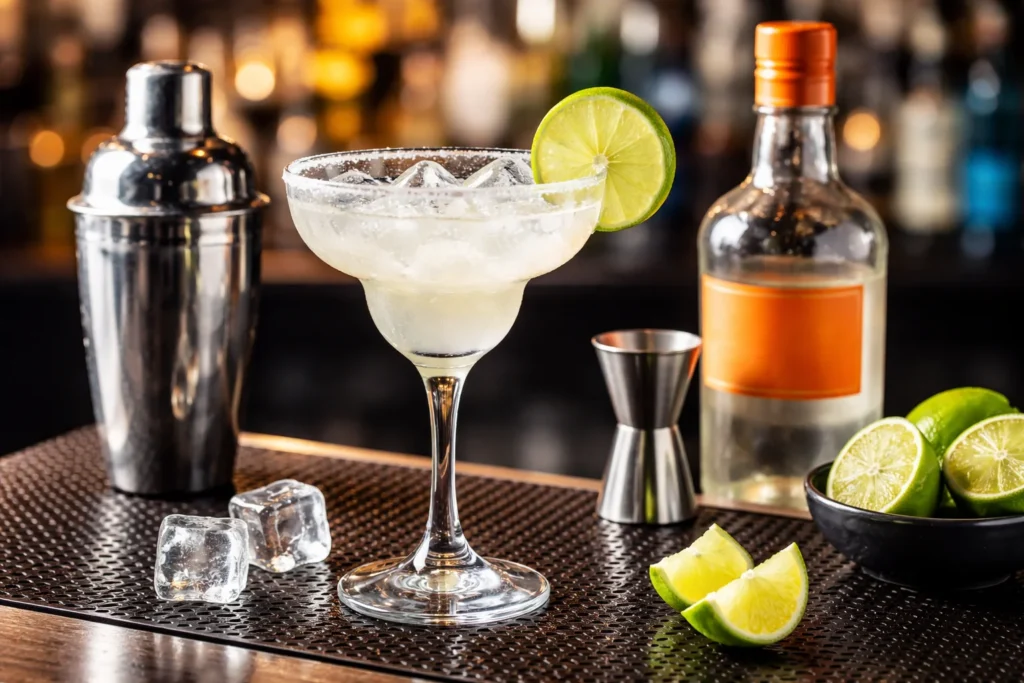
The moment a blended drink hits the glass, ice crystals begin melting rapidly. Texture thickens briefly as the coldest parts hit the warmer glass, then progressively loosens and separates as melting accelerates. A shaken margarita can sit for several minutes and still taste essentially the same. A frozen margarita has a short peak window, I find around five to eight minutes, before the texture deteriorates noticeably.
This is not a flaw to be solved. It is the nature of the style. But it means blended margaritas require faster serving and faster drinking than shaken versions, and hosting a gathering with frozen margaritas means making smaller batches more frequently rather than one large batch that sits.
Ice Shape and Size: Why It Changes Both Techniques
Different ice shapes melt at different rates and create completely different dilution patterns. I did not appreciate this until testing the same recipe repeatedly with different ice formats. The differences were immediately obvious and consistent.
Large cubes in a shaker are the most reliable choice for most situations. They chill efficiently while slowing excessive dilution because their lower surface area means slower melting. They survive hard shaking without shattering into tiny pieces that would accelerate dilution mid-shake.
Small cubes in a shaker dilute faster and can waterlog the drink before proper chilling occurs. That said, a very short aggressive shake with small cubes can work well for situations where you want quick aeration without long dilution, but consistency becomes difficult to maintain.
Crushed ice in a blender produces finer, more uniform frozen textures because it reaches smooth consistency faster and requires less total blending time. Less blending time means less friction heat and less ice surface area melting before you stop the machine.
Cube ice in a blender creates thicker, coarser results unless blended longer, and longer blending means more overall dilution. The drink typically ends up more watered down despite feeling denser at first.
Ice quality affects flavour in both methods. Cloudy freezer ice carries stale trapped aromas that transfer to the cocktail during melting. I noticed this most clearly with delicate blanco tequilas where clean mineral and citrus notes disappeared behind freezer off-flavours. Filtered water frozen slowly produces clearer, denser ice without specialised equipment. This is the smallest change that makes the most consistent improvement to every margarita regardless of technique.
The Technique Decision That Changes the Most
Once a recipe is solid, technique timing matters more than any further ingredient adjustment.
For shaking: too short leaves the drink harsh and disjointed; too long flattens everything through excessive dilution. The window between those two failure points is narrower than most home bartenders realise, which is why most margarita problems blamed on ingredient quality are actually timing problems.
For blending: too short leaves, chunky uneven texture; too long creates watery slush that collapses immediately. The solution is blending in short pulses, five to seven seconds each, stopping to check consistency rather than running the machine continuously until it sounds smooth.
Most margarita problems I had for years were timing problems in disguise. Changing tequila brands or lime juice sources produced no improvement because the timing was always the real issue.
My Go-To Shaken Margarita
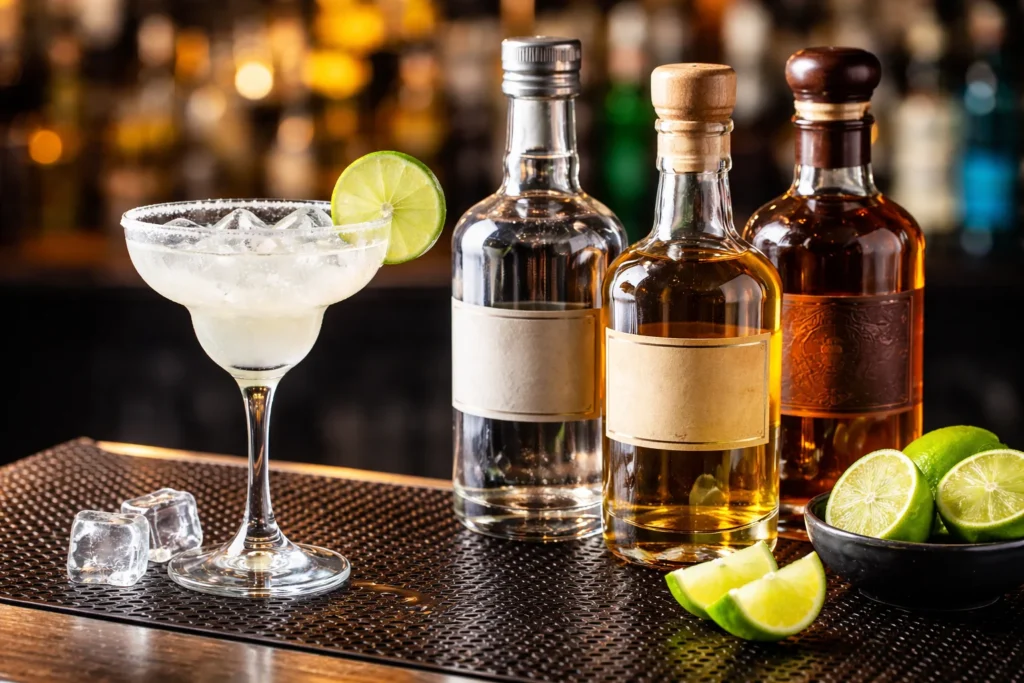
This is the version I make most often because it stays bright, structured, and clearly tastes like a margarita throughout the drink.
Ingredients
- 2 oz blanco tequila Something with clear agave and citrus character, this is where the tequila actually shows itself.
- 1 oz fresh lime juice Fresh only. Bottled lime is immediately noticeable in a shaken version where there is nowhere for artificial notes to hide.
- ¾ oz Cointreau Dry orange character without excessive sweetness.
- ¼ oz agave syrup Optional depending on your lime. Taste first.
- Large ice cubes for shaking Dense, clear, ideally made from filtered water.
Instructions
Fill a shaker with large cold cubes. Add all ingredients. Shake hard with controlled forceful movements for 12 to 15 seconds.
Stop when the shaker feels uncomfortably cold to hold and has visible condensation on the outside.
Double strain into a half-salt-rimmed rocks glass over one large fresh ice cube if possible. The single large cube extends the life of the drink significantly compared to a glass full of smaller cubes.
My Go-To Blended Margarita
The frozen version requires adjusted ratios because using the shaken recipe directly in a blender consistently produces a dull, flat drink.
Ingredients
- 2 oz blanco tequila Choose a blanco with more intense flavour than you might select for a shaken version, the cold will suppress aromatics significantly.
- 1¼ oz fresh lime juice More than the shaken version. Cold suppresses acidity perception so the frozen version needs brighter citrus to taste equivalently balanced.
- ¾ oz Cointreau
- ¼ oz agave syrup More likely to be needed here than in the shaken version for the same cold-suppression reason.
- 1 cup crushed ice Less than instinct suggests. Start here and add only if needed after checking texture.
- Small pinch of salt Sharpens flavour definition that blending and cold temperature together tend to soften.
Instructions
Add liquid ingredients to the blender first. Ice goes in last. This helps the liquids distribute evenly before blending begins rather than ice clumping in a dry pocket at the bottom.
Blend in short pulses of five to seven seconds each. Check consistency between pulses.
Target texture: pours slowly when tilted, holds shape briefly, does not immediately liquify. If it does not move at all when tilted, add a tiny splash of cold water and pulse once more. If it pours immediately like liquid, the texture has already collapsed.
Pour into a pre-chilled glass immediately and serve within five to eight minutes.
The Specific Mistakes That Ruin Each Technique
The biggest shaking mistake is under-shaking. Not over-shaking as most people assume. An under-shaken margarita tastes harsh and disconnected; the water from dilution is what allows the tequila, citrus, and sweetness to integrate properly. Without enough dilution, the ingredients sit in the glass as separate sensations rather than a unified cocktail.
The biggest blending mistake is over-blending. Every additional second of blending after the texture reaches smooth consistency adds more dilution and more aeration than the drink needs. The blender sounds the same whether the drink is perfectly textured or already over-processed; you have to stop and check rather than listening for an audio cue.
Both errors come from misunderstanding what ice is supposed to accomplish. Shaking needs enough dilution to integrate flavours. Blending needs restraint before the ice completely collapses the structure.
Which Technique Should You Actually Use
After all the testing, the honest answer is that neither technique is universally better. They solve different problems.
Shaken margaritas are sharper, brighter, and more expressive. They highlight tequila quality more clearly. They are better for situations where you want to taste what is in the glass.
Blended margaritas are softer, colder, and more texture-driven. They work especially well outdoors in high heat or in situations where the refreshment of the drink matters more than its complexity.
The practical decision I have arrived at: if I am thinking about the tequila, I shake. If I am thinking about how hot it is, I blend.
One additional consideration worth stating clearly: if you are using a premium or complex tequila, shaking will let you actually taste it. Blending will largely erase its character. Save the good bottle for a shaken drink where the investment is perceptible.
A Question About Technique Worth Answering
People ask whether shaking “bruises” the tequila, a claim that circulates in cocktail culture.
Alcohol cannot be bruised. That concept applies to fresh herbs and botanicals where physical damage releases bitter compounds. Tequila is a distilled spirit with no cellular structure to damage.
What shaking does is introduce oxygen and aeration, which changes how volatile aromatic compounds reach your nose. A shaken margarita smells and tastes slightly different from a stirred one, not because of damage but because of aeration. That is a real and interesting difference, but it has nothing to do with bruising.
Faqs
What is the difference between shaken and blended?
The main difference between shaken and blended margaritas comes down to texture and preparation method. A shaken margarita is made by shaking tequila, lime juice, and orange liqueur with ice in a cocktail shaker, then straining it into a glass. This results in a smooth, slightly diluted drink with a crisp and refreshing taste. A blended margarita, on the other hand, is made by blending all ingredients with ice, creating a frozen, slushy texture. Shaken margaritas are more traditional and highlight the ingredients’ flavors, while blended versions are thicker, colder, and often feel more like a frozen treat.
Should you put ice in margaritas?
Yes, ice is an essential part of most margaritas. It helps chill the drink, slightly dilute the alcohol, and balance the strong flavors of tequila and citrus. Whether you’re making a shaken margarita or serving it on the rocks, ice improves the overall drinking experience. The only exception is when you serve a margarita “neat” or “up” (without ice in the glass), but even then, the drink is usually shaken with ice first to properly chill it.
Does ice change the taste of drinks?
Yes, ice does affect the taste of drinks, including margaritas. As ice melts, it adds water to the drink, which softens strong flavors like alcohol and acidity. This dilution can actually improve balance, making the drink smoother and easier to enjoy. However, too much melting can water down the flavor too much. That’s why the quality, size, and amount of ice matter; good ice melts slowly and maintains the intended taste longer.
How much ice should I put in a margarita?
The amount of ice depends on how you’re serving the margarita. If you’re making it in a shaker, fill the shaker about two-thirds full with ice to properly chill and dilute the drink. If you’re serving it on the rocks, fill the glass completely with ice so it stays cold and melts more slowly. Using too little ice can lead to faster melting and a watered-down drink, while enough ice keeps the margarita balanced and refreshing.
What is the best ice for margaritas?
The best ice for margaritas is clean, solid ice that melts slowly. Large ice cubes or clear ice are ideal for margaritas served on the rocks because they dilute the drink more slowly and preserve flavor. For shaking, standard freezer ice cubes work well since they chill the drink quickly. If you’re making a blended margarita, crushed ice is preferred because it creates that smooth, frozen texture. Avoid cloudy or soft ice, as it melts faster and can negatively affect the taste.
References
Classic Cocktail Structure (Sour Ratio)
Standard Margarita Ratio (2:1:1)
Margarita Ingredients & Preparation Standards

Muhammad Hussain is the creator of MargaritaLab.com, where he tests and analyzes margarita recipes, ingredients, and techniques to help readers make better drinks at home. Over time, he has experimented with different tequila types, lime juice variations, and store-bought mixes to understand what actually makes a balanced margarita.
His approach combines hands-on testing with detailed research, focusing on real-world results rather than theory. Whether comparing fresh vs bottled lime juice or reviewing popular margarita mixes, his goal is to simplify the process and share what truly works.
Pingback: Best Pineapple Margarita Recipe with Sweet-Tart Tropical Flavor
Pingback: Best Mango Margarita Recipe with Fresh and Frozen Options
Pingback: Grand Marnier vs Triple Sec vs Cointreau: Which Orange Liqueur Actually Makes a Better Margarita?