|
Getting your Trinity Audio player ready... |
The first time I made a margarita at home, I added extra triple sec, thinking more orange flavor meant a better drink. It seemed harmless. Instead of improving it, the margarita turned into a sweet, flat citrus drink that barely tasted like tequila. A too-sweet margarita is almost always a triple sec problem, whether it’s due to excessive volume, a sweeter-than-expected brand, or an ABV that’s lower than the recipe assumed. Once you understand exactly what triple sec is doing in the drink, fixing the imbalance takes about thirty seconds.
What Triple Sec Actually Does in a Margarita
Triple sec isn’t just a sweetener. It’s the structural bridge between tequila’s bitterness and lime’s sharp acidity. Without it, a margarita tastes harsh and one-dimensional, just alcohol and citrus with nothing connecting them. With the right amount, the three components integrate into a single coherent flavor.
The problem is that triple sec is doing two jobs simultaneously: adding orange citrus complexity and adding sweetness. When you add too much, both jobs go into overdrive. The sweetness overwhelms the lime’s acidity, the orange flavor becomes prominent in the wrong way, and the tequila gets buried. What you’re left with doesn’t taste like a margarita, it tastes like a sweet orange cocktail that happens to have tequila in it.
The standard 2:1:1 ratio (2 oz tequila, 1 oz lime, 1 oz triple sec) is calibrated so that none of the three elements dominates. Triple sec at 1 oz provides exactly enough sweetness and orange complexity to balance the lime without overwhelming it. Every additional quarter ounce pushes the drink noticeably sweeter, because there’s no corresponding increase in acidity or alcohol to absorb it.
Why Some Brands Make the Problem Worse
Not all triple sec behaves the same way at the same volume. This is the part most recipes skip.
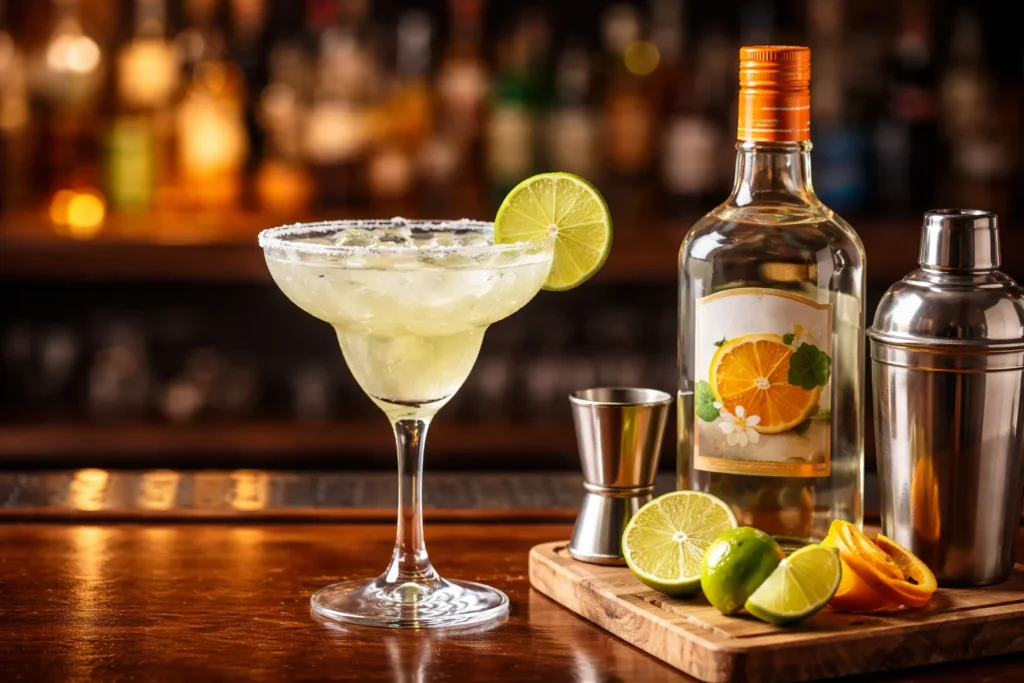
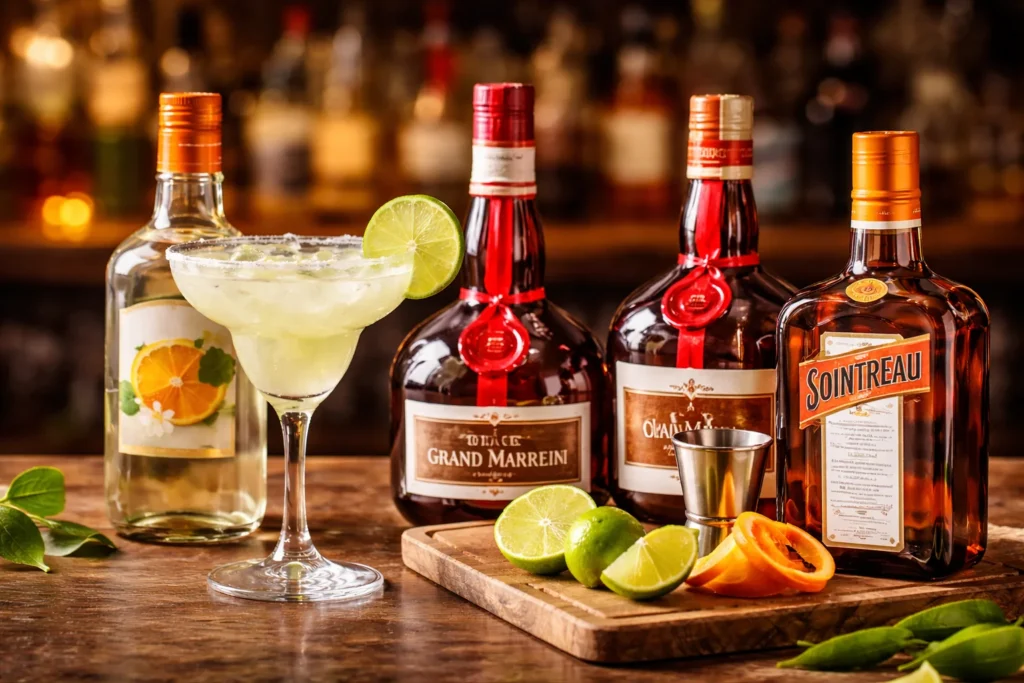
Budget triple secs typically run at 15 to 25% ABV and are formulated sweeter than premium options. Cointreau and comparable premium triple secs run at 40% ABV and are drier in sweetness profile. Using a budget triple sec at the same 1 oz volume as a premium one produces a noticeably sweeter drink, even though the measurement is identical. The sweetness difference between a 20% budget triple sec and a 40% Cointreau is large enough that what tastes balanced with one will taste over-sweet with the other.
If you’ve switched brands recently and your margarita suddenly tastes too sweet without changing anything else, the brand is almost certainly the variable that changed. A budget triple sec at the standard 1 oz pour is often equivalent in sweetness impact to 1.25 oz or more of a premium triple sec.
How to Fix a Margarita That’s Already Too Sweet
The fix depends on how far off balance the drink is.
If it’s slightly too sweet: Add a quarter ounce of fresh lime juice to the shaker, add a handful of fresh ice, and shake again for ten seconds. The additional acid brings the balance back toward the center without changing the overall character of the drink significantly. Taste before pouring.
If it’s noticeably too sweet: Add a quarter ounce of fresh lime juice and a quarter ounce of tequila simultaneously. The lime restores acidity and the additional tequila dilutes the sweetness concentration while bringing the spirit back to the foreground. Shake with fresh ice and taste.
If it’s very sweet: The drink is probably past the point of easy rescue in the same glass. The most practical fix at this stage is to treat it as a base and build a second drink around it. Combine the over-sweet margarita with equal parts fresh tequila and fresh lime juice, shake with ice, and effectively make two drinks from one unbalanced one.
The important rule across all three scenarios: make one adjustment at a time and taste before making another. Adding both lime and tequila simultaneously without tasting first risks swinging the drink too far in the opposite direction, over-correcting from too sweet to too sharp is just as unpleasant.
The Mistake Most People Make When Trying to Fix It
The most common instinct when a margarita is too sweet is to add orange juice as a replacement or supplement for triple sec, reducing the liqueur and adding juice instead to cut down on alcohol sweetness. This makes the problem worse, not better.
Orange juice contains significantly more sugar per ounce than even a budget triple sec, and it adds that sugar without the ABV contribution that triple sec provides. A professional bartender’s point is worth repeating here: orange juice can’t do the same structural job as a distilled spirit, and adding it makes the drink heavier and sweeter rather than more balanced. If you want to reduce the triple sec’s sweetness impact, the fix is less triple sec plus more lime, not a juice replacement.
Similarly, replacing triple sec with simple syrup is not a fix, it removes the orange complexity that defines a margarita and technically produces a different drink (tequila, lime, and simple syrup is a tequila daiquiri, not a margarita). The goal is to fix the balance, not change the drink.
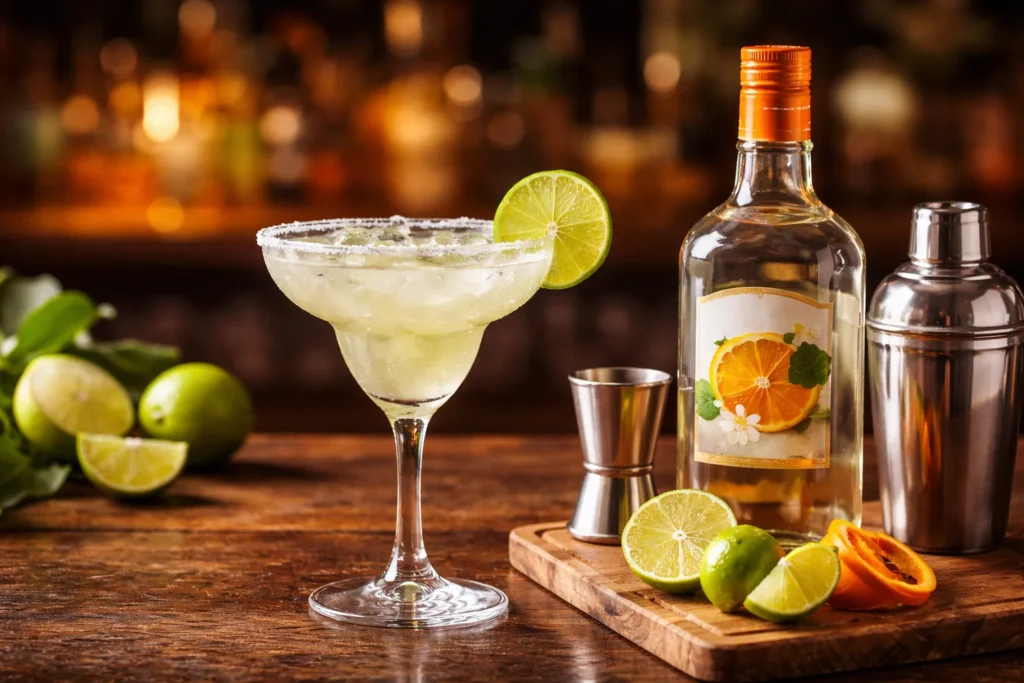
The Corrected Margarita Recipe
This is the standard 2:1:1 build, with the specific note that the ratio assumes a 40% ABV triple sec. If using a lower-ABV brand, reduce the triple sec to three-quarters of an ounce and taste before adding more.
Ingredients
- 2 oz blanco tequila (100% agave)
- 1 oz fresh lime juice
- 1 oz Cointreau or 40% ABV triple sec (or ¾ oz if using budget brand)
- Ice for shaking
- Ice for serving
- Coarse kosher salt for the rim (optional)
Instructions
- If salting the rim, run a spent lime half around the edge of a rocks glass and press lightly into coarse salt on a flat plate. Fill the glass with fresh ice.
- Fill a cocktail shaker three-quarters full with ice.
- Add the tequila, lime juice, and triple sec.
- Shake hard for 12 to 15 seconds.
- Strain into the prepared glass.
- Taste before serving. If it tastes too sweet, add a few drops of fresh lime and stir. If the tequila is too prominent, the issue is under-dilution; shake again with fresh ice rather than adding more triple sec.
One note on fresh lime: if your margarita is too sweet and you’re also using bottled lime juice, switch to fresh before making any other adjustment. Bottled lime juice lacks the acidity intensity of fresh lime, which means the sweetness of even a correct triple sec pour will go unbalanced. Fresh lime is not optional in a sweet-correction context.
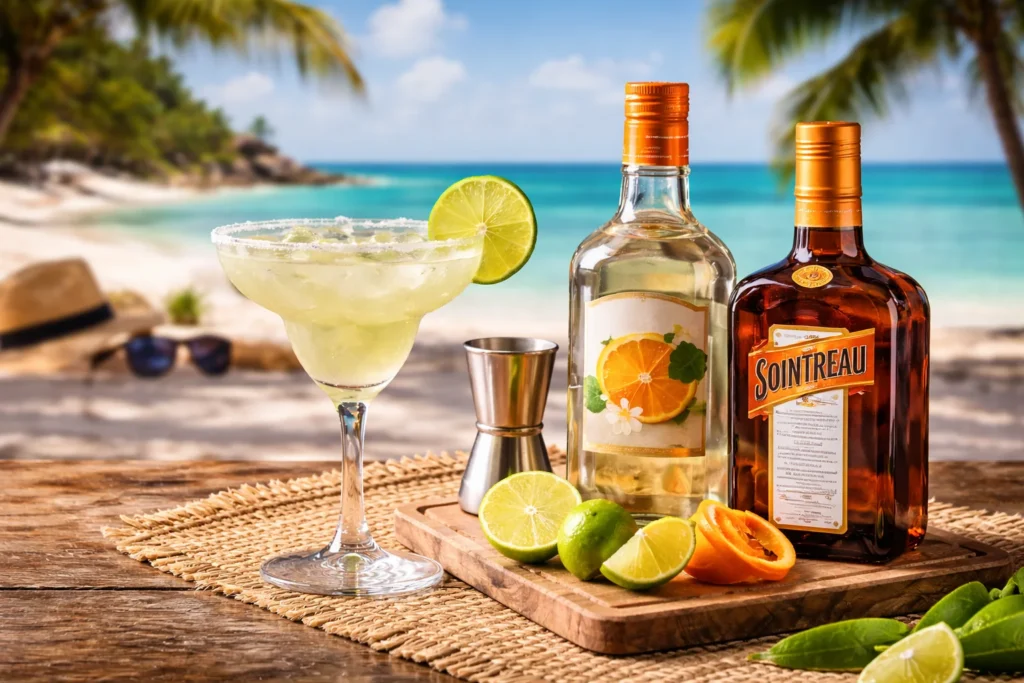
Can You Make a Margarita With Less Triple Sec?
Yes, and in some cases it produces a better drink. The 2:1:1 ratio is a starting point, not a fixed rule.
Reducing triple sec to three-quarters of an ounce and keeping everything else the same produces a drier, more tequila-forward margarita. This works well with a good blanco tequila where you want the spirit’s character to come through more clearly. The drink is still a margarita, the orange complexity is present, just less prominent.
Reducing triple sec to half an ounce starts to push the drink toward Tommy’s Margarita territory, if you go that low, adding a small amount of agave syrup compensates for the lost sweetness without adding more orange flavor, and the result is a genuinely different style of drink rather than just a reduced version of the original.
What you shouldn’t do is eliminate triple sec and replace it with only agave or simple syrup. The orange flavor is part of what makes a margarita a margarita. Without it, you have tequila, lime, and sweetener, which is a different drink with a different name.
Faqs
How to fix a margarita that is too strong?
If your margarita tastes too strong, it likely has too much alcohol relative to the citrus and sweet components. The simplest way to fix it is by adjusting the balance on the spot. Add a bit more fresh lime juice first, this enhances acidity and dilutes strength without making the drink overly sweet.
If needed, add a small splash of triple sec or orange liqueur to reintroduce sweetness and round out the flavor. Another effective approach is to add more ice and shake again; this increases dilution, softens the alcohol intensity, and improves texture. For batch preparations, keeping to a balanced ratio like 2 parts tequila, 1 part lime, and 1 part orange liqueur helps prevent an overly potent cocktail from the start.
Is it better to use lime or lemon in a margarita?
Traditionally, margaritas are made with fresh lime juice, and there’s a good reason for that. Lime provides a bright, slightly tart acidity that complements tequila’s natural flavors and enhances the overall balance of the drink. Lemon juice is more subdued and sweeter in comparison, which can make the cocktail taste less vibrant and less characteristic of a classic margarita profile.
While you can use lemon in a pinch, especially in variations or personal adaptations, lime remains the preferred choice among bartenders and enthusiasts because it delivers the sharp, citrus edge that defines the margarita.
What to do when a margarita is too sweet?
When a margarita tastes too sweet, the issue is usually an excess of sweetener, most commonly triple sec, orange liqueur, or added simple syrup. To correct this, start by adding a bit more fresh lime juice; the added acidity balances sweetness and brightens the drink.
If the sweetness is still pronounced, dilute the cocktail slightly with additional tequila and ice, then shake again to integrate. It’s important to add adjustments in small increments and taste as you go, because over‑adjusting can swing the drink too far in the opposite direction. Maintaining balance between sour and sweet is the key to a well‑rounded margarita.
Why put salt in margaritas?
Salt on a margarita’s rim is more than just decoration, it enhances the overall drinking experience. The salt serves two functions: it accentuates the citrus brightness by creating a contrasting flavor on the palate, and it reduces perceived bitterness, especially from lime peel or lower‑quality spirits. When you sip through salted rim, the salt briefly interacts with taste receptors in the mouth, making the citrus taste brighter and the tequila smoother. This simple sensory trick improves balance and makes each sip more refreshing.
Is salt or sugar better for a margarita?
Salt is traditionally used on the rim of a margarita because it highlights the citrus and balances acidity and alcohol, but sugar can be used thoughtfully in certain variations. For a classic margarita, salt is generally the better choice because it enhances brightness and counteracts bitterness. Sugar rims or sugar blends are sometimes used in fruitier or sweeter margarita variations, where an extra layer of sweetness is intentional, for example, in a strawberry‑mango or dessert‑style cocktail. Ultimately, the choice depends on the flavor profile you want: salt for contrast and balance in classic recipes, sugar only when additional sweetness is part of the design.
References
Where Triple Sec Fits In Cocktails

Muhammad Hussain is the creator of MargaritaLab.com, where he tests and analyzes margarita recipes, ingredients, and techniques to help readers make better drinks at home. Over time, he has experimented with different tequila types, lime juice variations, and store-bought mixes to understand what actually makes a balanced margarita.
His approach combines hands-on testing with detailed research, focusing on real-world results rather than theory. Whether comparing fresh vs bottled lime juice or reviewing popular margarita mixes, his goal is to simplify the process and share what truly works.