|
Getting your Trinity Audio player ready... |
If you’ve ever seen a vibrant pink margarita at a bar and wondered what makes it so eye-catching, you’re looking at a prickly pear margarita. I still remember the first time I tried one, the color pulled me in, but the flavor is what made me stay. It’s slightly sweet, gently fruity, and perfectly balanced when done right.
In this guide, I’ll walk you through my prickly pear margarita recipe, along with everything I’ve learned about getting the flavor, texture, and balance just right at home. Whether you’re making one drink or batching for a party, this will help you get consistent, bar-quality results.
What Makes a Prickly Pear Margarita Special?
A prickly pear margarita stands out for two reasons: color and flavor.
Prickly pear (from cactus fruit) has a subtle taste, think watermelon meets berry with a mild sweetness. It doesn’t overpower the drink, which makes it perfect for a margarita where balance matters.
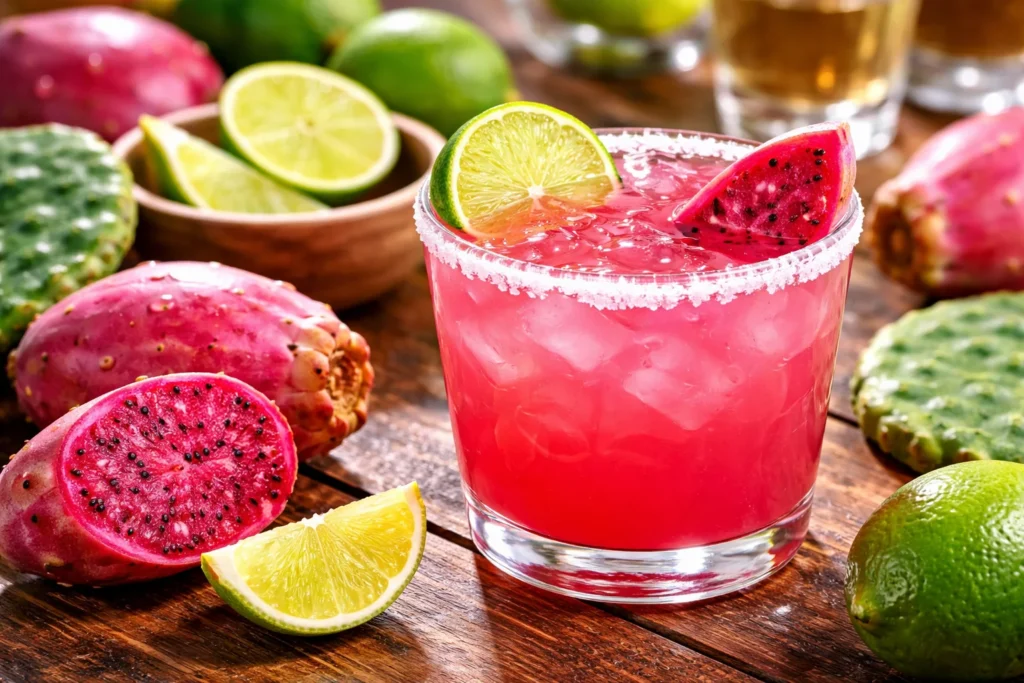
Unlike overly sugary fruit cocktails, this version still feels like a proper margarita. You get citrus brightness, tequila backbone, and just enough sweetness to round it out.
Why People Love It
There’s a reason this prickly pear margarita recipe keeps showing up on menus and social feeds, it delivers both visually and in flavor.
- A showstopping shade of pink
The natural vibrant color instantly grabs attention. It looks premium, refreshing, and perfect for entertaining or special occasions. - Fresh and fruity
The prickly pear adds a light, subtly sweet fruitiness that doesn’t overpower the classic margarita structure. It keeps the drink refreshing, balanced, and easy to enjoy.
Understanding the Margarita Flavor Balance
Every great margarita follows a simple structure. I rely on the classic 2:1:1 ratio:
- 2 parts tequila (strong)
- 1 part lime juice (sour)
- 1 part orange liqueur or sweetener (sweet)
Here’s how each element affects your drink:
Strong (Tequila)
This is your base. Too much, and the drink feels harsh. Too little, and it lacks character.
Sour (Lime Juice)
Fresh lime juice adds brightness. It cuts through sweetness and keeps the drink refreshing.
Sweet (Prickly Pear + Orange Liqueur)
Prickly pear adds mild sweetness, so you may need slightly less sweetener compared to a classic margarita.
Dilution (Ice)
Shaking with ice slightly dilutes the drink, softening the alcohol and blending flavors. This is often overlooked but critical.
Key insight: If your margarita tastes “off,” it’s almost always a balance issue, not the ingredients themselves.
Ingredient Breakdown
What’s the Best Tequila for Prickly Pear Margaritas?
Choosing the right tequila can completely change how your prickly pear margarita tastes. Since prickly pear has a light, delicate flavor, I always look for a tequila that complements it rather than overpowering it.
- Ocho Plata Tequila: Excellent choice. Clean, bright agave flavor with natural citrus notes that pair beautifully with lime and prickly pear.
- Revel Avila Silver Tequila: Lighter and less traditional; works, but doesn’t deliver the same classic margarita depth.
- Arette Unique Extra Añejo Tequila: Too aged and complex for this cocktail. Better for sipping neat.
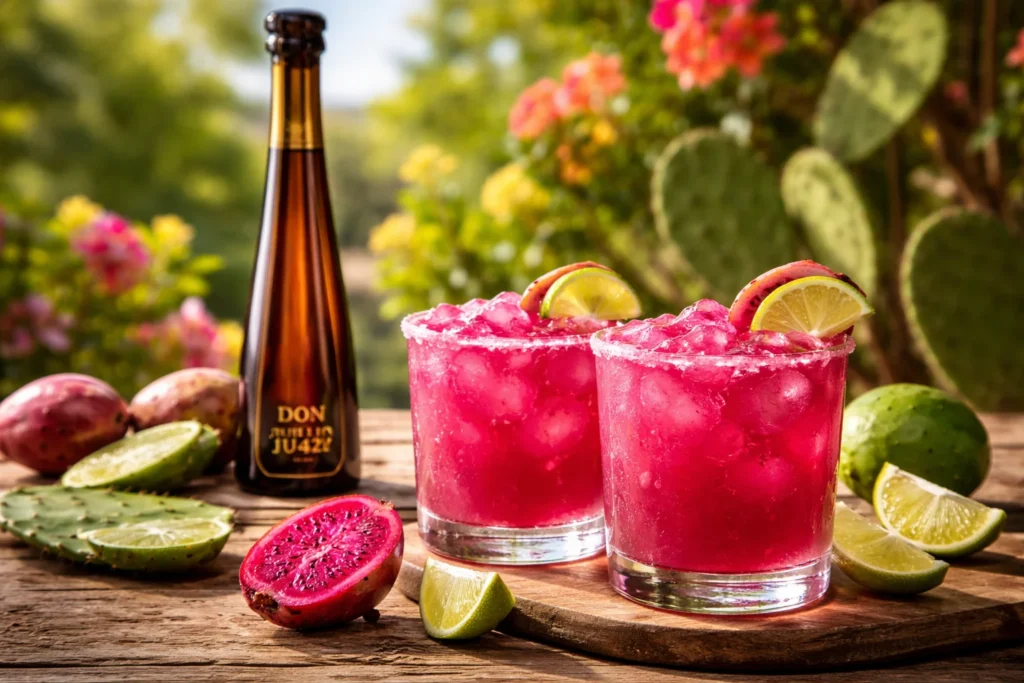
- Don Julio 1942 Tequila: Premium and smooth, but not ideal here. Its rich vanilla and oak notes can overpower the drink.
- Espolòn Cristalino Añejo Tequila: Smoother than a typical añejo, but still slightly heavy for a fruit-forward margarita.
- Herradura Plata Tequila: Solid option. Crisp and reliable with a balanced agave profile.
- Agave Australis Silver Agave Spirit: Not a true tequila (different agave origin), so the flavor profile can feel off in a classic margarita.
- Tapatío Blanco Tequila: Fantastic choice. Bold agave character with enough brightness to stand up to citrus and fruit.
My Personal Pick
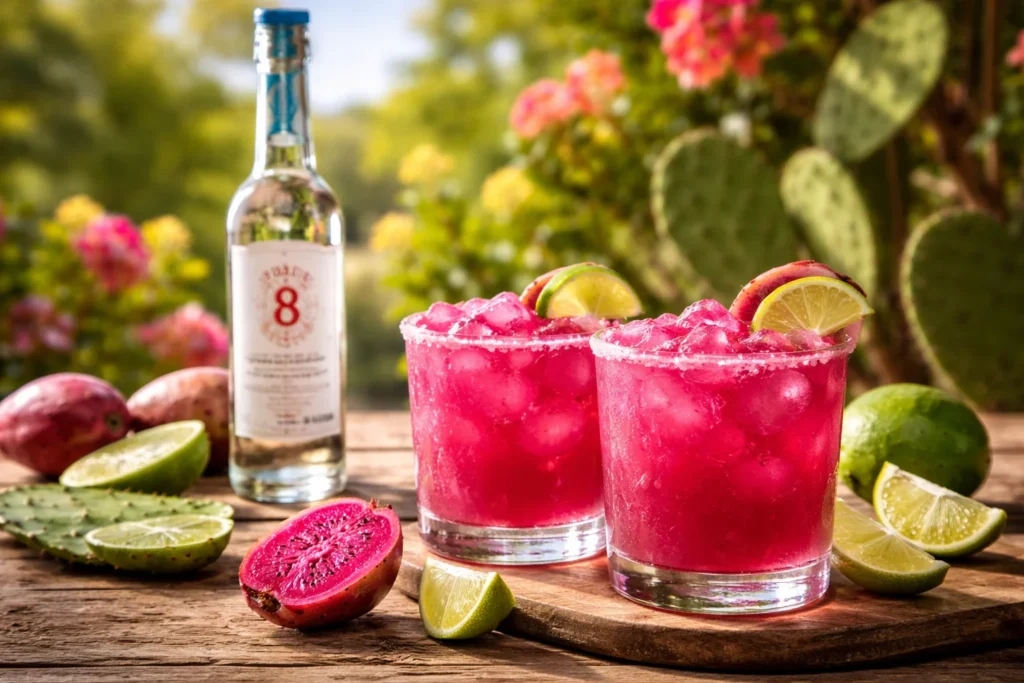
If I had to choose one for this prickly pear margarita recipe, I’d go with Ocho Plata Tequila.
It strikes the perfect balance:
- Clean and crisp
- Naturally citrusy
- Doesn’t overpower the prickly pear
- Keeps the drink tasting fresh and vibrant
Other Best Alternative
If Ocho isn’t available, Tapatío Blanco Tequila is my second pick. It’s slightly more robust but still works beautifully in a well-balanced margarita.
Follow the Simple Rule
For fruit-forward margaritas like this one:
- Stick with blanco (silver) tequila
- Avoid heavily aged expressions (añejo, extra añejo)
- Choose something clean, agave-forward, and not overly woody
This small decision makes a noticeable difference in the final drink.
Orange Liqueur Options
- Triple sec (budget-friendly)
- Cointreau (balanced and smooth)
- Grand Marnier (richer, slightly heavier)
For this recipe, I prefer something clean like triple sec or Cointreau so the prickly pear flavor stays noticeable.
Prickly Pear Component
You can use:
- Prickly pear syrup (most practical)
- Fresh prickly pear purée (if available)
Syrup is more consistent and easier to control.
Fresh Lime Juice vs Bottled
Always use fresh lime juice. Bottled juice lacks brightness and can taste flat or slightly bitter.
Prickly Pear Margarita Recipe: Step-by-Step Guide
Ingredients
- 2 oz tequila
- 1 oz fresh lime juice
- ¾ oz orange liqueur
- ¾ oz prickly pear syrup
- Ice
Instructions
- Fill a cocktail shaker with ice.
- Add tequila, lime juice, orange liqueur, and prickly pear syrup.
- Shake for about 10–15 seconds until chilled.
- Strain into a glass filled with fresh ice.
- Garnish with a lime wheel or cactus fruit slice.
Nutrition Facts: Per Serving
Here’s an approximate nutritional breakdown for one serving of this prickly pear margarita recipe (based on standard ingredients and measurements). Values can vary depending on the exact tequila, syrup, and orange liqueur you use.
| Nutrient | Amount Per Serving |
|---|---|
| Calories | 180–220 kcal |
| Carbohydrates | 14–18 g |
| Protein | 0 g |
| Fat | 0 g |
| Saturated Fat | 0 g |
| Polyunsaturated Fat | 0 g |
| Sodium | 5–15 mg (higher with salted rim) |
| Potassium | 80–120 mg |
| Fiber | 0–1 g |
| Sugar | 12–16 g |
| Vitamin A | 0–2% DV |
| Vitamin C | 15–25% DV (from fresh lime juice) |
| Calcium | 1–2% DV |
| Iron | 1–2% DV |
Notes on Nutrition
- Most calories come from alcohol and sugars (prickly pear syrup + orange liqueur).
- Using fresh ingredients helps retain small amounts of vitamin C and potassium.
- You can lower sugar by reducing syrup or switching to fresh prickly pear purée.
Mistakes You Should Avoid
Even simple recipes can go wrong. Here’s what I see most often:
- Using bottled lime juice
- Adding too much syrup (overly sweet drink)
- Not shaking long enough (poor dilution)
- Using low-quality tequila
- Skipping proper measurement
Consistency comes from measuring, not guessing.
Guide on Texture: Frozen vs On-the-Rocks
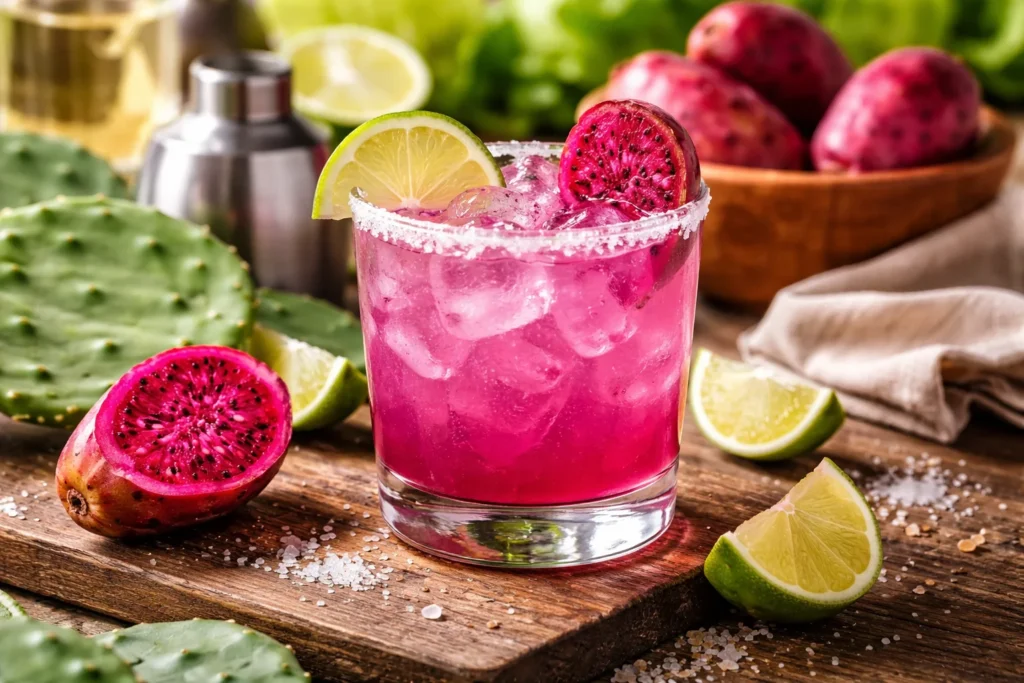
On-the-Rocks
- Clean, crisp, and balanced
- Better flavor clarity
- Easier to control dilution
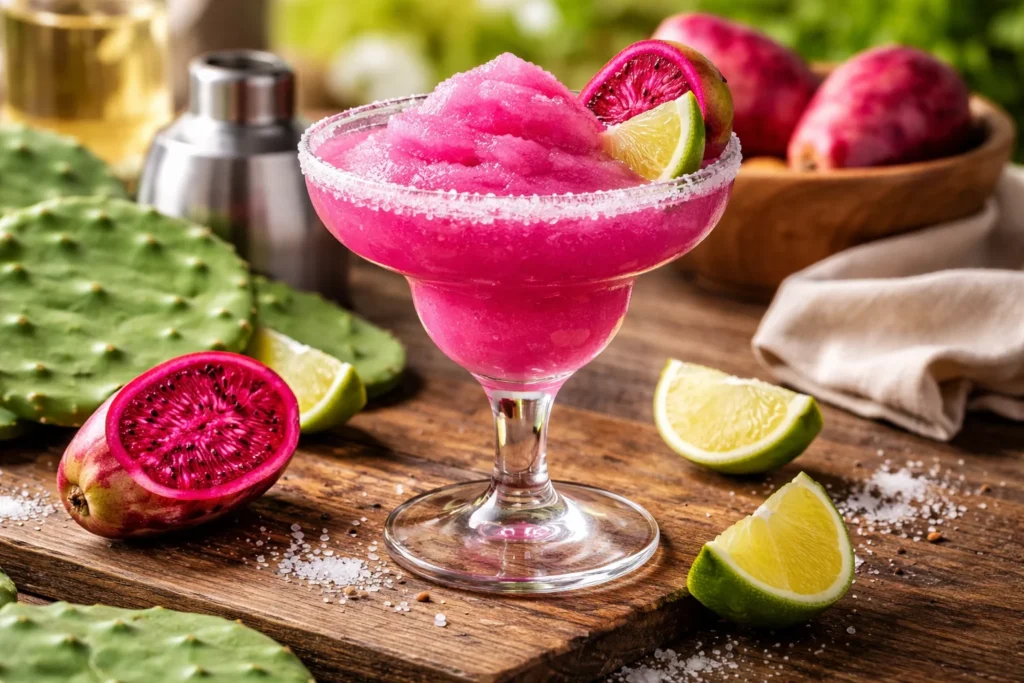
Frozen
- Thick, slushy texture
- Colder and slightly sweeter perception
- Risk of over-dilution if blended too long
My tip: If you want frozen, reduce added ice and blend briefly to maintain flavor intensity.
Flavor Variations to Try
Once you master the base recipe, you can experiment:
Fruit Variations
- Add strawberry or mango alongside prickly pear
- Blend for a layered fruit profile
Spicy Version
- Add a few slices of jalapeño while shaking
- Creates a sweet-heat balance
Skinny Version
- Reduce syrup
- Use fresh prickly pear purée instead
Premium Version
- Use high-quality tequila and Cointreau
- Add a touch of agave nectar for smoother sweetness
Critical Mistakes: What NOT to Do
Some shortcuts completely ruin the drink:
- Don’t use artificial margarita mix
- Don’t skip fresh citrus
- Don’t overload sweetness to mask bad tequila
- Don’t serve without proper chilling
- Don’t ignore dilution, this is a real flavor factor
A good margarita is simple, but precision matters.
Troubleshooting Your Margarita
Even experienced home bartenders need quick fixes. Here’s how I adjust:
| Problem | Fix |
|---|---|
| Too Sour | Add a small amount of prickly pear syrup or orange liqueur |
| Too Sweet | Add fresh lime juice |
| Too Strong | Shake again with fresh ice for more dilution |
| Too Watery | Use less ice or shorten shaking/blending time |
Small adjustments make a big difference.
Tips to Serve and Present
Presentation elevates the entire experience.
Glassware
- Margarita glass (classic)
- Rocks glass (modern and practical)
Salting the Rim
- Run a lime wedge around the rim
- Dip lightly in salt (don’t overdo it)
You can also mix salt with chili powder for extra flavor.
Garnishes
- Lime wheel
- Prickly pear slice
- Edible flowers for visual appeal
The bright pink color already does most of the work, keep it clean and simple.
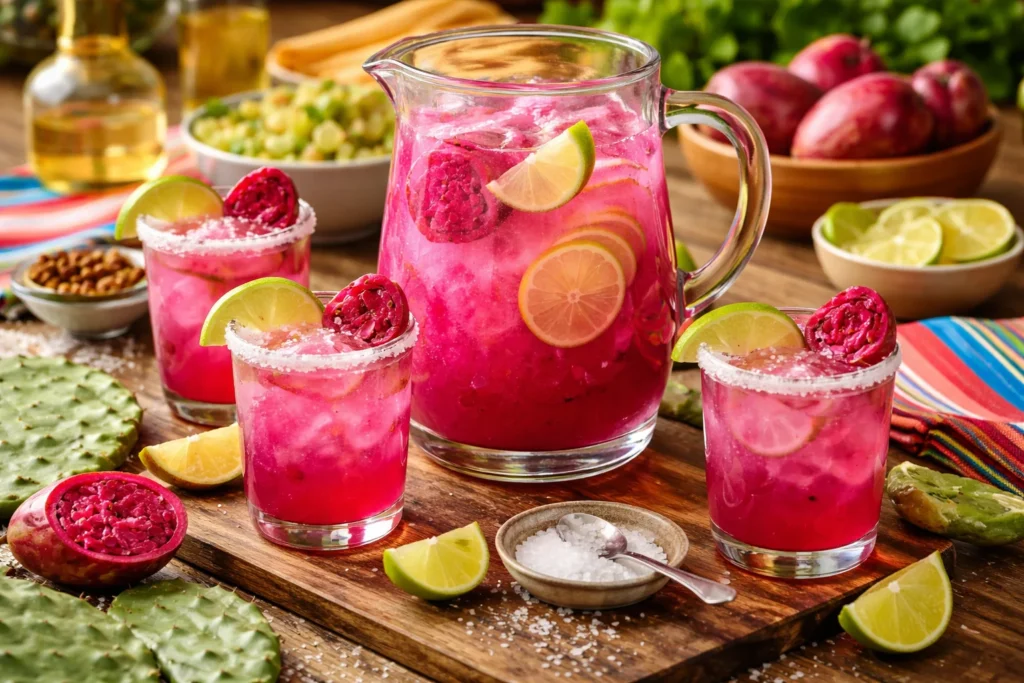
Party Batching Tips (For Groups)
When making margaritas for a crowd, batching saves time and stress.
Batch Ratio
- 2 cups tequila
- 1 cup lime juice
- 1 cup orange liqueur
- 1 cup prickly pear syrup
How I Do It
- Mix everything ahead of time
- Chill in the fridge
- Shake individual servings with ice before serving
This keeps each drink fresh and properly diluted.
Now, Try It Yourself
One of the best things about this prickly pear margarita recipe is how easy it is to personalize. You can tweak sweetness, experiment with spice, or even blend in other fruits.
If you try this at home, I recommend starting with the classic version first. Once you understand the balance, you’ll naturally start adjusting it to your taste.
I’d love to know how you customize yours, do you prefer it sweeter, spicier, or more citrus-forward?
Share Your Experience with Us
The Community Insights on Reddit
I came across a discussion on Reddit r/tequila forum where a user asked if Espolòn Tequila is still a good choice, especially for mixed drinks.
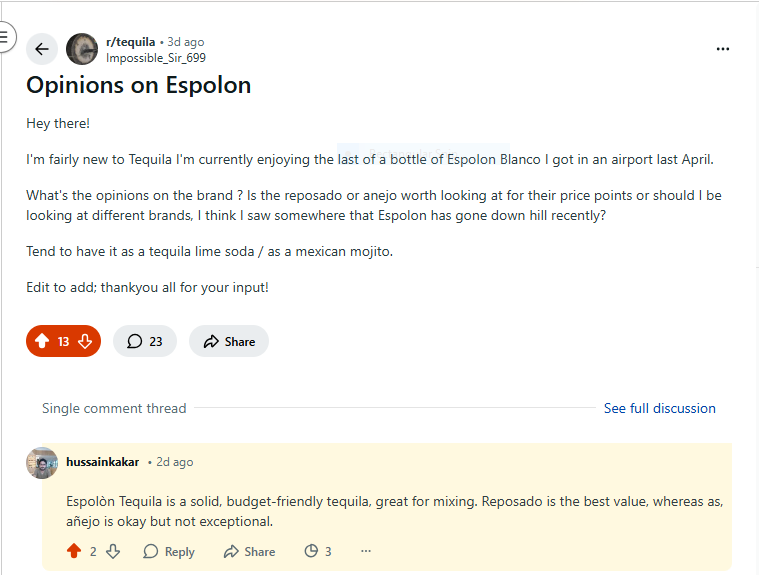
I replied that Espolòn is a solid, budget-friendly tequila for mixing, with reposado offering the best value.
What This Means for This Recipe
- Espolòn Blanco works well for margaritas
- It’s a good everyday option, even if not premium
- Clean, balanced tequila matters more than price
This aligns with my approach in this recipe: use the best tequila you can, but even affordable, well-made options can still make a great prickly pear margarita.
Faqs
What alcohol goes well with prickly pear?
Prickly pear pairs best with tequila, which is why it is most commonly used in a prickly pear margarita. The fruit’s mild sweetness and subtle berry-like flavor balance the earthy, slightly peppery character of tequila, especially blanco and reposado styles. Other alcohols that work well include mezcal, which adds a smoky depth, and vodka, which creates a lighter, more neutral prickly pear cocktail. Some recipes also use gin for herbal complexity or rum for a sweeter, tropical twist, but tequila remains the most traditional and widely preferred choice.
What do Mexicans use prickly pears for?
In Mexico, prickly pears, known as tunas, are widely used in traditional foods and drinks. The fruit is commonly eaten fresh, blended into juices called aguas frescas, or made into syrups, candies, and jams. It is also used to flavor desserts and beverages, including cocktails like margaritas. The cactus pads, called nopales, are also an important part of Mexican cuisine and are cooked in dishes such as salads, tacos, and stews. Because prickly pear cactus grows naturally across many regions of Mexico, it has been used in local cooking and food traditions for centuries.
What is another name for prickly pear?
Another common name for prickly pear is cactus pear. In Spanish-speaking regions, especially Mexico, the fruit is called tuna, while the cactus plant itself is known as nopal. The scientific genus for prickly pear cactus is Opuntia, which includes many species that produce edible fruit. These different names are often used interchangeably depending on the region, but they all refer to the same family of cactus fruits commonly used in drinks like prickly pear margaritas and in traditional foods.
What is the best garnish for a prickly pear margarita?
The best garnish for a prickly pear margarita is a lime wheel or wedge, as it complements the citrus flavors already present in the drink. For visual appeal, many bartenders also add a slice of fresh prickly pear or a small cactus fruit wedge, which highlights the cocktail’s main ingredient and vibrant pink color. A salted or Tajín-style rim is another popular finishing touch because the salty, slightly spicy flavor enhances the sweetness of the prickly pear. Simple garnishes that match the drink’s flavors usually work better than overly decorative ones.
What does a prickly pear cocktail taste like?
A prickly pear cocktail typically tastes lightly sweet, mildly fruity, and refreshing, with subtle flavors similar to watermelon, berry, or bubblegum-like fruit. The taste is not overly strong, which allows other ingredients, such as lime juice and tequila, to remain noticeable. In a prickly pear margarita, the fruit adds a gentle sweetness and a bright pink color while balancing the tartness of lime and the strength of tequila. Overall, the flavor is smooth and approachable, making prickly pear cocktails popular even among people who prefer less intense fruit flavors.
Our Approach for the Real Mixology Principles Behind This Recipe
This article is based on classic cocktail structure, particularly the traditional 2:1:1 sour ratio used in margaritas and other balanced drinks. The techniques and recommendations come from established bartending practices, culinary principles, and hands-on experience with home cocktail preparation.
Ingredient insights reflect standard mixology knowledge, including the importance of fresh citrus, proper dilution, and balanced sweetness. The goal is to provide practical, reliable guidance that helps you consistently make better margaritas at home.
With the right balance and a bit of attention to detail, this bright pink cocktail isn’t just beautiful, it’s one of the most enjoyable margaritas you can make.
References
The Café Royal Cocktail Book (1937) – Early Tequila Cocktail Reference
The Fine Art of Mixing Drinks (1948) by David A. Embury
Professional Margarita Ratio & Bartending Standards
Classic Margarita Ratios Explained (Wikibooks)
Why Fresh Lime Juice Is Essential in Cocktails

MargaritaLab.com is created and managed by Muhammad Hussain, an SEO specialist with several years of experience in research-driven content creation. With a focus on the Margarita Recipe niche, he combines data-backed insights, careful testing, and clear explanations to make margarita recipes easy to understand and enjoyable for readers at every level.