|
Getting your Trinity Audio player ready... |
A frozen margarita should be slushy, bright, and cold enough to make you slow down. What most home versions produce instead is a watery, over-sweet slush that tastes fine for the first two sips and flat for the rest of the glass. After testing this recipe across multiple variations, adjusting ice quantity, blending time, sweetener balance, and fruit additions, I found that two specific problems cause almost every frozen margarita failure. Fix both and the drink comes together correctly every time.
Why Frozen Margaritas Fail at Home
The first problem is over-blending. Most people blend until the drink looks smooth, but smooth and correct are not the same thing. Every extra second in the blender generates friction heat that melts the ice and produces water rather than slush. The correct texture appears before you expect it, usually after 15 to 20 seconds on high, and you need to stop the moment it arrives.
The second problem is sweetness calibration. Cold temperature suppresses the perception of both sweetness and acidity. A frozen margarita that tastes balanced while still slightly warm will taste flat and under-sweet once it’s fully chilled. This means building in slightly more sweetness at the ingredient stage than you would in a shaken version, not adjusting after the fact. Most recipes skip this entirely. The fix is a small amount of agave syrup added alongside the orange liqueur, not as an optional extra but as a structural ingredient.
Both problems are easy to solve once you understand what’s causing them.
The Ice Problem Nobody Mentions
Blender type matters more than most recipes acknowledge.
A standard household blender struggles with whole ice cubes. The cubes bounce around rather than breaking down evenly, which means some of the ice pulverizes while the rest stays in large chunks. The result is uneven texture, part slushy, part icy, that forces you to keep blending past the point where the drink is already over-diluted.
Crushed ice solves this. It makes contact with the blades immediately, breaks down evenly, and produces a consistently smooth texture in significantly less blending time. If your blender has a crush setting, use it. If not, put whole ice in a sealed bag and roll it with a rolling pin for 30 seconds before adding it to the blender. The difference in texture is immediate and worth the extra minute.
The Frozen Margarita Recipe
This version builds in the sweetness calibration that cold temperature requires, and uses measured ice rather than eyeballed quantities. The recipe makes two generous servings.
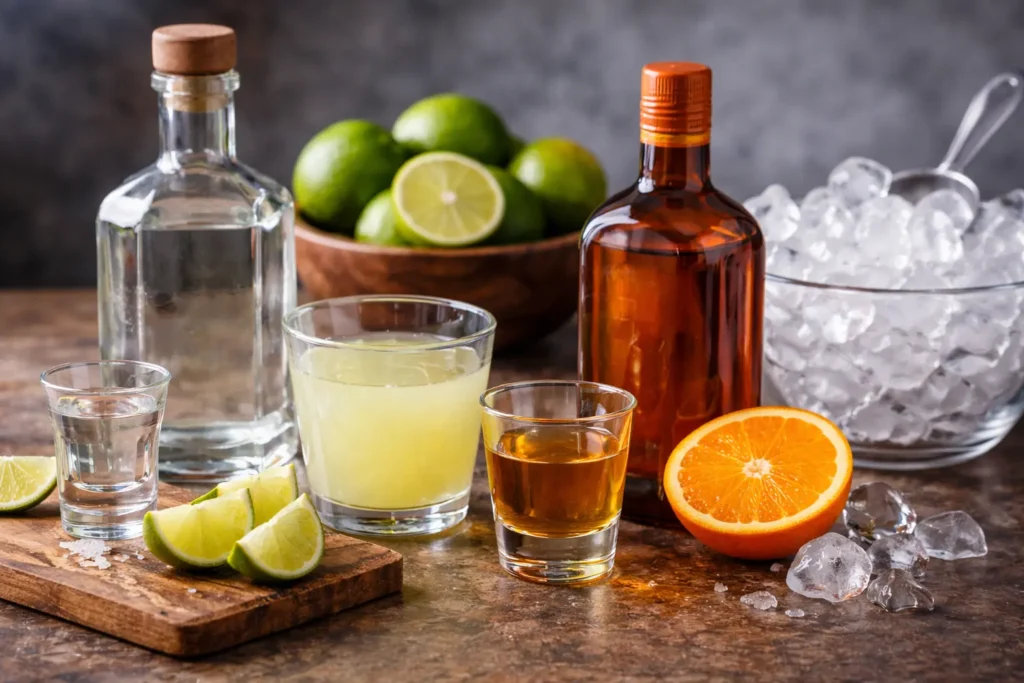
Ingredients (2 servings)
- 4 oz blanco tequila (100% agave)
- 2 oz fresh lime juice
- 1.5 oz triple sec or orange liqueur
- 1 oz agave syrup
- 2.5 cups crushed ice (or 2 cups whole ice cubes)
- Coarse kosher salt for the rim (optional)
Instructions
- If salting the rim, run a spent lime half around the outer edge of two glasses and press lightly into coarse salt on a flat plate. Set aside.
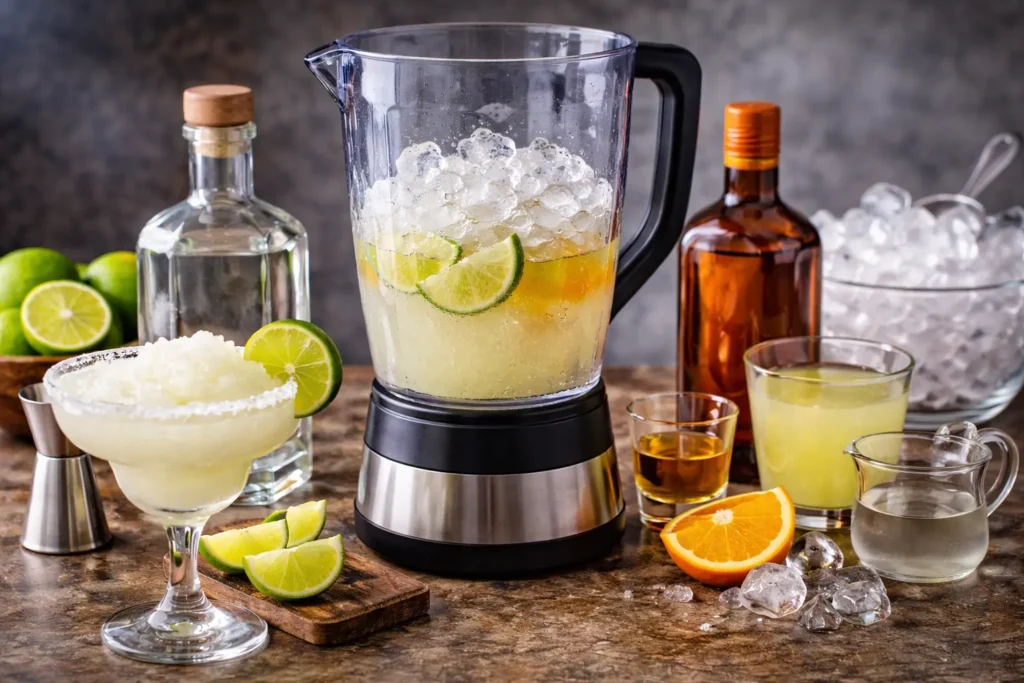
- Add the tequila, lime juice, orange liqueur, and agave syrup to the blender first. Add the ice last; liquid underneath helps the blades make initial contact with the ingredients rather than just the ice.
- Blend on high for 15 to 20 seconds. Stop the moment the texture turns uniformly slushy.
- Taste immediately before pouring. The drink will taste slightly more tart at this stage than it will once fully chilled, which is correct. If it tastes overly sweet while still slightly warm, it will taste balanced cold.
- Pour into the prepared glasses and serve immediately. Frozen margaritas continue melting in the glass, serve within two minutes of blending for best texture.
A note on the agave: this is not optional sweetener for people who want a sweeter drink. It compensates for the sweetness suppression that happens when the drink reaches full chill. Removing it and relying only on the orange liqueur produces a flat-tasting frozen margarita even when the shaken version of the same recipe tastes balanced.
Single-Serve Version
Most frozen margarita recipes scale for four or six and leave you blending more than you need. For one drink:
- 1.5 oz blanco tequila
- 1 oz fresh lime juice
- 1 oz triple sec
- 0.5 oz simple syrup or agave
- 0.5 cup crushed ice
Follow the same method, liquid in first, ice last, blend for 10 to 12 seconds, stop when slushy. The smaller volume blends faster, so watch the texture closely.
The Rim Options Worth Knowing
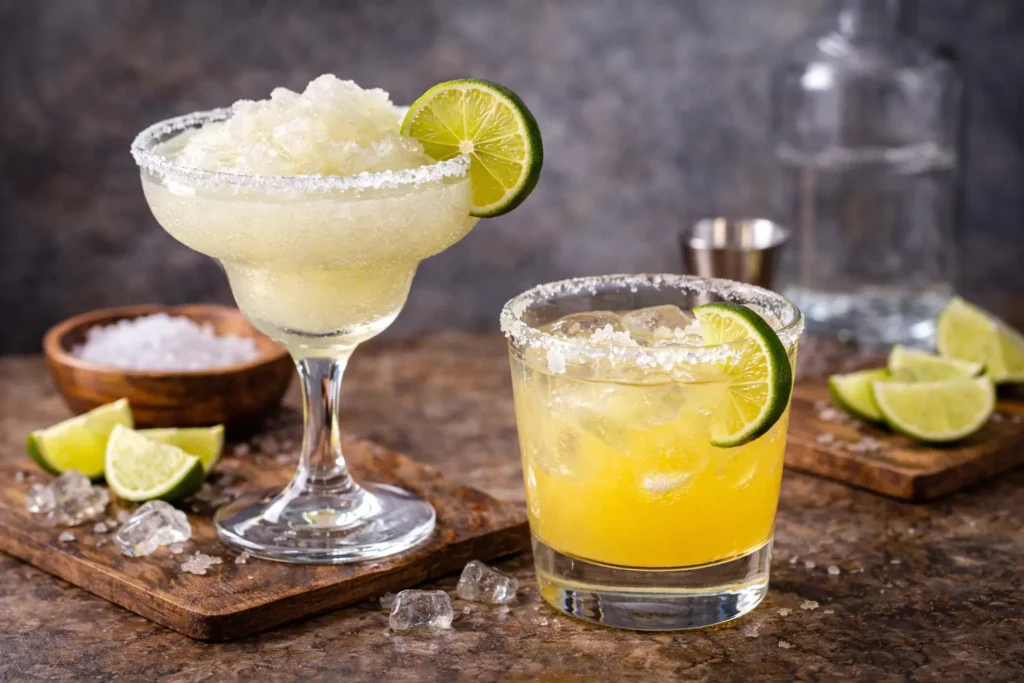
Salt is the classic choice and the right one for most purposes. It suppresses bitterness, enhances the sweetness perception slightly, and makes the citrus taste brighter on each sip. Use coarse kosher salt or sea salt, table salt dissolves on contact and tastes sharp rather than clean.
Tajín, a Mexican chili-lime salt, is the most interesting alternative. It adds mild heat, a tangy lime note, and a distinctive orange-red color that makes the glass look as good as it tastes. It pairs particularly well with the frozen format because the cold temperature softens the chili heat to a pleasant warmth rather than a sharp spike. If you’ve never tried a Tajín rim, the frozen margarita is the version to start with.
A sugar rim works for people who prefer a sweeter drink, though it changes the character of the margarita significantly. Half salt, half sugar on the same rim gives both effects without committing fully to either.
How Frozen Fruit Changes the Build
Adding fruit to a frozen margarita changes two things: sweetness and texture. Knowing how to adjust for both separates a fruit frozen margarita that works from one that’s too thick, too sweet, or too icy.
Always add fruit frozen, not fresh. Fresh fruit is mostly water. Adding fresh mango or strawberries to the blender dilutes the drink the same way extra ice does, and the result is a thin, watery texture rather than a slushy one. Frozen fruit acts as both flavoring and a portion of the ice, it replaces some of the crushed ice rather than adding to it.
Reduce the agave when the fruit is ripe. Ripe mango, ripe strawberry, and ripe pineapple carry significant natural sweetness. Adding a full ounce of agave syrup alongside very sweet fruit pushes the drink past the balance point. Start with half an ounce of agave for fruit variations and taste before adding more.
Keep the lime at full quantity or add slightly more. Most fruit is lower in acidity than fresh lime juice. Adding half a cup of frozen mango alongside the standard lime quantity produces a sweeter, flatter drink than the same recipe without fruit. A quarter ounce of extra lime juice with any fruit variation keeps the brightness intact.
Variations That Work
Frozen Strawberry Margarita: Replace half a cup of the crushed ice with frozen strawberries. Keep the lime at the full quantity, strawberry is sweet and needs the acid balance. Reduce agave to half an ounce. The color is vivid and the flavor is bright rather than jammy when the balance is correct.
Frozen Mango Margarita: Replace half a cup of the crushed ice with frozen mango chunks. Ripe mango is sweet enough to reduce the agave to half an ounce. Add a quarter ounce of extra lime to prevent the mango sweetness from dominating. Blanco tequila pairs with mango more naturally than a barrel-aged reposado.
Spicy Frozen Margarita: Add two thin jalapeño slices directly to the blender with the liquid before adding ice. Blend briefly, five seconds, before adding the ice and blending to final texture. This distributes the capsaicin evenly without concentrating heat in one area of the drink. Remove jalapeño seeds for moderate heat, keep them for significant heat.
Skinny Version: Reduce the orange liqueur to one ounce and the agave to half an ounce. Keep the full lime quantity. The flavor is cleaner but less rich, the trade-off is real but worthwhile if calories are the priority.
Batching for a Group
For eight servings, combine in a large pitcher:
- 16 oz blanco tequila
- 8 oz fresh lime juice
- 6 oz orange liqueur
- 4 oz agave syrup
Refrigerate the liquid base until ready to serve. Blend in batches of two servings at a time using 2.5 cups of crushed ice per batch. Do not pre-blend the full batch and let it sit, the texture degrades within minutes and cannot be restored by re-blending.
If you do have leftover frozen margarita, store it in the freezer rather than the fridge. When ready to serve again, let it sit at room temperature for two to three minutes and stir firmly; this restores a slushy consistency without the aeration that re-blending causes. Re-blending a partially melted frozen margarita introduces too much air and changes the texture in a way that stirring does not.
A practical shortcut for batches larger than ten drinks: one 12 oz can of frozen limeade concentrate, thawed, can replace both the fresh lime juice and the agave syrup. The flavor is slightly less bright than fresh lime, but the consistency is predictable and the convenience is significant when making drinks for a crowd.
Press limes for the juice as close to serving time as possible, the aromatic oils in fresh lime juice begin oxidizing within a few hours and the brightness of the drink depends on them being intact at blending time.
Faqs
What is the difference between a margarita and a frozen margarita?
The main difference between a margarita and a frozen margarita is texture and preparation method. A classic margarita is typically shaken with ice and then strained into a salt-rimmed glass, served either “straight up” (without ice) or “on the rocks” (over ice). It has a smooth, liquid consistency.
A frozen margarita, on the other hand, is blended with ice until it reaches a slushy texture, similar to a frozen cocktail or smoothie. The ingredients are usually the same: tequila, orange liqueur, and fresh lime juice, but the blending process creates a thicker, icy drink. Frozen margaritas are especially popular in warm climates and during summer because of their refreshing texture.
What is the golden rule margarita?
The “golden rule” margarita commonly refers to the balanced ratio of ingredients that creates the ideal flavor profile: 2 parts tequila, 1 part orange liqueur, and 1 part fresh lime juice. This balance ensures the drink is neither too sour nor too sweet.
The golden rule focuses on proportion rather than specific brands. A well-balanced margarita highlights the tequila while maintaining freshness from lime juice and subtle sweetness from orange liqueur. Many professional bartenders consider this ratio the foundation of a properly made margarita.
What was the first recipe for a margarita?
The exact origin of the margarita is debated, but one of the earliest documented recipes appeared in the December 1953 issue of Esquire. That published recipe included tequila, triple sec, and lime juice, the same core ingredients used today.
Several origin stories exist, including claims from bartenders in Mexico and the United States during the 1930s and 1940s. While no single inventor has been definitively confirmed, the classic combination of tequila, orange liqueur, and lime juice has remained consistent since the mid-20th century.
What is the 2:1:1 rule in bartending?
The 2:1:1 rule in bartending is a standard cocktail ratio that means:
- 2 parts base spirit
- 1 part sweet ingredient
- 1 part sour ingredient
This formula creates a balanced cocktail with structure and harmony. In a margarita, tequila is the base spirit (2 parts), orange liqueur provides sweetness (1 part), and fresh lime juice provides sourness (1 part).
The 2:1:1 ratio is widely used beyond margaritas and serves as a reliable guideline for building many classic cocktails. It helps maintain consistency and balance, which are essential in professional bartending.
What is a substitute for Cointreau in margaritas?
If you do not have Cointreau, several good substitutes work well in margaritas:
- Triple sec: A general category of orange liqueur that provides similar citrus sweetness.
- Grand Marnier: A richer, cognac-based orange liqueur that adds depth and slight oak notes.
- Other quality orange liqueurs. Any well-made orange liqueur can replace Cointreau while maintaining the drink’s balance.
When substituting, use the same amount as you would Cointreau. Keep in mind that different orange liqueurs vary in sweetness and alcohol content, so slight adjustments may be needed depending on taste preference.
References
Industry-standard professional margarita ratios
Classic margarita preparation and ingredient tips
Frozen margaritas (origin, balance, and technique context)

Muhammad Hussain is the creator of MargaritaLab.com, where he tests and analyzes margarita recipes, ingredients, and techniques to help readers make better drinks at home. Over time, he has experimented with different tequila types, lime juice variations, and store-bought mixes to understand what actually makes a balanced margarita.
His approach combines hands-on testing with detailed research, focusing on real-world results rather than theory. Whether comparing fresh vs bottled lime juice or reviewing popular margarita mixes, his goal is to simplify the process and share what truly works.
Pingback: Perfect Virgin Margarita Recipe: Refreshing & Alcohol-Free
Pingback: How to Make a Perfect Mezcal Margarita Recipe: Spicy, Skinny, Balanced & Bold
Pingback: Frozen vs Classic Margarita: Which One Wins?
Pingback: Best Mango Margarita Recipe with Fresh and Frozen Options
Pingback: Best Strawberry Margarita Recipe: Fresh, Frozen, and Everything In Between
Pingback: Cranberry Margarita Recipe: Why This Tart, Vivid Cocktail Works Better in Winter
Pingback: Best Watermelon Margarita Recipe: Step-by-Step Guide for Home Bartenders
Pingback: Best Margarita Recipe: I Compared 6 Famous Versions Against My Own 2:1:1