|
Getting your Trinity Audio player ready... |
The biggest mistake I see in a Pineapple Margarita Recipe is treating pineapple like it behaves the same way as lime juice. It doesn’t.
Not because of the tequila. Not because of the garnish. The problem is the pineapple itself, specifically, how its sweetness builds on the palate in a way that no other margarita fruit does. The first sip may taste perfectly balanced. By the third sip, the drink feels heavy, sweet, and oddly flat. I kept adding more lime, thinking acidity was the answer. It wasn’t.
What finally fixed it was using less pineapple than most recipes call for and keeping the lime sharper than felt instinctive. Once I stopped trying to make it taste extra tropical, the margarita became brighter, crisper, and far more refreshing.
Why Pineapple Is More Difficult to Balance Than Most Tropical Fruits
Mango is thick but mellow. Passion fruit is intensely tart. Watermelon is delicate and watery.
Pineapple does everything at once. It brings sweetness, sharp acidity, aggressive aroma, texture, and natural enzymes into the glass simultaneously. That sounds ideal for margaritas until you realize it can easily overpower both tequila and orange liqueur if the proportions drift even slightly.
Most recipes compensate by adding more tequila. I tried that too. The drink just became boozy and muddy instead of balanced.
The better solution was reducing the pineapple slightly and keeping the lime brighter than I expected. Pineapple already softens perception of alcohol. It does not need as much fruit as people think.
That was the biggest surprise during testing.
Fresh Pineapple vs Canned vs Juice: Three Different Cocktails
This decision matters more than almost any other ingredient choice in this recipe.
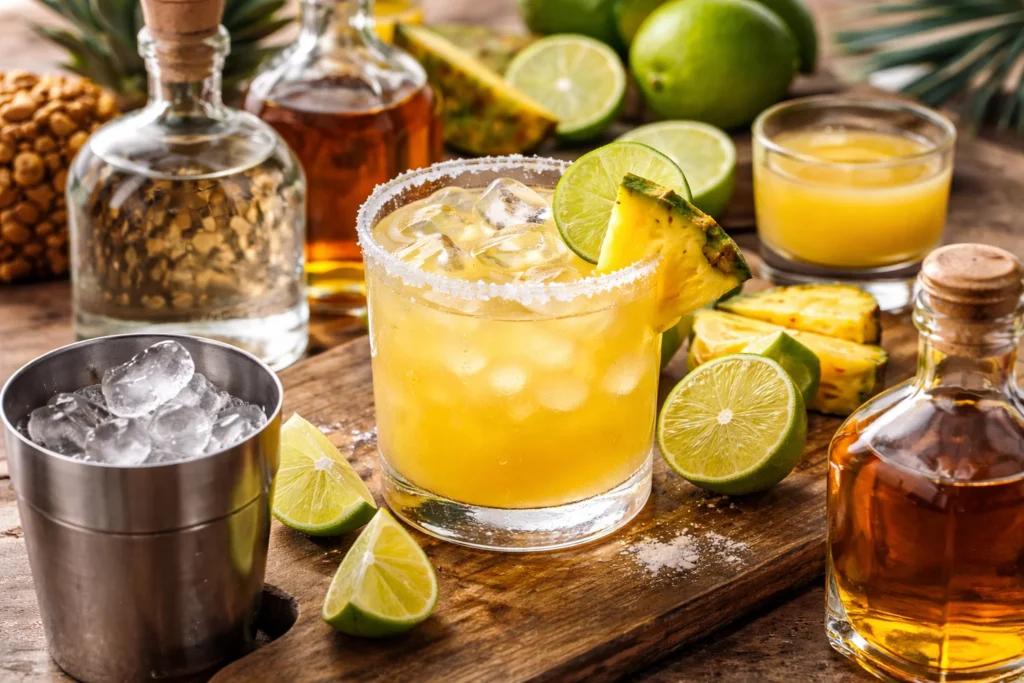
Fresh pineapple creates the brightest cocktail by far. The aroma jumps immediately, and the texture becomes naturally frothy after shaking in a way that feels alive and vibrant. The downside is inconsistency; one pineapple can be intensely sweet while another tastes almost citrusy. I always taste fresh juice before building the cocktail and adjust the agave based on that specific fruit.
One technique worth trying with fresh pineapple: muddle two or three small chunks directly in the shaker before adding the juice. That adds texture and amplifies the fruit character in a way juice alone cannot replicate.
Canned pineapple behaves differently. The heat processing softens the sharper acids and rounds the flavor. Canned versions taste smoother but noticeably flatter, closer to a dessert-style tropical drink than a crisp margarita. Some people actually prefer that.
Bottled refrigerated juice gives the most reliable results for everyday home bartending. It lacks some fresh aroma but the consistency makes balancing far easier from batch to batch.
What I avoid completely is canned pineapple juice packed in heavy syrup. That version destroyed several early tests because the sweetness keeps building as the ice melts.
The Bromelain Effect: Why This Drink Changes as It Sits
Pineapple contains bromelain, a natural enzyme that breaks down proteins. Most people know this from using pineapple as a meat tenderiser, but it affects cocktails in subtle and measurable ways.
Fresh pineapple margaritas literally taste different after sitting for ten or fifteen minutes.
The texture softens. The foam collapses. The drink feels rounder and less sharp over time as the enzyme continues working even after shaking.
I noticed this most clearly while testing party batches. A freshly shaken version tasted bright and crisp. The same mixture an hour later felt softer and sweeter even though nothing had been added or changed.
That does not mean the cocktail becomes bad. It just means pineapple margaritas are one of the few fruit margaritas that genuinely taste best served immediately after shaking. For parties, this changes how you should approach preparation entirely.
The Foam Question Nobody Warns You About
The foam surprises people the first time they make this drink with fresh juice.
Pineapple naturally traps air extremely well because of its enzyme content and pulp structure. A hard shake creates a thick frothy layer that looks beautiful for about thirty seconds before slowly settling.
I initially thought my measurements were inconsistent because the drink tasted different depending on when I sipped it. Eventually I realised the foam itself changes perception. The first sip tastes lighter and more aromatic because you are tasting aerated pineapple oils alongside the citrus.
This means shaking technique matters here more than in most margaritas. I shake pineapple versions harder and longer than standard lime margaritas, around twelve seconds with real force. Dave Arnold writes extensively about aeration and texture in cocktails in Liquid Intelligence, and this drink is one of the clearest examples of why aggressive shaking changes the final experience rather than just the temperature.
The Ingredient Decisions That Matter for This Specific Drink
Blanco or Reposado: Pineapple Is One of the Few Fruits That Works With Both
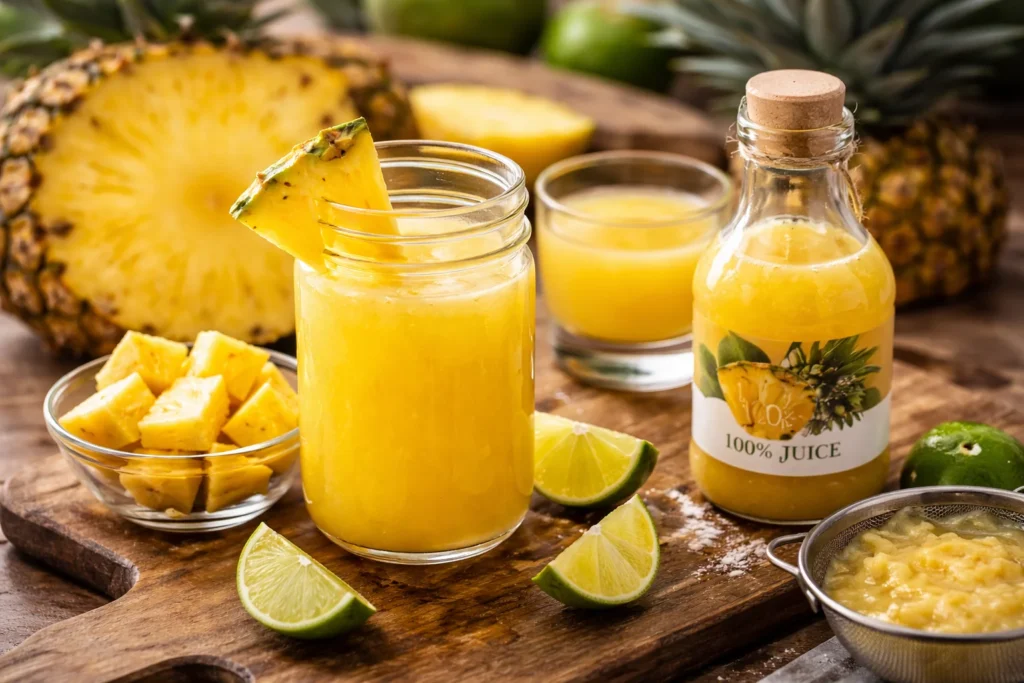
Most fruit margaritas clearly favour blanco tequila. Pineapple is genuinely different because its sweetness can support light oak notes in a way that grapefruit or strawberry cannot.
Blanco still gives the cleanest and brightest result. I usually reach for it when I want the drink sharp and refreshing. Reposado becomes interesting when the pineapple is especially tart, the vanilla and light caramel notes soften the fruit without making the cocktail feel sugary. Añejo pushes too far. I tested one version, thinking the caramel character might pair nicely with pineapple. It did, technically, but it stopped tasting like a margarita and started tasting like a tropical tequila sour.
For most situations, a peppery blanco remains the safest and most consistently satisfying choice.
How Much Lime You Actually Need When Pineapple Is Already Acidic and Sweet
This was the adjustment that changed my results most dramatically.
People assume pineapple replaces some of the lime because it tastes acidic on its own. Technically it contains acid, but the sweetness changes how your palate perceives it inside a cocktail. My first versions used only half an ounce of lime. Every single one tasted heavy.
The ratio that consistently worked was one full ounce of fresh lime juice for every three quarters of an ounce of pineapple juice. That keeps the finish crisp instead of sticky and makes the tequila noticeably more present.
Orange Liqueur: Dry vs Sweet With a Tropical Fruit
This choice matters more in a pineapple margarita than in a classic margarita.
I strongly prefer drier orange liqueurs like Cointreau because pineapple already contributes substantial sugar and body. Sweeter triple secs can work but they shrink the margin for error fast, one slightly overripe pineapple and the drink suddenly feels syrupy throughout. Cointreau keeps the edges cleaner and sharper.
Sweetener: Taste First, Decide Second
Sometimes I skip sweetener entirely and the drink is better for it.
Now I always build the cocktail and taste it before deciding on agave. If it tastes sharp but lively, I leave it alone. If the fruit feels thin or the bitterness from lime dominates, I add only a small bar spoon of agave and shake again. That single habit improved my results more than any tequila upgrade ever did.
My Go-To Pineapple Margarita Recipe
This is the version I keep returning to because it still tastes unmistakably like a margarita first and a tropical drink second.
Ingredients
- 2 oz blanco tequila A clean peppery blanco because pineapple already brings enough richness and body without additional oak character.
- 1 oz fresh lime juice Bottled lime makes this drink taste especially lifeless. Pineapple softens acidity so strongly that fresh lime matters even more here than in a standard margarita.
- ¾ oz pineapple juice Fresh is excellent when available. Good refrigerated juice works surprisingly well for everyday mixing.
- ½ oz Cointreau or dry triple sec Dryness keeps the cocktail crisp where pineapple wants to push it soft.
- ¼ oz agave syrup, only if needed after tasting Never added by default.
- Tajín or kosher salt for the rim
Instructions
Rim half the glass with Tajín or salt. I prefer a half rim, pineapple cocktails become tiring when every sip is aggressively seasoned.
If using fresh pineapple, muddle two or three small chunks in the shaker first before adding liquids. This is optional but noticeably improves aroma.
Add all liquid ingredients to the shaker with ice. Shake hard for 12 seconds, longer than you think necessary. That force matters for texture and foam.
Strain over fresh ice into the rimmed glass.
Garnish with a lime wheel, small pineapple wedge, or a thin pineapple leaf if you have one.
Tajín Rim or Salt Rim: What Actually Works Here
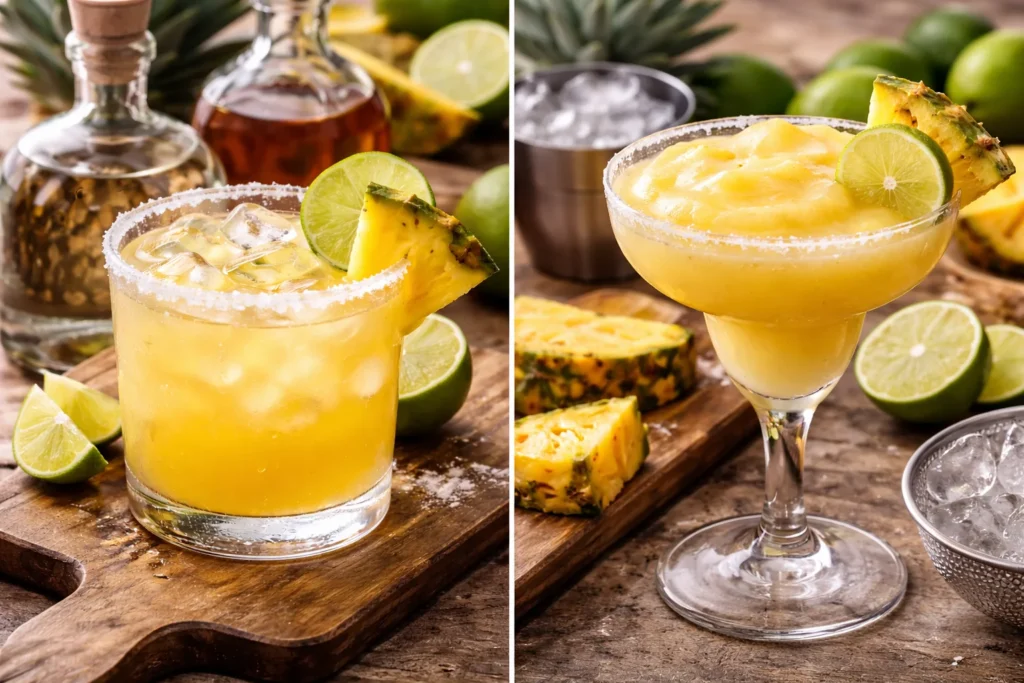
I almost always choose Tajín for a pineapple margarita because the chili-lime seasoning sharpens the fruit instead of simply contrasting it.
That said, Tajín can overpower delicate or floral tequilas. If your blanco is subtle, regular kosher salt keeps the drink cleaner. With a bolder peppery blanco, Tajín adds contrast that works beautifully against pineapple’s sweetness.
The half-rim rule applies strongly here. Full Tajín rim on a pineapple margarita becomes exhausting by the second glass.
Frozen Pineapple Margarita: Why Less Ice Works Better Here
Pineapple already has a thick natural texture. Frozen versions need surprisingly little ice compared to strawberry or mango margaritas; too much turns the drink fluffy and watered down almost instantly.
I get the best texture using frozen pineapple chunks as most of the frozen element, with only a small handful of additional ice cubes. The frozen fruit provides body and cold temperature simultaneously while keeping the flavour concentrated rather than diluted.
For frozen versions, blend only until just smooth. Stop earlier than feels right. Overblending aerates the mixture further and makes the sweetness feel heavier.
Should You Try It With Mezcal?
Yes, but carefully, and not as a full substitution.
Pineapple handles smoke better than almost any other margarita fruit because its tropical sweetness naturally softens aggressive smoky notes. A full mezcal version overwhelmed the pineapple completely in my testing. The better approach is splitting the base spirit.
One and a half ounces of blanco tequila with half an ounce of mezcal gives enough smoke character to be interesting without losing the brightness that makes the drink refreshing. The pineapple stays noticeable. The tequila stays crisp. The mezcal adds a background layer that makes the cocktail feel more complex without becoming the dominant flavour.
This split ratio also works well with the jalapeño variation because smoke and spice together complement pineapple’s sweetness from two different directions.
Two Variations Built Around What Pineapple Actually Does Well
Pineapple Jalapeño: The Combination That Became a Classic for a Reason
There is a reason bars keep returning to this pairing. Jalapeño sharpens pineapple’s sweetness instead of covering it. Done correctly the cocktail tastes brighter, not simply hotter.
I use two thin jalapeño slices muddled lightly directly in the shaker. Leaving jalapeño sitting too long pulls bitterness from the skin, especially with fresh pineapple juice. A brief muddle and an immediate shake keeps the heat green and bright rather than deep and building.
Tajín rim works particularly well here because the chili-lime seasoning visually and flavourally connects the heat and fruit together.
Pineapple Coconut: Getting the Cream Balance Right
This variation is harder than it sounds and most recipes get it wrong by using too much coconut cream.
My first version tasted closer to a blended beach cocktail than a margarita, the coconut suffocated the lime and made the drink feel thick and cloying after two sips.
The fix was using only half an ounce of cream of coconut at most. That gives texture and tropical richness without killing the citrus structure underneath. I also strongly prefer a shaken coconut pineapple version over a frozen one because blending flattens the lime and exaggerates the sweetness in a way that pushes the drink into dessert territory.
The Sweetness Trap That Ruined My Early Versions
Every time an early version felt slightly off, my instinct was adding more pineapple. That always made the drink worse.
Pineapple sweetness builds slowly on the palate in a way lime or mango sweetness does not. The first sip tastes balanced. By the third sip, a version with too much pineapple becomes genuinely tiring. The tequila disappears. The lime disappears. The finish feels thick and sweet rather than crisp and refreshing.
Once I reduced the fruit slightly and let the lime do more of the structural work, the entire cocktail became brighter. That single realisation was the breakthrough with this drink; more pineapple is rarely the answer.
Batching for a Party: The Bromelain Problem at Scale
Batching pineapple margaritas requires a different approach than other fruit margaritas because of the bromelain issue described earlier.
The longer fresh pineapple juice sits in a batch, the softer and rounder the cocktail becomes as the enzyme continues working. Large batches made two hours before guests arrive taste noticeably different from the same recipe served freshly shaken.
For parties, I premix the tequila, orange liqueur, and lime several hours ahead and keep it refrigerated. Then I add fresh pineapple juice no more than thirty minutes before serving. That preserves brightness and prevents the batch from softening too far.
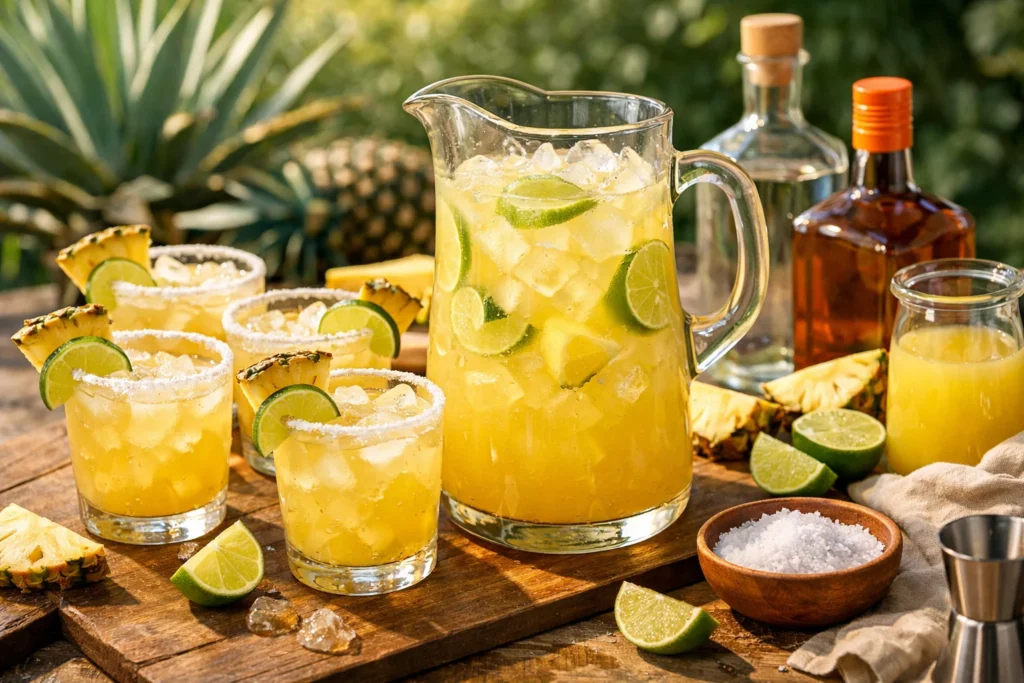
For a pitcher serving six to eight, the scaling that works reliably:
- 1½ cups blanco tequila
- 1 cup fresh lime juice
- ¾ cup pineapple juice
- ¾ cup Cointreau
- Agave syrup to taste after mixing
Shake individual servings from this mixture rather than pouring straight from the pitcher whenever possible. The aeration from shaking improves each glass significantly and prevents the foam from being absent entirely.
One more option for guests who find the drink slightly heavy: a small splash of sparkling water added after pouring lightens the texture without affecting the balance noticeably. Do not add it before shaking.
A Pineapple Margarita Question Worth Answering
People often ask whether pineapple margaritas should taste predominantly sweet or tart.
The answer is both, but in sequence, not simultaneously.
A great pineapple margarita should open with juicy tropical fruit and finish with sharp lime and visible tequila. If the cocktail only tastes sweet from first sip to last, the pineapple has taken over. If it tastes aggressively sour throughout, the fruit is disappearing under the citrus.
The tension between those two elements moving through the drink is what makes it interesting. That balance is also exactly why adding more pineapple when something feels wrong is the wrong instinct, it eliminates the tension rather than restoring it.
Faqs
What is the ratio of tequila to pineapple juice?
A common ratio for a tequila and pineapple drink is 2:1, meaning two parts tequila to one part pineapple juice. For example, you might use 2 oz tequila and 1 oz pineapple juice, then add lime juice or orange liqueur if you’re making a cocktail like a pineapple margarita. Some people prefer a lighter drink and use a 1:1 ratio, but the 2:1 balance keeps the tequila flavor noticeable while the pineapple adds sweetness and acidity.
How do you make pineapple tequila?
Pineapple tequila is usually made by infusing tequila with fresh pineapple. Cut fresh pineapple into chunks and place them in a clean jar, then pour tequila over the fruit until it is fully covered. Seal the jar and let it infuse for 24 to 72 hours, depending on how strong you want the pineapple flavor. Shake the jar occasionally, taste after a day, and strain out the fruit once the flavor is right. The infused tequila can then be used in margaritas, spritzes, or simple tequila-pineapple cocktails.
What is the 2:1:1 rule for cocktails?
The 2:1:1 rule is a classic cocktail formula used to create balanced drinks. It means 2 parts spirit, 1 part sweet, and 1 part sour. For example, a typical margarita might use 2 oz tequila, 1 oz orange liqueur, and 1 oz lime juice. This ratio works because the sweetness and acidity balance the strength of the alcohol, making the drink smooth and well-structured.
What is Taylor Swift’s favorite cocktail?
Taylor Swift has mentioned in interviews that she enjoys a vodka Diet Coke, which became a widely discussed drink among fans. It’s a very simple highball made by mixing vodka with Diet Coke over ice. Like many celebrities, her preferences may change over time, but this drink is one of the most frequently cited cocktails associated with her.What is the most loved cocktail?
There isn’t a single cocktail that everyone agrees is the most loved, but global rankings and bar industry surveys consistently place drinks like the Margarita, Old Fashioned, and Mojito among the most popular worldwide. The margarita is especially famous because of its simple balance of tequila, lime, and orange liqueur, while the Old Fashioned is a classic whiskey cocktail that has remained popular for more than a century. Popularity can vary by region, but these drinks regularly appear on lists of the world’s favorite cocktails.
References
Classic Margarita Ratio and Ingredient Balance
Professional Margarita Specifications and Ratios
Common Margarita Ratios and International Bartenders Association Standard
Classic Margarita Preparation Method (Shake, Salt Rim, Fresh Lime)

Muhammad Hussain is the creator of MargaritaLab.com, where he tests and analyzes margarita recipes, ingredients, and techniques to help readers make better drinks at home. Over time, he has experimented with different tequila types, lime juice variations, and store-bought mixes to understand what actually makes a balanced margarita.
His approach combines hands-on testing with detailed research, focusing on real-world results rather than theory. Whether comparing fresh vs bottled lime juice or reviewing popular margarita mixes, his goal is to simplify the process and share what truly works.
Pingback: Cointreau vs Orange Liqueur: Discover the Best Choice for Your Margarita
Pingback: Strong vs Smooth Margaritas: What’s Better?
Pingback: Jalapeño Margarita Recipe: Everything That Makes This Pepper Specifically Worth Using
Pingback: How to Make a Margarita at Home: 5 Tricks Real Bartenders Actually Use