|
Getting your Trinity Audio player ready... |
Most people treat a margarita garnish as decoration, something to make the glass look finished before it goes to the table. After paying closer attention to how the same drink tastes with and without garnish, I stopped thinking of it that way. A lime wedge on the rim positions fresh citrus oils at nose level on every sip. Salt on the rim suppresses bitterness and makes the citrus taste brighter. Both of these things happen before any liquid touches your tongue. The garnish is doing real flavor work, not just sitting there looking nice. Here’s how to use it deliberately rather than by habit.
Why Garnish Affects Taste Before You Even Sip
Flavor perception is largely smell. What we experience as “taste” is mostly aroma reaching the olfactory receptors at the back of the nasal passage, which is why food tastes flat when you have a blocked nose. A margarita garnish works with this mechanism directly.
A fresh lime wedge or wheel on the rim of the glass releases citrus oils as the drink warms slightly in your hand. Those oils drift upward and reach your nose a fraction of a second before the liquid hits your tongue. The brain interprets what follows as brighter and more citrus-forward than the same liquid without that aromatic priming. It’s not a trick; it’s the same reason a fresh-cut lime smells more intense than the juice alone.
Salt on the rim works differently. Sodium suppresses bitter taste receptors, which is why a small amount of salt makes coffee taste less bitter and why a salted rim rounds the harshness of tequila and the sharp edge of lime. The margarita doesn’t become sweeter; it becomes less sharp, which the palate reads as smoother and more balanced.
These two effects, aroma priming and bitterness suppression, are why a correctly garnished margarita tastes different from the same drink without a garnish. The liquid hasn’t changed. The experience has.
The Salt Rim: Getting It Right
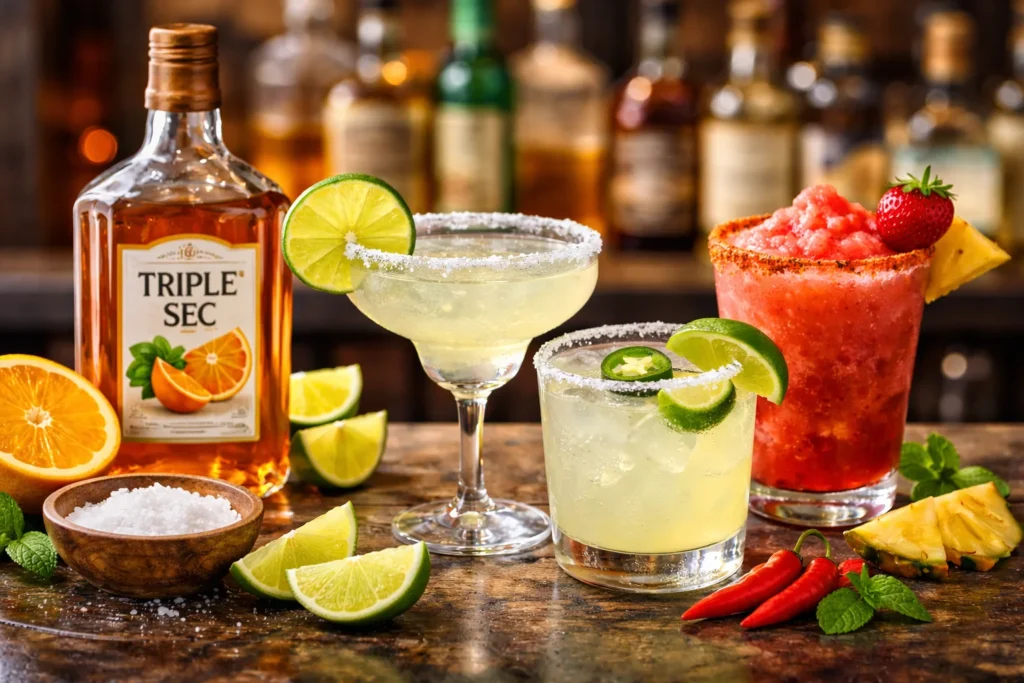
The salt rim is the most important margarita garnish and the most commonly done wrong. Two specific mistakes change the result significantly.
The first mistake is salting the inside of the rim. Salt on the inside falls directly into the drink, making the entire liquid slightly salty rather than affecting only the sips taken from the rim edge. Salt the outer edge only, run a lime wedge around the outside, then press that outer edge into salt on a flat plate.
The second mistake is using fine table salt. Table salt dissolves immediately on contact with any moisture, producing a concentrated hit of salt that tastes sharp rather than clean. Coarse kosher salt or flaky sea salt sticks to the glass properly, dissolves slowly against the lip, and delivers a controlled, pleasant salinity rather than a sharp jolt.
Half-rimming is worth developing as a habit. Salting only half the glass gives the person drinking it control over each sip, salt from the rimmed side, no salt from the plain side. In practice, most people naturally rotate the glass toward whichever side they prefer. It also prevents the drink from becoming uniformly salty if someone drinks slowly enough that the salt begins falling into the liquid.
Salt Alternatives Worth Knowing
Tajín is a Mexican chili-lime salt that adds mild heat and tangy lime alongside the salinity. It works particularly well with spicy margaritas and fruit margaritas where the chili note complements the drink rather than fighting it. The orange-red color also makes the presentation more distinctive than plain salt.
Smoked salt pairs well with mezcal margaritas, the smokiness in the salt echoes the smokiness in the spirit in a way that’s subtle and intentional rather than accidental. Don’t use smoked salt with a standard blanco tequila margarita; the smoke note has nothing to pair with and just tastes odd.
Sugar works for people who find salt too sharp, though it changes the character of the drink meaningfully; a sugar-rimmed margarita tastes more like a sweet citrus cocktail than a balanced one. Half sugar, half salt is a reasonable middle ground that gives both effects without committing fully to either.
Lime zest mixed into the salt is the most underused upgrade. Finely grated lime zest stirred into coarse salt before rimming adds concentrated citrus oil to every sip that touches the rim. The aroma enhancement is immediate and more pronounced than a plain salt rim. A half teaspoon of zest per tablespoon of salt is enough to notice without overwhelming.
Classic Lime Garnishes
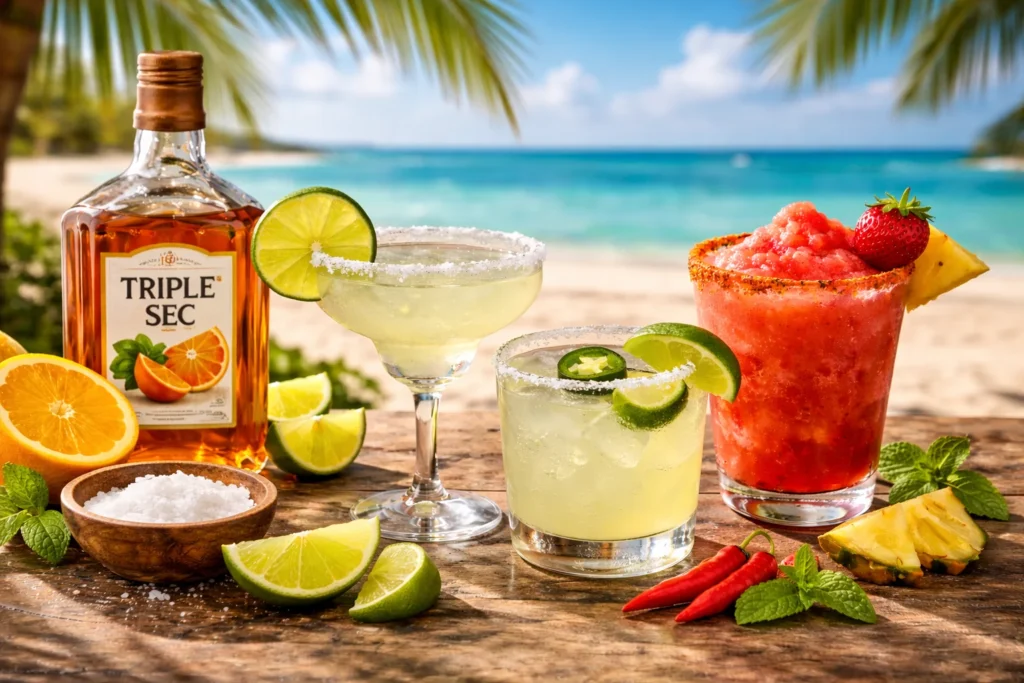
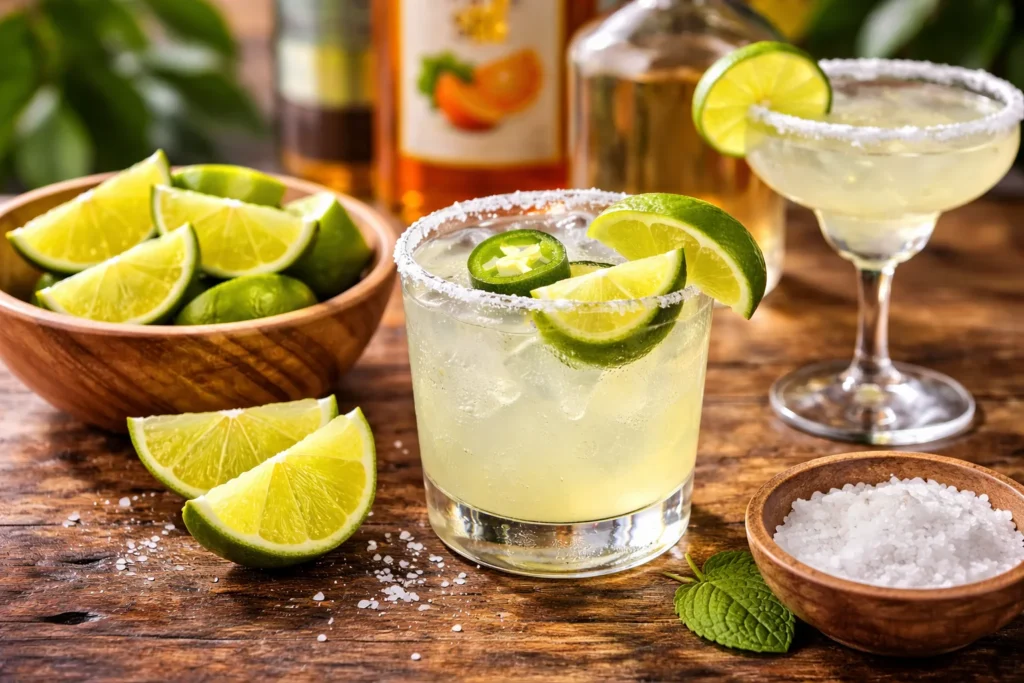
A lime wedge is the most practical option. A wedge provides aroma when placed on the rim and gives the drinker the option to squeeze additional fresh juice into the drink, which is the most effective way to quickly adjust a margarita that tastes slightly flat or over-sweet. Cut from tip to tip rather than across the middle for a wedge that fits cleanly on the rim.
Lime wheel is more elegant and more purely aromatic. A wheel sits on the rim or floats on the surface of the drink and releases citrus oils continuously as the drink warms, but it doesn’t offer the option to squeeze additional juice. Cut crosswise into thin rounds and make a single slit from the center to the edge to fit on the rim without falling in.
Lime twist is a thin strip of peel with the white pith removed, twisted over the glass to release the oils from the skin onto the surface of the drink, then rested on the rim or dropped in. This is a more technical option that delivers concentrated citrus oil directly onto the drink’s surface, the aroma hits immediately on the first sip. Use a channel knife or vegetable peeler to cut a thin strip about three inches long, avoiding as much white pith as possible since pith is bitter.
Fruit Garnish Techniques
These are worth learning for fruit margaritas specifically because matching the garnish to the drink’s flavor both signals what’s inside and reinforces the aroma on every sip.
Spiral strawberry: Place a skewer through the center of a whole strawberry from tip to stem. Cut the strawberry into a continuous spiral around the skewer from the wide base upward, stopping before you go through the skewer. Remove the skewer, the strawberry opens into a loose spiral shape that sits on the rim or the edge of the glass. The technique needs practice, but once you have it, it’s fast and visually impressive. Make these just before serving, strawberry softens quickly once cut.
Mango butterfly: Cut a symmetrical wedge from the side of a mango at least one inch wide. Cut the top into an antenna shape, then make a V-cut on the lower portion to create two wing shapes. Cut the wedge halfway through from the bottom while leaving a small piece of skin intact at the center to hold the butterfly together. Open out the two sides and rest the butterfly on the rim. This takes practice but is the most impressive of the fruit garnish techniques, it works particularly well for mango and peach margaritas.
Peach feather: Slice a thin strip from a ripe peach at a slight angle to create a curved feather shape. Fan it slightly and rest on the rim. The important note here: peach oxidizes and darkens faster than any other fruit garnish. Make the peach garnish immediately before serving, even five minutes on the counter dulls the color and makes it look tired.
Kiwi slice: A simple crosswise slice of kiwi sitting on the rim adds a vivid green color and a sweet-tart aroma that pairs well with citrus margaritas. More elaborate kiwi garnishes are possible (kiwi cactus shapes are a well-known party option) but the simple slice is the most practical and still visually distinctive.
Herb Garnishes
Herbs as margarita garnishes are underused and worth experimenting with. The logic is the same as with fruit, the garnish should reinforce the flavor profile of the specific drink rather than sitting on top of it generically.
Rosemary sprig works well with cranberry margaritas. The piney, slightly resinous aroma of fresh rosemary pairs with the tart berry note in a way that makes the drink smell complex from the first moment. Rest the sprig across the rim so it sits above the liquid.
Basil leaf pairs well with strawberry margaritas. Fresh basil adds a sweet, slightly anise-tinged aroma that works surprisingly well with ripe strawberry flavor. A single large basil leaf pressed slightly to release its oils and laid across the top of the drink is enough, more than one leaf starts to dominate.
Mint sprig is the most familiar herb garnish and works well with citrus-forward margaritas. The cooling effect of mint aroma makes the drink feel more refreshing on a hot day, regardless of what’s in the glass. Press the mint briefly between your palms before placing it; this releases the essential oils that provide the aroma.
Jalapeño slice on the rim of a spicy margarita both signals heat to the drinker before the first sip and allows them to add more heat by squeezing or muddling the garnish into the drink as they go. Use a thin crosswise slice with or without seeds depending on how much heat you want visible.
Garnish by Margarita Style
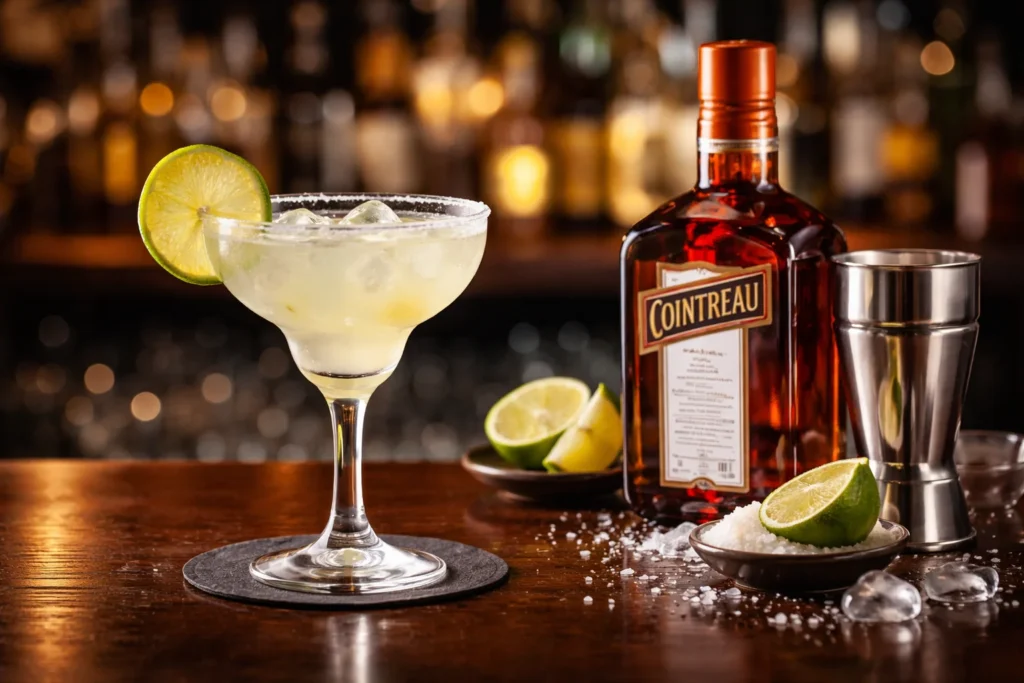
Classic on-the-rocks: Lime wedge or lime wheel, half salt rim with coarse kosher salt. Simple, clean, lets the drink speak for itself.
Spicy margarita: Tajín rim, thin jalapeño slice on the rim, lime wedge. The Tajín reinforces the heat before the first sip; the jalapeño gives visual confirmation of what’s inside.
Strawberry margarita: Spiral strawberry on the rim, lime wedge, and optional basil leaf. The spiral strawberry is worth the effort here because strawberry margaritas are inherently visual drinks.
Mango margarita: Mango butterfly or thin mango slice on the rim, lime wheel. The bright orange color of mango against the yellow-green of the drink is visually striking without needing anything else.
Cranberry margarita: Rosemary sprig, lime wheel, optional sugar rim. The rosemary adds an aromatic complexity that plain lime garnish doesn’t provide and that matches well with the tartness of cranberry.
Mezcal margarita: Lime twist (not wedge) and smoked salt rim. The twist delivers citrus oil directly onto the drink’s surface, and the smoked salt echoes the mezcal’s smoke. No fruit garnish needed, the drink has enough character without additional visual complexity.
Frozen margarita: Lime wheel resting on the blended surface rather than on the rim, since the frozen texture holds it. Tajín works well here because the cold temperature softens the chili heat to a warmth rather than a spike.
Faqs
What goes on top of a margarita?
The most common margarita garnish is a fresh lime wedge or lime wheel, often paired with a salted rim. This combination is widely used because it enhances both aroma and flavor. The lime adds a bright citrus scent that complements the drink, while the salt balances acidity and reduces bitterness from the alcohol. In some variations, bartenders may also add fruit slices (like orange or mango), herbs such as mint, or even chili for a spicy twist, but the classic lime garnish remains the most reliable and widely accepted choice.
How to make a margarita special?
To make a margarita stand out, focus on quality ingredients and proper balance rather than adding too many extras. Using fresh lime juice instead of bottled juice makes a noticeable difference in brightness and flavor. Choosing a good-quality tequila, typically a blanco, also improves the overall drink. Small details like chilling the glass, using a properly salted rim, and selecting the right margarita garnish can elevate the experience. From my experience, keeping the recipe simple but executing it well is what truly makes a margarita feel special.
What makes a margarita taste better?
A margarita tastes better when the balance between strong, sour, sweet, and dilution is properly adjusted. Fresh lime juice provides natural acidity, while orange liqueur adds sweetness and depth. Shaking the drink with ice for the right amount of time ensures proper dilution, which smooths out harsh edges. Salt on the rim also plays an important role by enhancing flavor and reducing bitterness. In practice, even small adjustments, like slightly increasing lime juice or improving ingredient quality, can significantly improve the final taste.
Is it better to use lime or lemon in a margarita?
Lime is the traditional and preferred citrus for margaritas because it provides the sharp, bright acidity that defines the drink. The classic margarita is built on a tequila, lime, and orange liqueur combination, which is part of the broader sour cocktail structure used in professional bartending. Lemon can be used as a substitute in some cases, but it creates a different flavor profile that is softer and less distinctive. If you want an authentic margarita, fresh lime juice is always the better choice.
What salt is best for margarita rims?
Coarse or flaky salt is generally considered the best choice for margarita rims. These types of salt stick well to the glass and provide a clean, controlled salinity without dissolving too quickly into the drink. Fine table salt is usually avoided because it can clump, fall into the glass easily, and make the margarita overly salty. Many bartenders also prefer to apply salt only to the outer rim, or even just half the rim, to give the drinker more control over each sip.
References
Classic Margarita Ingredients & Structure
Why Salt Transforms a Margarita

Muhammad Hussain is the creator of MargaritaLab.com, where he tests and analyzes margarita recipes, ingredients, and techniques to help readers make better drinks at home. Over time, he has experimented with different tequila types, lime juice variations, and store-bought mixes to understand what actually makes a balanced margarita.
His approach combines hands-on testing with detailed research, focusing on real-world results rather than theory. Whether comparing fresh vs bottled lime juice or reviewing popular margarita mixes, his goal is to simplify the process and share what truly works.