|
Getting your Trinity Audio player ready... |
The standard advice is simple: always use fresh lime juice. But after making dozens of fresh lime juice margaritas back to back against bottled alternatives, the reality is more nuanced than that. Fresh lime squeezed that day beats bottled every time. Fresh lime squeezed last night versus a quality bottled juice pressed hours after harvest, that comparison is much closer than most people expect. Understanding exactly where the difference lives, and when it doesn’t, is what this article is actually about.
Why Fresh Lime Juice Changes a Margarita
The flavor difference between fresh and bottled lime juice comes down to two things: volatile aromatic compounds and oxidation timing.
Fresh limes contain aromatic oils in the peel and juice that give a just-squeezed margarita its bright, slightly floral top note, the quality that makes a great margarita smell as good as it tastes. These compounds begin breaking down the moment the juice is exposed to air. Standard bottling involves pasteurization, which applies heat to extend shelf life, and that process destroys most of those oils before the bottle is sealed.
The result is a juice that’s acidic but flat, it provides sourness without the aromatic complexity that makes fresh citrus irreplaceable in a quality cocktail. This is why a margarita made with bottled juice can taste correct in terms of balance but still feel like something is missing.
What that means practically: the fresher your lime juice is when it hits the shaker, the better the drink. Same-day fresh is the gold standard. The advantage narrows as hours pass.
The Lime Variety Decision Nobody Talks About
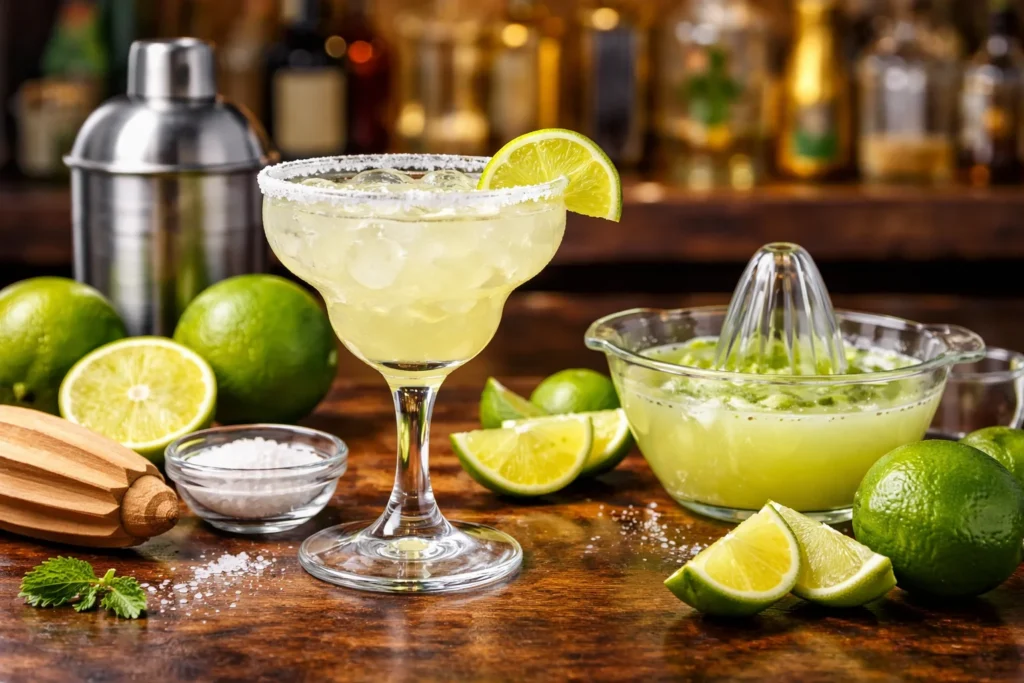
Before squeezing a single lime, it’s worth knowing which lime you’re working with, because the variety changes the balance of your recipe without any other variable shifting.
Persian limes are the large, dark green limes sold in most grocery stores. They’re mild in acidity relative to their size, yield well, and produce a clean, familiar lime flavor. One Persian lime typically gives about one ounce of juice. These are the standard for most margarita recipes, including the one below.
Key limes are smaller, rounder, more yellow than green, and significantly more acidic. They also produce less juice per fruit, which means you need more of them to hit the same volume. If you use Key limes in a recipe calibrated for Persian limes without adjusting, the drink will run noticeably sharper and may need a sweetener correction to come back into balance.
The practical rule: if a recipe doesn’t specify, it assumes Persian limes. If you’re using Key limes, either reduce the quantity by about a quarter or increase the sweetener slightly and taste before serving.
How to Get the Most From Fresh Limes
Technique matters here more than most guides acknowledge.
Start with room-temperature limes. Cold limes from the refrigerator have tighter cell structure and yield less juice, letting them sit out for 20 to 30 minutes makes a real difference in extraction. Rolling the lime firmly on the counter for 30 seconds before cutting breaks down the internal membranes and achieves the same result faster.
Cut crosswise rather than lengthwise. This exposes more juice sacs to the press and produces better extraction. Use a handheld citrus press rather than a reamer for anything more than one drink.
Stop pressing before the lime is completely dry. The last squeeze pulls juice from the pith, where bitterness concentrates. The first full press of each lime half gives the brightest, cleanest flavor. Pushing past that point introduces a harsh edge that sweetener alone won’t fully cover.
One detail worth trying: mix finely grated lime zest into your rim salt before coating the glass. The zest brings citrus oils to every sip, it reinforces the fresh lime note in the drink without adding liquid, and it looks better than plain salt.
The Fresh Lime Juice Margarita Recipe
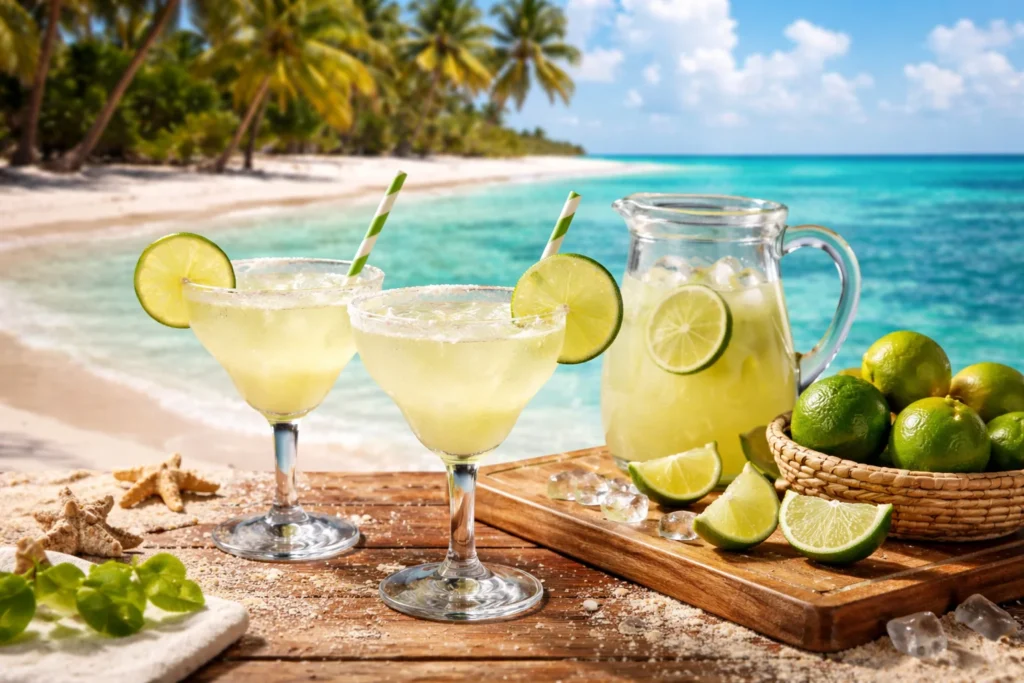
This is the version I come back to consistently. The ratio is 2:1:1, but the details are where it either comes together or doesn’t.
Ingredients
- 2 oz blanco tequila (100% agave)
- 1 oz fresh lime juice (pressed that day)
- 1 oz orange liqueur (Cointreau or triple sec)
- Ice for shaking
- Ice for serving
- 1 tbsp coarse kosher salt + ½ tsp finely grated lime zest for the rim (optional)
Instructions
- Combine the salt and lime zest on a flat plate and mix together.
- Run a spent lime half around the rim of a rocks glass and press lightly into the salt-zest mixture.
- Fill a cocktail shaker three-quarters full with ice.
- Add the tequila, lime juice, and orange liqueur.
- Shake hard for 12 to 15 seconds, the shaker should feel cold and frosted on the outside.
- Strain over fresh ice in the prepared glass.
- Taste before serving. If too sharp, add three drops of agave and shake for three more seconds. If flat, add a few drops more lime.
The orange liqueur is doing genuine flavor work, it provides the citrus complexity and sweetness that bridges tequila and lime. Without it, the drink is one-dimensional regardless of how good the lime juice is. Don’t reduce it to simplify the recipe.
When Bottled Lime Juice Is Honestly Worth Considering
This is the section most fresh-lime advocates skip, so I’ll be direct about it.
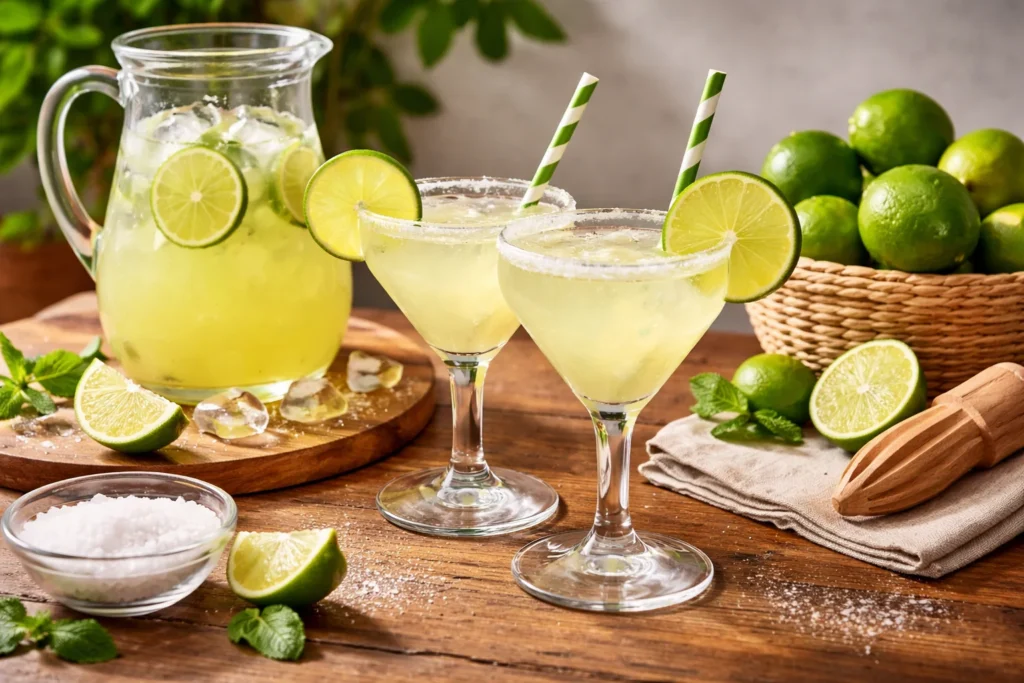
Not all bottled lime juice is the same product. The standard grocery-store bottle, a pale, faintly bitter liquid with a shelf life of several months, is made from concentrate or pasteurized juice that has been stored for an extended period. This version is genuinely inferior to fresh for single cocktails.
However, there’s a category of quality bottled lime juices, pressed within hours of harvest and stabilized with a small amount of antioxidant, the same used in wine production to preserve freshness, that perform meaningfully better than the standard option. These products are closer to fresh than their packaging suggests, because the oxidation clock starts at harvest, not at bottling. A fresh lime sitting on a supermarket shelf for three to four weeks before you buy it isn’t the same product as a lime juiced the day it was picked.
For home use, fresh beats both options when squeezed the same day. For large batches where you’re pressing juice hours in advance, the quality gap between well-made fresh-pressed-ahead juice and a quality bottled product narrows considerably, because the oxidation damage has already occurred.
The honest rule: fresh same-day always. Quality bottled for advance preparation or high-volume situations where same-day fresh isn’t practical.
Making a Large Batch Fresh Lime Margarita
For eight servings, this ratio works well and scales cleanly.
Ingredients
- 12 oz blanco tequila
- 8 oz fresh lime juice (press as close to serving as possible)
- 4 oz orange liqueur
- 4 oz agave syrup or simple syrup
- Ice for serving
Instructions
- Combine tequila, lime juice, orange liqueur, and sweetener in a large pitcher.
- Stir well to integrate.
- Keep refrigerated until serving; do not add ice to the pitcher.
- Stir again before serving and pour over fresh ice in individual glasses.
A note on sweetener for batching: agave syrup dissolves easily at room temperature without heating, which makes it the most practical choice when making a batch. Simple syrup works equally well but needs to be made ahead and chilled. Honey adds a floral note that some people enjoy; if using honey, thin it first with equal parts warm water so it incorporates properly.
The lime juice is the most time-sensitive element. If you’re batching for a party, prepare everything else the night before and press the limes as close to serving time as possible, even two hours ahead is better than the night before.
Faqs
Is bottled lime juice as good as fresh for margaritas?
Bottled lime juice can work in margaritas, but it is generally not considered as good as fresh lime juice for flavor. Freshly squeezed lime juice provides brighter acidity and natural citrus oils that give a margarita a clean, vibrant taste. Bottled lime juice often contains preservatives or stabilizers that help extend shelf life, but these can slightly dull the flavor over time. Many bartenders and cocktail guides recommend fresh lime juice for single drinks or small batches because it produces a more balanced and aromatic margarita. However, high-quality bottled lime juice can be useful for large batches or situations where fresh juicing is not practical.
Which lime is best for margaritas?
The best limes for margaritas are Persian limes, which are the most commonly available limes in grocery stores. Persian limes are larger, less bitter than some other varieties, and provide consistent juice yield, making them ideal for cocktails. In some regions, Key limes are also used, especially in traditional recipes, but they are smaller, more acidic, and require more fruit to produce the same amount of juice. For most home bartenders, fresh Persian limes provide the right balance of tartness and convenience for a classic margarita.
Can I make a margarita with bottled lime juice?
Yes, you can make a margarita with bottled lime juice, especially when fresh limes are not available. While fresh lime juice is preferred for its flavor and aroma, bottled lime juice can still produce a drinkable margarita when used in the correct proportions. It is best to choose a bottled lime juice labeled as 100% lime juice without added sweeteners. Bottled lime juice is commonly used for large gatherings or pre-batched margaritas because it saves time and reduces preparation work. If using bottled juice, taste the margarita before serving and adjust sweetness or dilution as needed.
How much lime juice is needed for a margarita?
A standard margarita typically uses about 1 ounce (30 ml) of lime juice per drink. This measurement follows the classic cocktail balance known as the 2:1:1 ratio, which includes 2 parts tequila, 1 part lime juice, and 1 part orange liqueur. This ratio is widely taught in bartending and mixology guides because it creates a balanced flavor between strong alcohol, tart citrus, and sweetness. Some people adjust the lime juice slightly depending on personal taste or the acidity of the limes, but 1 ounce remains the most common starting point.
Is a margarita just tequila and lime juice?
No, a classic margarita is not just tequila and lime juice. A traditional margarita includes three main ingredients: tequila, lime juice, and orange liqueur, such as triple sec, Cointreau, or another orange-flavored liqueur. The orange liqueur adds sweetness and citrus flavor that balances the tartness of lime juice and the strength of tequila. Without the sweet component, the drink would taste overly sharp and unbalanced. Some simplified versions may include only tequila and lime juice, but these are not considered classic margaritas in traditional cocktail preparation.
References
Fresh Lime Juice vs Bottled Quality
Waste and Efficiency in Citrus Use

Muhammad Hussain is the creator of MargaritaLab.com, where he tests and analyzes margarita recipes, ingredients, and techniques to help readers make better drinks at home. Over time, he has experimented with different tequila types, lime juice variations, and store-bought mixes to understand what actually makes a balanced margarita.
His approach combines hands-on testing with detailed research, focusing on real-world results rather than theory. Whether comparing fresh vs bottled lime juice or reviewing popular margarita mixes, his goal is to simplify the process and share what truly works.
Pingback: Can You Make Margaritas Without Alcohol? The Perfect Non Alcoholic Margarita Recipe
Pingback: Homemade vs Store Margarita: Why Homemade Margaritas Taste Better
Pingback: Strong vs Smooth Margaritas: What’s Better?
Pingback: Frozen vs Classic Margarita: Which One Wins?
Pingback: Cointreau vs Orange Liqueur: Discover the Best Choice for Your Margarita
Pingback: Grand Marnier vs Triple Sec vs Cointreau with Full Comparison
Pingback: Best Mango Margarita Recipe with Fresh and Frozen Options
Pingback: Best Margarita Recipe: I Compared 6 Famous Versions Against My Own 2:1:1